Jump Starters
Can you jump start a car with a bad alternator?
The jump will work. What happens twenty minutes later is the part nobody warns you about.
Disclosure: we earn a commission if you buy through the Amazon links on this page, at no extra cost to you. Commission never decides a verdict or a ranking position — read our editorial policy and affiliate disclosure.
How we assessed these: picks are selected from manufacturer specifications, current retailer listings and published owner feedback — not from hands-on testing of every unit. Where a manufacturer does not publish a figure, it is left out rather than estimated.
Short answer
Yes. A jump starter will start a car with a failed alternator, because starting only needs current for a few seconds. But the alternator is what keeps the engine running and refills the battery, so with it dead the car runs on battery reserve alone — typically minutes to a few miles — and then stops again. Drive to a shop, not home.
This is one of the few questions on this site where the honest answer is yes, and that is the problem. The jump will look like a success. The engine will catch, the dash will light up, and for a few minutes everything will seem fine. Then the headlights will dim, the power steering will get heavy, the dash will fill with warnings, and the engine will die somewhere less convenient than where it started.
Why the jump works and the drive does not
The two jobs are completely separate. Starting is a short, enormous draw — hundreds of amps for three to five seconds — and a jump pack is built for exactly that. Running is a modest, continuous draw: ignition, fuel pump, engine management, lights, wipers, climate fan, perhaps twenty to fifty amps depending on what is switched on. The alternator exists to supply that continuous load and to put back what the starter took out.
Remove the alternator from that picture and the battery is doing both jobs with nothing refilling it. A car battery that was already flat enough to need a jump has very little left, which is why the realistic range on a dead alternator is minutes rather than hours. A fully charged healthy battery buys you more — but the car you are standing next to does not have one of those.
Telling an alternator fault from a dead battery
These two faults present almost identically — the car will not start, or it started yesterday and will not today — and they need completely different fixes. One multimeter reading separates them, and it takes under a minute.
| Reading | When | What it indicates |
|---|---|---|
| 12.6 V or a little above | Engine off, car sat for hours | Battery is charged — look elsewhere for the fault |
| 12.0 to 12.4 V | Engine off, car sat for hours | Partly discharged; could be the battery or a parasitic drain |
| Below 12.0 V | Engine off, car sat for hours | Deeply discharged. Charge it fully before judging it |
| 13.5 to 14.5 V | Engine running | Alternator is charging normally |
| No higher than engine-off | Engine running | Alternator is not charging — the bad-alternator signature |
| Above 15 V | Engine running | Over-charging; a regulator fault, which also kills batteries |
These are the standard 12-volt lead-acid working ranges. The important comparison is engine-off against engine-running: if the voltage does not rise when the engine starts, the alternator is not doing its job.
That is the entire test. Probe the battery posts with the engine off, note the number, start the engine, probe again. A healthy charging system puts 13.5 to 14.5 volts across the battery with the engine running. A number that has not moved is an alternator, a belt, or the wiring between them. How to tell if a car battery is bad covers the battery side of the same test in more detail.
Other signs it is the alternator
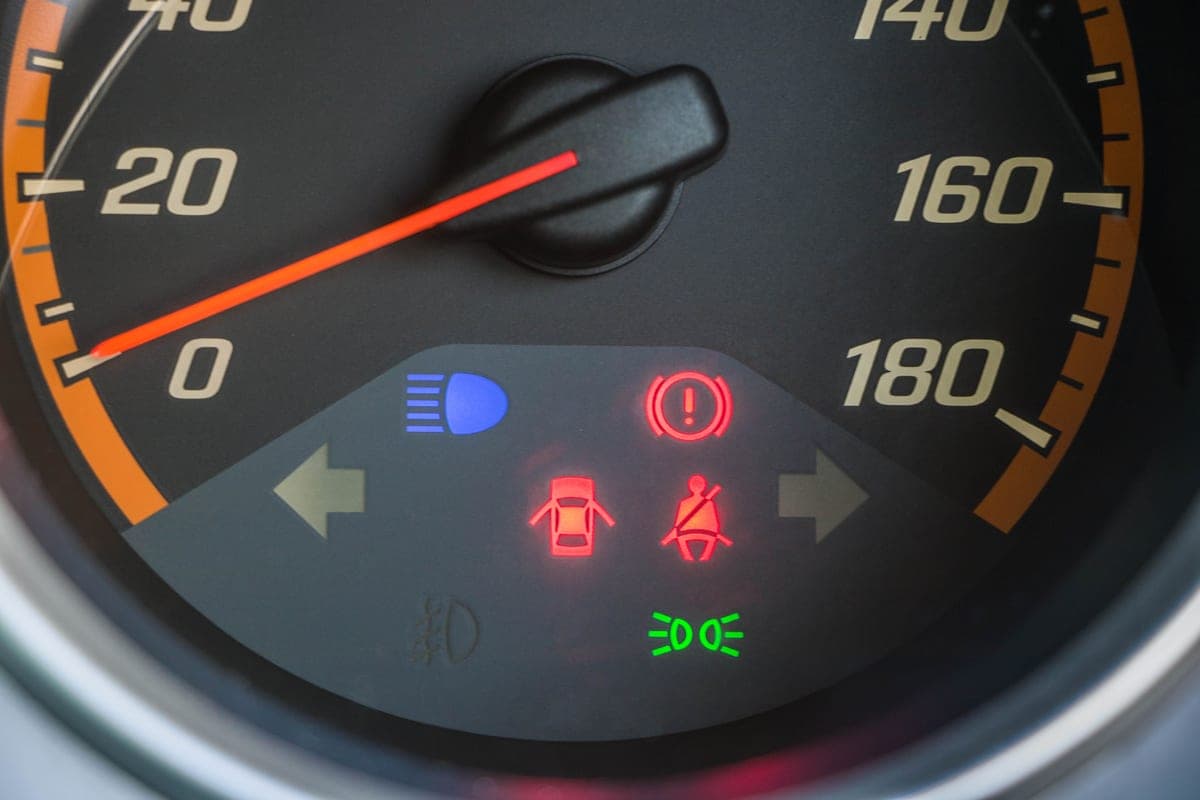
- The battery light stays on with the engine running. That lamp is a charging-system warning, not a battery warning. It means the system is not seeing charge voltage.
- Lights that dim and brighten with engine speed. The classic symptom of a charging system that is marginal rather than dead.
- A whine or growl that tracks engine revs. Alternator bearings fail audibly, often before the output does.
- A brand-new battery that went flat within days. A good battery does not die in a week. Something is either draining it or failing to fill it.
- A burning-rubber smell or a squeal on start-up. A slipping or shredded belt drives the alternator badly or not at all, and a belt is much cheaper than an alternator.
What to do if you are already stranded
The sequence that gets you somewhere useful
Jump it, then test before you move
With the engine running, read the voltage at the battery. If it has not risen above about 13 volts, assume a charging fault and plan the next step around minutes of range, not miles.
Switch off every load you can
Climate fan, heated seats, rear defroster, phone charging, audio — and headlights where it is safe and legal to do so. Every amp you turn off is range you keep.
Drive to the nearest competent shop, not home
This is the single most important decision. The reserve you have is good for one short trip, and you want to spend it going somewhere the car can be fixed.
Do not switch the engine off until you arrive
With a dead alternator, each restart spends reserve you may not have. If you must stop, keep it running.
Keep the pack connected only while cranking
A jump pack is not an alternator substitute — it carries a few tens of watt-hours, which is minutes of running load at best. Use it to start, then disconnect and stow it.
What to carry so this is an inconvenience, not a tow
Two things cover almost every version of this problem. A small lithium pack means you can restart the car as many times as you need to get it somewhere, and a multimeter means you know within a minute whether you are dealing with a battery or a charging fault — which is the difference between driving home and driving to a shop. Both live in the same corner of the trunk and neither takes much space.
The third item is the one people skip: a charger at home. Once the alternator is fixed, the battery is still deeply discharged, and an alternator is a poor charger for a flat battery — it is designed to maintain a full one. Charging it properly afterwards is what stops the next failure, and it is also how you avoid replacing a battery that was only ever flat. How to charge a car battery covers the method.
What we would buy
1. Best way to tell the two faults apart
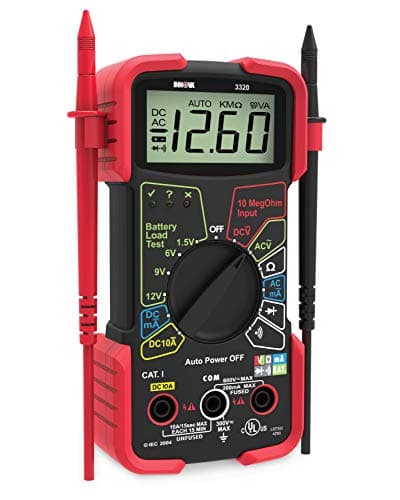
INNOVA 3320 Digital Multimeter
INNOVA · Best for checking whether the battery is the problem
An auto-ranging meter is the difference between guessing and knowing whether you have a dead battery, a dead alternator or a parasitic drain.
This manufacturer does not publish a full specification table for this model on its own site. Rather than repeat figures we cannot source, the assessment below is limited to what the product category and the retailer listing genuinely establish.
What works
- Auto-ranging removes the main source of beginner error
- Reads resting and charging voltage, which is most of automotive electrical diagnosis
- Cheap enough that not owning one is hard to justify
What does not
- A voltage reading is not a load test — a battery can read 12.6 V and still fail under cranking load
- Entry-level leads are the weak point and are worth replacing
Skip it if
Not a scan tool. If you are chasing a check-engine light rather than an electrical fault, you want an OBD2 reader instead.
#ad Affiliate link · Price as of October 16, 2026
2. Best pack to get you moving
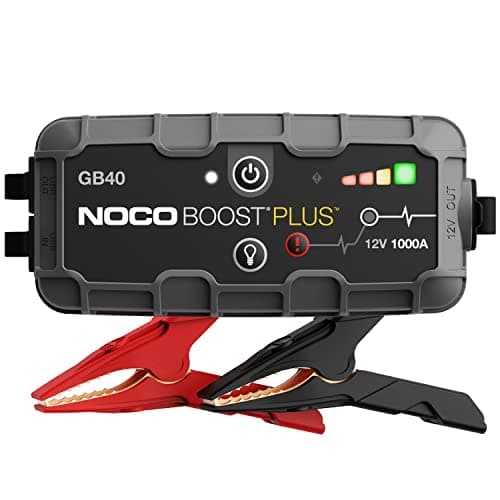
NOCO Boost Plus GB40
NOCO · Best for most cars and small suvs
The default answer for a four- or six-cylinder car: 1,000 peak amps, 24 watt-hours, and light enough that it actually stays in the trunk.
Published specifications
What works
- 24 Wh sits far under the 100 Wh carry-on threshold, so flying with it needs no airline approval
- 2.45 lb and pocketable — the size that decides whether a tool is still in the trunk six months later
- IP65 enclosure, so a wet shoulder in the rain is not a problem
- Reverse-polarity protection means a backwards clamp does not spark
What does not
- 1,000 peak amps runs out of headroom above a 6.0 L gas engine
- The 3.0 L diesel ceiling rules out most modern diesel pickups
- 24 Wh is a small reserve — it is a jump starter, not a power bank substitute
Skip it if
Not the one to buy if you drive a diesel pickup or a big V8. You would be at the edge of its rating on a cold morning, which is exactly when you want margin.
#ad Affiliate link · Price as of October 16, 2026
Raw specifications: NOCO’s own page for the NOCO Boost Plus GB40.

3. Best way to refill the battery afterwards
NOCO GENIUS5
NOCO · Best for one car, charging and maintaining
The single most useful charger for one vehicle: 5 amps, 6 V and 12 V, batteries up to 120 Ah, and it can be left connected indefinitely.
Published specifications
What works
- 5 A recharges a car battery overnight and then holds it — one unit does both jobs
- Rated down to -4 °F, so it works in an unheated garage
- The 77-inch cable reaches from a wall outlet to most engine bays without an extension
- 3-year warranty, against 1 year on the jump-starter line
What does not
- 5 A is slow for a deeply discharged large battery — a 100 Ah battery is an all-nighter
- The 120 Ah ceiling rules out larger deep-cycle banks
Skip it if
Not enough charger if you are reviving deep-cycle RV or marine batteries. Step up to the GENIUS10 and its 230 Ah range.
#ad Affiliate link · Price as of October 16, 2026
Raw specifications: NOCO’s own page for the NOCO GENIUS5.
Key takeaways
- A jump pack will start a car with a dead alternator — it just cannot keep it running.
- Expect minutes to a few miles of range, because the battery is doing both jobs with nothing refilling it.
- Engine off, then engine running: if the voltage does not rise to 13.5-14.5 V, it is a charging fault.
- A battery warning light that stays on with the engine running is a charging-system light.
- Drive to a shop, not home, and do not switch the engine off on the way.
- After the repair, charge the battery properly — an alternator is a poor charger for a flat battery.
How we sourced this
Every figure on this page came from one of the following. Where a manufacturer or regulator does not publish a number, we say so rather than estimate it.
Common questions
- How far can you drive with a bad alternator after a jump start?
- Usually minutes to a few miles. The battery is supplying the whole running load with nothing refilling it, and a battery that just needed a jump has very little reserve left. Switch off every load you can and drive to the nearest shop rather than home.
- Will a jump starter charge a battery if the alternator is dead?
- No, not meaningfully. A compact lithium pack holds a few tens of watt-hours, which is enough for several starts but nowhere near enough to run a car. Charging a battery is a job for a mains charger.
- How do I know if it is the battery or the alternator?
- Measure voltage at the battery posts with the engine off, then again with the engine running. A healthy charging system reads 13.5 to 14.5 volts running. If the running figure is no higher than the engine-off figure, the alternator or its belt is the problem.
- Can a bad alternator damage a new battery?
- Yes, in both directions. An alternator that under-charges leaves the battery chronically short of full, which sulfates the plates permanently. A regulator fault that over-charges above about 15 volts cooks off electrolyte. Either will ruin a new battery in weeks.
- Is it safe to keep jump starting a car with a bad alternator?
- It is safe for the pack and the battery, but it is not a fix — you are repeatedly reviving a car that will stop again. The risk is where it stops. Use the jump to reach a repair, not to keep driving for days.
More in Jump Starters
A jump pack is the one trunk tool that turns a tow truck into a five-minute inconvenience. This is how to size one, and which ones are worth the space.
Read next
Guide
Is the Battery Bad?
The resting-voltage table, the cranking and charging checks, and how to tell a failed battery from a failing alternator or a parasitic drain.
Guide
Will It Start a Dead Battery?
The difference between a discharged battery and a failed one, what a pack can and cannot do about each, and how to tell which you have.
Best Automotive Multimeters
Best Multimeters
Meters for automotive electrical work, the readings that actually diagnose a no-start, and the one thing a voltmeter cannot measure.
How to
How to Charge a Battery
The full sequence with a portable charger: connection order, chemistry setting, what the stages mean, and when to remove the battery first.
Found something out of date, or a figure you can source better than we did? Tell us — corrections get read first. Our methodology explains how picks are made, and contact is one click away.