Jump Starters
Jump starter vs jumper cables
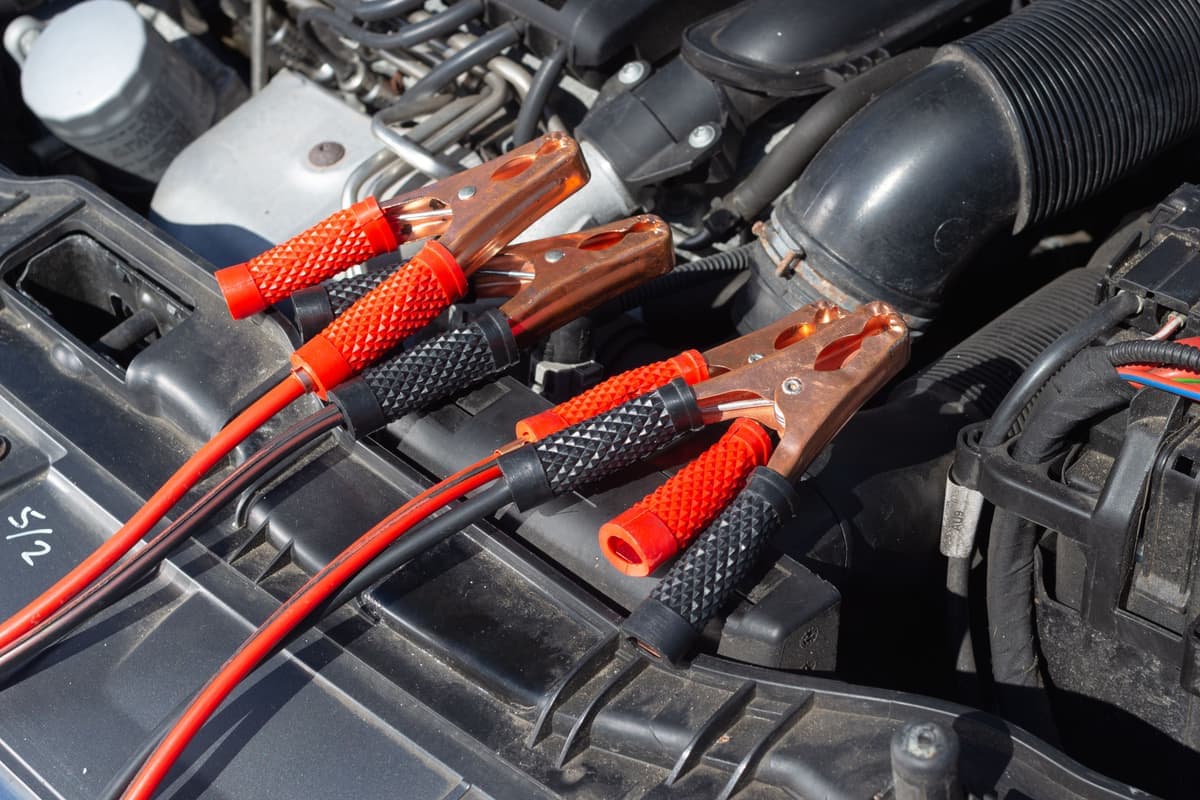
Cables are cheaper and never go flat. They also need a stranger with a running car, which is the whole problem.
Disclosure: we earn a commission if you buy through the Amazon links on this page, at no extra cost to you. Commission never decides a verdict or a ranking position — read our editorial policy and affiliate disclosure.
How we assessed these: this comparison is built from manufacturer specifications and current retailer listings, not from hands-on testing of every unit. Figures we cannot source, we leave out.
Short answer
A jump starter works alone; jumper cables need a second vehicle with a running engine. That single difference decides it for almost everyone. Cables still earn a spot as a backup — they never go flat — but they cannot be your only plan.
| Jump starter | Jumper cables | |
|---|---|---|
| Needs a second vehicle | No | Yes, with a running engine |
| Works in an empty parking lot | Yes | No |
| Needs charging | Yes, quarterly | No, ever |
| Risk of wrong connection | Low — reverse-polarity protection | Real, and it can damage both cars |
| Cost | Higher | Low |
| Weight and bulk | 2-4 lb, compact | Light but awkward to coil |
| Degrades over time | Yes, especially in heat | Effectively no |
| Can also charge a phone | Yes | No |
| Good for a truly dead battery | Often | Often |
Why the second-vehicle requirement is decisive
Think about where cars actually fail to start. A supermarket car park at closing time. A trailhead. A driveway at 6 am on the coldest morning of the year, when your neighbor's car is also cold. A rest stop off a highway at night. In a fair share of those, there is either nobody to ask or nobody you want to ask — and that is before you consider that many drivers no longer know how to connect cables safely, so "there is another car here" does not reliably mean "this is solvable."
This is sharper still for the reader this site is built for: if you are away from home, the pool of people you can flag down is smaller and the consequences of not solving it are bigger.
The safety difference is real, not marketing
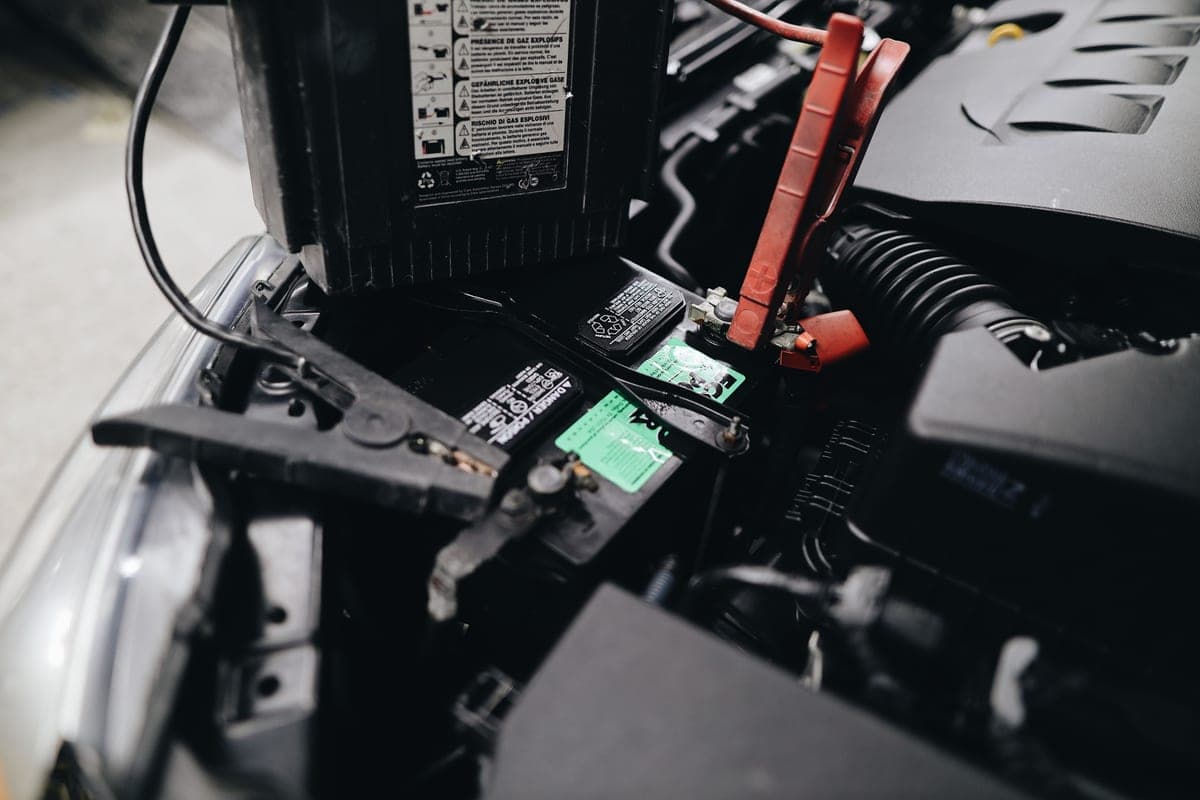
Connecting cables backwards puts the donor car's alternator, both cars' electronics and the batteries themselves at risk, and it can produce a genuine spark at the terminal — over a lead-acid battery that is venting hydrogen. Modern lithium packs with reverse-polarity protection simply refuse to deliver current if the clamps are the wrong way round. They will beep at you instead of arcing.
That does not make a pack risk-free. Jump starter safety covers what can still go wrong — clamps touching each other while live, a damaged or swollen pack, connecting to a frozen battery — and how to use a jump starter has the correct sequence.
Where cables still win
- They never go flat. A pack that has not been charged in a year may do nothing. Cables in a trunk for a decade still work. That reliability is their only genuine advantage and it is not a small one.
- They cost very little. If the choice is cables today or a pack next month, carry cables today.
- Heat does not degrade them. Sustained heat permanently costs a lithium pack capacity; it costs copper cable nothing.
- They can pass current for as long as the donor car runs, which occasionally matters on a very depleted battery that needs a few minutes of surface charge before it will crank.
If you do carry cables, carry heavy ones. Thin, long, aluminum-cored cables with small clamps are the item most likely to fail you, and they are exactly what comes in a budget pre-built roadside kit.
What neither of them fixes
Neither is a solution to a battery that keeps dying. Both are ways to get the engine running once. If you are reaching for either more than once or twice a year, the fault is the battery or the charging system, and the answer is a charger or maintainer plus a multimeter to find out which.
And if the battery is genuinely dead rather than discharged — a failed cell, a frozen electrolyte — neither will save it.
What we would actually carry
A pack sized to your engine, recharged quarterly, plus a set of decent cables left in the trunk as the thing that works when the pack does not. The cables cost little, weigh little, and cover the pack's only real failure mode. That is the whole recommendation.
1. The pack most drivers should carry
NOCO Boost Plus GB40
NOCO · Best for most cars and small suvs
The default answer for a four- or six-cylinder car: 1,000 peak amps, 24 watt-hours, and light enough that it actually stays in the trunk.
Published specifications
What works
- 24 Wh sits far under the 100 Wh carry-on threshold, so flying with it needs no airline approval
- 2.45 lb and pocketable — the size that decides whether a tool is still in the trunk six months later
- IP65 enclosure, so a wet shoulder in the rain is not a problem
- Reverse-polarity protection means a backwards clamp does not spark
What does not
- 1,000 peak amps runs out of headroom above a 6.0 L gas engine
- The 3.0 L diesel ceiling rules out most modern diesel pickups
- 24 Wh is a small reserve — it is a jump starter, not a power bank substitute
Skip it if
Not the one to buy if you drive a diesel pickup or a big V8. You would be at the edge of its rating on a cold morning, which is exactly when you want margin.
#ad Affiliate link · We show no price here; Amazon shows the current one
Raw specifications: NOCO’s own page for the NOCO Boost Plus GB40.

2. The pack if you drive a diesel or V8
NOCO Boost HD GB70
NOCO · Best for diesel pickups and big v8s
The one to buy if you drive a diesel: 2,000 peak amps, a 6.0-liter diesel rating and 56 watt-hours, which is the smallest pack with real margin on a cold diesel.
Published specifications
What works
- The 6.0 L diesel rating covers the common 3.0 L and 6.7 L light-truck diesels with margin
- 56 Wh is still comfortably under the 100 Wh carry-on threshold, so it flies as hand luggage
- 12 V 15 A accessory output, and a 400-lumen light that is genuinely usable roadside
- 12 V / 3 A fast charge brings it back in about three hours
What does not
- 4.18 lb — noticeably heavier than the compact packs, and it wants a dedicated spot
- Overkill for a commuter four-cylinder; you are paying for headroom you will not use
Skip it if
Not the one to buy if you only ever start a four-cylinder commuter. Buy diesel headroom when you have a diesel.
#ad Affiliate link · We show no price here; Amazon shows the current one
Raw specifications: NOCO’s own page for the NOCO Boost HD GB70.
Key takeaways
- A pack works alone; cables need a second running vehicle.
- Reverse-polarity protection is a genuine safety advantage over cables.
- Cables' real advantage is that they never go flat and heat does not harm them.
- Thin budget cables from a pre-built kit are the item most likely to fail.
- Carry both: a pack sized to your engine, with cables as the backup.
How we sourced this
Every figure on this page came from one of the following. Where a manufacturer or regulator does not publish a number, we say so rather than estimate it.
Common questions
- Is a jump starter better than jumper cables?
- For almost everyone, yes, because it works without a second vehicle — and a second vehicle is exactly what is missing in most of the places cars fail to start. Cables remain a good backup because they never go flat, but they cannot be your only plan.
- Are jump starters safer than jumper cables?
- Meaningfully, yes. Modern packs refuse to deliver current if the clamps are reversed, where reversed cables can damage both vehicles' electronics and can spark over a battery that is venting hydrogen. A pack is not risk-free, but the most common serious mistake is designed out of it.
- Should I carry both a jump starter and jumper cables?
- That is what we would do. Cables cost little, weigh little, and cover the pack's one real failure mode — being flat when you need it. The pack covers the cables' failure mode, which is needing another car.
- Can jumper cables damage my car?
- They can, if connected incorrectly. Reversing polarity risks the alternator, the electronics in both vehicles and the batteries themselves. Following the correct order, and connecting the final negative to an unpainted engine ground rather than the battery post, is what keeps the process safe.
More in Jump Starters
A jump pack is the one trunk tool that turns a tow truck into a five-minute inconvenience. This is how to size one, and which ones are worth the space.
Read next
How to
How to Use One
The full sequence for a lithium jump pack, plus what to do when the first attempt does not work and when to stop trying.

Guide
Jump Starter Safety
The risks that remain with a protected lithium pack: clamp shorts, damaged cells, frozen batteries, hydrogen, and the traffic behind you.
Guide
Will It Start a Dead Battery?
The difference between a discharged battery and a failed one, what a pack can and cannot do about each, and how to tell which you have.
Best Portable Jump Starters
Best Portable Jump Starters
Our main roundup: five packs from compact to heavy-duty, ranked on the engine rating the manufacturer will actually stand behind.
Found something out of date, or a figure you can source better than we did? Tell us — corrections get read first. Our methodology explains how picks are made, and contact is one click away.