Jump Starters
Are portable jump starters worth it?
It is the only roadside tool that needs no second car, no stranger and no wait. It is also the only one that quietly goes flat in your trunk.
Disclosure: we earn a commission if you buy through the Amazon links on this page, at no extra cost to you. Commission never decides a verdict or a ranking position — read our editorial policy and affiliate disclosure.
How we assessed these: picks are selected from manufacturer specifications, current retailer listings and published owner feedback — not from hands-on testing of every unit. Where a manufacturer does not publish a figure, it is left out rather than estimated.
Short answer
For most drivers, yes. A lithium pack is the only flat-battery fix that works with nobody else present — no second car, no jumper cables, no wait for a truck — and a mainstream pack such as the NOCO GB40 publishes up to 20 jump starts on a single charge. It is not worth it if you never drive beyond a roadside-assistance call, or if you will not recharge it twice a year.
The case against is simpler than the case for: it is a tool you buy hoping never to use, and it sits in a trunk slowly losing charge while you forget it exists. That is a real objection, and it is the one this page spends most of its time on.
Quick picks
Tap any row to jump to the full write-up. Scoring criteria are published in full on our methodology page.
| # | Product | Best for | Our read | Price |
|---|---|---|---|---|
| 1 | 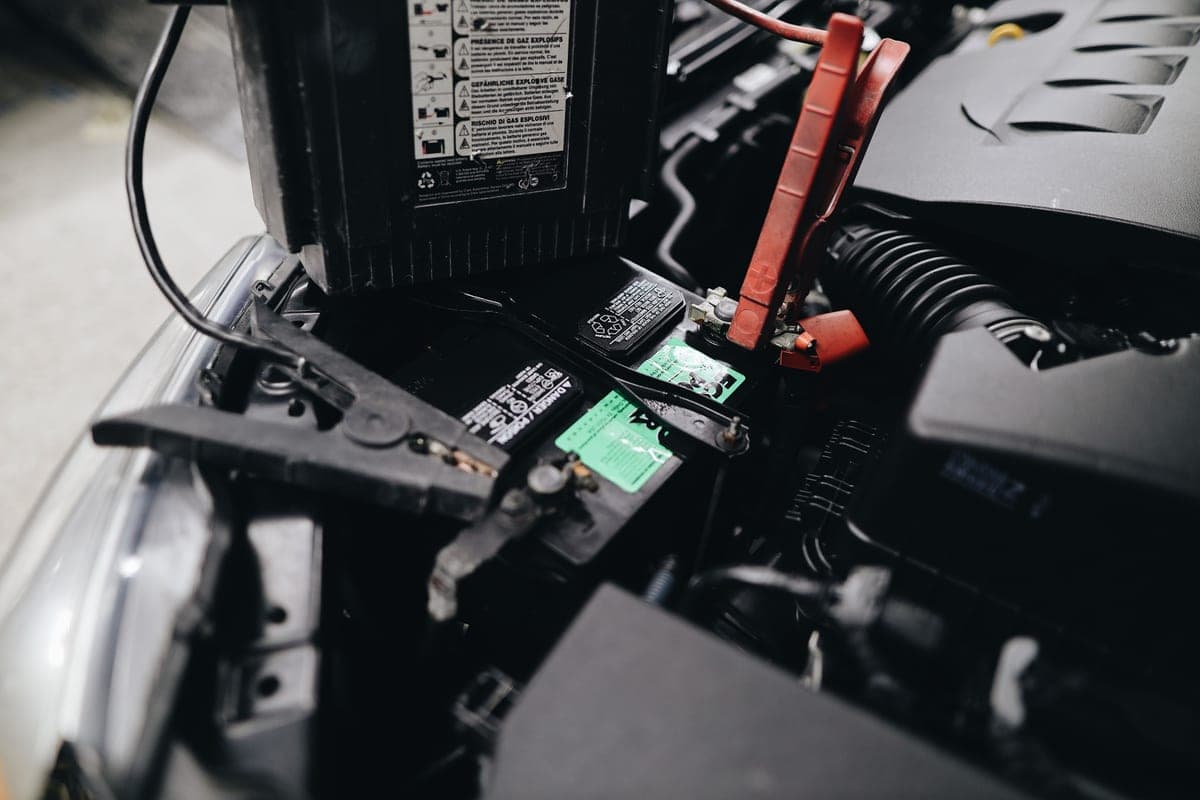 NOCO Boost Plus GB40 The default worth buying | Most cars and small SUVs | 1,000 A, up to 20 starts per charge | Check price on Amazon #ad Affiliate link · We show no price here; Amazon shows the current one |
| 2 |  NOCO Boost X GBX45 Worth the premium if you travel | Travel and carry-on use | Recharges in 48 minutes, charges a laptop | Check price on Amazon #ad Affiliate link · We show no price here; Amazon shows the current one |
| 3 |  NOCO Boost HD GB70 Worth it if you drive something big | Diesel pickups and big V8s | 2,000 A for diesel pickups and big V8s | Check price on Amazon #ad Affiliate link · We show no price here; Amazon shows the current one |
What you are actually buying
Not power. A jump pack holds very little energy — the GB40 stores 24 watt-hours, roughly a large phone battery and a half. What you are buying is the ability to deliver a very large current for a few seconds, and the independence that comes with it.
Every other option for a flat battery requires something you do not control. Jumper cables require a second vehicle and a willing driver, and in an empty parking lot at night that is not a plan. Roadside assistance requires coverage, signal and a wait measured in tens of minutes. A pack requires only that you charged it.
| Jump pack | Jumper cables | Roadside assistance | |
|---|---|---|---|
| Needs a second car | No | Yes | Yes — theirs |
| Needs a phone signal | No | No | Yes |
| Typical time to moving | Under five minutes | Depends on finding help | A wait, then minutes |
| Works in a parking garage | Yes | If someone is there | Often poorly |
| Ongoing cost | None | None | A subscription |
| Needs upkeep | Yes — recharge it | No | No |
| Also charges a phone | Usually | No | No |
The honest comparison is not pack versus cables — most prepared drivers carry both. Jump starter versus jumper cables works through when cables still win.
Who it is clearly worth it for
- Anyone who parks somewhere quiet. A garage level, a trailhead, a hotel lot at 6am. The value of a pack scales with how unlikely a helpful stranger is.
- Anyone driving a car that sits. A second vehicle, a weekend car, a work truck used twice a month. Batteries die from sitting far more often than from age.
- Anyone in a cold climate. Cold raises the current an engine needs and cuts what the battery can deliver at the same time. Why car batteries die in cold weather covers the physics; the cold-weather roundup covers the packs.
- Anyone taking long trips. The further from a tow truck, the higher the value. The travel pick is sized around that case.
- Anyone responsible for someone else's car. A teenager's first car, a parent's car. One pack covers both if you size it for the larger engine.
Who it is not worth it for
If you will not maintain it. This is the honest disqualifier. A lithium pack left in a trunk for three years is a brick, and a brick is worse than nothing because you were counting on it. If the idea of recharging something twice a year is not going to happen, buy roadside coverage instead — it fails less silently.
If your flat battery is a symptom, not an event. A battery that has gone flat three times is telling you something: a parasitic drain, a failing alternator or a battery at the end of its life. A pack lets you keep ignoring that, which is exactly the wrong outcome. Will a jump starter start a dead battery covers what a pack can and cannot rescue, and a battery charger is the tool that actually fixes a discharged battery.
If you only ever drive in dense traffic, in a mild climate, with coverage. Then a pack is a convenience rather than a necessity. It is still a good convenience, but it is not the purchase it is for someone in Minnesota with a gravel driveway.
The upkeep that decides whether it works
Every argument for a jump pack collapses if the pack is flat. Three habits cover it, and none takes more than a few minutes:
Keeping a pack honest
Recharge it on a schedule, not on a feeling
Twice a year is enough for most packs. Tie it to something you already do — the clock change, a birthday, the day you swap tires. How to charge a jump starter covers the detail.
Keep it out of the heat
A lithium pack baking on a parcel shelf through a summer loses capacity permanently. In the cabin, in a door pocket or under a seat, is the compromise that works. Jump starter storage and heat has the reasoning.
Test it once, on purpose
Use it to start your own car in the driveway on a day when nothing is wrong. You will learn the clamp order, the indicator lights and the override button in two minutes rather than in the dark. How to use a jump starter is the walkthrough.
Sizing it so it is worth it
A pack that is too small for your engine is a wasted purchase, and this is the most common way people end up disappointed. NOCO publishes an engine-size rating for every pack rather than a cranking-amp figure, and that is the number to buy against: 6.0 liters gas and 3.0 diesel for the GB40, 8.0 gas and 6.0 diesel for the GB70. What size jump starter do I need walks through it properly, and peak amps versus cranking amps explains why the headline number on the box is not a specification you can compare across brands.
The picks
1. The default worth buying
NOCO Boost Plus GB40
NOCO · Best for most cars and small suvs
The default answer for a four- or six-cylinder car: 1,000 peak amps, 24 watt-hours, and light enough that it actually stays in the trunk.
Published specifications
What works
- 24 Wh sits far under the 100 Wh carry-on threshold, so flying with it needs no airline approval
- 2.45 lb and pocketable — the size that decides whether a tool is still in the trunk six months later
- IP65 enclosure, so a wet shoulder in the rain is not a problem
- Reverse-polarity protection means a backwards clamp does not spark
What does not
- 1,000 peak amps runs out of headroom above a 6.0 L gas engine
- The 3.0 L diesel ceiling rules out most modern diesel pickups
- 24 Wh is a small reserve — it is a jump starter, not a power bank substitute
Skip it if
Not the one to buy if you drive a diesel pickup or a big V8. You would be at the edge of its rating on a cold morning, which is exactly when you want margin.
#ad Affiliate link · We show no price here; Amazon shows the current one
Raw specifications: NOCO’s own page for the NOCO Boost Plus GB40.
2. Worth the premium if you travel
NOCO Boost X GBX45
NOCO · Best for travel and carry-on use
The travel pick: 1,250 peak amps at 2.16 lb with USB-C Power Delivery in and out, so it recharges from the same brick as your laptop.
Published specifications
- Peak amps
- 1,250 A source
- Internal battery
- 31 Wh lithium-ion source
- Gas engine rating
- Up to 6.5 liters source
- Diesel engine rating
- Up to 4.0 liters source
- Weight
- 2.16 lb (0.98 kg) source
- USB-C output
- Up to 20 V / 3 A Power Delivery source
- Water resistance
- IP65 with ports closed source
- Warranty
- 1-year hassle-free source
What works
- Lightest pack in the range at 2.16 lb, and 31 Wh means no airline paperwork
- USB-C Power Delivery both directions — one cable covers the pack, phone and laptop
- More gas headroom than the GB40 (6.5 L against 6.0 L) in a lighter body
What does not
- The IP65 rating only holds with the port covers closed — worth remembering in the rain
- The 4.0 L diesel ceiling is not enough for a full-size diesel pickup
Skip it if
Not the right pack for a diesel truck, and not the cheapest way to cover a small commuter — its premium buys packability, not amps.
#ad Affiliate link · We show no price here; Amazon shows the current one
Raw specifications: NOCO’s own page for the NOCO Boost X GBX45.
3. Worth it if you drive something big
NOCO Boost HD GB70
NOCO · Best for diesel pickups and big v8s
The one to buy if you drive a diesel: 2,000 peak amps, a 6.0-liter diesel rating and 56 watt-hours, which is the smallest pack with real margin on a cold diesel.
Published specifications
What works
- The 6.0 L diesel rating covers the common 3.0 L and 6.7 L light-truck diesels with margin
- 56 Wh is still comfortably under the 100 Wh carry-on threshold, so it flies as hand luggage
- 12 V 15 A accessory output, and a 400-lumen light that is genuinely usable roadside
- 12 V / 3 A fast charge brings it back in about three hours
What does not
- 4.18 lb — noticeably heavier than the compact packs, and it wants a dedicated spot
- Overkill for a commuter four-cylinder; you are paying for headroom you will not use
Skip it if
Not the one to buy if you only ever start a four-cylinder commuter. Buy diesel headroom when you have a diesel.
#ad Affiliate link · We show no price here; Amazon shows the current one
Raw specifications: NOCO’s own page for the NOCO Boost HD GB70.
Key takeaways
- A pack is the only flat-battery fix that needs nobody else present.
- NOCO publishes up to 20 jump starts per charge on the GB40 — capacity is rarely the limit.
- It is not worth it if you will not recharge it twice a year; a flat pack fails silently.
- A battery that keeps going flat needs a charger and a diagnosis, not a pack.
- Buy against the manufacturer's published engine-size rating, not the peak-amp headline.
How we sourced this
Every figure on this page came from one of the following. Where a manufacturer or regulator does not publish a number, we say so rather than estimate it.
Common questions
- Are portable jump starters worth it?
- For most drivers, yes. A lithium pack starts a car with nobody else present — no second vehicle, no cables, no wait — and a mainstream pack like the NOCO GB40 publishes up to 20 starts on a single charge. The one real disqualifier is upkeep: a pack you never recharge will be flat when you need it.
- How long does a jump starter last before it needs replacing?
- The limiting factor is the lithium cell, and the two things that age it are heat and sitting at a low state of charge. A pack kept out of a hot trunk and recharged a couple of times a year lasts years; one left on a parcel shelf through several summers does not. There is no fixed figure, and any site quoting one has invented it.
- Is a jump starter better than roadside assistance?
- They solve different parts of the problem. A pack handles a flat battery in minutes with no signal and no wait, but does nothing for a flat tire with no spare, a lockout or a tow. Roadside coverage handles all of those and needs a phone signal and patience. Many people sensibly have both.
- Do I still need jumper cables if I have a jump starter?
- They are worth keeping. Cables never go flat, cost little and let you accept help from a passing driver if your pack has failed or is undersized for the engine in front of you. The pack is the primary tool; the cables are the backup that needs no maintenance.
More in Jump Starters
A jump pack is the one trunk tool that turns a tow truck into a five-minute inconvenience. This is how to size one, and which ones are worth the space.
Read next
Head to head
Jump Starter vs Cables
The honest comparison: where cables still make sense, why a pack is safer, and why most drivers should carry both.

Guide
What Size Do I Need?
The sizing table by engine displacement and fuel type, using ratings manufacturers publish and warrant rather than peak-amp marketing.
Best Portable Jump Starters
Best Portable Jump Starters
Our main roundup: five packs from compact to heavy-duty, ranked on the engine rating the manufacturer will actually stand behind.

Guide
How Long Does One Last?
Charge retention, starts per charge and total service life, separated out — plus the one factor that shortens all three.
Guide
Storage and Heat
Why a hot trunk permanently costs a lithium pack capacity, where to store it instead, and the one case where lead-acid genuinely wins.
Found something out of date, or a figure you can source better than we did? Tell us — corrections get read first. Our methodology explains how picks are made, and contact is one click away.