Jump Starters
How long does a jump starter last?
Three questions in one. Charge between uses, starts per charge, and years of service life — with an honest answer to each.

Disclosure: we earn a commission if you buy through the Amazon links on this page, at no extra cost to you. Commission never decides a verdict or a ranking position — read our editorial policy and affiliate disclosure.
How we assessed these: procedures here follow the general sequence manufacturers publish for lithium jump packs. Always follow your own pack's and vehicle's manuals where they differ — designated jump points vary by vehicle.
Short answer
A charged lithium pack holds usable charge for months, which is why quarterly topping-up is the recommended habit. Starts per charge ranges from a handful to around twenty depending on capacity and engine. Service life is typically several years, and heat is what shortens it.
People asking this question usually mean one of three different things, so here is each separately.
1. How long does it hold charge sitting unused?
Months. Lithium self-discharge is slow — far slower than the lead-acid boxes this product replaced, where a flat unit at the moment of need was the standard complaint. That is the single biggest practical advantage of lithium.
"Months" is not "indefinitely", though, and the retention figure is not something manufacturers publish as a hard number because it depends heavily on storage temperature. The working answer is the habit: top it up every three months and the question stops mattering. How to charge it covers the practicalities.
2. How many starts per charge?
This is the one where honest answers and marketing answers diverge most. NOCO publishes an up-to figure for the GB40 — up to 20 jump starts — and that is a best case: a healthy battery, a moderate temperature, an engine well within the pack's rating, and a start that catches on the first crank.
Four things reduce it, and they often arrive together:
- Cold. Each attempt costs more energy, and a cold pack delivers less willingly.
- Engine size relative to rating. A pack at the top of its rating spends far more per start than one with headroom.
- Battery condition. A completely flat battery contributes nothing; a partly charged one helps.
- Long cranks. A four-second crank costs roughly four times a one-second one.
Capacity in watt-hours is the figure that predicts this, not peak amps — a 56 Wh GB70 has more than twice the energy budget of a 24 Wh GB40. See mAh vs watt-hours. Our practical guidance: treat the advertised count as a ceiling, plan on considerably fewer in winter, and recharge after any use rather than banking on the remainder.
3. How many years will the pack itself last?
Several, with normal use and reasonable storage. Lithium cells lose capacity gradually with both calendar age and charge cycles, and a jump pack does very few cycles — which means calendar ageing and, above all, temperature dominate.
Heat is the variable that decides this. Sustained high temperature causes permanent capacity loss, and a car's interior in summer is far hotter than ambient. A pack that lives in a trunk through several summers will measurably outlive nothing; it will simply have less capacity each year, until one day it no longer starts an engine it used to start. That is not a defect, and no amount of charging reverses it. Storage and heat is the most useful page on this site for extending a pack's life.
How to get the most years out of one
- Store it out of the heat. The cabin out of direct sun beats the trunk; indoors over summer beats both.
- Keep it topped up, not empty. Quarterly is enough. Storing a lithium pack fully flat for long periods is worse than storing it charged.
- Do not leave it charging indefinitely. Charge it, then unplug it.
- Buy margin. A pack with headroom over your engine works less hard per start, which means fewer deep discharges over its life.
- Check it before you need it. A pack that no longer reaches full charge is telling you it is near the end.
Packs by energy budget

1. Most attempts per charge
NOCO Boost HD GB70
NOCO · Best for diesel pickups and big v8s
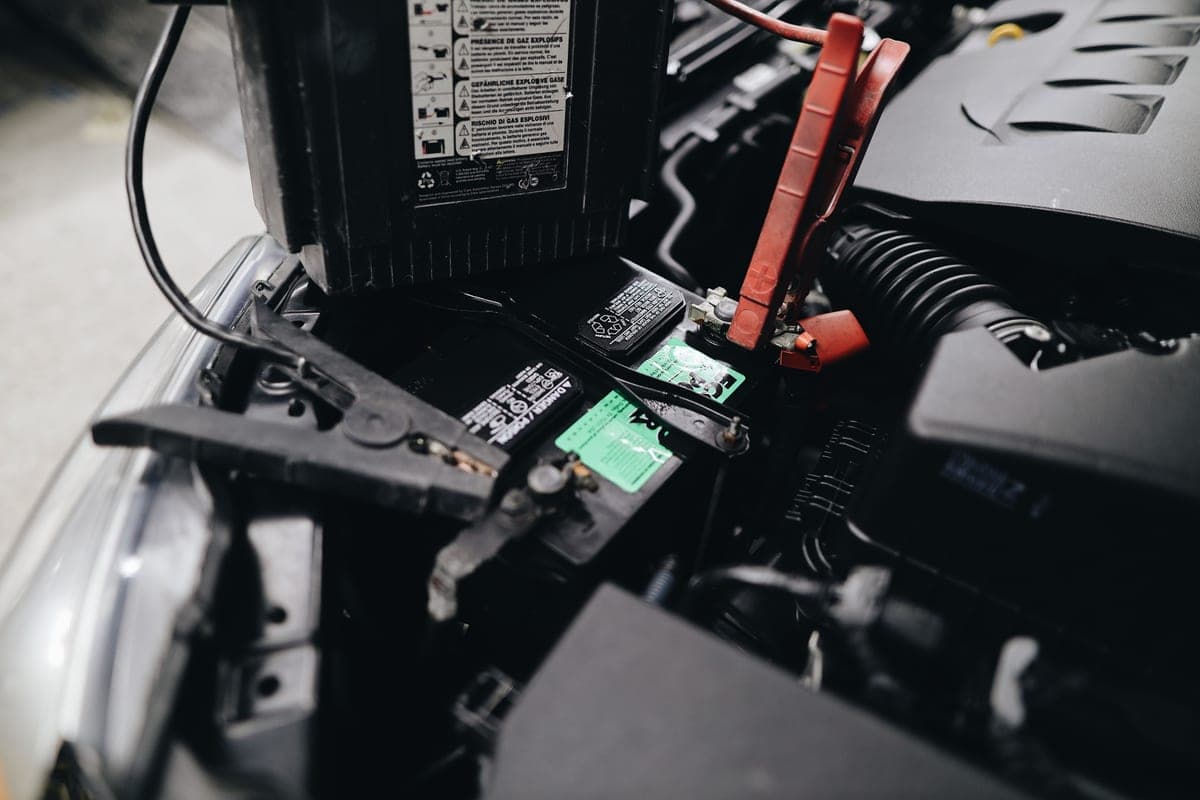
The one to buy if you drive a diesel: 2,000 peak amps, a 6.0-liter diesel rating and 56 watt-hours, which is the smallest pack with real margin on a cold diesel.
Published specifications
What works
- The 6.0 L diesel rating covers the common 3.0 L and 6.7 L light-truck diesels with margin
- 56 Wh is still comfortably under the 100 Wh carry-on threshold, so it flies as hand luggage
- 12 V 15 A accessory output, and a 400-lumen light that is genuinely usable roadside
- 12 V / 3 A fast charge brings it back in about three hours
What does not
- 4.18 lb — noticeably heavier than the compact packs, and it wants a dedicated spot
- Overkill for a commuter four-cylinder; you are paying for headroom you will not use
Skip it if
Not the one to buy if you only ever start a four-cylinder commuter. Buy diesel headroom when you have a diesel.
#ad Affiliate link · We show no price here; Amazon shows the current one
Raw specifications: NOCO’s own page for the NOCO Boost HD GB70.
2. Best balance for a car
NOCO Boost Plus GB40
NOCO · Best for most cars and small suvs
The default answer for a four- or six-cylinder car: 1,000 peak amps, 24 watt-hours, and light enough that it actually stays in the trunk.
Published specifications
What works
- 24 Wh sits far under the 100 Wh carry-on threshold, so flying with it needs no airline approval
- 2.45 lb and pocketable — the size that decides whether a tool is still in the trunk six months later
- IP65 enclosure, so a wet shoulder in the rain is not a problem
- Reverse-polarity protection means a backwards clamp does not spark
What does not
- 1,000 peak amps runs out of headroom above a 6.0 L gas engine
- The 3.0 L diesel ceiling rules out most modern diesel pickups
- 24 Wh is a small reserve — it is a jump starter, not a power bank substitute
Skip it if
Not the one to buy if you drive a diesel pickup or a big V8. You would be at the edge of its rating on a cold morning, which is exactly when you want margin.
#ad Affiliate link · We show no price here; Amazon shows the current one
Raw specifications: NOCO’s own page for the NOCO Boost Plus GB40.

3. Longest life in a hot vehicle
DEWALT DXAEJ14 Power Station
DEWALT · Best for one box that jumps and inflates
A lead-acid jump station with a built-in air compressor and a 120 V outlet — the combo box for people who would rather carry one heavy thing than two light ones.
This manufacturer does not publish a full specification table for this model on its own site. Rather than repeat figures we cannot source, the assessment below is limited to what the product category and the retailer listing genuinely establish.
What works
- Jump starter, air compressor and AC outlet in a single case
- Lead-acid chemistry is untroubled by living in a hot trunk
- Handle-and-case format survives being thrown in a truck bed
What does not
- Heavy and bulky next to any lithium pack — the usual reason combo boxes end up in the garage
- Lead-acid self-discharges, so it needs topping up on a schedule or it is flat when you need it
- The built-in compressor is a convenience feature, not a match for a dedicated inflator's duty cycle
Skip it if
Not for anyone whose priority is packed size or carry-on travel. If the tool has to fit a door pocket or a suitcase, buy a lithium pack and a separate inflator.
#ad Affiliate link · We show no price here; Amazon shows the current one
Key takeaways
- Charge retention is months — top up quarterly and it is a non-issue.
- Advertised jump-start counts are warm-weather best cases; plan on fewer.
- Watt-hours, not peak amps, predicts how many attempts you get.
- Service life is years, and sustained heat is what shortens it permanently.
- The one-year jump-pack warranty against three years on chargers reflects the environment.
How we sourced this
Every figure on this page came from one of the following. Where a manufacturer or regulator does not publish a number, we say so rather than estimate it.
Common questions
- How long does a jump starter hold its charge?
- Months, because lithium self-discharge is slow. Manufacturers do not publish a firm figure because storage temperature affects it substantially, so the practical answer is to top the pack up every three months and stop worrying about it.
- How many times can you use a jump starter before recharging?
- NOCO publishes up to 20 jump starts for its compact GB40, which is a best case. Cold weather, a larger engine, a completely flat battery and longer cranks all reduce it, sometimes dramatically. Recharge after any use rather than relying on the remainder.
- How many years does a jump starter last?
- Several with reasonable care, but heat is the deciding factor. Sustained high temperature causes permanent capacity loss, so a pack stored in a hot trunk through several summers will gradually stop being able to start engines it once could. Storing it cooler is the single best thing you can do for its lifespan.
- Should I store a jump starter fully charged or partly charged?
- Charged rather than flat — storing a lithium pack deeply discharged for long periods is harder on it. Top it up quarterly, keep it out of the heat, and unplug it once charging completes rather than leaving it connected permanently.
More in Jump Starters
A jump pack is the one trunk tool that turns a tow truck into a five-minute inconvenience. This is how to size one, and which ones are worth the space.
Read next
How to
How to Charge One
Charging methods and times, how often to top up, and why a pack that sat in a hot car all summer needs checking before winter.
Guide
Storage and Heat
Why a hot trunk permanently costs a lithium pack capacity, where to store it instead, and the one case where lead-acid genuinely wins.
Troubleshooting
Jump Starter Not Working
A symptom-by-symptom walk through the common failures, and how to tell a dead pack from a pack that is refusing to engage on purpose.
Head to head
Lithium vs Lead-Acid
Why lithium replaced lead-acid for most drivers, and the one storage situation where the old heavy boxes still make sense.
Found something out of date, or a figure you can source better than we did? Tell us — corrections get read first. Our methodology explains how picks are made, and contact is one click away.