Road Trip & Travel
Jump starter storage and heat
The least-covered question in this category, and the one that quietly decides whether your pack still starts your engine in three years.

Disclosure: we earn a commission if you buy through the Amazon links on this page, at no extra cost to you. Commission never decides a verdict or a ranking position — read our editorial policy and affiliate disclosure.
How we assessed these: regulatory figures on this page were read off the FAA and TSA pages linked in the sources block on 2026-09-26 and are cited there. Product figures are manufacturers' published specifications. We have not bench-tested every unit.
Short answer
Sustained high temperature permanently reduces a lithium pack's capacity — it is not a dip you get back when it cools. Store the pack in the cabin out of direct sun rather than the trunk, bring it indoors over summer if that is practical, and check its charge before any trip you are relying on it for.
Almost every jump-starter page tells you which pack to buy. Very few tell you where to keep it, and that decision does more to determine whether the pack works in three years than which model you chose.
What heat does to a lithium cell
Lithium-ion cells age two ways: cycle ageing, from being charged and discharged, and calendar ageing, which happens simply with the passage of time and accelerates sharply with temperature. A jump pack does very few cycles — a handful of starts a year — so calendar ageing, and therefore temperature, dominates its life almost entirely.
The consequence is specific and worth stating plainly: capacity loss from heat is permanent. A pack that has spent two summers in a hot trunk will charge to 100% of what it can now hold, which is less than it held new. Nothing recovers it. The failure mode is not dramatic — it is a pack that one day does not start an engine it used to start.
A parked car is much hotter than the weather
This is the part people underestimate. A vehicle sitting in sun does not sit at ambient temperature — the cabin acts as a solar collector and climbs well above it, and a closed trunk with no glazing to radiate through is worse still. A dark metal toolbox in a truck bed is the hottest option available.
So "it only gets to 90 °F here" is not the relevant number. The relevant number is what the inside of your parked car reaches on that day, and it is considerably higher.
Where to actually keep it
| Location | Verdict |
|---|---|
| Indoors, brought to the car for trips | Best for the pack, worst for the odds it is with you when you need it |
| Cabin, in a door pocket or under a seat, out of direct sun | The best practical compromise, and why a compact pack is worth its premium |
| Glovebox | Fine — enclosed and shaded, though it does get warm |
| Trunk, under the parcel shelf | Acceptable in mild climates, poor in hot ones |
| Rear window shelf or dashboard | Bad. Direct sun through glass is the worst case in the cabin |
| Metal toolbox in a truck bed | Worst. Dark metal in sun, and the pack cooks all summer |
This is a real argument for buying a compact pack rather than the biggest one you can find. A 2.16 lb GBX45 fits in a door pocket where a 6.39 lb pack needs the trunk — and the door pocket is the cooler place. Packability is not just convenience; it buys you the better storage location.
The seasonal routine
- Spring: check the charge. Top it up. Decide whether it is coming indoors for the summer.
- Summer: keep it out of direct sun, in the cabin rather than the trunk. If the car sits outside all day every day, indoors is genuinely better.
- Autumn: check the charge again, and this is the important one — a pack that spent summer in the car needs verifying before winter, which is when you will need it.
- Winter: keep it in the cabin, or bring it inside overnight. Cold reduces output temporarily, unlike heat, so a warm pack performs better on a cold morning.
Two checks a year, tied to the clock change. That is the whole maintenance regime.
Cold is a different problem
Worth separating, because the two get conflated. Cold reduces performance temporarily — a cold cell has higher internal resistance and delivers its rated current less willingly, and you get it all back when it warms. Heat reduces capacity permanently.
So cold is an argument for keeping the pack warm on the day and for buying margin. Heat is an argument about where the pack lives for years. Only one of them is doing lasting damage.
The one case for lead-acid
This is where the old heavy boxes have a genuine argument, and we will not pretend otherwise. A lead-acid jump station is far less degraded by living in a hot vehicle than a lithium pack is. If the unit genuinely must stay in a hot truck year-round and you will top it up on a schedule — lead-acid self-discharges, so that part is not optional — it is a defensible choice, and it usually brings a compressor and an AC outlet with it. Lithium vs lead-acid settles the rest of that trade.
Signs the heat has already cost you
- It will not reach full charge, or the charge indicator cycles without completing.
- It reaches full and falls quickly with no use.
- It no longer starts an engine it used to start. This is capacity loss, and it is the common presentation.
- It gets hot rather than warm while charging.
- The case is swollen. Stop using it, stop charging it, and take it to a battery recycling point.
The picks
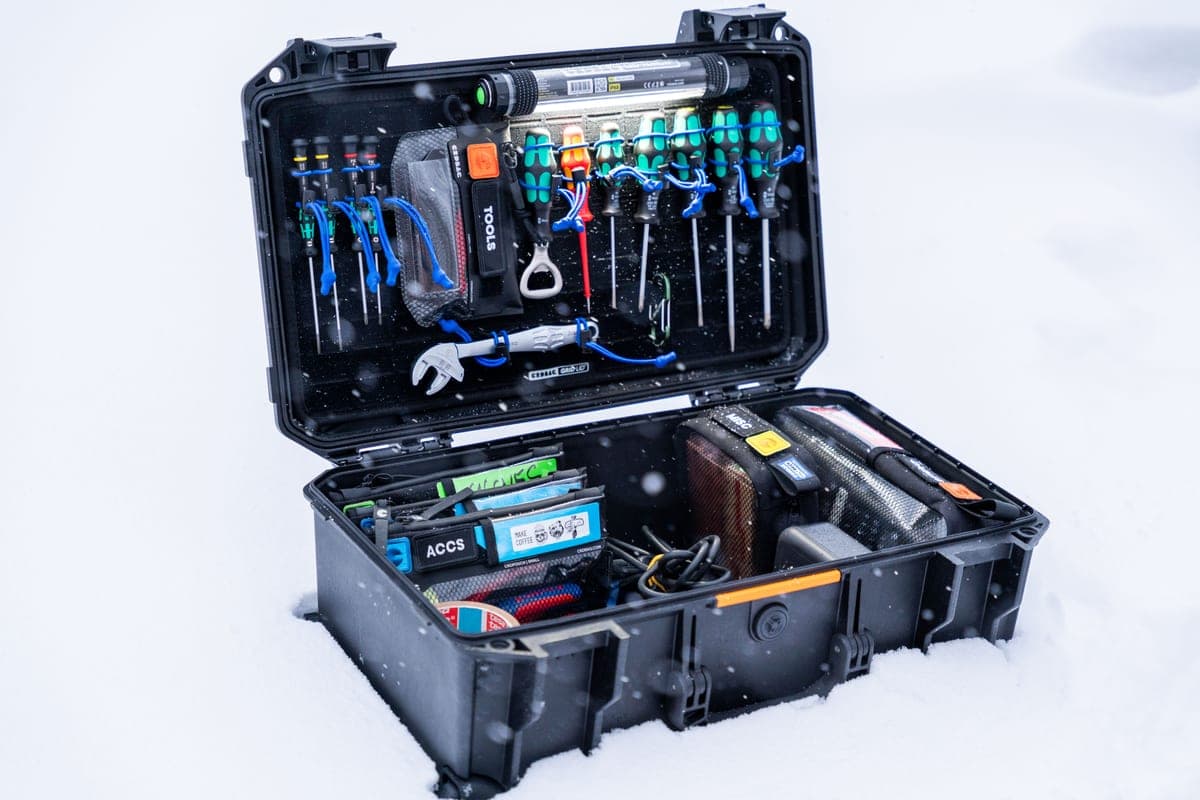
1. Best pack to keep in the cabin
NOCO Boost X GBX45
NOCO · Best for travel and carry-on use
The travel pick: 1,250 peak amps at 2.16 lb with USB-C Power Delivery in and out, so it recharges from the same brick as your laptop.
Published specifications
- Peak amps
- 1,250 A source
- Internal battery
- 31 Wh lithium-ion source
- Gas engine rating
- Up to 6.5 liters source
- Diesel engine rating
- Up to 4.0 liters source
- Weight
- 2.16 lb (0.98 kg) source
- USB-C output
- Up to 20 V / 3 A Power Delivery source
- Water resistance
- IP65 with ports closed source
- Warranty
- 1-year hassle-free source
What works
- Lightest pack in the range at 2.16 lb, and 31 Wh means no airline paperwork
- USB-C Power Delivery both directions — one cable covers the pack, phone and laptop
- More gas headroom than the GB40 (6.5 L against 6.0 L) in a lighter body
What does not
- The IP65 rating only holds with the port covers closed — worth remembering in the rain
- The 4.0 L diesel ceiling is not enough for a full-size diesel pickup
Skip it if
Not the right pack for a diesel truck, and not the cheapest way to cover a small commuter — its premium buys packability, not amps.
#ad Affiliate link · We show no price here; Amazon shows the current one
Raw specifications: NOCO’s own page for the NOCO Boost X GBX45.

2. Best if it must live in the heat
DEWALT DXAEJ14 Power Station
DEWALT · Best for one box that jumps and inflates
A lead-acid jump station with a built-in air compressor and a 120 V outlet — the combo box for people who would rather carry one heavy thing than two light ones.
This manufacturer does not publish a full specification table for this model on its own site. Rather than repeat figures we cannot source, the assessment below is limited to what the product category and the retailer listing genuinely establish.
What works
- Jump starter, air compressor and AC outlet in a single case
- Lead-acid chemistry is untroubled by living in a hot trunk
- Handle-and-case format survives being thrown in a truck bed
What does not
- Heavy and bulky next to any lithium pack — the usual reason combo boxes end up in the garage
- Lead-acid self-discharges, so it needs topping up on a schedule or it is flat when you need it
- The built-in compressor is a convenience feature, not a match for a dedicated inflator's duty cycle
Skip it if
Not for anyone whose priority is packed size or carry-on travel. If the tool has to fit a door pocket or a suitcase, buy a lithium pack and a separate inflator.
#ad Affiliate link · We show no price here; Amazon shows the current one

3. Best margin against capacity loss
NOCO Boost HD GB70
NOCO · Best for diesel pickups and big v8s
The one to buy if you drive a diesel: 2,000 peak amps, a 6.0-liter diesel rating and 56 watt-hours, which is the smallest pack with real margin on a cold diesel.
Published specifications
What works
- The 6.0 L diesel rating covers the common 3.0 L and 6.7 L light-truck diesels with margin
- 56 Wh is still comfortably under the 100 Wh carry-on threshold, so it flies as hand luggage
- 12 V 15 A accessory output, and a 400-lumen light that is genuinely usable roadside
- 12 V / 3 A fast charge brings it back in about three hours
What does not
- 4.18 lb — noticeably heavier than the compact packs, and it wants a dedicated spot
- Overkill for a commuter four-cylinder; you are paying for headroom you will not use
Skip it if
Not the one to buy if you only ever start a four-cylinder commuter. Buy diesel headroom when you have a diesel.
#ad Affiliate link · We show no price here; Amazon shows the current one
Raw specifications: NOCO’s own page for the NOCO Boost HD GB70.
Key takeaways
- Heat causes permanent capacity loss; cold only causes temporary performance loss.
- A parked car's interior runs far above ambient, and a trunk is worse.
- Cabin, out of direct sun, is the best practical location.
- Compactness buys you the cooler storage spot, not just convenience.
- Check the charge twice a year — especially in autumn, before you need it.
How we sourced this
Every figure on this page came from one of the following. Where a manufacturer or regulator does not publish a number, we say so rather than estimate it.
Common questions
- Can I leave a lithium jump starter in a hot car?
- You can, and it costs you capacity permanently. Sustained high temperature is the main driver of calendar ageing in lithium cells, and a parked car's interior runs well above ambient. Keep the pack in the cabin out of direct sun, and bring it indoors over summer if that is practical.
- What is the right storage temperature for a jump starter?
- Cooler is better, and manufacturers publish storage ranges for their chargers rather than firm guidance for packs in vehicles. The practical rule is to avoid direct sun and avoid the hottest parts of the vehicle — a trunk or a metal bed toolbox — and to verify the charge before you rely on it.
- Does cold damage a jump starter?
- Not permanently. Cold raises a cell's internal resistance so the pack delivers less willingly, and you get that back when it warms. Heat is the one that causes lasting capacity loss, which is why the storage question is mostly a summer question.
- Where is the best place to keep a jump starter in a car?
- In the cabin, out of direct sunlight — a door pocket, under a seat, or the glovebox. That is cooler than the trunk and much cooler than a metal toolbox in a truck bed, and it is a genuine reason to prefer a compact pack that fits there.
More in Road Trip & Travel
What changes when the nearest parts store is four hours away, the pack has to survive a hot trunk, and the airline has an opinion about your lithium battery.
Read next
Guide
How Long Does One Last?
Charge retention, starts per charge and total service life, separated out — plus the one factor that shortens all three.
Head to head
Lithium vs Lead-Acid
Why lithium replaced lead-acid for most drivers, and the one storage situation where the old heavy boxes still make sense.
How to
How to Charge One
Charging methods and times, how often to top up, and why a pack that sat in a hot car all summer needs checking before winter.
Best for Cold Weather
For Cold Weather
Winter picks with real margin, plus the one situation where a lead-acid box beats lithium and why lithium usually still wins.
Found something out of date, or a figure you can source better than we did? Tell us — corrections get read first. Our methodology explains how picks are made, and contact is one click away.