Road Trip & Travel
Flying with a jump starter
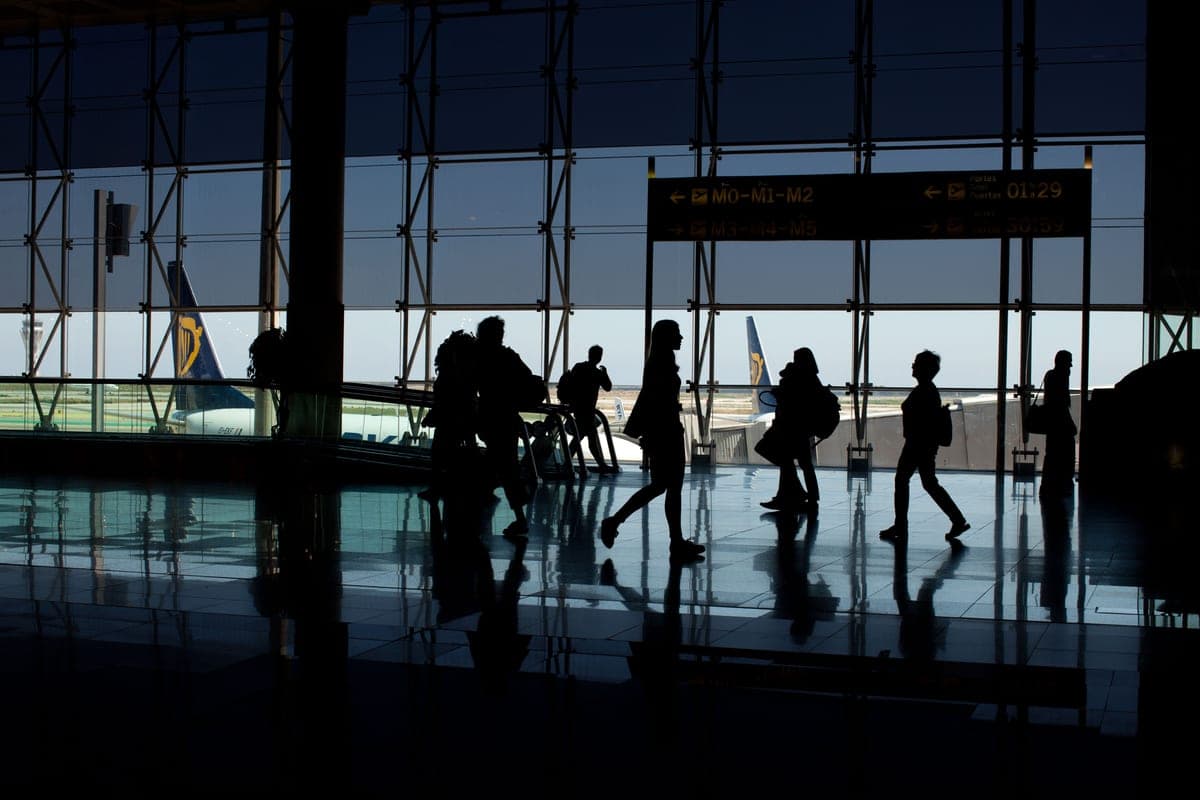
Carry-on only, and the watt-hour number on the pack decides everything. Here are the thresholds in the regulator's own words.
Disclosure: we earn a commission if you buy through the Amazon links on this page, at no extra cost to you. Commission never decides a verdict or a ranking position — read our editorial policy and affiliate disclosure.
How we assessed these: regulatory figures on this page were read off the FAA and TSA pages linked in the sources block on 2026-09-26 and are cited there. Product figures are manufacturers' published specifications. We have not bench-tested every unit.
Short answer
Yes, in carry-on baggage only, if the pack is rated 100 watt-hours or less — which covers every mainstream automotive jump pack. Between 101 and 160 Wh you need the airline's approval and may carry at most two. Spare lithium batteries are never permitted in checked baggage.
This is the question the whole internet answers badly. Search it and you get manufacturer help-desk pages and forum threads. The actual rules are published by the FAA and the TSA, they are specific, and they are quoted below with links so you can check them yourself before you pack.
The rules, from the regulator
Carry-on only. The FAA states that spare (uninstalled) lithium-ion and lithium-metal batteries, including power banks, must be carried in carry-on baggage only. If a carry-on bag is checked at the gate or planeside, spare batteries and power banks must be removed and kept with the passenger in the cabin.
The size limit is 100 watt-hours. The FAA's size limit for rechargeable lithium-ion batteries is a rating of 100 watt-hours per battery. Its own note adds that to calculate watt-hours you multiply the battery voltage by the amp-hours, and that newer batteries have the Wh rating marked on them.
101 to 160 Wh needs approval, and is capped at two. With airline approval, passengers may also carry up to two spare larger lithium-ion batteries exceeding 101-160 Wh. The TSA's page states the same allowance and the same two-battery limit.
Terminals must be protected. The battery terminals must be protected from short circuit — leaving batteries in retail packaging, taping the terminals, using a battery case or a protective pouch are the methods the FAA names.
Where the packs actually sit
| Pack | Capacity | Status |
|---|---|---|
| NOCO GB40 | 24 Wh | Carry-on, no approval needed |
| NOCO GBX45 | 31 Wh | Carry-on, no approval needed |
| NOCO GB50 | 35 Wh | Carry-on, no approval needed |
| NOCO GB70 | 56 Wh | Carry-on, no approval needed |
| NOCO GB150 | 88 Wh | Carry-on, no approval needed |
| Typical power station | 200-2,000+ Wh | Beyond the passenger allowance |
Jump-pack figures are from NOCO's published specification pages. The power-station row is a capacity range for that product class, not a claim about a specific model — check the label on any unit you intend to travel with.
The useful conclusion: every mainstream automotive jump pack flies, including the heavy 3,000-amp one. What does not fly is the adjacent product — a camping power station with a jump-start port. Jump starter vs power station covers why those are different tools.
If your pack only advertises mAh
Convert it, because mAh without a voltage is not a capacity. Divide the mAh by 1,000 to get amp-hours, then multiply by the nominal voltage: a 20,000 mAh pack on 3.7 V cells is 74 Wh. The same mAh figure at 11.1 V would be 222 Wh — well over the limit. The full conversion.
If the manufacturer publishes no watt-hour figure at all, that is itself informative. Brands that expect customers to travel with the pack state Wh.
Airlines and countries can be stricter
The FAA sets the floor, not the ceiling. Its own page notes that many airlines, domestic and international, may have stricter quantity and watt-hour limits, including caps on how many power banks a passenger may carry regardless of capacity — and tells you to check with your carrier before traveling.
Two further practical points. The TSA's page notes that the final decision on whether an item passes the checkpoint rests with the TSA officer. And destination countries have their own rules, which matters on international itineraries in both directions.
Practical packing
- Carry it in your hand luggage, always. Never in a checked bag, and remove it if your carry-on gets gate-checked.
- Keep the watt-hour marking visible. If the Wh rating is printed on the pack, do not cover it with a sticker or bury it in a case — it is what resolves a question at the checkpoint in seconds.
- Protect the terminals. The pack's own case or a pouch is fine; the requirement is that the terminals cannot contact other metal.
- Bring the cables in the same bag, so the pack reads as one device rather than loose gear.
- Check your specific airline, especially internationally, and especially if you are also carrying phone power banks — some carriers limit the total number.
- Do not pack a damaged pack. The FAA states that damaged or recalled batteries and battery-powered devices likely to spark or generate dangerous heat must not be carried aboard an aircraft at all.
Is there such a thing as a "TSA approved" jump starter?
No. There is no TSA approval scheme for jump starters, and any product marketed as "TSA approved" is using the phrase loosely. What exists is a watt-hour threshold, and a pack either sits under it or does not. Buying a pack whose Wh rating is clearly marked is the closest thing to the reassurance that phrase implies.
Packs worth traveling with
1. Best pack to travel with
NOCO Boost X GBX45
NOCO · Best for travel and carry-on use
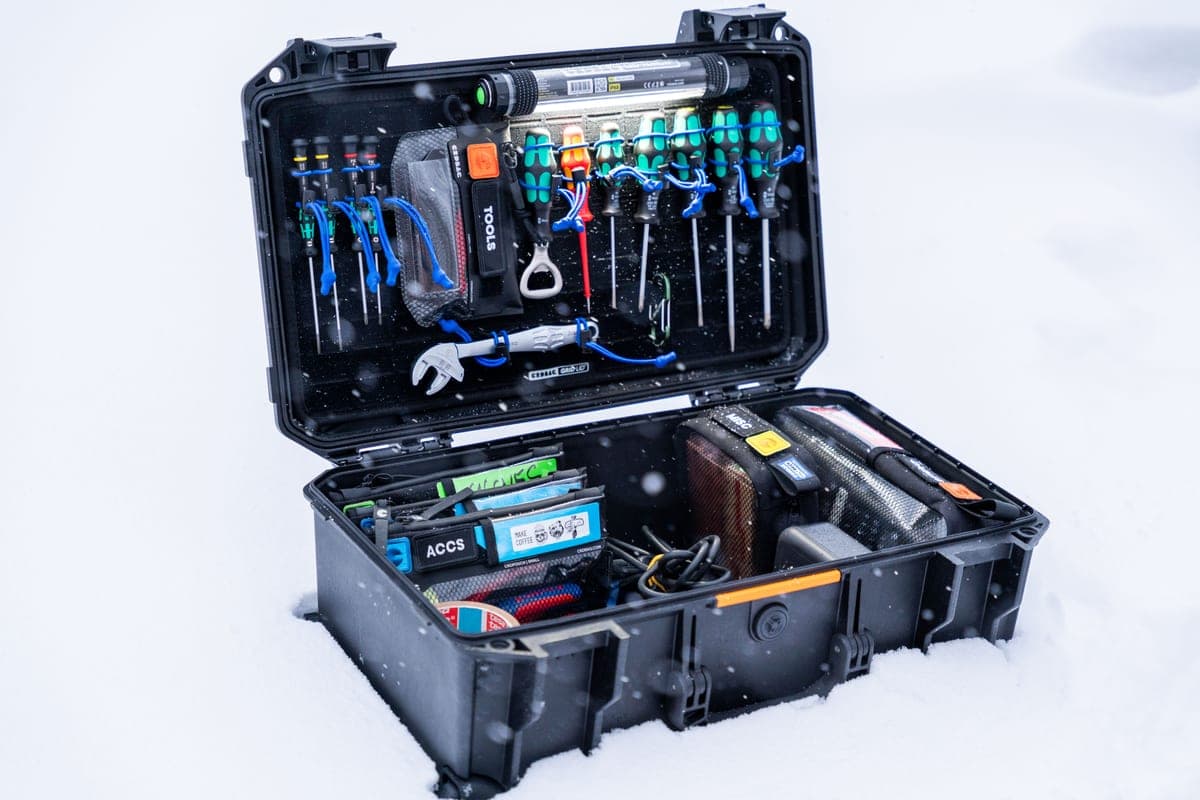
The travel pick: 1,250 peak amps at 2.16 lb with USB-C Power Delivery in and out, so it recharges from the same brick as your laptop.
Published specifications
- Peak amps
- 1,250 A source
- Internal battery
- 31 Wh lithium-ion source
- Gas engine rating
- Up to 6.5 liters source
- Diesel engine rating
- Up to 4.0 liters source
- Weight
- 2.16 lb (0.98 kg) source
- USB-C output
- Up to 20 V / 3 A Power Delivery source
- Water resistance
- IP65 with ports closed source
- Warranty
- 1-year hassle-free source
What works
- Lightest pack in the range at 2.16 lb, and 31 Wh means no airline paperwork
- USB-C Power Delivery both directions — one cable covers the pack, phone and laptop
- More gas headroom than the GB40 (6.5 L against 6.0 L) in a lighter body
What does not
- The IP65 rating only holds with the port covers closed — worth remembering in the rain
- The 4.0 L diesel ceiling is not enough for a full-size diesel pickup
Skip it if
Not the right pack for a diesel truck, and not the cheapest way to cover a small commuter — its premium buys packability, not amps.
#ad Affiliate link · We show no price here; Amazon shows the current one
Raw specifications: NOCO’s own page for the NOCO Boost X GBX45.
2. Smallest capable pack
NOCO Boost Plus GB40
NOCO · Best for most cars and small suvs
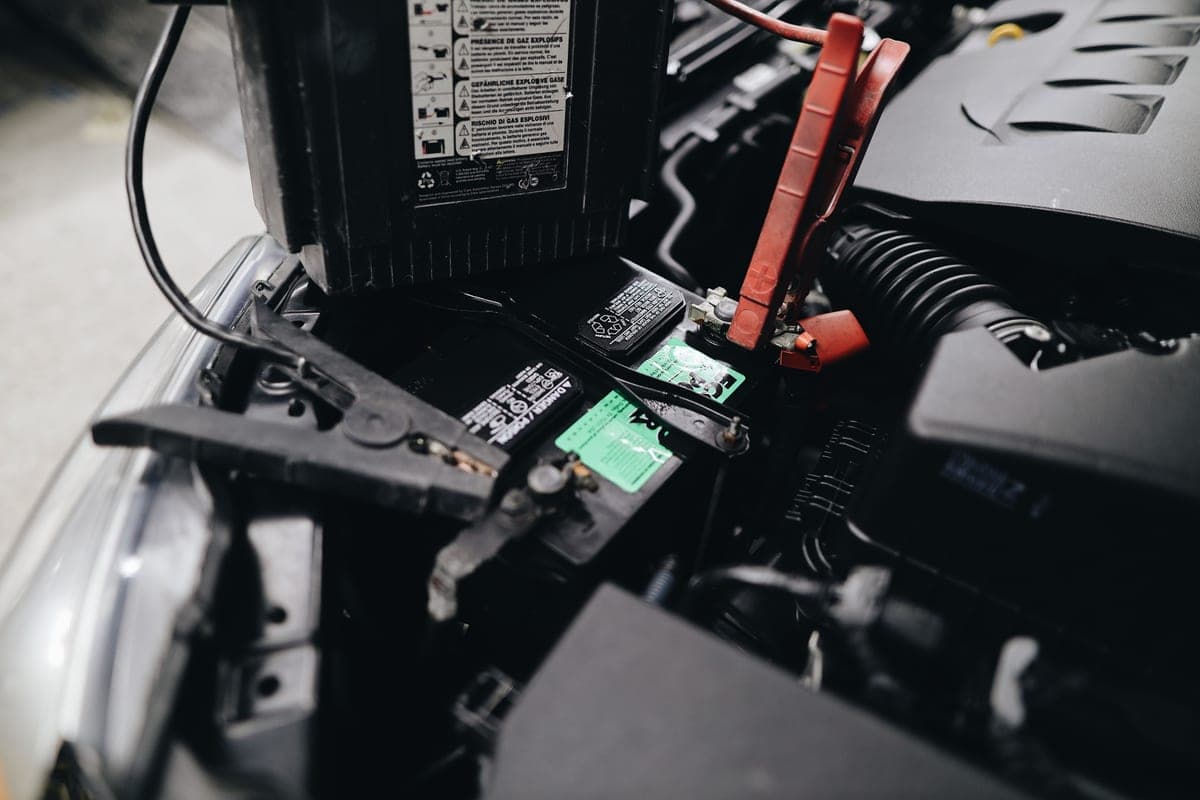
The default answer for a four- or six-cylinder car: 1,000 peak amps, 24 watt-hours, and light enough that it actually stays in the trunk.
Published specifications
What works
- 24 Wh sits far under the 100 Wh carry-on threshold, so flying with it needs no airline approval
- 2.45 lb and pocketable — the size that decides whether a tool is still in the trunk six months later
- IP65 enclosure, so a wet shoulder in the rain is not a problem
- Reverse-polarity protection means a backwards clamp does not spark
What does not
- 1,000 peak amps runs out of headroom above a 6.0 L gas engine
- The 3.0 L diesel ceiling rules out most modern diesel pickups
- 24 Wh is a small reserve — it is a jump starter, not a power bank substitute
Skip it if
Not the one to buy if you drive a diesel pickup or a big V8. You would be at the edge of its rating on a cold morning, which is exactly when you want margin.
#ad Affiliate link · We show no price here; Amazon shows the current one
Raw specifications: NOCO’s own page for the NOCO Boost Plus GB40.
3. Best if you need diesel capability
NOCO Boost HD GB70
NOCO · Best for diesel pickups and big v8s
The one to buy if you drive a diesel: 2,000 peak amps, a 6.0-liter diesel rating and 56 watt-hours, which is the smallest pack with real margin on a cold diesel.
Published specifications
What works
- The 6.0 L diesel rating covers the common 3.0 L and 6.7 L light-truck diesels with margin
- 56 Wh is still comfortably under the 100 Wh carry-on threshold, so it flies as hand luggage
- 12 V 15 A accessory output, and a 400-lumen light that is genuinely usable roadside
- 12 V / 3 A fast charge brings it back in about three hours
What does not
- 4.18 lb — noticeably heavier than the compact packs, and it wants a dedicated spot
- Overkill for a commuter four-cylinder; you are paying for headroom you will not use
Skip it if
Not the one to buy if you only ever start a four-cylinder commuter. Buy diesel headroom when you have a diesel.
#ad Affiliate link · We show no price here; Amazon shows the current one
Raw specifications: NOCO’s own page for the NOCO Boost HD GB70.
Key takeaways
- Carry-on only — spare lithium batteries are never allowed in checked baggage.
- 100 Wh is the no-approval limit; 101-160 Wh needs airline approval, maximum two.
- Every mainstream jump pack, up to 88 Wh, is under the limit.
- Protect the terminals, and keep the watt-hour marking visible.
- Airlines and destination countries can be stricter — check before you fly.
How we sourced this
Every figure on this page came from one of the following. Where a manufacturer or regulator does not publish a number, we say so rather than estimate it.
- FAA PackSafe — Lithium Batteries (carry-on and checked rules, watt-hour limits)
- TSA — Lithium batteries with more than 100 watt hours
- NOCO GB40 published specifications
- NOCO GBX45 published specifications
- NOCO GB50 published specifications
- NOCO GB70 published specifications
- NOCO GB150 published specifications
Common questions
- Can I take a portable jump starter on a plane?
- Yes, in carry-on baggage only, if it is rated 100 watt-hours or less — which covers every mainstream automotive jump pack. Between 101 and 160 Wh you need the airline's prior approval and may carry at most two. Spare lithium batteries are never permitted in checked baggage.
- Is a jump starter TSA approved?
- There is no TSA approval scheme for jump starters. What exists is the watt-hour threshold: at or under 100 Wh no approval is needed, and 101-160 Wh requires the airline's permission. The TSA also notes that the final decision at the checkpoint rests with the officer.
- What is the TSA limit for lithium batteries in carry-on?
- Lithium-ion batteries are limited to a rating of 100 watt-hours per battery without approval. With airline approval, passengers may carry up to two spare batteries in the 101-160 Wh range. Terminals must be protected against short circuit.
- Can I put a jump starter in checked baggage?
- No. The FAA requires spare lithium-ion and lithium-metal batteries, including power banks, to travel in carry-on baggage only. If your carry-on is checked at the gate, the pack must be removed and kept with you in the cabin.
More in Road Trip & Travel
What changes when the nearest parts store is four hours away, the pack has to survive a hot trunk, and the airline has an opinion about your lithium battery.
Read next
Guide
mAh vs Watt-Hours
The conversion, worked through, plus why watt-hours is the only capacity figure that matters if the pack is ever going on a plane.
Best for Travel
Best for Travel
Packs for road trips, rentals and flying: light, compact, under 100 Wh, and charging from a cable you already have.
Head to head
Jump Starter vs Power Station
Why a 500 Wh power station with a jump-start port is not a substitute for a jump pack, and what the watt-hour gap means at an airport.
Guide
Storage and Heat
Why a hot trunk permanently costs a lithium pack capacity, where to store it instead, and the one case where lead-acid genuinely wins.
Found something out of date, or a figure you can source better than we did? Tell us — corrections get read first. Our methodology explains how picks are made, and contact is one click away.