A portable jump starter is a lithium battery with clamps on it. That is genuinely the whole idea. It holds enough energy to spin your starter motor for a few seconds, which is all a healthy engine needs, and it does it without a second car, a stranger, or a wait on the shoulder. For most drivers it is the single highest-value thing you can put in a trunk, because the failure it fixes — a battery that will not crank — is by a wide margin the most common reason a car does not move.
The category has one real decision in it and a lot of noise around that decision. The decision is how much starting current you need, which is set by your engine's displacement and fuel type. The noise is everything else: mAh figures that are not comparable across brands, peak-amp claims that are not measured the same way from one tier to the next, and feature lists that pad a spec sheet without changing whether the thing starts your truck at 15 °F.
Manufacturers publish an engine rating in liters, and it is the most useful number on the box because it already folds in the arithmetic. NOCO, for example, rates the GB40 to 6.0 L gas and 3.0 L diesel, and the GB70 to 8.0 L gas and 6.0 L diesel. Diesels get a much lower rating than gas engines at the same pack size because they crank against far higher compression and draw more current doing it.
So the shortest honest path through this category is: look up your engine's displacement, read it against the published gas or diesel rating, and buy a pack that clears it with margin rather than one that just meets it. Cold weather eats margin, an ageing battery eats margin, and the morning you actually need the pack is the morning both are true. Our jump starter sizing guide lays the engine-size table out in full, and peak amps vs cranking amps explains why the big number on the front of the box is not the number that does the work.
There are four practical groups, and they barely compete with each other:
- Compact lithium packs (roughly 1,000-1,500 peak amps, 24-35 Wh, 2-3 lb). The default for a four- or six-cylinder car. Small enough to live in a door pocket, which is the property that decides whether it is still in the vehicle in a year.
- Heavy-duty lithium packs (2,000-3,000 peak amps, 56-88 Wh, 4-6.5 lb). Diesel pickups, big V8s, equipment. See the diesel roundup.
- Combo units with a built-in air compressor. One box for two problems, at a real cost in size and in compressor quality — the combo roundup is honest about the tradeoff.
- Lead-acid jump stations. Heavy, cheap, indifferent to a hot trunk, and prone to being flat when you need them because they self-discharge.
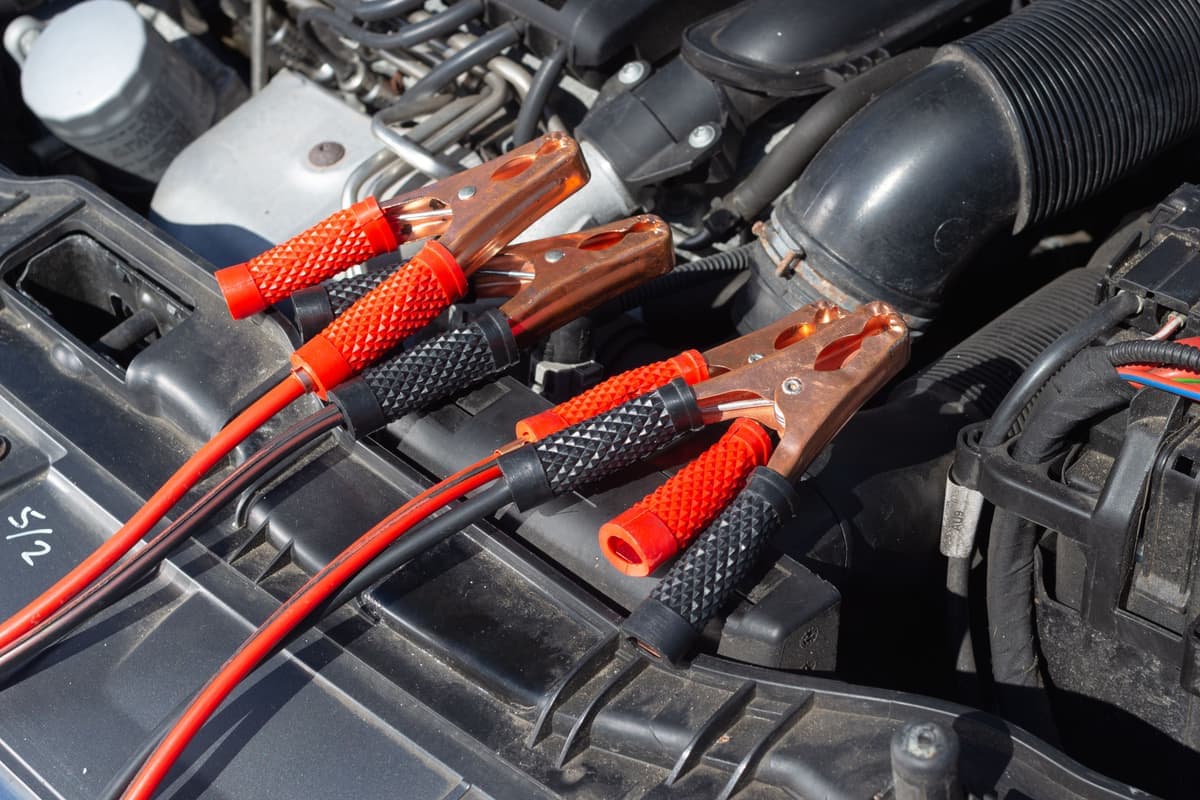
Three things, in this order. Capacity and current — a 56 Wh, 2,000 A pack costs more than a 24 Wh, 1,000 A pack because there is more battery inside it. Rating credibility — the majors publish an engine rating they will stand behind under a warranty, and budget brands publish a bigger peak-amp number they define differently; you are partly paying for a claim you can hold someone to. Build and protection — an IP65 enclosure, reverse-polarity protection, and clamps with real copper in them, versus the ones that get warm.
What does not meaningfully move the price is the feature list. A flashlight, a USB port and a carry case are nice, and none of them is why one pack costs twice another.
Two mistakes, and they pull in opposite directions. The first is buying on peak amps alone and ending up with a pack rated for an engine three sizes bigger than the one in the driveway — heavier, pricier, and no more likely to start your Civic. The second, and more common, is buying the smallest pack available for a diesel pickup because the listing said "for trucks", and discovering on the first genuinely cold morning that there is no margin left.
There is a third mistake worth naming: expecting a jump pack to fix a battery. It will not. A pack gets you moving; if the battery is the thing that failed, you need a charger or a maintainer to deal with the cause, and our guide to whether a jump starter will start a completely dead battery is blunt about where the line is.
This matters more than most buyers realize and almost no listing explains it. Every lithium pack has a watt-hour rating, and that number decides whether you can take it on a plane at all. The FAA's allowance covers lithium-ion batteries up to 100 Wh; between 101 and 160 Wh you need airline approval and can carry at most two spares. Every NOCO Boost pack sits under 100 Wh, including the 88 Wh GB150 — but plenty of larger "power station" style units do not. Read flying with a jump starter before you pack one, and mAh vs watt-hours if your unit only advertises mAh.