Jump Starters
Jump starter safety
A modern pack designs out the most common serious mistake. Here is what it does not design out.

Note: Deliberately unmonetized. This is safety content, and attaching product recommendations to it would put a commercial interest where a reader needs plain information. The relevant products are linked from the guides this page points to.
Short answer
Reverse-polarity protection means a modern pack refuses to deliver current if the clamps are wrong. The remaining risks are clamps touching each other while live, a damaged or swollen pack, a frozen or leaking battery, hydrogen vented by a lead-acid battery, and traffic passing you on a shoulder.
The genuinely dangerous version of jump starting was two cars, a set of thin cables and no protection against a reversed connection. That version is mostly gone. What follows is what is left, in roughly descending order of how likely it is to hurt you.
1. Traffic, first and by a distance
The electrical risks on this page are small. Standing at the front of a vehicle on the shoulder of a road, at night, in the rain, while cars pass at speed, is not small. Before you open the hood:
- Get the vehicle as far off the roadway as it will go. A flat tire or a dead battery is worth ruining a wheel to move clear of a live lane.
- Hazard lights on, immediately.
- Put out reflective triangles well back from the vehicle — far enough that traffic has time to react, not just to see you.
- Wear something visible. This is the argument for a hi-vis vest living in the trunk kit.
- On a narrow shoulder with fast traffic, consider waiting for assistance rather than working at the roadside at all.
2. The clamps, while the pack is live
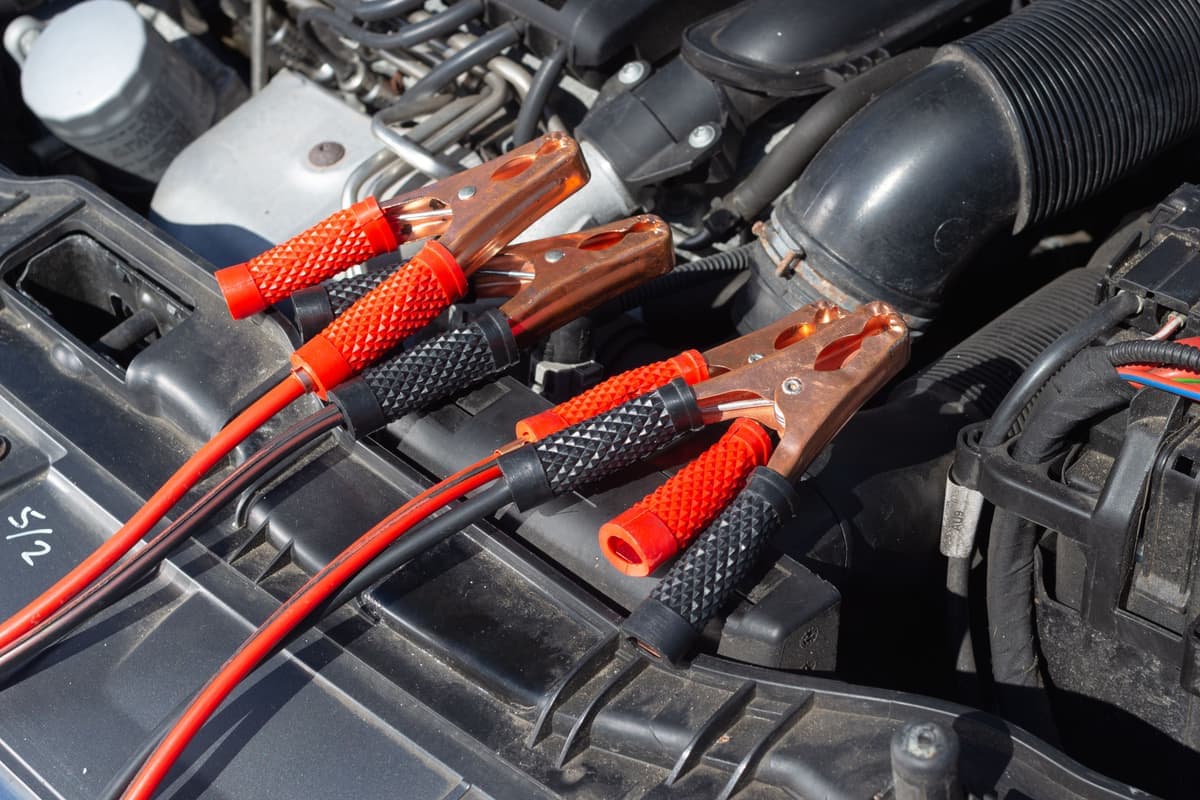
Reverse-polarity protection stops the pack delivering current into a wrong connection. It does not stop the clamps themselves from shorting against each other or against bodywork once the pack has engaged. That short carries serious current and will produce heat and sparks.
- Switch the pack off before connecting or disconnecting.
- Never let the two clamps touch while the pack is on.
- Keep the clamps clear of metal they are not meant to be on — brake lines, fuel lines, the bonnet catch.
- Disconnect the black clamp first, so a dropped red clamp cannot short to the body.
3. Hydrogen from the vehicle's own battery
A lead-acid battery vents hydrogen, particularly when it has been charging or has been deeply discharged. Hydrogen is flammable and a spark at the terminal is a genuine ignition source. This is the specific risk behind a rule that sounds arbitrary: connect the final negative clamp to an unpainted engine ground rather than the battery's negative post where the manufacturer directs, so that any small spark happens away from the battery's vents.
Follow your pack's and vehicle's manuals — some specify the battery post, some a chassis point, and the manufacturer's instruction wins over a general rule.
4. A damaged battery
5. A damaged pack
Lithium cells are safe in normal use and unforgiving once physically damaged. Retire a pack rather than using it if:
- The case is swollen, deformed or split.
- It gets hot rather than warm while charging.
- It has been dropped hard, crushed, or submerged.
- It smells of anything, or has ever vented.
Dispose of lithium packs at a battery recycling point — never in household waste, where a crushed cell is a fire risk to someone else. The FAA's guidance on damaged batteries is blunt on the underlying point: damaged or recalled batteries and battery-powered devices likely to spark or generate dangerous heat must not be carried aboard an aircraft.
6. Cranking, and the starter motor
Crank for three to five seconds, then stop for about 30 seconds. Continuous cranking overheats the starter motor, which is an expensive failure and an avoidable one. Three properly executed attempts is the sensible limit; past that the problem is not a discharged battery. How to use a jump starter has the full sequence.
7. Storage, which is a safety issue too
A pack stored in a hot vehicle loses capacity permanently, and a cell degraded by heat is the cell most likely to misbehave. Keeping the pack out of direct sun is both a longevity measure and a safety one — see storage and heat.
Key takeaways
- Traffic is the largest risk at a roadside stop. Get clear and get visible first.
- Switch the pack off before connecting or disconnecting, and never let clamps touch.
- Connect the final negative where your manuals specify — the rule exists because batteries vent hydrogen.
- Never jump a swollen, cracked, leaking or frozen battery.
- Retire a swollen or overheating pack and recycle it properly.
How we sourced this
Every figure on this page came from one of the following. Where a manufacturer or regulator does not publish a number, we say so rather than estimate it.
Common questions
- Are portable jump starters safe to use?
- Yes, and safer than jumper cables for most people, because reverse-polarity protection removes the most common serious mistake. The risks that remain are clamps shorting while the pack is live, working on a damaged battery, and the traffic passing you on a shoulder.
- Why are my jump leads sparking?
- Sparking usually means the clamps are touching each other or contacting metal they should not, while the pack is switched on. Switch the pack off, separate and re-seat the clamps, and only then switch it back on. A spark at the battery terminal itself is the risk that the connect-to-engine-ground instruction exists to avoid.
- Can a jump starter damage my car's electronics?
- A correctly connected pack with reverse-polarity protection is very unlikely to. The risk comes from reversed connections, which is exactly what the protection prevents by refusing to deliver current. Follow your vehicle's designated jump points, which on some cars are remote terminals rather than the battery posts.
- What do I do with a swollen jump starter?
- Stop using it and stop charging it. Take it to a battery recycling point rather than putting it in household waste, where a damaged lithium cell is a fire risk. A swollen case means the cell has vented or is generating gas internally, and it will not get better.
More in Jump Starters
A jump pack is the one trunk tool that turns a tow truck into a five-minute inconvenience. This is how to size one, and which ones are worth the space.
Read next
How to
How to Use One
The full sequence for a lithium jump pack, plus what to do when the first attempt does not work and when to stop trying.
Head to head
Jump Starter vs Cables
The honest comparison: where cables still make sense, why a pack is safer, and why most drivers should carry both.
Guide
Emergency Kit Checklist
The short list that survives contact with a real trunk, in priority order, plus what to skip and what to check twice a year.

Guide
Storage and Heat
Why a hot trunk permanently costs a lithium pack capacity, where to store it instead, and the one case where lead-acid genuinely wins.
Found something out of date, or a figure you can source better than we did? Tell us — corrections get read first. Our methodology explains how picks are made, and contact is one click away.