Jump Starters
The best jump starters for cold weather
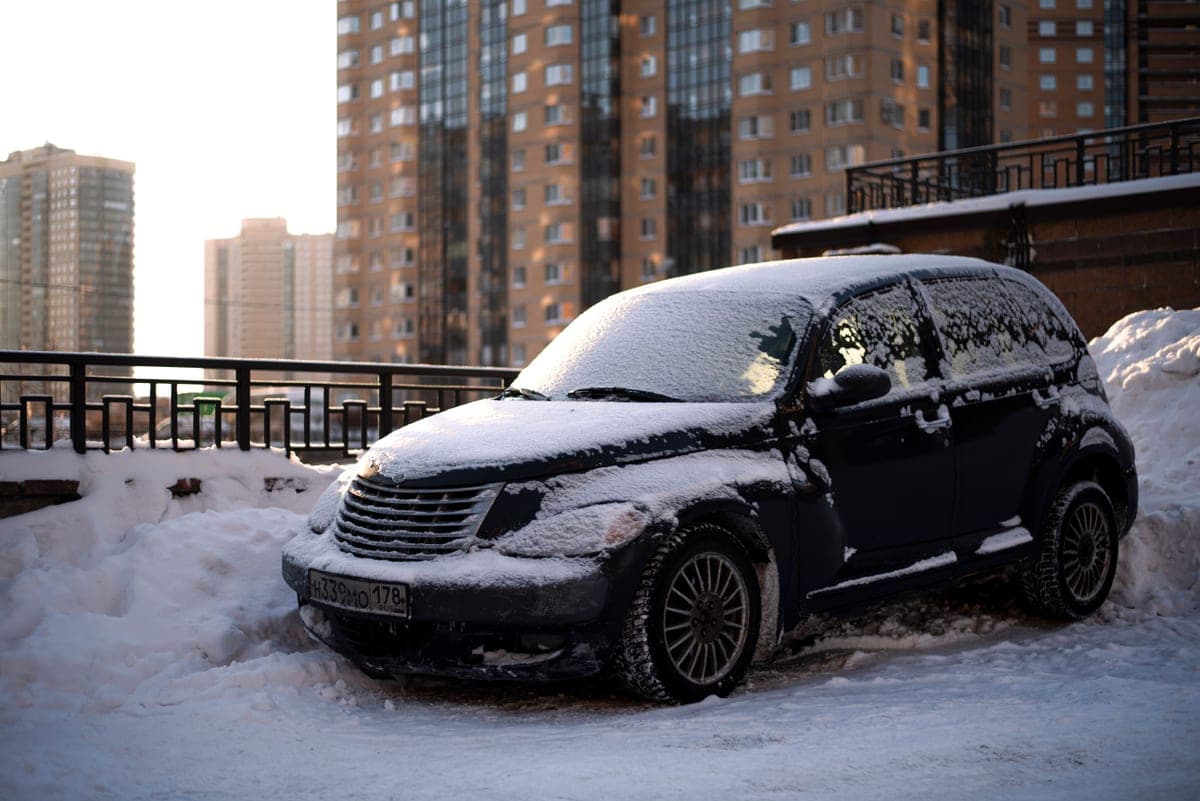
Cold squeezes you from both ends at once. The fix is margin, and knowing where a lithium pack genuinely struggles.
Disclosure: we earn a commission if you buy through the Amazon links on this page, at no extra cost to you. Commission never decides a verdict or a ranking position — read our editorial policy and affiliate disclosure.
How we assessed these: picks are selected from manufacturer specifications, current retailer listings and published owner feedback — not from hands-on testing of every unit. Where a figure is not published by the manufacturer, we say so rather than estimate it.
Short answer
Buy one step up the range from what your engine's rating requires. Cold reduces what a battery can deliver at the same time as it increases what the engine demands to turn over, so a pack that just meets your rating in July has no margin left in January.
Batteries do not fail in winter because winter is unkind in some vague way. Two specific things happen, and they happen simultaneously.
The battery delivers less. The chemical reaction that produces current slows as temperature drops, so the same battery has meaningfully less available cranking current at 0 °F than at 80 °F. The engine demands more. Cold oil is thicker, so the starter has to turn the engine against more drag, and on a diesel the glow plugs or grid heater draw their own current first.
A battery that was quietly at 70% of its original capacity all summer — which you would never notice — meets the worst morning of the year with nothing left. That is the whole mechanism, and why car batteries die in cold weather goes deeper into it.
Quick picks
Tap any row to jump to the full write-up. Scoring criteria are published in full on our methodology page.
| # | Product | Best for | Our read | Price |
|---|---|---|---|---|
| 1 |  NOCO Boost HD GB70 Best winter pack overall | Diesel pickups and big V8s | The margin you want when it is below freezing | Check price on Amazon #ad Affiliate link · We show no price here; Amazon shows the current one |
| 2 |  NOCO Boost Plus GB50 Best compact winter pack | V6 and small V8 gas engines | One step up from the default, barely heavier | Check price on Amazon #ad Affiliate link · We show no price here; Amazon shows the current one |
| 3 |  DEWALT DXAEJ14 Power Station Best if the pack lives outdoors | One box that jumps and inflates | Lead-acid, so heat cycling bothers it less | Check price on Amazon #ad Affiliate link · We show no price here; Amazon shows the current one |
| 4 |  NOCO GENIUS5 Best way to not need any of the above | One car, charging and maintaining | Prevention beats cure, every winter | Check price on Amazon #ad Affiliate link · We show no price here; Amazon shows the current one |
How much margin, concretely
| Engine | Minimum pack | What we would buy for winter |
|---|---|---|
| 2.0-2.7 L gas four | 1,000 A / 6.0 L gas | 1,000 A — still ample |
| 3.5 L gas V6 | 1,000 A / 6.0 L gas | 1,250-1,500 A |
| 5.3 L gas V8 | 1,500 A / 7.0 L gas | 2,000 A / 8.0 L gas |
| 3.0 L diesel | 1,500 A / 4.5 L diesel | 2,000 A / 6.0 L diesel |
| 6.7 L diesel | 2,000 A / 6.0 L diesel | 3,000 A / 7.0 L diesel |
The minimum column is the manufacturer's published rating. The winter column is our judgment — one step up the range — not a manufacturer figure.
Does lithium work in the cold?
Yes, and better than its reputation suggests — NOCO describes the high-discharge lithium in the Boost line as intended for safe operation in any climate. What is true is that a cold lithium cell has higher internal resistance and delivers its rated current less willingly, exactly like the lead-acid battery you are trying to start.
The practical consequences are straightforward and worth knowing before you are standing in the cold:
- Keep the pack warm if you can. A pack that has been inside the cabin, or indoors overnight, performs better than one that spent the night in an unheated trunk.
- Expect fewer attempts. The advertised jump-start count is a warm-weather best case. Plan on fewer, and recharge after any use.
- Do not crank continuously. Short attempts with pauses let both the pack and the starter recover; a long continuous crank is the fastest way to exhaust a correctly sized pack.
- Check the state of charge before winter, not during it. A pack that sat all summer in a hot car has permanently lost some capacity to heat — the storage and heat guide explains why.
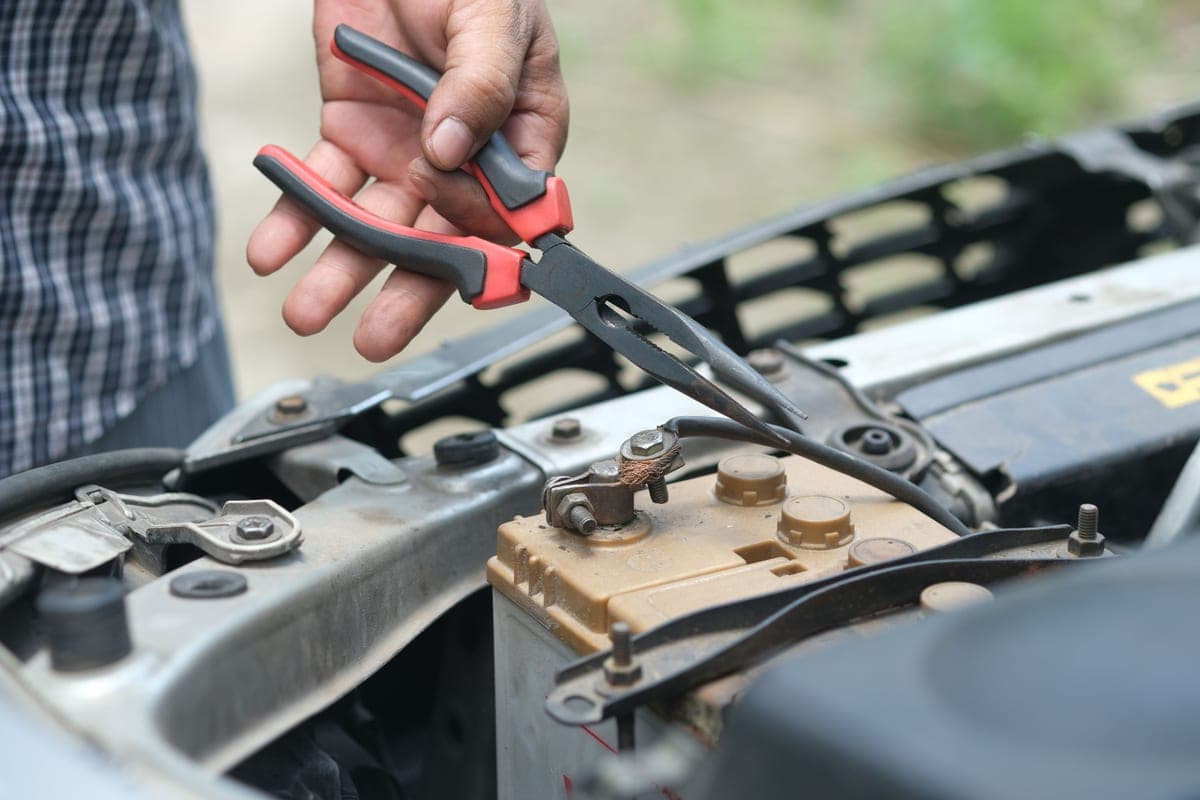
This is the one place lead-acid has a genuine argument: a lead-acid jump station stored in a cold outbuilding is not degraded by heat cycling the way lithium is, and it does not mind the cold any more than the car's own battery does. It is also four times the weight and self-discharges. Lithium vs lead-acid settles that trade properly.
The picks
1. Best winter pack overall
NOCO Boost HD GB70
NOCO · Best for diesel pickups and big v8s
The one to buy if you drive a diesel: 2,000 peak amps, a 6.0-liter diesel rating and 56 watt-hours, which is the smallest pack with real margin on a cold diesel.
Published specifications
What works
- The 6.0 L diesel rating covers the common 3.0 L and 6.7 L light-truck diesels with margin
- 56 Wh is still comfortably under the 100 Wh carry-on threshold, so it flies as hand luggage
- 12 V 15 A accessory output, and a 400-lumen light that is genuinely usable roadside
- 12 V / 3 A fast charge brings it back in about three hours
What does not
- 4.18 lb — noticeably heavier than the compact packs, and it wants a dedicated spot
- Overkill for a commuter four-cylinder; you are paying for headroom you will not use
Skip it if
Not the one to buy if you only ever start a four-cylinder commuter. Buy diesel headroom when you have a diesel.
#ad Affiliate link · We show no price here; Amazon shows the current one
Raw specifications: NOCO’s own page for the NOCO Boost HD GB70.
2. Best compact winter pack
NOCO Boost Plus GB50
NOCO · Best for v6 and small v8 gas engines
The middle rung: 1,500 peak amps and 35 watt-hours for a quarter-pound more than the GB40, which is the cheapest headroom in the range.
Published specifications
What works
- A full liter more gas headroom than the GB40 for 0.26 lb more weight
- 35 Wh still clears the 100 Wh carry-on limit with room to spare
- Doubles the flashlight output over the GB40 at 200 lumens
What does not
- Overlaps awkwardly with the GBX45, which is lighter and charges over USB-C
- Still short of the 6.0 L diesel rating a modern diesel pickup wants
Skip it if
Skip it if convenience matters more than amps — the GBX45 is lighter and takes USB-C Power Delivery, and the GB50's edge is raw current.
#ad Affiliate link · We show no price here; Amazon shows the current one
Raw specifications: NOCO’s own page for the NOCO Boost Plus GB50.
3. Best if the pack lives outdoors
DEWALT DXAEJ14 Power Station
DEWALT · Best for one box that jumps and inflates
A lead-acid jump station with a built-in air compressor and a 120 V outlet — the combo box for people who would rather carry one heavy thing than two light ones.
This manufacturer does not publish a full specification table for this model on its own site. Rather than repeat figures we cannot source, the assessment below is limited to what the product category and the retailer listing genuinely establish.
What works
- Jump starter, air compressor and AC outlet in a single case
- Lead-acid chemistry is untroubled by living in a hot trunk
- Handle-and-case format survives being thrown in a truck bed
What does not
- Heavy and bulky next to any lithium pack — the usual reason combo boxes end up in the garage
- Lead-acid self-discharges, so it needs topping up on a schedule or it is flat when you need it
- The built-in compressor is a convenience feature, not a match for a dedicated inflator's duty cycle
Skip it if
Not for anyone whose priority is packed size or carry-on travel. If the tool has to fit a door pocket or a suitcase, buy a lithium pack and a separate inflator.
#ad Affiliate link · We show no price here; Amazon shows the current one
4. Best way to not need any of the above
NOCO GENIUS5
NOCO · Best for one car, charging and maintaining
The single most useful charger for one vehicle: 5 amps, 6 V and 12 V, batteries up to 120 Ah, and it can be left connected indefinitely.
Published specifications
What works
- 5 A recharges a car battery overnight and then holds it — one unit does both jobs
- Rated down to -4 °F, so it works in an unheated garage
- The 77-inch cable reaches from a wall outlet to most engine bays without an extension
- 3-year warranty, against 1 year on the jump-starter line
What does not
- 5 A is slow for a deeply discharged large battery — a 100 Ah battery is an all-nighter
- The 120 Ah ceiling rules out larger deep-cycle banks
Skip it if
Not enough charger if you are reviving deep-cycle RV or marine batteries. Step up to the GENIUS10 and its 230 Ah range.
#ad Affiliate link · We show no price here; Amazon shows the current one
Raw specifications: NOCO’s own page for the NOCO GENIUS5.
The cheaper answer nobody wants to hear
A maintainer. Most winter no-starts are not sudden failures — they are a battery that has been undercharged for months meeting the one morning that exposes it. A 5 A charger that keeps the battery at full through the cold season prevents more roadside stops than any jump pack resolves, and it costs less than the pack does. NOCO rates the GENIUS line to operate down to -4 °F, so an unheated garage is not an obstacle.
Buy the pack too. But if you only buy one thing this winter, and the car has ever been slow to crank, buy the charger.
Key takeaways
- Cold cuts battery output and raises engine demand at the same time.
- Buy one step up the range from your engine's minimum rating.
- Keep the pack in the cabin or indoors, not an unheated trunk.
- Short cranking attempts with pauses beat one long crank.
- A maintainer prevents more winter no-starts than a pack fixes.
How we sourced this
Every figure on this page came from one of the following. Where a manufacturer or regulator does not publish a number, we say so rather than estimate it.
Common questions
- Do lithium jump starters work in cold weather?
- Yes. NOCO specifies the high-discharge lithium in its Boost line for use in any climate. A cold cell does deliver its rated current less willingly, so expect fewer attempts than the warm-weather figure and keep the pack somewhere warmer than an unheated trunk if you can.
- How much bigger should a jump starter be for winter?
- One step up the manufacturer's range from the rating your engine strictly requires. If your engine needs a 1,500-amp pack rated to 7.0 L gas, a 2,000-amp pack rated to 8.0 L gives you the margin that cold takes away.
- Why does my car battery die in cold weather?
- Two things happen at once: the battery's chemistry slows so it delivers less current, and cold, thick oil means the starter needs more. A battery already down to 70% of its original capacity copes fine in summer and fails on the first genuinely cold morning.
- Should I bring my jump starter inside in winter?
- If it is convenient, yes — a warm pack works better than a frozen one, and it is the cheapest performance improvement available. The more important habit is checking its state of charge before winter starts, because a summer spent in a hot car has already cost it some capacity.
More in Jump Starters
A jump pack is the one trunk tool that turns a tow truck into a five-minute inconvenience. This is how to size one, and which ones are worth the space.
Read next
Guide
Dead Battery in the Cold
The mechanism behind winter no-starts, why a new battery can still fail, and the cheap prevention that works better than a bigger jump pack.
Head to head
Lithium vs Lead-Acid
Why lithium replaced lead-acid for most drivers, and the one storage situation where the old heavy boxes still make sense.
Best Battery Maintainers
Best Maintainers
Low-current maintainers for seasonal and stored vehicles, including the solar option for anything parked away from an outlet.
Guide
Winter Car Kit
What gets added for winter: cold-margin power, warmth that does not need the engine, traction, and the things people forget until it is dark.
Found something out of date, or a figure you can source better than we did? Tell us — corrections get read first. Our methodology explains how picks are made, and contact is one click away.