Trunk Kit
The winter car emergency kit
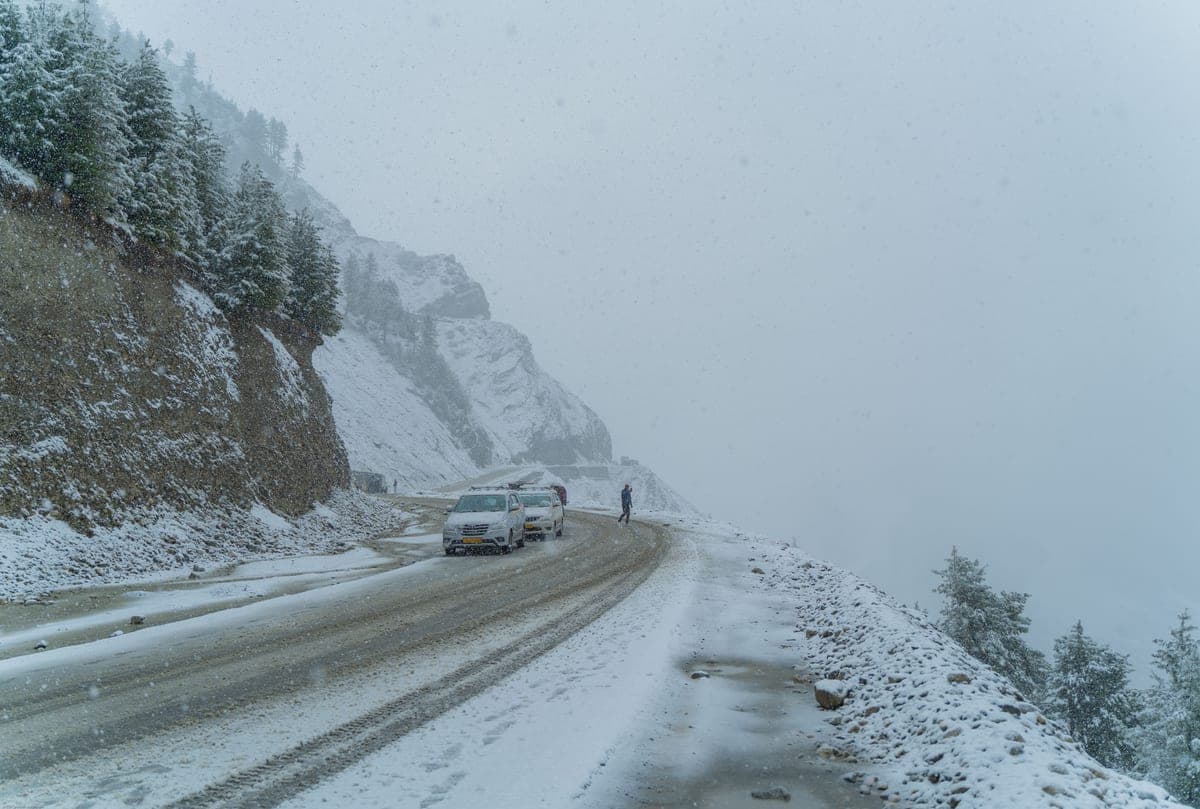
Cold cuts what your battery delivers and raises what your engine needs. It also changes what being stuck actually means.
Disclosure: we earn a commission if you buy through the Amazon links on this page, at no extra cost to you. Commission never decides a verdict or a ranking position — read our editorial policy and affiliate disclosure.
How we assessed these: picks are selected from manufacturer specifications, current retailer listings and published owner feedback — not from hands-on testing of every unit. Unpublished figures are left out rather than estimated.
Short answer
Add cold-weather margin on the jump pack, warmth that does not depend on the engine running, traction material, a folding shovel where it snows properly, food and water, and a phone power bank separate from the jump pack. And put a maintainer on the battery before winter starts.
Winter changes two things. The first is mechanical: a cold battery delivers less current while a cold engine demands more to turn over, which is why failures cluster in January. The second is more important: being stuck in July is an inconvenience, and being stuck in January can be an exposure problem. The kit has to answer both.
Start with the battery, before the kit
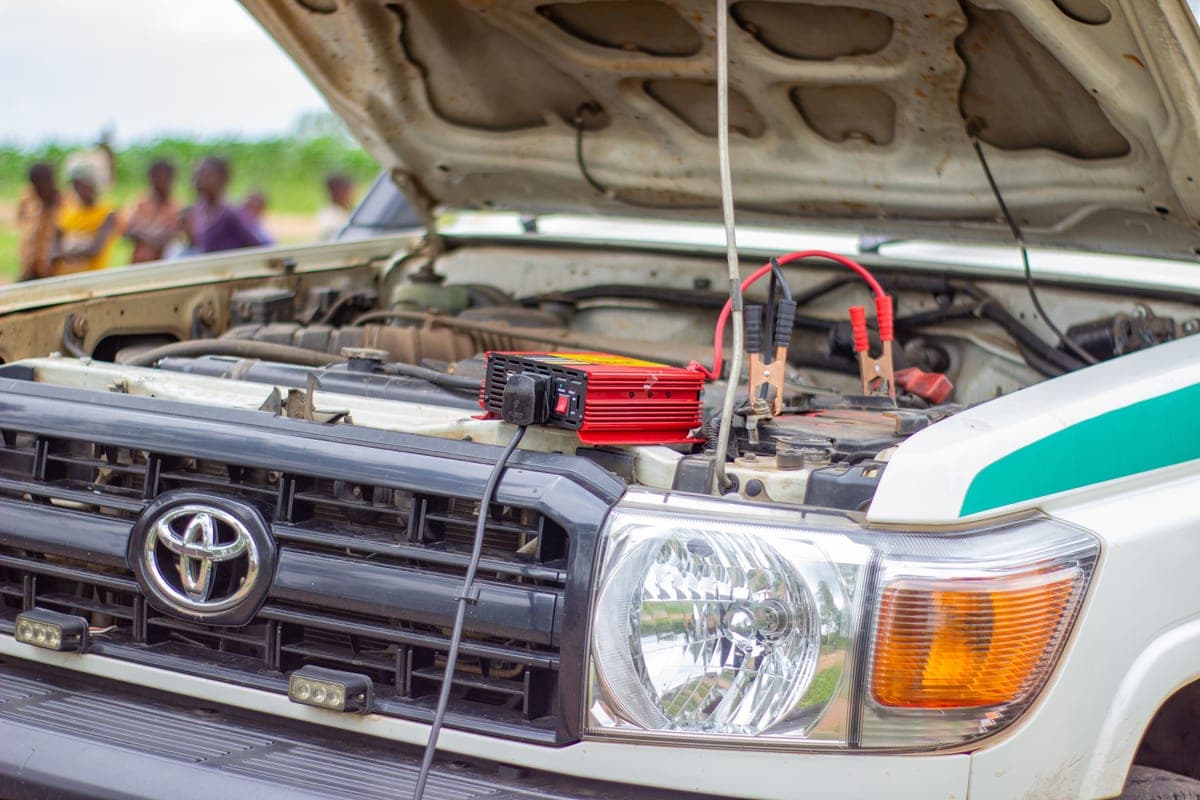
Most winter no-starts are not sudden failures. They are a battery that has been quietly undercharged for months meeting the one morning that exposes it. A 5 A charger or maintainer that keeps the battery at full through the cold season prevents more roadside stops than any jump pack resolves — and NOCO rates its GENIUS line to operate down to -4 °F, so an unheated garage is not an obstacle.
Then buy margin on the pack. One step up from what your engine's published rating requires, because cold consumes margin. The cold-weather roundup explains how much and why, and why batteries die in the cold covers the mechanism.
What gets added to the trunk
| Item | Why it earns the space |
|---|---|
| Warm layers, hat and gloves | Warmth that does not depend on the engine running. The single most important addition. |
| A proper blanket, or a sleeping bag | Same reason, for a longer wait. |
| Traction material — sand or cat litter | Cheap, effective on ice under a driven wheel, and it doubles as ballast. |
| A folding shovel | If you are somewhere it snows properly. Clearing the exhaust matters more than clearing the wheels. |
| Ice scraper and snow brush | Obvious, and the item most often left at home in October. |
| Food that keeps | Bars, nuts. Nothing that freezes and splits. |
| Water, stored where it will not freeze solid | Harder than it sounds. Keep it in the cabin. |
| A phone power bank, separate from the jump pack | So one dead battery does not take out navigation too. |
| A headlamp rather than a handheld light | Because you need both hands, in the dark, in gloves. |
| Washer fluid rated for cold | Summer fluid freezes in the lines and on the screen. This is a visibility issue. |
Two things people get wrong
And keep the fuel tank fuller in winter. Half a tank is a reasonable floor. It reduces condensation in the tank, and more importantly it is the difference between being able to run the engine intermittently for heat for hours and not.
Tire pressure is a winter item too
Pressure falls with temperature — roughly 1 PSI for every 10 °F, as a widely used rule of thumb. A 30 °F overnight drop takes about 3 PSI out of each tire, which is why the TPMS light appears on the first genuinely cold morning. Underinflated tires in winter are worse than in summer, because grip is already the scarce resource. Check monthly, cold, against the door-jamb placard — full guidance here — and keep an inflator in the car.
What to move out of the trunk
The jump pack. Sustained cold reduces what a lithium pack delivers, and a pack that spent the night in an unheated trunk performs worse than one from the cabin. Move it inside the car, and indoors overnight if that is practical. Storage and heat covers the year-round version of this.
The picks
1. Cold-weather margin
NOCO Boost HD GB70
NOCO · Best for diesel pickups and big v8s
The one to buy if you drive a diesel: 2,000 peak amps, a 6.0-liter diesel rating and 56 watt-hours, which is the smallest pack with real margin on a cold diesel.
Published specifications
What works
- The 6.0 L diesel rating covers the common 3.0 L and 6.7 L light-truck diesels with margin
- 56 Wh is still comfortably under the 100 Wh carry-on threshold, so it flies as hand luggage
- 12 V 15 A accessory output, and a 400-lumen light that is genuinely usable roadside
- 12 V / 3 A fast charge brings it back in about three hours
What does not
- 4.18 lb — noticeably heavier than the compact packs, and it wants a dedicated spot
- Overkill for a commuter four-cylinder; you are paying for headroom you will not use
Skip it if
Not the one to buy if you only ever start a four-cylinder commuter. Buy diesel headroom when you have a diesel.
#ad Affiliate link · We show no price here; Amazon shows the current one
Raw specifications: NOCO’s own page for the NOCO Boost HD GB70.
2. Prevention, which works better
NOCO GENIUS5
NOCO · Best for one car, charging and maintaining
The single most useful charger for one vehicle: 5 amps, 6 V and 12 V, batteries up to 120 Ah, and it can be left connected indefinitely.
Published specifications
What works
- 5 A recharges a car battery overnight and then holds it — one unit does both jobs
- Rated down to -4 °F, so it works in an unheated garage
- The 77-inch cable reaches from a wall outlet to most engine bays without an extension
- 3-year warranty, against 1 year on the jump-starter line
What does not
- 5 A is slow for a deeply discharged large battery — a 100 Ah battery is an all-nighter
- The 120 Ah ceiling rules out larger deep-cycle banks
Skip it if
Not enough charger if you are reviving deep-cycle RV or marine batteries. Step up to the GENIUS10 and its 230 Ah range.
#ad Affiliate link · We show no price here; Amazon shows the current one
Raw specifications: NOCO’s own page for the NOCO GENIUS5.

3. Visibility in poor light
Reflective Warning Triangle Set
Various · Best for being seen before anything else
The cheapest item in the trunk that changes an outcome. Before you open the hood on a shoulder, you want traffic to know you are there.
This manufacturer does not publish a full specification table for this model on its own site. Rather than repeat figures we cannot source, the assessment below is limited to what the product category and the retailer listing genuinely establish.
What works
- Works without batteries, in any weather, for as long as you own the car
- Folds flat, so it costs almost no trunk space
- Visible far enough back to give traffic time to move over
What does not
- Only useful if you actually get out and place it, which takes a deliberate habit
- Plastic bases crack if they live loose under heavier gear
Skip it if
Not a substitute for hazard lights or for getting clear of the roadway. Placement matters more than the product.
#ad Affiliate link · We show no price here; Amazon shows the current one
4. Base kit to build onto
AAA Roadside Emergency Kit
AAA / Lifeline · Best for a ready-made starting point
A pre-assembled kit is the fastest way to stop having no kit. Treat it as a base to upgrade, not a finished answer.
This manufacturer does not publish a full specification table for this model on its own site. Rather than repeat figures we cannot source, the assessment below is limited to what the product category and the retailer listing genuinely establish.
What works
- Removes the excuse — one purchase and there is something in the trunk tonight
- The bag and organization are usually better than what you would improvise
- Covers the small consumables nobody buys on their own: gloves, ties, tape, first aid
What does not
- The jumper cables and flashlight in pre-built kits are the first things worth replacing
- Advertised item counts include individual bandages, which inflates the apparent value
- No kit at this level includes a jump starter or an inflator — the two things that actually get you moving
Skip it if
Not sufficient on its own. If you buy one, budget for a jump starter and an inflator alongside it, because the kit will include neither.
#ad Affiliate link · We show no price here; Amazon shows the current one
Key takeaways
- Put a maintainer on the battery before winter — prevention beats rescue.
- Buy one step up the pack range, because cold consumes margin.
- Warmth that does not need the engine is the most important addition.
- Clear the exhaust before running the engine while stuck in snow.
- Expect to lose about 1 PSI per 10 °F, and check tires monthly.
How we sourced this
Every figure on this page came from one of the following. Where a manufacturer or regulator does not publish a number, we say so rather than estimate it.
Common questions
- What should I keep in my car for winter driving?
- Warm layers and a blanket, traction material such as sand or cat litter, a folding shovel where it snows properly, an ice scraper, food that keeps, water kept where it will not freeze, a headlamp, cold-rated washer fluid, and a phone power bank separate from your jump pack.
- Why does my car battery die in cold weather?
- Two things happen at once: the battery's chemistry slows so it delivers less current, and cold, thick oil means the starter needs more. A battery already at 70% of its original capacity copes in summer and fails on the first genuinely cold morning.
- Should I keep my jump starter in the car in winter?
- Keep it in the cabin rather than an unheated trunk, and bring it indoors overnight if that is practical. A cold lithium pack delivers its rated current less willingly, which matters most on exactly the mornings you need it.
- Is it safe to run the engine while stuck in snow?
- Only with a clear exhaust. Snow blocking the tailpipe puts carbon monoxide into the cabin, which is the real danger in a winter stranding. Check the pipe is clear before you start, and re-check it if snow is still falling.
More in Trunk Kit
What actually lives in the trunk, in the order it earns its space — and the pre-built kits that are a starting point rather than an answer.
Read next
Guide
Dead Battery in the Cold
The mechanism behind winter no-starts, why a new battery can still fail, and the cheap prevention that works better than a bigger jump pack.
Best for Cold Weather
For Cold Weather
Winter picks with real margin, plus the one situation where a lead-acid box beats lithium and why lithium usually still wins.
Guide
Emergency Kit Checklist
The short list that survives contact with a real trunk, in priority order, plus what to skip and what to check twice a year.
Best Battery Maintainers
Best Maintainers
Low-current maintainers for seasonal and stored vehicles, including the solar option for anything parked away from an outlet.
Found something out of date, or a figure you can source better than we did? Tell us — corrections get read first. Our methodology explains how picks are made, and contact is one click away.