Tire Inflators
The best tire inflators for cold weather
Cold is when you actually need an inflator, and it is also when half the category quietly stops working. Two published numbers sort the field.
Disclosure: we earn a commission if you buy through the Amazon links on this page, at no extra cost to you. Commission never decides a verdict or a ranking position — read our editorial policy and affiliate disclosure.
How we assessed these: picks are selected from manufacturer specifications, current retailer listings and published owner feedback — not from hands-on testing of every unit in a freezer. We publish no measured cold fill times, because we do not measure them.
Short answer
In cold weather, buy an inflator powered by the car rather than by its own lithium pack, and prefer one that publishes an operating-temperature range. VIAIR publishes -4 to 158 degrees F for the 88P. Fanttik publishes 14 to 113 degrees F for the X8 APEX. Below 14 degrees F, that is the whole decision.
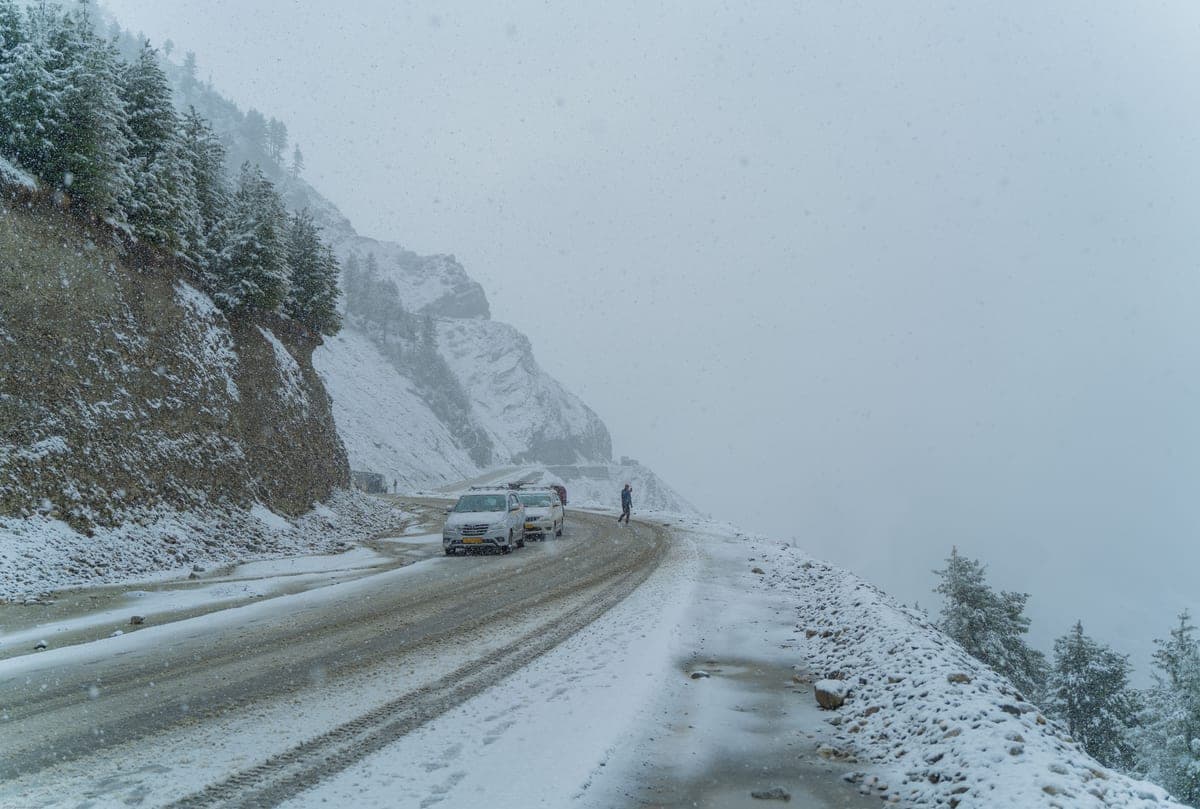
Cold weather is not a minor variable in this category. It is the reason you are standing in the driveway at all: pressure falls as temperature falls, roughly 1 PSI for every 10 degrees F as a widely used rule of thumb, so the first genuinely cold morning of the year is when a TPMS light appears on a car that was fine in October. It is also, inconveniently, the condition in which a lithium-powered inflator delivers least, plastic hoses go stiff, and bare fingers have about ninety seconds of useful life.
So this page is not the portable-inflator field with a snowy photo on top. Cold genuinely reorders it — the unit we would recommend to most people in July is not the one we would recommend in January, and one of the most popular cordless inflators on the market publishes a lower limit that a northern winter clears regularly.
Quick picks
Tap any row to jump to the full write-up. Scoring criteria are published in full on our methodology page.
| # | Product | Best for | Our read | Price |
|---|---|---|---|---|
| 1 | 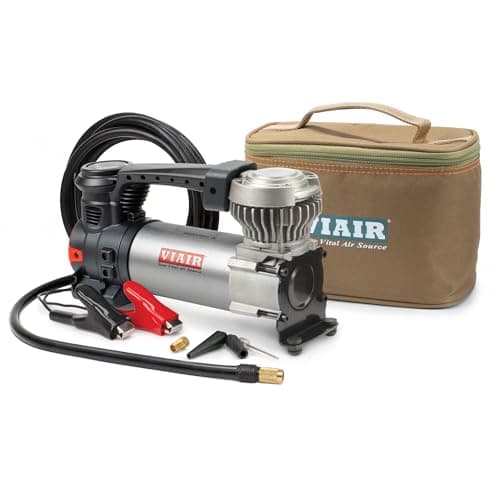 VIAIR 88P Portable Compressor Best overall for cold weather | Truck, SUV and off-road tires | A published -4 to 158 degrees F range, and clamps instead of a socket | $89.89$103.95View on Amazon #ad Affiliate link · Price as of October 16, 2026 |
| 2 | 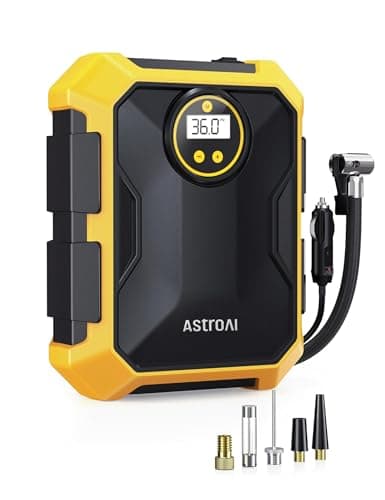 AstroAI 12V Tire Inflator Best with nothing to keep charged | The cheapest inflator still worth owning | Socket power means no battery to lose capacity overnight | $23.99$27.99View on Amazon #ad Affiliate link · Price as of October 16, 2026 |
| 3 | 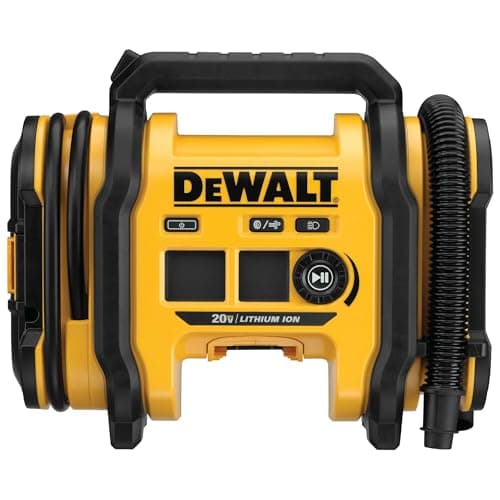 DEWALT DCC020IB 20V MAX Inflator Best with a cold-weather fallback built in | Anyone already on DEWALT 20V batteries | If the tool battery is dead and frozen, the 12 V cord still works | $141.79$179.00View on Amazon #ad Affiliate link · Price as of October 16, 2026 |
| 4 | 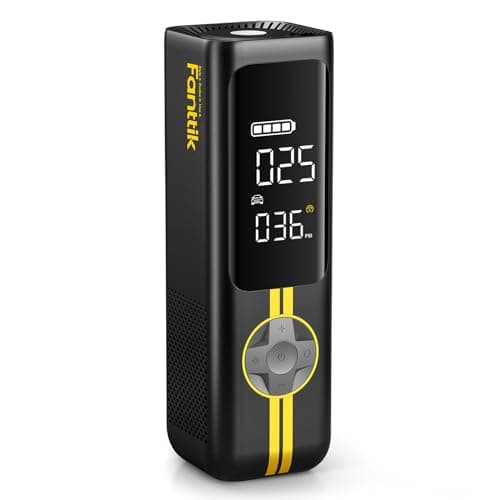 Fanttik X8 Apex Best cordless — with one condition | Cordless top-ups from a glovebox | Published floor is 14 degrees F, so it lives in the cabin, not the trunk | $69.99$89.99View on Amazon #ad Affiliate link · Price as of October 16, 2026 |
| 5 | 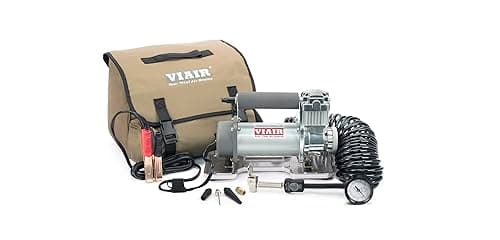 VIAIR 400P Portable Compressor Best for light-truck tires in winter | Airing back up after a trail | 33 percent duty cycle at 100 PSI and 25 feet of hose | $226.00View on Amazon #ad Affiliate link · Price as of October 16, 2026 |
How we chose: the five things cold changes
Criteria first, picks second. Every one of these is something that is either irrelevant or invisible in mild weather, and decisive at 10 degrees F.
- A published operating-temperature range. Almost nothing in this category publishes one. The units that do are telling you they thought about it, and they give you a number to check against your own climate instead of a guess.
- A power source the cold does not degrade. A lithium cell at 15 degrees F delivers less current and less total energy than the same cell at 70 degrees F. A 12 V feed from the car's own system does not care how cold it is, because the alternator is turning.
- Duty cycle, or at least honesty about it. Cold air is denser, so a given PSI takes marginally more work, and you are often filling further because the tire lost more. A unit with a published duty cycle tells you how long it runs before it needs to stop.
- A hose and chuck you can work with gloves on. Short molded hoses stiffen into a shape that will not reach a rear valve stem. A long rubber hose and a threaded or brass chuck is a different experience at 20 degrees F than a stubby plastic one.
- Preset-and-stop pressure control. The point of a preset is that you set the number and walk away, which matters more when standing still hurts. Chasing a needle with cold hands is how overshoot happens.
The published cold ratings, side by side
| Unit | Power source | Published operating range | Published duty cycle | Hose |
|---|---|---|---|---|
| VIAIR 88P | 12 V, battery clamps | -4 to 158 degrees F | 25 min at 30 PSI | 16 ft |
| VIAIR 400P | 12 V or 24 V, battery clamps | Not published | 33% at 100 PSI | 25 ft |
| DEWALT DCC020IB | 20V MAX, 12 V DC or 110 V AC | Not published | Not published | Not published |
| Fanttik X8 APEX | Own 28.8 Wh battery | 14 to 113 degrees F | Not published (40 min runtime) | Short integrated hose |
| AstroAI 12V inflator | 12 V accessory socket | Not published | Not published | Integrated cord and hose |
Figures are each manufacturer's own published specifications, read on 2026-10-12 from the pages listed in Sources. Rows marked not published are left that way rather than estimated — AstroAI publishes no spec sheet of the kind VIAIR does, and DEWALT's product page carries a warranty and a mode list but no temperature range.
Two things jump out of that table. The first is that VIAIR is almost alone in publishing a temperature range at all, and the 88P's -4 degrees F floor covers the great majority of US winters. The second is that the most convenient unit on the list, the cordless Fanttik, publishes the narrowest range — and its 14 degrees F floor is a temperature that Minneapolis, Denver and Buffalo all clear several times a season.
Why a cordless inflator is the wrong default in January
This is the uncomfortable part, because cordless is otherwise the best thing to happen to this category in a decade. A self-contained inflator lives in a door pocket, needs no engine running and works on a bicycle in a garage. We recommend one on the cordless roundup and we stand by it for most of the year.
Cold undoes two of its advantages at once. Lithium cells deliver less current and less usable capacity when cold — the same physics that kills car batteries in winter — so a pack rated for 40 minutes of running gives you noticeably less on a freezing morning. And a cordless unit stored in the trunk has been sitting at ambient temperature all night, which means it is at its weakest exactly when the tire is at its lowest.
There is a fix, and it is free: keep the cordless unit in the cabin rather than the trunk, and charge it indoors. A pack that starts the job near room temperature behaves far better than one that started at 10 degrees F. 12 V versus cordless tire inflators is the full version of that trade-off.
Why clamps beat the cigarette socket when it is cold
A socket-powered inflator is limited by the accessory circuit's fuse, which is usually 15 or 20 amps and often shared. That is enough for a short top-up and it is why socket inflators exist. What it is not enough for is a long fill on a large tire, and cold weather pushes more jobs into that category because tires lose more pressure and because you are more likely to be dealing with a tire that went properly low rather than slightly low.
VIAIR publishes 20 amps maximum draw for the 88P with a 45-amp inrush spike at 0 PSI, which is precisely why it ships with battery clamps instead of a plug. The clamps are not a premium feature; they are an admission that the unit asks for more than a socket circuit should pass. How many watts a tire inflator uses works the same figures in watts, and does a tire inflator drain your battery covers what that draw costs you.
The picks
1. Best overall for cold weather
VIAIR 88P Portable Compressor
VIAIR · Best for truck, suv and off-road tires
A battery-clamp compressor built for the tire sizes socket-powered units cannot handle without stopping to cool down.
Published specifications
- Maximum working pressure
- 120 PSI source
- Air flow
- 1.97 CFM at 0 PSI source
- Duty cycle
- 25 minutes at 30 PSI source
- Supply
- 12 V, battery clamps source
- Maximum amp draw
- 20 A source
- Inrush current
- 45 A at 0 PSI source
- Ingress protection
- IP53 source
- Operating temperature
- -4 to 158 °F source
- Tire size rating
- Up to 33 in source
- Weight
- 4.75 lb source
- Power cord / air hose
- 10 ft / 16 ft source
What works
- Connects to the battery terminals rather than the 12 V socket, so socket fuse current is not the limit
- Built for larger tires and repeated fills — the duty cycle is the whole reason to buy it
- Metal body and a real air hose rather than a molded plastic assembly
What does not
- The battery-clamp connection means popping the hood every time
- Bigger and heavier than any glovebox inflator
- Overkill, and slower to set up, for a routine cold-morning top-up
Skip it if
Not the pick if you drive a sedan and just want to correct 4 PSI once a month. That is what a socket inflator is for.
#ad Affiliate link · Price as of October 16, 2026
2. Best with nothing to keep charged
AstroAI 12V Tire Inflator
AstroAI · Best for the cheapest inflator still worth owning
A plain 12 V socket-powered inflator with a digital gauge and auto-shutoff — the baseline that covers a car's tires with no battery to maintain.
This manufacturer does not publish a full specification table for this model on its own site. Rather than repeat figures we cannot source, the assessment below is limited to what the product category and the retailer listing genuinely establish.
What works
- Powered from the 12 V socket, so it works whenever the car does
- Nothing to keep charged, which means it is never flat when the tire is
- Digital preset shutoff at the target pressure
What does not
- The cord limits where you can work, and reaching a rear tire can be tight
- Small-motor inflators in this tier run hot; large tires need rest intervals
- Gauge accuracy in this class varies unit to unit, so verify against a separate gauge
Skip it if
Not the pick if you regularly air down and back up for trails, or run light-truck tires. That is dedicated-compressor work.
#ad Affiliate link · Price as of October 16, 2026
3. Best with a cold-weather fallback built in
DEWALT DCC020IB 20V MAX Inflator
DEWALT · Best for anyone already on dewalt 20v batteries
Three power sources in one body — 20V MAX battery, 12 V socket or 110 V wall — with a digital gauge and auto-shutoff, which is what makes an inflator usable everywhere.
Published specifications
What works
- The 12 V socket option means a dead tool battery never leaves you stranded
- A threaded chuck screws onto the valve stem instead of clamping — the difference between a solid seal and a hissing one
- Set-and-walk-away auto-shutoff at your target pressure
- High-volume mode handles air mattresses and inflatables, not just tires
What does not
- Sold as a bare tool — battery, charger and AC adapter are separate purchases
- Bigger and heavier than a pocket 12 V inflator, so it wants trunk space
Skip it if
Not the pick if you own no DEWALT batteries and only ever top up car tires. A plain 12 V inflator is smaller and cheaper for that job.
#ad Affiliate link · Price as of October 16, 2026
Raw specifications: DEWALT’s own page for the DEWALT DCC020IB 20V MAX Inflator.
4. Best cordless — with one condition
Fanttik X8 Apex
Fanttik · Best for cordless top-ups from a glovebox
A self-contained cordless inflator small enough to live in a door pocket, with a backlit digital gauge and a preset target pressure.
Published specifications
- Maximum pressure
- 150 PSI source
- Internal battery
- 28.8 Wh lithium-ion source
- Stated gauge accuracy
- ±1 PSI source
- Stated runtime
- Up to 40 minutes continuous source
- Stated fill time
- 56 seconds, 215/55 R17 from 28 to 33 PSI source
- Operating temperature
- 14 to 113 °F (-10 to 45 °C) source
- Weight
- 1.74 lb source
- Recharging
- USB-C, 15 W maximum source
- Work light
- 40 lumens source
- Preset modes
- 4 — bicycle, motorcycle, car, ball; PSI, kPa and bar source
- Warranty
- 12 months source
What works
- No cable to the car at all — it runs off its own internal battery
- Small enough that it stays in the vehicle, which is most of the battle
- Preset-and-stop pressure control avoids the overshoot you get chasing an analogue gauge
What does not
- An internal battery is one more thing to keep charged, and cold weather cuts into it
- Cordless inflators this size heat up on large tires; expect to work in stages
- Manufacturer duty-cycle figures for this class are not consistently published
Skip it if
Not the pick for light-truck or RV tires. Small cordless units are built for top-ups, not for taking a 35-inch tire from flat to 60 PSI.
#ad Affiliate link · Price as of October 16, 2026
5. Best for light-truck tires in winter
VIAIR 400P Portable Compressor
VIAIR · Best for airing back up after a trail
A step up from the 88P for people who air down deliberately: 150 PSI, a published 33 percent duty cycle at 100 PSI, and a 25-foot hose that reaches all four corners.
Published specifications
- Maximum working pressure
- 150 PSI source
- Air flow
- 2.30 CFM at 0 PSI source
- Duty cycle
- 33% at 100 PSI source
- Supply
- 12 V or 24 V, battery clamps source
- Maximum amp draw
- 30 A at 12 V, 15 A at 24 V source
- Inrush current
- 81 A at 0 PSI (PN 40043) source
- Ingress protection
- IP54 source
- Weight
- 10.40 lb source
- Power cord / air hose
- 8 ft / 25 ft source
What works
- Battery-clamp connection, so the 12 V socket's fuse is not the ceiling on throughput
- A published duty cycle — 33 percent at 100 PSI — which almost nothing in this category gives you
- 25 feet of air hose reaches every corner of a vehicle from one hookup
- Metal construction and a real air hose rather than a molded plastic assembly
What does not
- 10.40 lb and the bulk that goes with it — dedicated recovery-gear territory, not a glovebox tool
- 30 A at 12 V rules out any accessory socket; it is battery clamps or nothing
- Slower to set up than a socket inflator for a routine cold-morning top-up
Skip it if
Overkill for a car that needs 4 PSI once a month. That is a socket inflator's job, and this is a lot of equipment to carry for it.
#ad Affiliate link · Price as of October 16, 2026
The number you are aiming at does not change in winter
A common winter mistake is to add a few extra PSI to compensate for the cold. Do not. The placard figure in the driver's door jamb is a cold-inflation pressure already — it is specified to be set on a tire that has not been driven, which in practice means at ambient temperature. NHTSA's guidance is that the vehicle manufacturer's figure governs, not the maximum molded into the sidewall, which is often 15 to 20 PSI higher.
What changes in winter is how often you check, not what you aim at. A 30-degree overnight drop takes roughly 3 PSI out of each tire on its own, which is enough to trip a TPMS threshold on a tire that was already a little low. What PSI should my tires be is the full explanation, and how often you should check tire pressure covers the cadence.
One consequence worth knowing: if you set pressure in a heated garage and then park outside, the tires will read low within the hour. That is not a leak. Set them where the car lives, or set them warm and accept that the reading will drop.
Cold weather and duty cycle, which pull in opposite directions
Duty cycle is the fraction of time a compressor can run before it has to stop and shed heat. Cold air helps here — a motor rejecting heat into 20-degree air lasts longer than the same motor in a July parking lot, so a unit's duty-cycle rating is a conservative figure in winter rather than an optimistic one.
What cold does not help is the rest of the mechanism. Lubricant is thicker, seals are stiffer, and the first thirty seconds of running is the hardest work the unit will do all day. The practical version: let it run for a few seconds before you expect full output, and do not judge a cold unit by its first ten seconds. Tire inflator duty cycle explained covers the figure properly, and how long a tire inflator takes sets realistic fill times.
The small things that decide a cold job
- Hose length and material. Sixteen feet of rubber hose reaches a rear valve stem from a front hookup. A two-foot molded tail means moving the car or the compressor, in the cold, twice.
- A threaded or brass chuck. A chuck that screws onto the valve stem seals without being held. A press-on plastic one needs a hand on it, and that hand is the one you wanted in a pocket.
- A real light. Winter mornings and evenings are dark. A work light on the unit beats a phone held in your teeth, and the Fanttik's 40-lumen light is genuinely useful in a wheel well.
- A valve cap you can get off. Caps corrode on in road-salt country. A drop of penetrating oil in the fall is a thirty-second job that saves a frozen-fingered fight in February.
- Somewhere to put it. A 4.75 lb clamp compressor and a 10.40 lb one are both trunk tools, and a trunk tool you have to dig out from under luggage is a tool you will not use. The winter car emergency kit covers packing it properly.
What we would not buy for winter
Anything without a preset and automatic shutoff. In mild weather, standing over an inflator watching a dial is tedious; in cold weather it is the difference between doing the monthly check and skipping it. Anything with a very short integrated hose, for the reach reason above. And any cordless unit as your only inflator if you live somewhere that regularly clears 14 degrees F — not because those units are bad, but because their published limits say what they say.
We would also avoid treating an inflator as a winter substitute for the other half of the problem. A cold morning that takes 3 PSI out of a tire is the same morning that takes a third of the cranking performance out of a weak battery. The best jump starters for cold weather is the other half of the trunk, and the NOCO GB40 versus GB50 comparison covers how much amp headroom a cold climate is worth paying for.
Our pick, in one line
For a cold climate, the VIAIR 88P, because it publishes a -4 degrees F floor, a 25-minute duty cycle and 16 feet of hose, and because battery clamps mean the accessory fuse is not the ceiling. Our full VIAIR 88P review goes through the spec sheet line by line, including what the 33-inch tire rating does and does not mean. If popping the hood every time is a deal-breaker, the AstroAI socket inflator is the honest compromise — less capable, always present, and nothing to keep charged.
Key takeaways
- Pressure falls roughly 1 PSI per 10 degrees F, so cold mornings are when you actually need the tool.
- VIAIR publishes -4 to 158 degrees F for the 88P; Fanttik publishes 14 to 113 degrees F for the X8 APEX.
- A lithium-powered inflator is weakest in the cold — keep it in the cabin, not the trunk.
- Clamp-fed compressors sidestep the accessory-socket fuse, which is the real limit on long fills.
- Do not add extra PSI for winter: the door-jamb placard figure is already a cold-inflation pressure.
- Cold air helps duty cycle and hurts everything else in the mechanism — give it a few seconds to wake up.
- Hose length, a threaded chuck and a preset shutoff decide whether the job gets done with gloves on.
How we sourced this
Every figure on this page came from one of the following. Where a manufacturer or regulator does not publish a number, we say so rather than estimate it.
- VIAIR 88P portable compressor published specifications
- VIAIR 400P portable compressor published specifications
- Fanttik X8 APEX tire inflator published specifications
- DEWALT DCC020IB 20V MAX inflator product page
- AstroAI 12V 100 PSI tire inflator product page
- NHTSA TireWise — tire safety ratings and awareness
- NHTSA — Tire Safety: Everything Rides On It (PDF)
Common questions
- Do tire inflators work in cold weather?
- The car-powered ones work down to whatever their mechanism allows, and VIAIR publishes -4 degrees F for the 88P. Cordless units are the limited ones: Fanttik publishes a 14 degrees F floor for the X8 APEX, and lithium cells deliver less current when cold regardless of the stated limit.
- Should I add extra air in winter to compensate for the cold?
- No. The pressure on the driver's door-jamb placard is a cold-inflation figure already, so you set it to that number at whatever the ambient temperature is. Adding a few PSI on purpose leaves you overinflated the first mild week, which costs grip and wears the center of the tread.
- Why does my TPMS light come on the first cold morning?
- Because air pressure falls with temperature — roughly 1 PSI for every 10 degrees F as a rule of thumb. A 30-degree overnight drop takes about 3 PSI out of each tire, which is often enough to cross the warning threshold on a tire that was already slightly low.
- Can I leave a tire inflator in the car over winter?
- A 12 V socket or clamp-fed compressor, yes — there is no battery to degrade. A cordless unit stored in a freezing trunk starts every job at its weakest, and repeated deep cold is hard on lithium cells, so keep that one in the cabin and charge it indoors.
- Is a clamp-fed compressor really better in the cold than a socket one?
- For long fills, yes, because the accessory socket's fuse caps how much current you can draw and clamps do not. VIAIR publishes 20 amps maximum with a 45-amp inrush for the 88P, which is more than a socket circuit should pass. For a 3 PSI top-up, a socket inflator is perfectly adequate and much faster to set up.
More in Tire Inflators
The cheapest tool that prevents the second-most-common roadside stop. Here is which type fits your tires, and the two specs that actually matter.
Read next
Review
VIAIR 88P Review
120 PSI, 1.97 CFM at 0 PSI, 25 minutes at 30 PSI, 20 A draw, IP53, 4.75 lb, 16 ft hose, rated to 33-inch tires. The spec sheet, read honestly.
Head to head
12V vs Cordless
Socket power versus an internal battery, compared on reliability, convenience, cold-weather output and what happens when the car battery is also dead.
Guide
What PSI Should My Tires Be?
The single most common tire mistake, fixed in two minutes: placard versus sidewall, checking cold, and what cold weather does to the reading.
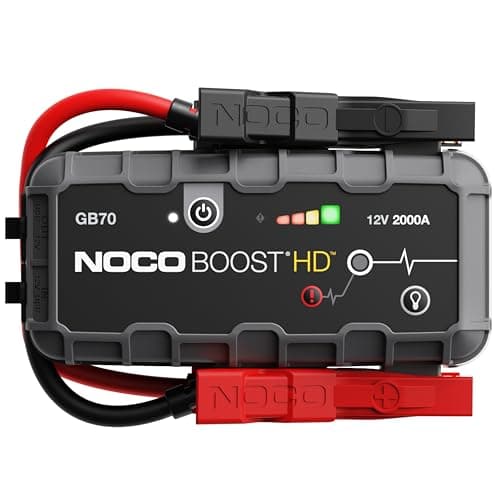
Best for Cold Weather
For Cold Weather
Winter picks with real margin, plus the one situation where a lead-acid box beats lithium and why lithium usually still wins.
Found something out of date, or a figure you can source better than we did? Tell us — corrections get read first. Our methodology explains how picks are made, and contact is one click away.