Tire Inflators
Tire inflator duty cycle, explained
The most predictive spec in this category, and the one manufacturers are least likely to publish. Here is how to read around the gap.
Disclosure: we earn a commission if you buy through the Amazon links on this page, at no extra cost to you. Commission never decides a verdict or a ranking position — read our editorial policy and affiliate disclosure.
How we assessed these: the figures here come from manufacturer pages and NHTSA publications, cited inline. We do not publish measured fill times or gauge-deviation figures, because we do not measure them.
Short answer
Duty cycle is the proportion of time a compressor can run before it must stop and cool — "50% at 10 minutes" means five minutes on, five off. It predicts whether a unit can fill a large tire in one session, and it matters far more than the maximum-PSI figure on the box.
A compressor turns electrical energy into compressed air and heat. The heat has to go somewhere, and in a small plastic-bodied inflator there is not much to absorb it and not much surface to shed it from. So the unit runs, gets hot, and either trips a thermal cut-out or — on cheaper units without one — degrades.
How duty cycle is expressed
| Stated as | Means |
|---|---|
| 100% duty cycle | Can run continuously. Rare outside genuinely industrial equipment. |
| 50% at 10 minutes | Five minutes on, five minutes off, indefinitely. |
| 33% at 30 minutes | Ten minutes on, twenty off. |
| "15 minutes maximum continuous" | A run-time limit rather than a ratio. Treat the cool-down as at least as long. |
| Not stated | The most common case in the consumer tier. Assume a short run time. |
Note that duty cycle is usually specified at a stated pressure and ambient temperature. Higher pressure means the motor works harder and heats faster, so a figure quoted at 30 PSI does not hold at 60. And a 95 °F day is materially worse than a 60 °F one.
Why it decides large-tire capability
Filling a tire is a volume problem. A car tire top-up of 4 PSI is a small volume — well inside any unit's run time. A light-truck tire from flat is a large volume, and if your unit can only run five minutes at a time, you are doing several on-off cycles with waits in between. At the extreme, the unit never gets far enough before cutting out to make progress against the air leaking back past a poorly seated chuck.
This is also why maximum PSI is a poor proxy. A pocket inflator rated to 150 PSI can genuinely reach 150 PSI — into a tiny volume, slowly, before it gets hot. The rating says nothing about whether it can fill your tire. The truck and SUV roundup is built entirely on this distinction.
What to do when it is not published
Most consumer-tier manufacturers do not publish a duty cycle. DEWALT does not publish one for its 20V inflator, for instance. Rather than guess at a number, read the proxies:
- Power source. A battery-clamp unit is not limited by a 10-20 A socket fuse, so it can draw more power and is almost always built with more thermal margin.
- Physical size and material. A metal body with visible cooling fins is a thermal design. A small molded plastic case is not.
- Weight. Mass absorbs heat. A heavier compressor of the same class will generally run longer before cutting out.
- Marketing language. "For car and bicycle tires" is telling you the run time is short. "For truck and off-road tires" is a claim about throughput.
- Whether a thermal cut-out is mentioned at all. A unit that advertises thermal protection has been designed expecting to reach its limit — which is better than one that has not.
Getting more out of the unit you have
- Seal the chuck properly. Air leaking past the connection is work the motor is doing for nothing. A threaded chuck that screws onto the stem beats a clamp-on one.
- Work in the shade and keep the unit off hot asphalt. Ambient temperature directly reduces run time.
- Do tires in rotation rather than one to target and then the next — each tire gets partway while the others give the unit a break.
- Top up before it is flat. Monthly checks mean you are always moving small volumes, which is inside any unit's comfortable range. What PSI should my tires be sets the routine.
- Run the engine if the unit is socket- or clamp-powered, so you are drawing from the alternator rather than flattening the battery.
Inflators by duty-cycle class
1. Bought specifically for duty cycle
VIAIR 88P Portable Compressor
VIAIR · Best for truck, suv and off-road tires
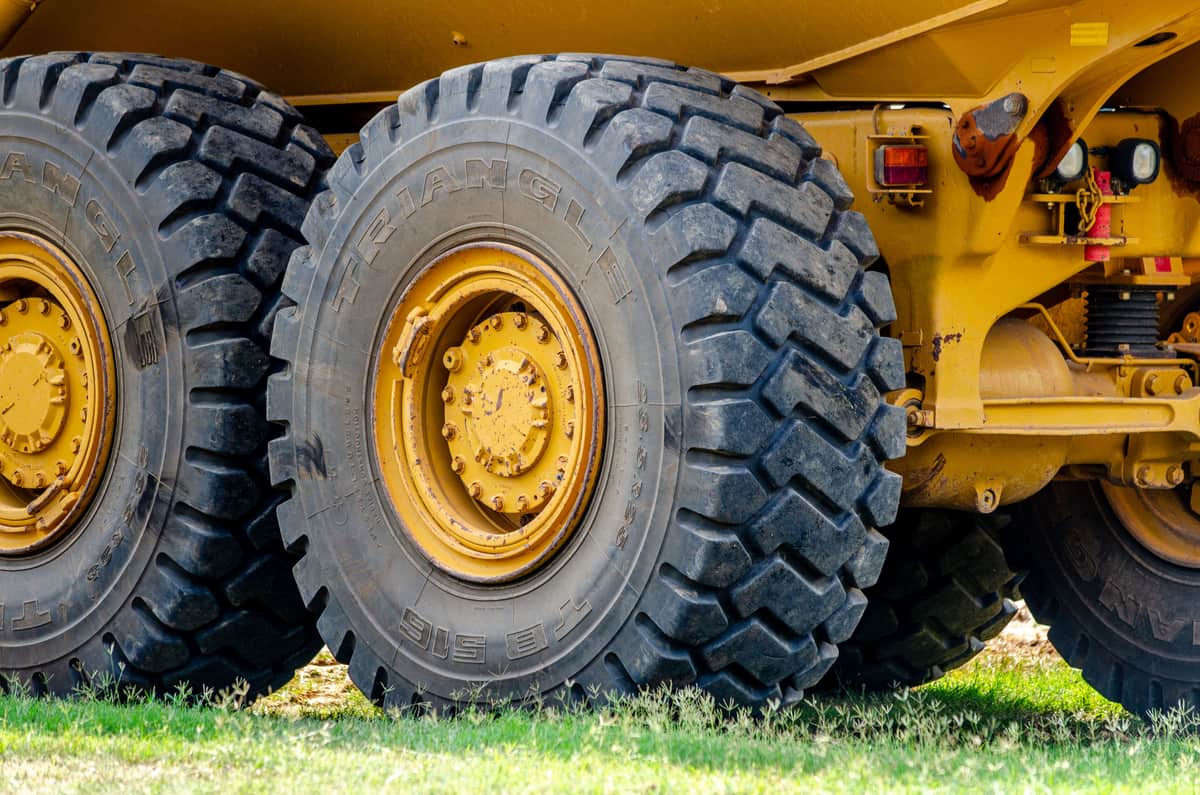
A battery-clamp compressor built for the tire sizes socket-powered units cannot handle without stopping to cool down.
This manufacturer does not publish a full specification table for this model on its own site. Rather than repeat figures we cannot source, the assessment below is limited to what the product category and the retailer listing genuinely establish.
What works
- Connects to the battery terminals rather than the 12 V socket, so socket fuse current is not the limit
- Built for larger tires and repeated fills — the duty cycle is the whole reason to buy it
- Metal body and a real air hose rather than a molded plastic assembly
What does not
- The battery-clamp connection means popping the hood every time
- Bigger and heavier than any glovebox inflator
- Overkill, and slower to set up, for a routine cold-morning top-up
Skip it if
Not the pick if you drive a sedan and just want to correct 4 PSI once a month. That is what a socket inflator is for.
#ad Affiliate link · We show no price here; Amazon shows the current one
2. Middle ground
DEWALT DCC020IB 20V MAX Inflator
DEWALT · Best for anyone already on dewalt 20v batteries
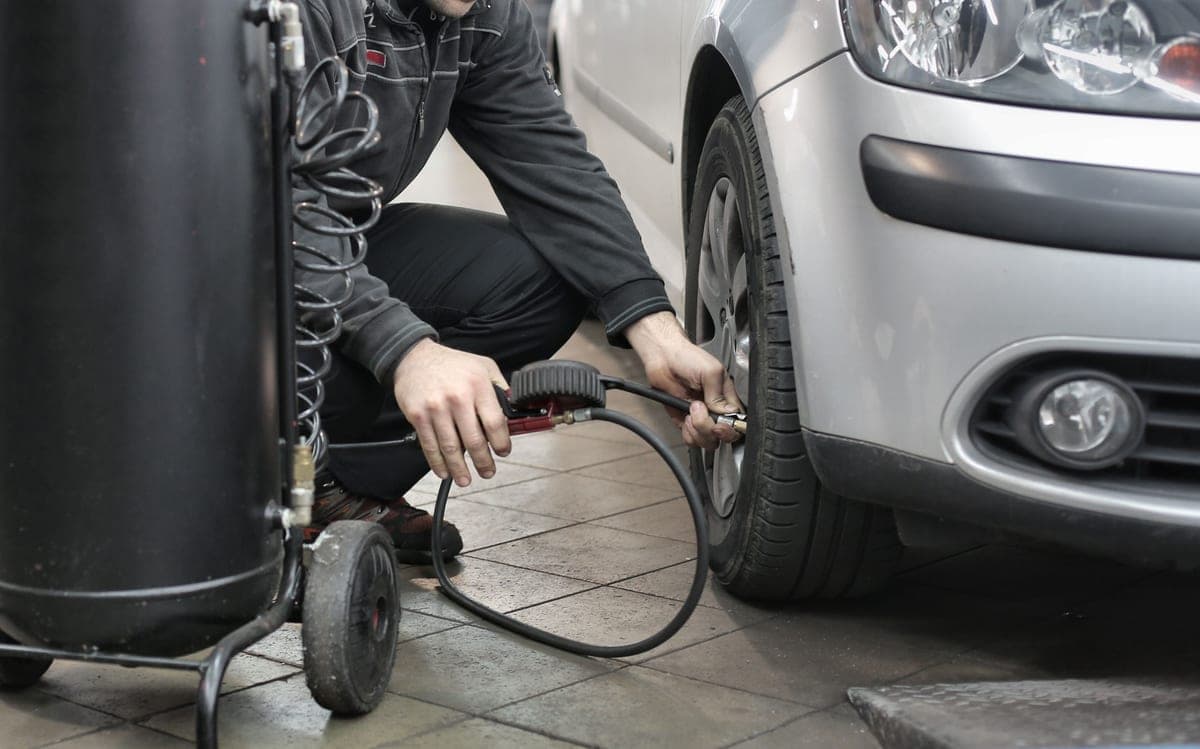
Three power sources in one body — 20V MAX battery, 12 V socket or 110 V wall — with a digital gauge and auto-shutoff, which is what makes an inflator usable everywhere.
Published specifications
What works
- The 12 V socket option means a dead tool battery never leaves you stranded
- A threaded chuck screws onto the valve stem instead of clamping — the difference between a solid seal and a hissing one
- Set-and-walk-away auto-shutoff at your target pressure
- High-volume mode handles air mattresses and inflatables, not just tires
What does not
- Sold as a bare tool — battery, charger and AC adapter are separate purchases
- Bigger and heavier than a pocket 12 V inflator, so it wants trunk space
Skip it if
Not the pick if you own no DEWALT batteries and only ever top up car tires. A plain 12 V inflator is smaller and cheaper for that job.
#ad Affiliate link · We show no price here; Amazon shows the current one
Raw specifications: DEWALT’s own page for the DEWALT DCC020IB 20V MAX Inflator.
3. Fine within its limits
AstroAI 12V Tire Inflator
AstroAI · Best for the cheapest inflator still worth owning
A plain 12 V socket-powered inflator with a digital gauge and auto-shutoff — the baseline that covers a car's tires with no battery to maintain.
This manufacturer does not publish a full specification table for this model on its own site. Rather than repeat figures we cannot source, the assessment below is limited to what the product category and the retailer listing genuinely establish.
What works
- Powered from the 12 V socket, so it works whenever the car does
- Nothing to keep charged, which means it is never flat when the tire is
- Digital preset shutoff at the target pressure
What does not
- The cord limits where you can work, and reaching a rear tire can be tight
- Small-motor inflators in this tier run hot; large tires need rest intervals
- Gauge accuracy in this class varies unit to unit, so verify against a separate gauge
Skip it if
Not the pick if you regularly air down and back up for trails, or run light-truck tires. That is dedicated-compressor work.
#ad Affiliate link · We show no price here; Amazon shows the current one
Key takeaways
- Duty cycle is run time versus cool-down, and it predicts large-tire capability.
- Maximum PSI tells you almost nothing about whether a unit can fill your tire.
- Most consumer manufacturers do not publish a figure — read size, material and power source instead.
- Duty-cycle figures are quoted at a pressure and temperature; both change the result.
- Never restart a hot inflator repeatedly to force a fill.
How we sourced this
Every figure on this page came from one of the following. Where a manufacturer or regulator does not publish a number, we say so rather than estimate it.
Common questions
- What is tire inflator duty cycle?
- It is how long a compressor can run before it must stop and cool, usually expressed as a percentage of a period — 50% at 10 minutes means five minutes on and five off. It is the spec that predicts whether a unit can fill a large tire in one session.
- Why does my tire inflator keep shutting off?
- Thermal protection. The motor has reached its temperature limit and the unit is protecting itself. Let it cool rather than restarting it repeatedly, and expect it to happen sooner on hot days and at higher pressures.
- Is a higher duty cycle always better?
- For large tires and repeated fills, yes — that is what you are buying. For monthly top-ups on a car, a modest duty cycle is entirely adequate, and a heavy-duty compressor is a slower, bulkier tool for that job.
- How do I find an inflator's duty cycle if it isn't published?
- You often cannot, and inventing a figure is worse than admitting that. Use the proxies instead: battery-clamp connection, metal body with cooling fins, greater weight, and marketing that claims truck-tire capability rather than car-and-bicycle use.
More in Tire Inflators
The cheapest tool that prevents the second-most-common roadside stop. Here is which type fits your tires, and the two specs that actually matter.
Read next
Best for Trucks & SUVs
For Trucks & SUVs
Battery-clamp compressors and heavy-duty units for light-truck and off-road tires, with the duty-cycle reasoning spelled out.
Head to head
Inflator vs Air Compressor
The tank is the dividing line: continuous small-volume work versus stored air for tools. Which one belongs in your trunk and which in your garage.
Best Portable Tire Inflators
Best Portable Tire Inflators
Our main inflator roundup: socket, cordless, tool-battery and battery-clamp units, matched to the tires you actually run.
Review
DEWALT DCC020IB Review
Runs off a 20V MAX pack, a 12 V socket or a wall outlet, with a threaded chuck and auto-shutoff. Sold bare, which is the catch.
Found something out of date, or a figure you can source better than we did? Tell us — corrections get read first. Our methodology explains how picks are made, and contact is one click away.