Tire Inflators
VIAIR 88P vs 400P
One is a 4.75-pound kit for topping up car tires. The other is a 10.4-pound, 150 PSI machine for 35-inch tires and air tools. The deciding number is duty cycle, not pressure.
Disclosure: we earn a commission if you buy through the Amazon links on this page, at no extra cost to you. Commission never decides a verdict or a ranking position — read our editorial policy and affiliate disclosure.
How we assessed these: picks are selected from manufacturers' published specifications, stated accuracy standards and current retailer listings — not from hands-on calibration testing against a reference gauge. We publish no measured error figures, because we do not measure them.
Short answer
Buy the 88P unless you have a reason not to: it is rated to 120 PSI and tires up to 33 inches, weighs 4.75 pounds, and costs considerably less. Step up to the 400P if you air up tires larger than 33 inches, run 24-volt equipment, or need to work for longer than a few tires at a time — VIAIR rates it at 150 PSI, 2.30 CFM and a 33 percent duty cycle at 100 PSI.
Quick picks
Tap any row to jump to the full write-up. Scoring criteria are published in full on our methodology page.
| # | Product | Best for | Our read | Price |
|---|---|---|---|---|
| 1 | 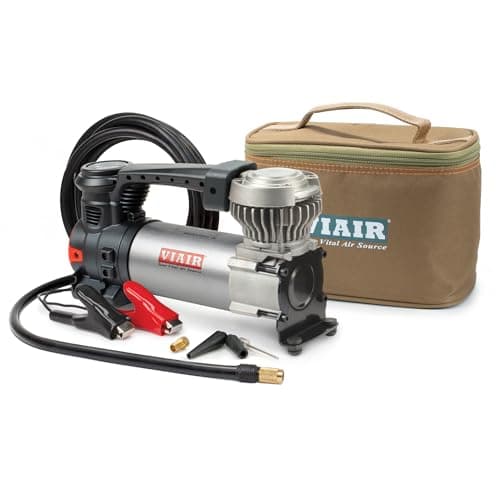 VIAIR 88P Portable Compressor Best for most drivers | Truck, SUV and off-road tires | 120 PSI, 4.75 lb, rated to 33 in tires, 25 minutes at 30 PSI | $89.89$103.95View on Amazon #ad Affiliate link · Price as of November 10, 2026 |
| 2 | 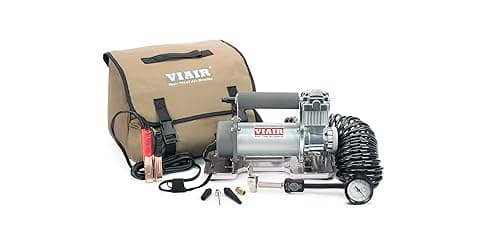 VIAIR 400P Portable Compressor Best for big tires and long sessions | Airing back up after a trail | 150 PSI, 2.30 CFM, 33 percent duty at 100 PSI, 12 V or 24 V | $226.00View on Amazon #ad Affiliate link · Price as of November 10, 2026 |
| 3 | 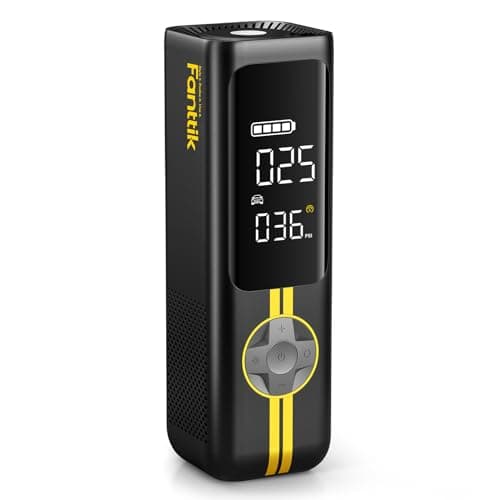 Fanttik X8 Apex Best if you want neither | Cordless top-ups from a glovebox | Cordless, pocketable, for topping up rather than airing up | $69.99$89.99View on Amazon #ad Affiliate link · Price as of November 10, 2026 |
These two compressors get compared constantly, and from the outside the question looks like a simple more-is-better ladder: 120 PSI against 150 PSI, 4.75 pounds against 10.4. That framing gets people into the wrong one in both directions — buying a 400P to put 3 PSI into a sedan, or buying an 88P and then running it until it gets hot on a set of 35s.
VIAIR publishes enough detail on both that the decision does not have to be guesswork. Below is what the manufacturer's own specification pages say, and what each figure means when you are kneeling next to a wheel.
| 88P | 400P | |
|---|---|---|
| Maximum working pressure | 120 PSI | 150 PSI |
| Air flow at 0 PSI | 1.97 CFM | 2.30 CFM |
| Duty cycle | 25 minutes at 30 PSI | 33 percent at 100 PSI |
| Supply | 12 V, battery clamps | 12 V or 24 V, battery clamps |
| Maximum amp draw | 20 A | 30 A at 12 V, 15 A at 24 V |
| Inrush current | 45 A at 0 PSI | 81 A at 0 PSI (PN 40043) |
| Ingress protection | IP53 | IP54 |
| Tire size rating | Up to 33 in | Not published as a single figure |
| Weight | 4.75 lb | 10.40 lb |
| Power cord / air hose | 10 ft / 16 ft | 8 ft / 25 ft |
Both columns are VIAIR's own published specifications, linked in Sources. Where VIAIR does not publish a directly comparable figure, the cell says so rather than carrying our estimate.
Duty cycle is the real difference
Maximum pressure is the number on the box, and for tires it is almost irrelevant — a passenger car wants about 35 PSI and a light truck under 60, so both compressors have headroom you will never use. What you will use is run time, and that is duty cycle.
The two figures are not stated in the same units, which is itself informative. VIAIR rates the 88P at 25 minutes at 30 PSI: a continuous block of work at a pressure a car tire actually uses. The 400P is rated at 33 percent at 100 PSI: one third of the time on, two thirds off, at a pressure far above anything a tire needs. The 400P's number is a heavier-duty rating expressed the way industrial compressors are rated, and at tire pressures it has correspondingly more margin.
In practice: topping four car tires up by a few pounds is inside the 88P's rating with room to spare. Airing four 35-inch tires from 15 PSI back to 35 after a trail is a long, hot job that is squarely the 400P's work. Tire inflator duty cycle explained is the longer version of why this is the spec that decides most inflator purchases.
The 33-inch line
VIAIR publishes a tire size rating of up to 33 inches for the 88P and does not publish a single equivalent figure for the 400P, which is the clearest signal in the whole comparison. If your tires are 33 inches or smaller — and that is every passenger car, crossover, most SUVs and a lot of stock pickups — the 88P is specified for your vehicle by its own maker.
Above that, you are outside the 88P's published envelope. It is not that the pump cannot move the air; it is that a bigger tire holds much more of it, so the job takes much longer, and run time is exactly where the smaller compressor is rated more tightly. That is the whole case for the 400P, and it is a good one for anyone running oversized tires. Our off-road inflator picks go further into airing down and back up.
Electrical draw, and why both come with clamps
Neither of these is a 12-volt-socket appliance. The 88P draws up to 20 amps and the 400P up to 30 amps at 12 volts, with inrush figures of 45 and 81 amps respectively — well beyond what a cigarette-lighter circuit is fused for. Both ship with battery clamps for that reason, and that is the correct way to run them.
The 400P's 24-volt capability is a genuine differentiator that rarely gets mentioned: at 24 volts it draws 15 amps instead of 30, which matters if you are working on commercial equipment, heavy trucks or anything else on a 24-volt system. Nothing in the 88P's specification covers that. Does a tire inflator drain your battery covers the related question of running either one with the engine off.
Hose, cord and where you can actually work
The reach numbers go in opposite directions and both matter. The 88P has the longer power cord at 10 feet and a 16-foot air hose; the 400P has a shorter 8-foot cord and a much longer 25-foot hose. Since the power end has to reach the battery and the air end has to reach each wheel, the 400P's layout suits a larger vehicle — on a full-size truck, 25 feet of hose will reach all four corners from one hookup, which 16 feet will not.
Ingress protection is IP53 on the 88P and IP54 on the 400P. Both are dust-protected; the 400P's 4 adds protection against splashing water from any direction, which is a fair description of trail and job-site use.
Weight is the reason most people choose the 88P
4.75 pounds against 10.40 pounds is not a detail on a site about things that live in a trunk. The 88P is a kit you forget is in the car. The 400P is a case you decide to bring. Both are far bulkier than a cordless inflator, which is why the Fanttik X8 APEX is in the comparison above — if what you actually need is to put three pounds into one tire in a parking lot, neither VIAIR is the right tool and our cordless picks are a better starting point.
The honest summary is that these are two different tools wearing the same brand. The 88P is a portable inflator. The 400P is a small portable compressor that also inflates tires. Tire inflator versus air compressor is the page that draws that line properly.
Where each one is weak
The 88P's weakness is its ceiling: 120 PSI, 33-inch tires, 12 volts only, and a rating stated in minutes rather than a percentage. Ask it to do a 37-inch tire and you are working outside what VIAIR specified. Our full 88P review goes into how that plays out in use.
The 400P's weaknesses are weight, bulk and price for a job most people do not have. Ten and a half pounds of compressor and 25 feet of hose is a lot of equipment to deploy for a tire that is 4 PSI low, and the 81-amp inrush means it is a clamps-on-the-battery tool every single time, with no shortcuts. Neither is a tool you leave baking in a hot trunk all summer without thinking about it — heat and storage applies to pumps as much as to jump packs.
The picks
1. Best for most drivers
VIAIR 88P Portable Compressor
VIAIR · Best for truck, suv and off-road tires
A battery-clamp compressor built for the tire sizes socket-powered units cannot handle without stopping to cool down.
Published specifications
- Maximum working pressure
- 120 PSI source
- Air flow
- 1.97 CFM at 0 PSI source
- Duty cycle
- 25 minutes at 30 PSI source
- Supply
- 12 V, battery clamps source
- Maximum amp draw
- 20 A source
- Inrush current
- 45 A at 0 PSI source
- Ingress protection
- IP53 source
- Operating temperature
- -4 to 158 °F source
- Tire size rating
- Up to 33 in source
- Weight
- 4.75 lb source
- Power cord / air hose
- 10 ft / 16 ft source
What works
- Connects to the battery terminals rather than the 12 V socket, so socket fuse current is not the limit
- Built for larger tires and repeated fills — the duty cycle is the whole reason to buy it
- Metal body and a real air hose rather than a molded plastic assembly
What does not
- The battery-clamp connection means popping the hood every time
- Bigger and heavier than any glovebox inflator
- Overkill, and slower to set up, for a routine cold-morning top-up
Skip it if
Not the pick if you drive a sedan and just want to correct 4 PSI once a month. That is what a socket inflator is for.
#ad Affiliate link · Price as of November 10, 2026
2. Best for big tires and long sessions
VIAIR 400P Portable Compressor
VIAIR · Best for airing back up after a trail
A step up from the 88P for people who air down deliberately: 150 PSI, a published 33 percent duty cycle at 100 PSI, and a 25-foot hose that reaches all four corners.
Published specifications
- Maximum working pressure
- 150 PSI source
- Air flow
- 2.30 CFM at 0 PSI source
- Duty cycle
- 33% at 100 PSI source
- Supply
- 12 V or 24 V, battery clamps source
- Maximum amp draw
- 30 A at 12 V, 15 A at 24 V source
- Inrush current
- 81 A at 0 PSI (PN 40043) source
- Ingress protection
- IP54 source
- Weight
- 10.40 lb source
- Power cord / air hose
- 8 ft / 25 ft source
What works
- Battery-clamp connection, so the 12 V socket's fuse is not the ceiling on throughput
- A published duty cycle — 33 percent at 100 PSI — which almost nothing in this category gives you
- 25 feet of air hose reaches every corner of a vehicle from one hookup
- Metal construction and a real air hose rather than a molded plastic assembly
What does not
- 10.40 lb and the bulk that goes with it — dedicated recovery-gear territory, not a glovebox tool
- 30 A at 12 V rules out any accessory socket; it is battery clamps or nothing
- Slower to set up than a socket inflator for a routine cold-morning top-up
Skip it if
Overkill for a car that needs 4 PSI once a month. That is a socket inflator's job, and this is a lot of equipment to carry for it.
#ad Affiliate link · Price as of November 10, 2026
3. Best if you want neither
Fanttik X8 Apex
Fanttik · Best for cordless top-ups from a glovebox
A self-contained cordless inflator small enough to live in a door pocket, with a backlit digital gauge and a preset target pressure.
Published specifications
- Maximum pressure
- 150 PSI source
- Internal battery
- 28.8 Wh lithium-ion source
- Stated gauge accuracy
- ±1 PSI source
- Stated runtime
- Up to 40 minutes continuous source
- Stated fill time
- 56 seconds, 215/55 R17 from 28 to 33 PSI source
- Operating temperature
- 14 to 113 °F (-10 to 45 °C) source
- Weight
- 1.74 lb source
- Recharging
- USB-C, 15 W maximum source
- Work light
- 40 lumens source
- Preset modes
- 4 — bicycle, motorcycle, car, ball; PSI, kPa and bar source
- Warranty
- 12 months source
What works
- No cable to the car at all — it runs off its own internal battery
- Small enough that it stays in the vehicle, which is most of the battle
- Preset-and-stop pressure control avoids the overshoot you get chasing an analogue gauge
What does not
- An internal battery is one more thing to keep charged, and cold weather cuts into it
- Cordless inflators this size heat up on large tires; expect to work in stages
- Manufacturer duty-cycle figures for this class are not consistently published
Skip it if
Not the pick for light-truck or RV tires. Small cordless units are built for top-ups, not for taking a 35-inch tire from flat to 60 PSI.
#ad Affiliate link · Price as of November 10, 2026
Key takeaways
- VIAIR rates the 88P to 120 PSI and tires up to 33 inches; most drivers are inside that envelope.
- The 400P is rated to 150 PSI, 2.30 CFM and a 33 percent duty cycle at 100 PSI — a heavier-duty rating, expressed in heavier-duty units.
- Duty cycle, not maximum pressure, is the spec that decides this. Tires never need 120 PSI, let alone 150.
- Above 33-inch tires you are outside the 88P's published rating, and that is the clearest reason to step up.
- The 400P runs on 24 volts at half the amp draw, which the 88P cannot do at all.
- Both need battery clamps, not a 12-volt socket: 45 A and 81 A inrush respectively.
- 4.75 lb against 10.40 lb is why the 88P is the one that stays in the car.
How we sourced this
Every figure on this page came from one of the following. Where a manufacturer or regulator does not publish a number, we say so rather than estimate it.
Common questions
- Is the VIAIR 400P worth it over the 88P?
- Only if you air up tires larger than 33 inches, work on 24-volt equipment, or run the compressor for long sessions. For topping up car, crossover and stock-truck tires, the 88P is specified for the job and is lighter and cheaper.
- What size tires can a VIAIR 88P handle?
- VIAIR publishes a rating of up to 33 inches for the 88P. That covers passenger cars, crossovers, most SUVs and many stock pickups.
- Can you run a VIAIR 88P from a cigarette lighter?
- No. It draws up to 20 amps with a 45-amp inrush at 0 PSI, which is why VIAIR supplies battery clamps. A 12-volt accessory socket is typically fused far below that.
- What does a 33 percent duty cycle mean on the 400P?
- At 100 PSI, VIAIR rates it to run one third of the time and rest two thirds. At tire pressures, which are far lower, it has substantially more margin than that figure suggests.
- Does the VIAIR 400P work on 24 volts?
- Yes. VIAIR publishes 12 V and 24 V operation, drawing a maximum of 30 amps at 12 V and 15 amps at 24 V. The 88P is 12 V only.
More in Tire Inflators
The cheapest tool that prevents the second-most-common roadside stop. Here is which type fits your tires, and the two specs that actually matter.
Read next
Review
VIAIR 88P Review
120 PSI, 1.97 CFM at 0 PSI, 25 minutes at 30 PSI, 20 A draw, IP53, 4.75 lb, 16 ft hose, rated to 33-inch tires. The spec sheet, read honestly.
Guide
Duty Cycle Explained
What duty cycle means, why it decides whether an inflator can handle large tires, and what to infer when the manufacturer stays silent.
Best for Off-Road
Best for Off-Road
Battery-clamp compressors built for repeated large-volume fills, and why the 12 V socket is the ceiling you have to get past.
Best for Trucks & SUVs
For Trucks & SUVs
Battery-clamp compressors and heavy-duty units for light-truck and off-road tires, with the duty-cycle reasoning spelled out.
Best tire pressure gauge
Best Tire Gauges
Chosen on the accuracy standard the maker publishes, a scale that puts your tires mid-dial, and a chuck that seats square on the valve — plus honest limits on every pick.
Found something out of date, or a figure you can source better than we did? Tell us — corrections get read first. Our methodology explains how picks are made, and contact is one click away.