Tire Inflators
The best tire inflators under $50
This is the one category on the site where the cheap tier is genuinely good. Here is what the money still does not buy you.
Disclosure: we earn a commission if you buy through the Amazon links on this page, at no extra cost to you. Commission never decides a verdict or a ranking position — read our editorial policy and affiliate disclosure.
How we assessed these: picks are selected from manufacturer specifications, current retailer listings and published owner feedback — not from hands-on testing of every unit. We publish no prices, so the bracket in the title describes the market tier rather than a figure we have verified today.
Short answer
A socket-powered inflator with a digital preset and auto-shutoff is the right buy in this bracket, and it is genuinely enough for a car. What the budget tier does not give you is duty cycle for large tires or a gauge you can trust without checking it once against a reference.
Unlike jump starters, where the budget tier is a real compromise, cheap tire inflators are mostly fine. The job is undemanding for a passenger car: move a modest volume of air to about 35 PSI, once a month. A basic unit does that as well as an expensive one.
Quick picks
Tap any row to jump to the full write-up. Scoring criteria are published in full on our methodology page.
| # | Product | Best for | Our read | Price |
|---|---|---|---|---|
| 1 | AstroAI 12V Tire Inflator Best overall in the budget tier | The cheapest inflator still worth owning | Digital preset, socket powered, nothing to charge | Check price on Amazon #ad Affiliate link · We show no price here; Amazon shows the current one |
| 2 |  Fanttik X8 Apex Best cordless at the top of the bracket | Cordless top-ups from a glovebox | Check the current price — it sits near the cap | Check price on Amazon #ad Affiliate link · We show no price here; Amazon shows the current one |
| 3 |  Reflective Warning Triangle Set Better use of the same money | Being seen before anything else | If your trunk has no triangles yet, start here | Check price on Amazon #ad Affiliate link · We show no price here; Amazon shows the current one |
What the budget tier does well
- The core job. Topping a car tire up by 4-5 PSI is roughly a minute on almost any powered inflator. Paying more does not make that meaningfully faster.
- Digital presets are standard now. Set-and-walk-away shutoff used to be a premium feature and is not any more, which is most of why this tier is worth buying.
- Socket power means nothing to maintain. No battery to keep charged is a genuine reliability advantage, not a downgrade.
- Cheap enough to keep in each car. Two adequate inflators in two vehicles beat one excellent one in the garage.
The two corners that get cut
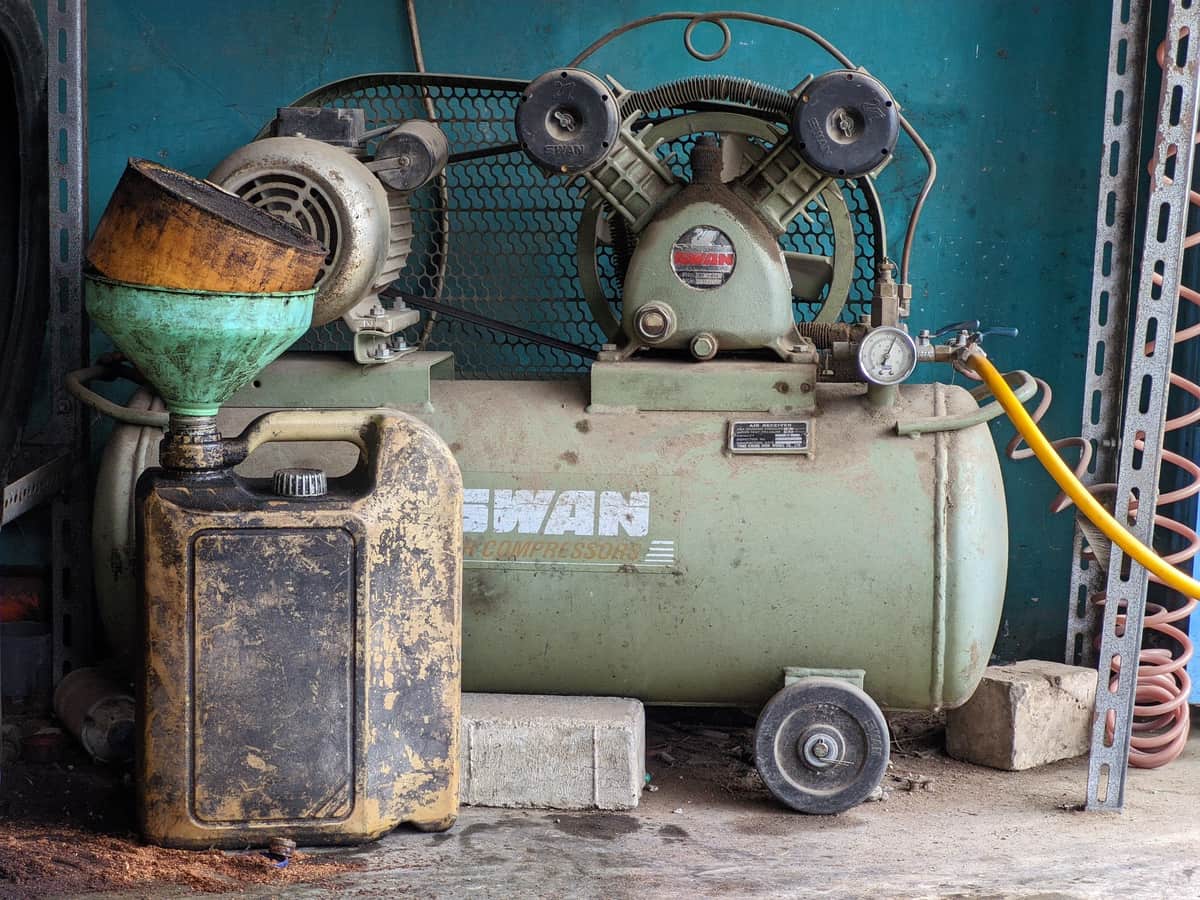
Duty cycle. This is the real one. A small motor in a molded plastic case heats quickly, and budget makers almost never publish a duty-cycle figure. On a car tire you will never notice. On a light-truck or 33-inch tire the unit will cut out on thermal protection before it finishes — see duty cycle explained, and the truck and SUV roundup if that is your vehicle.
Gauge consistency. Deviation varies unit to unit in this tier more than higher up. That is not a reason to avoid it — it is a reason to spend a few dollars on a separate stick gauge, check your unit once, and note the offset. Gauge accuracy has the method.
A third, smaller one: the chuck. Cheaper units often use a clamp-on chuck that hisses on a short or recessed valve stem. A threaded chuck seals properly, and it is worth looking for even in this bracket.
Where the bracket stops being enough
| Your situation | Is the budget tier enough? |
|---|---|
| Sedan or crossover, monthly top-ups | Yes, comfortably |
| Two cars, one inflator each | Yes — buy two |
| Occasional flat to reinflate and drive to a shop | Yes |
| Light-truck or 33-inch-plus tires | No — duty cycle will defeat it |
| Airing down and back up for trails | No — battery-clamp compressor |
| RV or trailer tires at high pressure | No — see the RV guide |
The picks
1. Best overall in the budget tier
AstroAI 12V Tire Inflator
AstroAI · Best for the cheapest inflator still worth owning
A plain 12 V socket-powered inflator with a digital gauge and auto-shutoff — the baseline that covers a car's tires with no battery to maintain.
This manufacturer does not publish a full specification table for this model on its own site. Rather than repeat figures we cannot source, the assessment below is limited to what the product category and the retailer listing genuinely establish.
What works
- Powered from the 12 V socket, so it works whenever the car does
- Nothing to keep charged, which means it is never flat when the tire is
- Digital preset shutoff at the target pressure
What does not
- The cord limits where you can work, and reaching a rear tire can be tight
- Small-motor inflators in this tier run hot; large tires need rest intervals
- Gauge accuracy in this class varies unit to unit, so verify against a separate gauge
Skip it if
Not the pick if you regularly air down and back up for trails, or run light-truck tires. That is dedicated-compressor work.
#ad Affiliate link · We show no price here; Amazon shows the current one
2. Best cordless at the top of the bracket
Fanttik X8 Apex
Fanttik · Best for cordless top-ups from a glovebox
A self-contained cordless inflator small enough to live in a door pocket, with a backlit digital gauge and a preset target pressure.
This manufacturer does not publish a full specification table for this model on its own site. Rather than repeat figures we cannot source, the assessment below is limited to what the product category and the retailer listing genuinely establish.
What works
- No cable to the car at all — it runs off its own internal battery
- Small enough that it stays in the vehicle, which is most of the battle
- Preset-and-stop pressure control avoids the overshoot you get chasing an analogue gauge
What does not
- An internal battery is one more thing to keep charged, and cold weather cuts into it
- Cordless inflators this size heat up on large tires; expect to work in stages
- Manufacturer duty-cycle figures for this class are not consistently published
Skip it if
Not the pick for light-truck or RV tires. Small cordless units are built for top-ups, not for taking a 35-inch tire from flat to 60 PSI.
#ad Affiliate link · We show no price here; Amazon shows the current one
3. Better use of the same money
Reflective Warning Triangle Set
Various · Best for being seen before anything else
The cheapest item in the trunk that changes an outcome. Before you open the hood on a shoulder, you want traffic to know you are there.
This manufacturer does not publish a full specification table for this model on its own site. Rather than repeat figures we cannot source, the assessment below is limited to what the product category and the retailer listing genuinely establish.
What works
- Works without batteries, in any weather, for as long as you own the car
- Folds flat, so it costs almost no trunk space
- Visible far enough back to give traffic time to move over
What does not
- Only useful if you actually get out and place it, which takes a deliberate habit
- Plastic bases crack if they live loose under heavier gear
Skip it if
Not a substitute for hazard lights or for getting clear of the roadway. Placement matters more than the product.
#ad Affiliate link · We show no price here; Amazon shows the current one
One honest alternative for the same money
If your trunk currently has no reflective triangles, buy those first. They cost a fraction of an inflator, they never go flat, and they address the actual danger of a roadside stop rather than the inconvenience. An inflator is the second purchase — see the roadside kit checklist for the order we would buy things in.
Key takeaways
- Cheap tire inflators are genuinely fine for passenger cars — this tier is good value.
- Duty cycle is the real corner cut, and it only bites on large tires.
- Budget gauges vary — check yours once against a separate reference.
- Look for a threaded chuck even in this bracket.
- We cannot verify the cap without live prices; confirm at the retailer.
How we sourced this
Every figure on this page came from one of the following. Where a manufacturer or regulator does not publish a number, we say so rather than estimate it.
Common questions
- Are cheap tire inflators any good?
- For passenger cars, yes. Topping a car tire up is an undemanding job and a budget unit with a digital preset does it about as fast as an expensive one. The compromises are duty cycle, which only matters on large tires, and gauge consistency, which a separate reference gauge solves.
- What should I look for in a budget tire inflator?
- A digital preset with automatic shutoff, a threaded chuck that screws onto the valve stem rather than clamping over it, and a readable backlit display. Those three are available in this tier and make the difference between a unit you use monthly and one you resent.
- Will a cheap inflator fill a truck tire?
- Usually not without stopping. Budget units have small motors in plastic cases that reach their thermal limit quickly, and a light-truck tire needs far more air than a car tire. For truck or off-road tires you want a battery-clamp compressor built for that duty cycle.
More in Tire Inflators
The cheapest tool that prevents the second-most-common roadside stop. Here is which type fits your tires, and the two specs that actually matter.
Read next
Best Portable Tire Inflators
Best Portable Tire Inflators
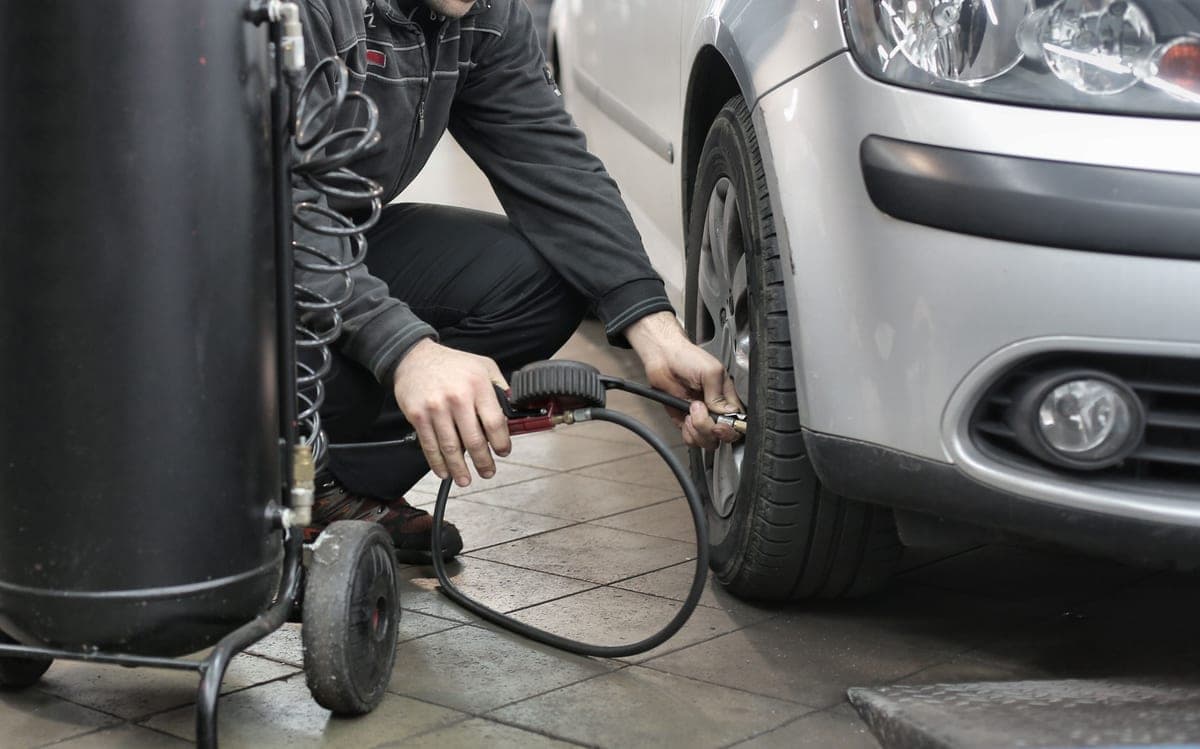
Our main inflator roundup: socket, cordless, tool-battery and battery-clamp units, matched to the tires you actually run.
Guide
Duty Cycle Explained
What duty cycle means, why it decides whether an inflator can handle large tires, and what to infer when the manufacturer stays silent.

Guide
Gauge Accuracy
Why built-in gauges drift, how to check yours against a reference, and why we will not publish per-model deviation numbers we have not measured.
Guide
Emergency Kit Checklist
The short list that survives contact with a real trunk, in priority order, plus what to skip and what to check twice a year.
Found something out of date, or a figure you can source better than we did? Tell us — corrections get read first. Our methodology explains how picks are made, and contact is one click away.