Trunk Kit
Jump starter versus roadside assistance
One is a tool for a single fault. The other is a tow truck for everything else. Choosing between them is the wrong question.

Disclosure: we earn a commission if you buy through the Amazon links on this page, at no extra cost to you. Commission never decides a verdict or a ranking position — read our editorial policy and affiliate disclosure.
Short answer
Buy both, because they solve different problems. A jump starter fixes a dead battery in two minutes, anywhere, with no wait and no phone signal. A roadside assistance membership covers towing, lockouts, fuel delivery, flat-tire changes and the breakdowns no tool in a trunk can address. Neither replaces the other.
The reason this comparison gets searched is that both are sold as the answer to being stranded, and both advertisements imply the other is unnecessary. In practice the overlap between them is narrow — it is exactly one fault, a flat battery — and outside that overlap each one does something the other simply cannot.
What each one actually covers
| Situation | Jump starter | Roadside assistance |
|---|---|---|
| Dead battery, you are present | Fixes it in minutes | Fixes it after a wait |
| Dead battery, no cell signal | Fixes it | Cannot be called |
| Dead battery in a parking garage | Fixes it | Access is often a problem |
| Flat tire, no spare | No | Yes — tow or roadside repair |
| Locked keys in the car | No | Yes |
| Out of fuel | No | Yes |
| Mechanical failure or won't drive | No | Yes — this is what a tow is for |
| Someone else's dead battery | Yes, you can help them | Usually tied to you or the vehicle |
Coverage varies enormously between providers, plan tiers, credit-card benefits and factory warranties. Read your own plan's terms — call limits, mileage caps and whether coverage follows you or the vehicle are the details that matter.
Read the first three rows together, because they are the whole case for the pack. A dead battery is the single most common reason a driver is stranded, and it is the one fault where a tool in the trunk turns a two-hour event into a two-minute one. Are portable jump starters worth it takes that argument apart in more detail.
The four situations where only the pack works
- No signal. A membership is a phone call. On a forest road, in a canyon or in a basement garage, there is nothing to call with. The pack does not care.
- Your own driveway, on a schedule. Nobody calls a tow truck to get to work at seven. They jump the car, drive it, and deal with it later — which is also when charging it properly matters most.
- Somewhere a truck cannot easily get to. Trailheads, campgrounds, farm tracks, multi-storey garages with height limits.
- Helping someone else. A pack in your trunk works on a stranger's car. Most memberships are tied to you or to your vehicle, and none of them dispatch for a car you do not own.
The four situations where only the membership works
- The car will not drive. A failed alternator, a seized engine, a broken belt — no pack in existence changes that. A jump that fires the engine and then dies again is an alternator symptom, not a battery one.
- A flat with no usable spare. Increasingly common on new cars. An inflator buys you distance on a slow leak; a sidewall tear needs a flatbed. Tire inflators versus sealant is honest about the limit.
- Lockouts and fuel. Neither is an electrical problem and neither is solvable from the trunk.
- A battery that is physically damaged. Swollen, cracked or possibly frozen means do not connect anything — see jump starter safety. That is a tow.
The honest cost comparison, without numbers
We do not publish prices on this site, so take the shape of the comparison rather than the figures. A jump starter is a single purchase that lasts years and has no recurring cost; its ongoing requirement is that you charge it every few months. A membership is a recurring cost that buys you access to labor and equipment you could never carry. The pack is cheap insurance against one specific, very common fault. The membership is insurance against everything else.
Worth checking before you buy either: you may already have roadside coverage you are not using. New-car warranties frequently include it, some credit cards include it, and some auto insurance policies add it for very little. Checking takes ten minutes and occasionally makes the decision for you.
What a membership does not put in your trunk
A plan dispatches help. It does not make you visible to traffic while you wait on a shoulder at dusk, and that is the part of a breakdown with real risk in it. Reflective triangles, a vest, gloves and a working light are the cheapest safety items in this entire category and the ones most often absent. Roadside emergency kit checklist is the full list, and the best roadside emergency kits covers the pre-assembled route.
The three purchases that cover the common case, the tire as well, and the waiting:
1. The pack that covers the common case
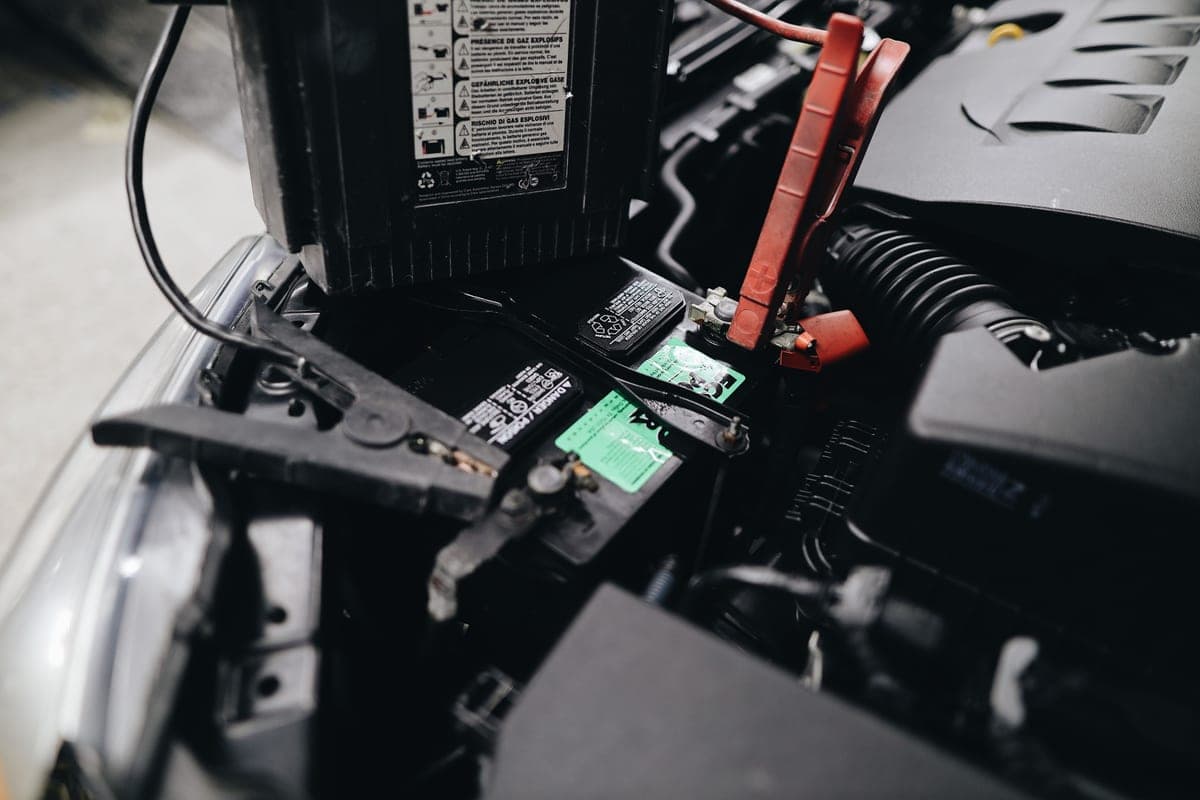
NOCO Boost Plus GB40
NOCO · Best for most cars and small suvs
The default answer for a four- or six-cylinder car: 1,000 peak amps, 24 watt-hours, and light enough that it actually stays in the trunk.
Published specifications
What works
- 24 Wh sits far under the 100 Wh carry-on threshold, so flying with it needs no airline approval
- 2.45 lb and pocketable — the size that decides whether a tool is still in the trunk six months later
- IP65 enclosure, so a wet shoulder in the rain is not a problem
- Reverse-polarity protection means a backwards clamp does not spark
What does not
- 1,000 peak amps runs out of headroom above a 6.0 L gas engine
- The 3.0 L diesel ceiling rules out most modern diesel pickups
- 24 Wh is a small reserve — it is a jump starter, not a power bank substitute
Skip it if
Not the one to buy if you drive a diesel pickup or a big V8. You would be at the edge of its rating on a cold morning, which is exactly when you want margin.
#ad Affiliate link · We show no price here; Amazon shows the current one
Raw specifications: NOCO’s own page for the NOCO Boost Plus GB40.
2. Covers the flat tire as well
DEWALT DXAEJ14 Power Station
DEWALT · Best for one box that jumps and inflates
A lead-acid jump station with a built-in 120 PSI digital compressor and USB-A plus USB-C power — the combo box for people who would rather carry one heavy thing than two light ones.
Published specifications
- Jump starting
- 1,600 peak amps, rated to start most 4-, 6- and 8-cylinder engines source
- Air compressor
- 120 PSI digital, with AUTOSTOP source
- USB output
- USB-A 15 W and USB-C 25 W source
- Battery types
- 12 V lead-acid: wet, gel and AGM source
- Diagnostics
- Alternator Check, plus reverse-polarity protection source
- In the box
- Clamps and cables, sports needle adapter source
What works
- Jump starter, 120 PSI compressor and USB-A/USB-C power in a single case
- 1,600 peak amps is rated for 4-, 6- and 8-cylinder engines
- Lead-acid chemistry is untroubled by living in a hot trunk
- Alternator Check tells you whether the jump was the problem or the symptom
What does not
- Heavy and bulky next to any lithium pack — the usual reason combo boxes end up in the garage
- Lead-acid self-discharges, so it needs topping up on a schedule or it is flat when you need it
- The built-in compressor is a convenience feature, not a match for a dedicated inflator's duty cycle
- DEWALT's licensee publishes no weight, cable gauge, battery capacity or compressor duty cycle for this unit
Skip it if
Not for anyone whose priority is packed size or carry-on travel. If the tool has to fit a door pocket or a suitcase, buy a lithium pack and a separate inflator.
#ad Affiliate link · We show no price here; Amazon shows the current one

3. What a membership does not put in your trunk
AAA Roadside Emergency Kit
AAA / Lifeline · Best for a ready-made starting point
A pre-assembled kit is the fastest way to stop having no kit. Treat it as a base to upgrade, not a finished answer.
This manufacturer does not publish a full specification table for this model on its own site. Rather than repeat figures we cannot source, the assessment below is limited to what the product category and the retailer listing genuinely establish.
What works
- Removes the excuse — one purchase and there is something in the trunk tonight
- The bag and organization are usually better than what you would improvise
- Covers the small consumables nobody buys on their own: gloves, ties, tape, first aid
What does not
- The jumper cables and flashlight in pre-built kits are the first things worth replacing
- Advertised item counts include individual bandages, which inflates the apparent value
- No kit at this level includes a jump starter or an inflator — the two things that actually get you moving
Skip it if
Not sufficient on its own. If you buy one, budget for a jump starter and an inflator alongside it, because the kit will include neither.
#ad Affiliate link · We show no price here; Amazon shows the current one
How we would actually set this up
- A lithium jump pack sized to your engine, charged quarterly, living in the vehicle rather than the garage. What size jump starter do I need covers the sizing.
- Roadside coverage you have actually read, whether that is a membership, a card benefit or a warranty inclusion. Know the call limit and the tow mileage cap before you need them.
- Visibility and basic consumables in the trunk, because the membership covers the fix and not the twenty minutes before it arrives.
- An inflator, because a soft tire is the second most common reason to stop. The best portable tire inflators covers the field.
- A charger at home, because a jump is a symptom fix. The best car battery chargers is the roundup, and how to tell if a car battery is bad tells you whether you need a new battery instead.
Key takeaways
- The overlap between the two is exactly one fault: a flat battery.
- A pack works with no signal, in a garage, on someone else's car, and with no wait.
- A membership covers towing, lockouts, fuel and everything that stops the car from driving.
- A jump that fires and then dies again is an alternator problem — call the tow.
- Check whether a warranty, credit card or insurance policy already includes roadside coverage.
- Neither option makes you visible on a shoulder. That is a triangles-and-vest purchase.
How we sourced this
Every figure on this page came from one of the following. Where a manufacturer or regulator does not publish a number, we say so rather than estimate it.
Common questions
- Do I need a jump starter if I have roadside assistance?
- They cover different things. A pack fixes a dead battery immediately, with no wait, no phone signal needed and no dependence on a truck reaching you. A membership covers towing, lockouts, fuel and mechanical failures a pack cannot touch. Most drivers are better served by having both.
- Is a jump starter cheaper than roadside assistance?
- A jump starter is a one-time purchase with no recurring cost beyond charging it every few months; a membership is an ongoing cost that buys labor and equipment you cannot carry. They are not substitutes, so the comparison is less about price than about which faults you want covered.
- Will roadside assistance jump start my car?
- Yes, that is one of the standard services on most plans. The difference is the wait and the dependence on being reachable — a dead battery in a basement garage or a place with no cell signal is exactly where a membership struggles and a pack does not.
- When should I call for a tow instead of using a jump starter?
- When the car fires and then dies again, which points at the charging system rather than the battery; when the battery is swollen, cracked or may have frozen; and whenever the car will not drive for any mechanical reason. A pack only ever solves a battery that has gone flat.
More in Trunk Kit
What actually lives in the trunk, in the order it earns its space — and the pre-built kits that are a starting point rather than an answer.
Read next
Guide
Are They Worth It?
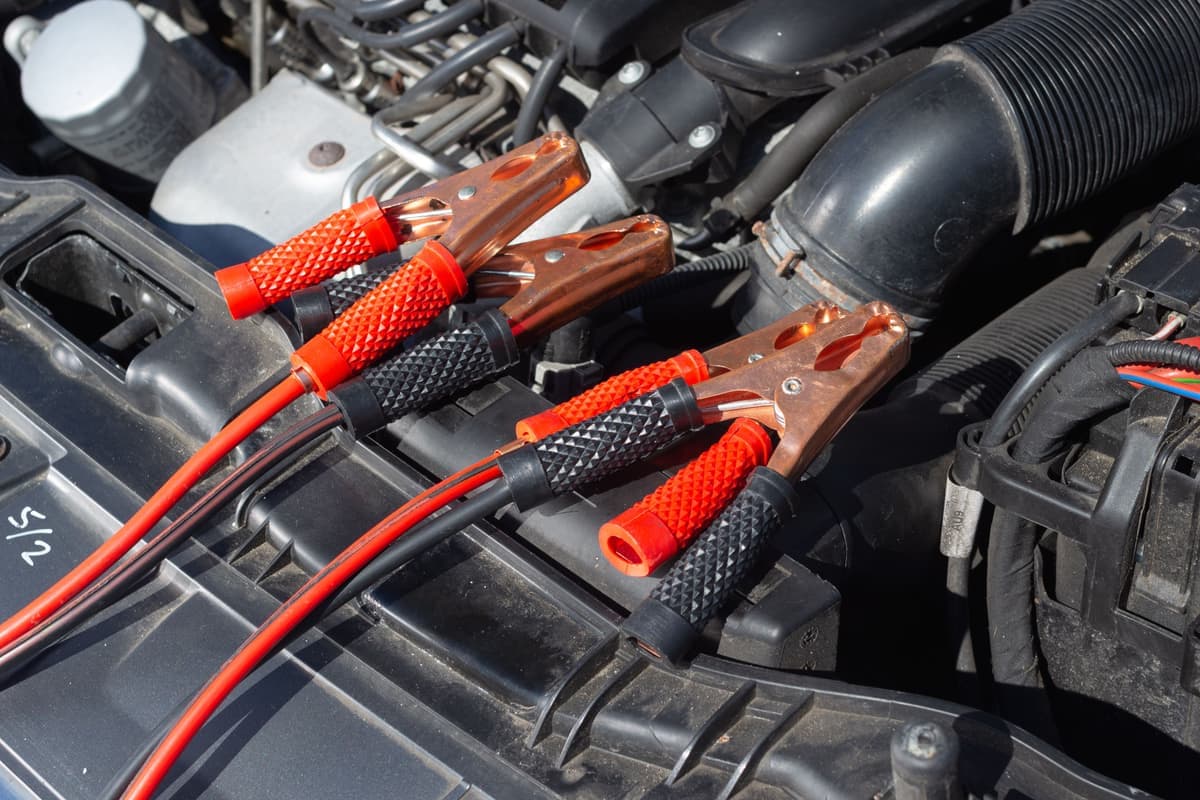
The honest case for and against owning one: who genuinely needs a pack, who does not, and the maintenance that decides whether yours works on the day.
Guide
Emergency Kit Checklist
The short list that survives contact with a real trunk, in priority order, plus what to skip and what to check twice a year.
Best Roadside Kits
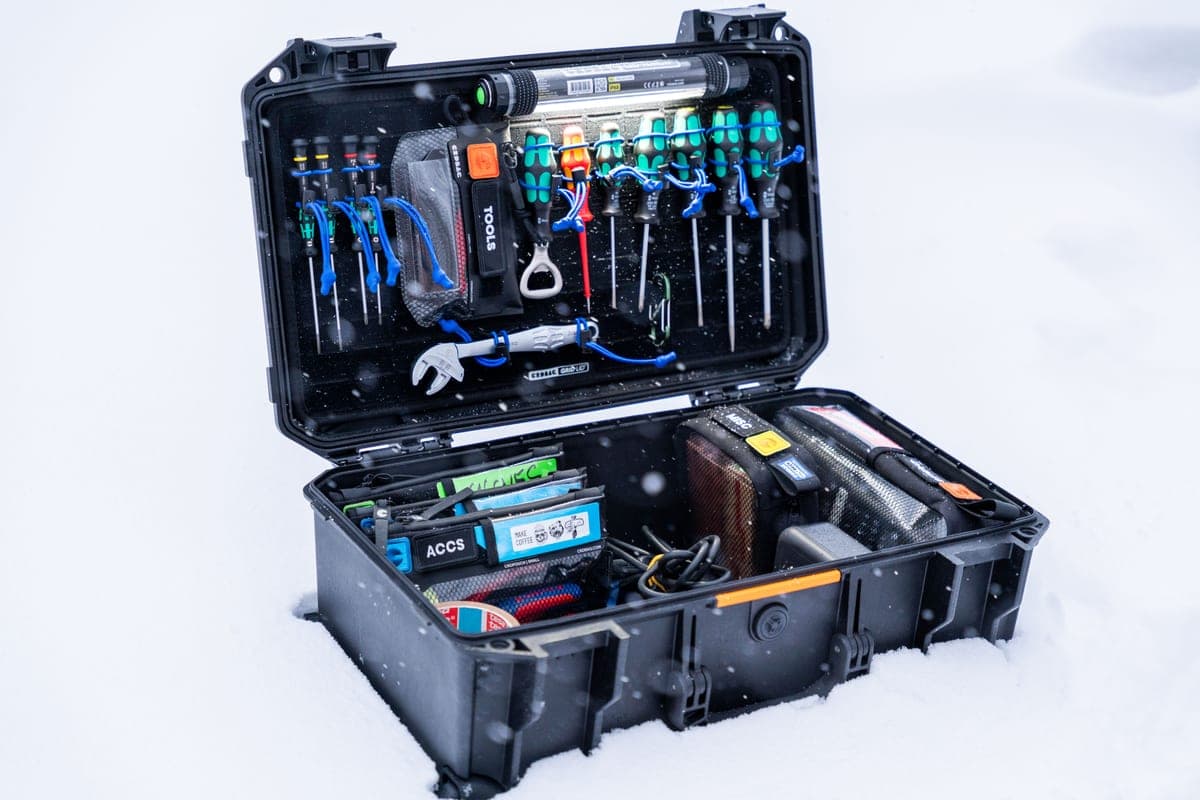
Best Emergency Kits
Pre-assembled kits worth buying as a base, what to replace immediately, and the two items no kit at this price includes.
Best Portable Jump Starters
Best Portable Jump Starters
Our main roundup: five packs from compact to heavy-duty, ranked on the engine rating the manufacturer will actually stand behind.
Guide
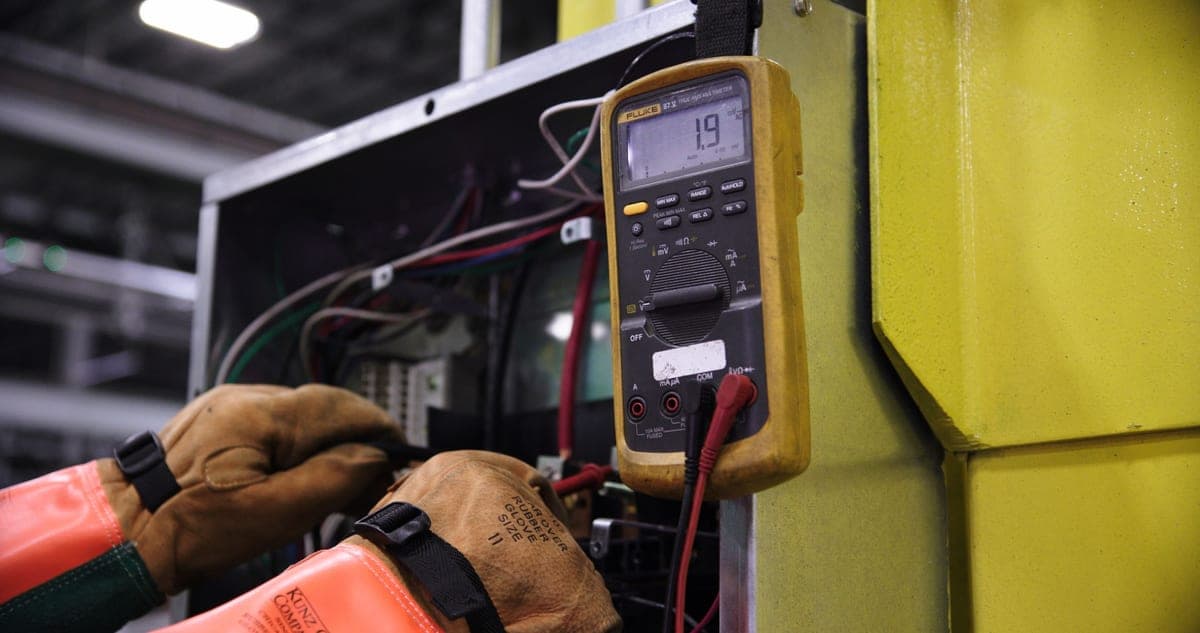
Is the Battery Bad?
The resting-voltage table, the cranking and charging checks, and how to tell a failed battery from a failing alternator or a parasitic drain.
Found something out of date, or a figure you can source better than we did? Tell us — corrections get read first. Our methodology explains how picks are made, and contact is one click away.