Tire Inflators
Tire inflator vs sealant
One adds air, the other stops it leaving. Knowing which problem you have is the whole decision — and sealant has costs worth knowing first.

Disclosure: we earn a commission if you buy through the Amazon links on this page, at no extra cost to you. Commission never decides a verdict or a ranking position — read our editorial policy and affiliate disclosure.
How we assessed these: this comparison is built from manufacturer information and NHTSA publications, cited inline. We publish no measured fill times or gauge deviations.
Short answer
Use an inflator when the tire holds air but is low — slow leaks, cold-weather drops, routine top-ups. Use sealant only when the tire will not hold air at all and you have no usable spare. Sealant is a get-to-a-shop measure with real consequences for the TPMS sensor and the repair.
| Symptom | Tool | Then what |
|---|---|---|
| Slightly low, holds pressure | Inflator | Top up, monitor. Probably temperature or normal permeation. |
| Loses a few PSI a week | Inflator | Top up and get it inspected — a slow leak is usually repairable. |
| Loses pressure in hours | Inflator to get moving | Drive straight to a shop. Do not rely on it. |
| Will not hold air at all, spare available | Spare wheel | Fit the spare. Best outcome for the tire. |
| Will not hold air, no spare | Sealant, then inflator | Drive gently to a shop and tell them there is sealant in it. |
| Sidewall damage, bulge, or driven on flat | Neither | Do not reinflate and drive. This tire is finished. |
What sealant actually does
Aerosol sealant injects a liquid that coats the inside of the tire and plugs small tread punctures from the inside as the tire rotates. Most canisters also inflate, or come with a small compressor — which is why the two products get confused. The sealing is the point; the air is incidental.
It genuinely works, for its narrow case: a small puncture in the tread, no usable spare, and a shop to get to. Modern cars increasingly ship with a sealant-and-compressor kit instead of a spare wheel, precisely because it saves weight and space.
The costs, which nobody mentions at the point of sale
- It may foul the TPMS sensor. The pressure sensor lives inside the wheel and sealant coats everything in there. Many sealants are marketed as TPMS-safe, which reduces but does not eliminate the chance of a sensor needing cleaning or replacing. Check the label before you buy.
- It complicates the repair. A tire full of sealant has to be cleaned out before it can be properly plugged or patched, and some shops will decline to repair a sealant-filled tire at all. A repairable puncture can become a replacement.
- It does not fix sidewalls or large holes. Sealant is for small tread punctures. A sidewall is not repairable by any means, and a large tread hole is beyond it.
- It has a shelf life. A canister that has been in a hot trunk for four years may not work. Check the date, and treat it as a consumable rather than permanent equipment.
- It is messy. Genuinely. Expect the shop to charge for the cleanup.
Plug kits: the better middle option
A tire plug kit — a reamer, plug strips and cement — repairs a tread puncture from the outside, costs very little, takes up almost no space, and does not fill the tire with liquid. Paired with an inflator it covers most real punctures, and a properly installed plug is frequently accepted as a permanent repair by shops in a way sealant is not.
The catch is that it takes a few minutes and a bit of force, which is harder at a roadside than pressing a button. If you are willing to learn it once in a driveway, it is the better tool. Either way you need the inflator: a plug does nothing until you put the air back in.
What we would carry
- An inflator. Non-negotiable, and used monthly rather than in emergencies. The roundup.
- A plug kit. Cheap, compact, and it solves the actual puncture rather than deferring it.
- The spare, checked. Half the spares on the road are themselves underinflated. Check yours twice a year with the rest of the trunk kit.
- Sealant, only if you have no spare. In that case it is the fallback, and know what it costs you.
The picks
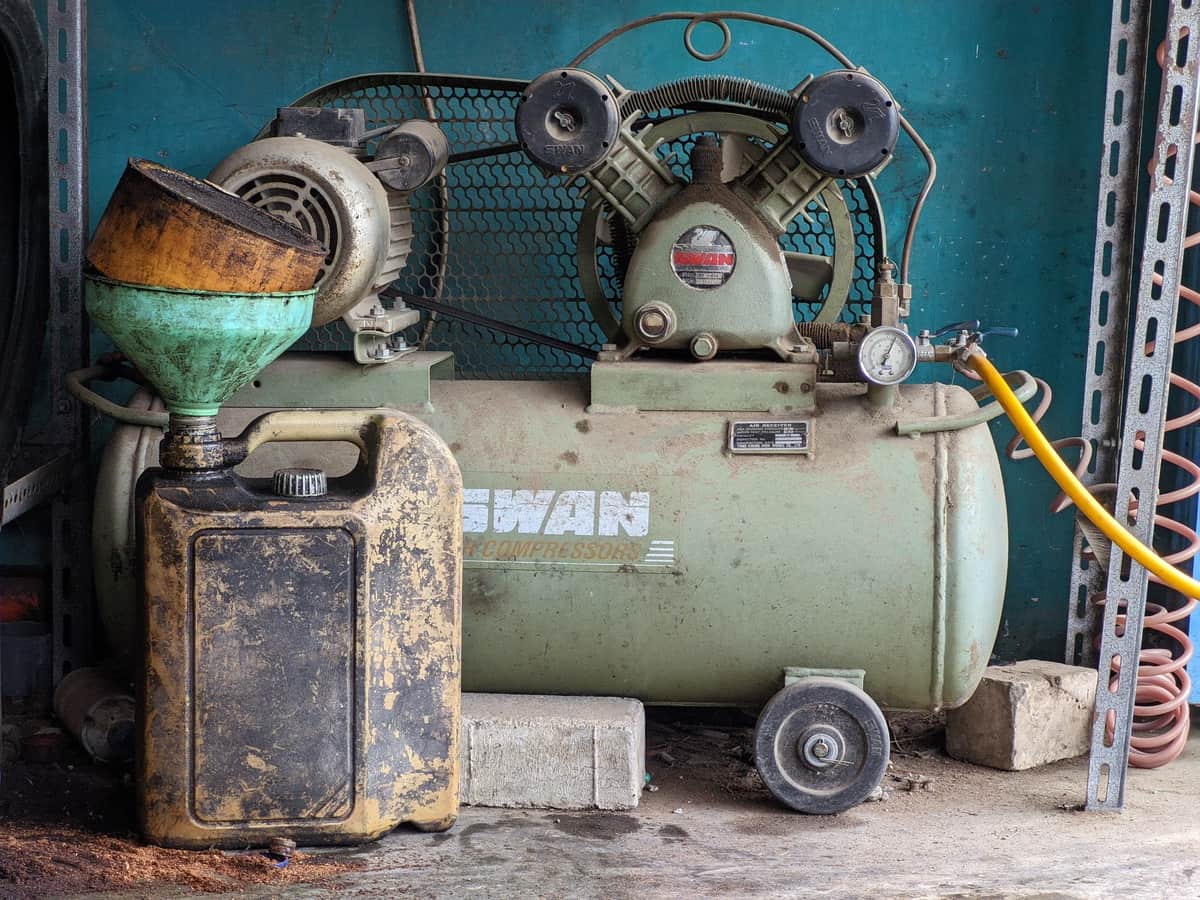
1. The air half of the answer
AstroAI 12V Tire Inflator
AstroAI · Best for the cheapest inflator still worth owning
A plain 12 V socket-powered inflator with a digital gauge and auto-shutoff — the baseline that covers a car's tires with no battery to maintain.
This manufacturer does not publish a full specification table for this model on its own site. Rather than repeat figures we cannot source, the assessment below is limited to what the product category and the retailer listing genuinely establish.
What works
- Powered from the 12 V socket, so it works whenever the car does
- Nothing to keep charged, which means it is never flat when the tire is
- Digital preset shutoff at the target pressure
What does not
- The cord limits where you can work, and reaching a rear tire can be tight
- Small-motor inflators in this tier run hot; large tires need rest intervals
- Gauge accuracy in this class varies unit to unit, so verify against a separate gauge
Skip it if
Not the pick if you regularly air down and back up for trails, or run light-truck tires. That is dedicated-compressor work.
#ad Affiliate link · We show no price here; Amazon shows the current one
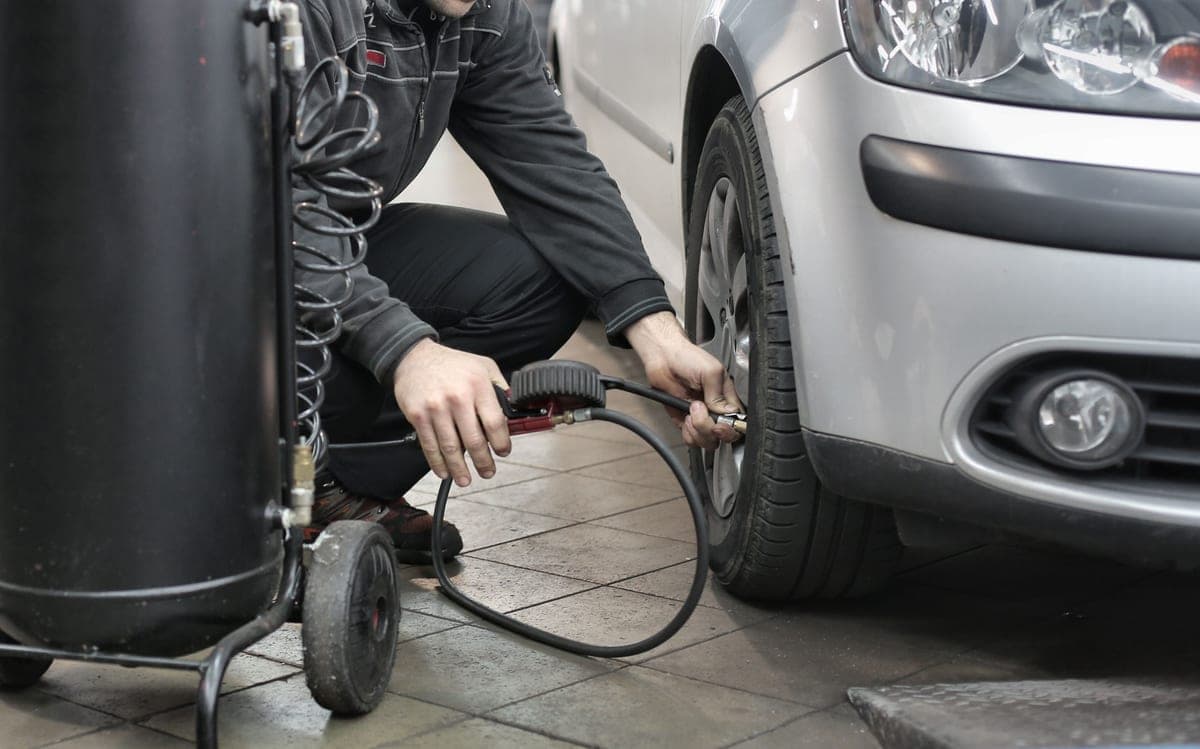
2. Best inflator to pair with a plug kit
DEWALT DCC020IB 20V MAX Inflator
DEWALT · Best for anyone already on dewalt 20v batteries
Three power sources in one body — 20V MAX battery, 12 V socket or 110 V wall — with a digital gauge and auto-shutoff, which is what makes an inflator usable everywhere.
Published specifications
What works
- The 12 V socket option means a dead tool battery never leaves you stranded
- A threaded chuck screws onto the valve stem instead of clamping — the difference between a solid seal and a hissing one
- Set-and-walk-away auto-shutoff at your target pressure
- High-volume mode handles air mattresses and inflatables, not just tires
What does not
- Sold as a bare tool — battery, charger and AC adapter are separate purchases
- Bigger and heavier than a pocket 12 V inflator, so it wants trunk space
Skip it if
Not the pick if you own no DEWALT batteries and only ever top up car tires. A plain 12 V inflator is smaller and cheaper for that job.
#ad Affiliate link · We show no price here; Amazon shows the current one
Raw specifications: DEWALT’s own page for the DEWALT DCC020IB 20V MAX Inflator.

3. Where the consumables live
AAA Roadside Emergency Kit
AAA / Lifeline · Best for a ready-made starting point
A pre-assembled kit is the fastest way to stop having no kit. Treat it as a base to upgrade, not a finished answer.
This manufacturer does not publish a full specification table for this model on its own site. Rather than repeat figures we cannot source, the assessment below is limited to what the product category and the retailer listing genuinely establish.
What works
- Removes the excuse — one purchase and there is something in the trunk tonight
- The bag and organization are usually better than what you would improvise
- Covers the small consumables nobody buys on their own: gloves, ties, tape, first aid
What does not
- The jumper cables and flashlight in pre-built kits are the first things worth replacing
- Advertised item counts include individual bandages, which inflates the apparent value
- No kit at this level includes a jump starter or an inflator — the two things that actually get you moving
Skip it if
Not sufficient on its own. If you buy one, budget for a jump starter and an inflator alongside it, because the kit will include neither.
#ad Affiliate link · We show no price here; Amazon shows the current one
Key takeaways
- An inflator is for low tires; sealant is for tires that will not hold air.
- Sealant can foul the TPMS sensor and can turn a repairable tire into a replacement.
- A plug kit plus an inflator is the better answer where you can manage it.
- Sealant has a shelf life — treat it as a consumable.
- Sidewall damage or a tire driven on flat is neither tool's problem.
How we sourced this
Every figure on this page came from one of the following. Where a manufacturer or regulator does not publish a number, we say so rather than estimate it.
Common questions
- Should I use tire sealant or just inflate the tire?
- Inflate if the tire holds pressure — that covers slow leaks and cold-weather drops. Use sealant only when the tire will not hold air and you have no usable spare, because sealant can foul the TPMS sensor and complicate or prevent a proper repair.
- Does tire sealant ruin TPMS sensors?
- It can. The sensor is inside the wheel and sealant coats everything in there. Many products are labeled TPMS-safe, which reduces the risk without eliminating it — check the label, and tell the shop there is sealant in the tire when you get it repaired.
- Can I repair a tire after using sealant?
- Sometimes, but it is harder. The tire has to be cleaned out first, and some shops decline to repair sealant-filled tires. A puncture that would have been a simple patch can become a tire replacement, which is the strongest argument for carrying a plug kit instead.
- How long can I drive on tire sealant?
- Treat it as enough to reach a shop, not as a repair — drive gently and go straight there. Sealant manufacturers state their own distance and speed limits on the canister, and those limits are the authority rather than any general rule.
More in Tire Inflators
The cheapest tool that prevents the second-most-common roadside stop. Here is which type fits your tires, and the two specs that actually matter.
Read next
How to
How to Use One
The full sequence, including the chuck technique that stops air escaping and what to do if the tire drops straight back down.
Guide
Emergency Kit Checklist
The short list that survives contact with a real trunk, in priority order, plus what to skip and what to check twice a year.
Best Portable Tire Inflators
Best Portable Tire Inflators
Our main inflator roundup: socket, cordless, tool-battery and battery-clamp units, matched to the tires you actually run.
Guide
What PSI Should My Tires Be?
The single most common tire mistake, fixed in two minutes: placard versus sidewall, checking cold, and what cold weather does to the reading.
Found something out of date, or a figure you can source better than we did? Tell us — corrections get read first. Our methodology explains how picks are made, and contact is one click away.