Tire Inflators
Is a portable tire inflator worth it?
Most people buy one for the flat they imagine. They end up using it for the four PSI their tires quietly lose every month, which is where the value actually is.
Disclosure: we earn a commission if you buy through the Amazon links on this page, at no extra cost to you. Commission never decides a verdict or a ranking position — read our editorial policy and affiliate disclosure.
How we assessed these: picks are selected from manufacturer specifications, current retailer listings and published owner feedback — not from hands-on testing of every unit. Where a manufacturer does not publish a figure, it is left out rather than estimated.
Short answer
Yes for most drivers, but the reason is routine rather than dramatic. Tires lose pressure steadily, and underinflation costs fuel economy, tire life and wet-weather grip — NHTSA's tire safety guidance is built around checking pressure monthly. An inflator makes that a two-minute job in your driveway. The roadside rescue it is marketed on is the rarer use.
It is also worth being honest about the limits up front: a portable inflator does not fix a puncture, will not reseat a tire that has come off the bead, and is not a substitute for a spare. What it does is keep four tires at the pressure the vehicle manufacturer specified, and get a slow leak to a tire shop.
Quick picks
Tap any row to jump to the full write-up. Scoring criteria are published in full on our methodology page.
| # | Product | Best for | Our read | Price |
|---|---|---|---|---|
| 1 | 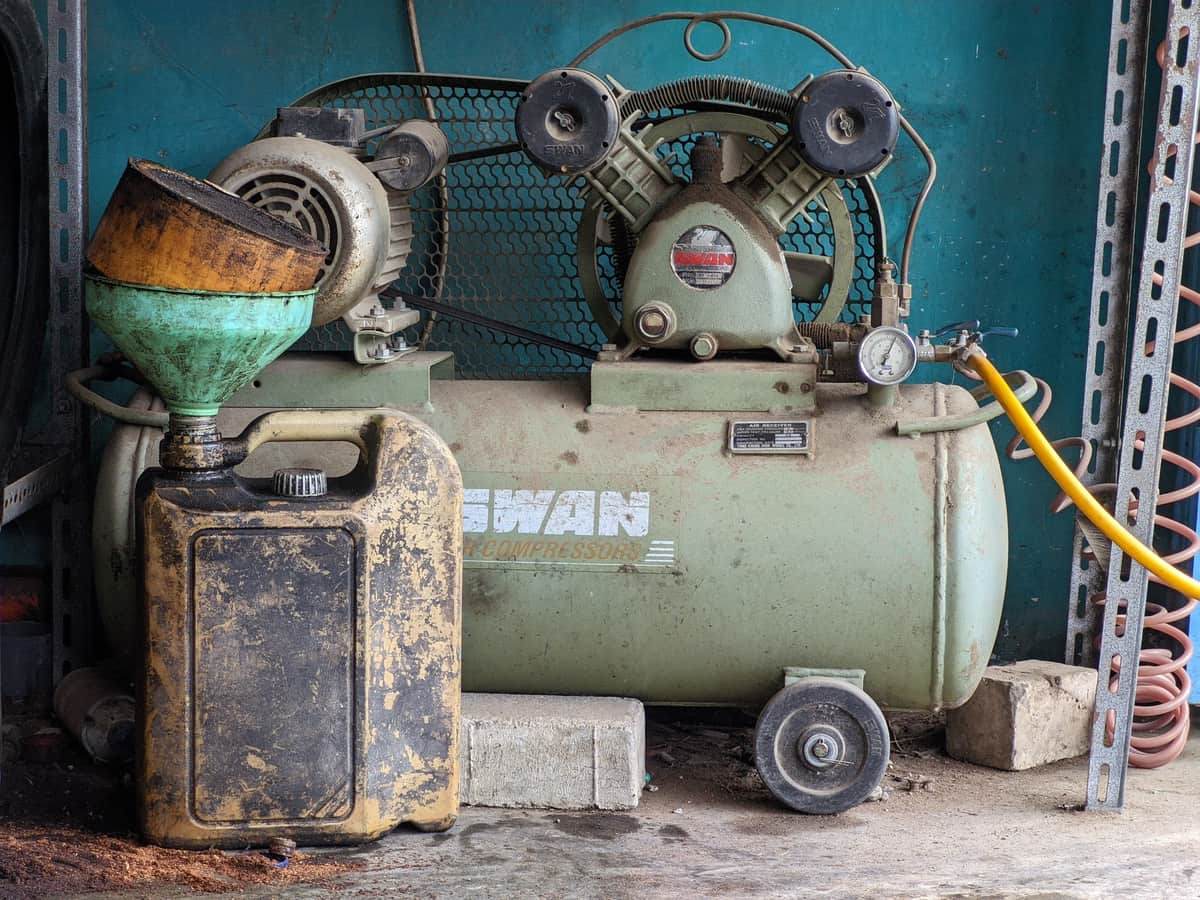 AstroAI 12V Tire Inflator Worth it at the entry point | The cheapest inflator still worth owning | 100 PSI, nothing to keep charged | Check price on Amazon #ad Affiliate link · We show no price here; Amazon shows the current one |
| 2 | Fanttik X8 Apex Worth the premium if you will use it | Cordless top-ups from a glovebox | 56 s for a 5 PSI top-up, 1.74 lb | Check price on Amazon #ad Affiliate link · We show no price here; Amazon shows the current one |
| 3 | 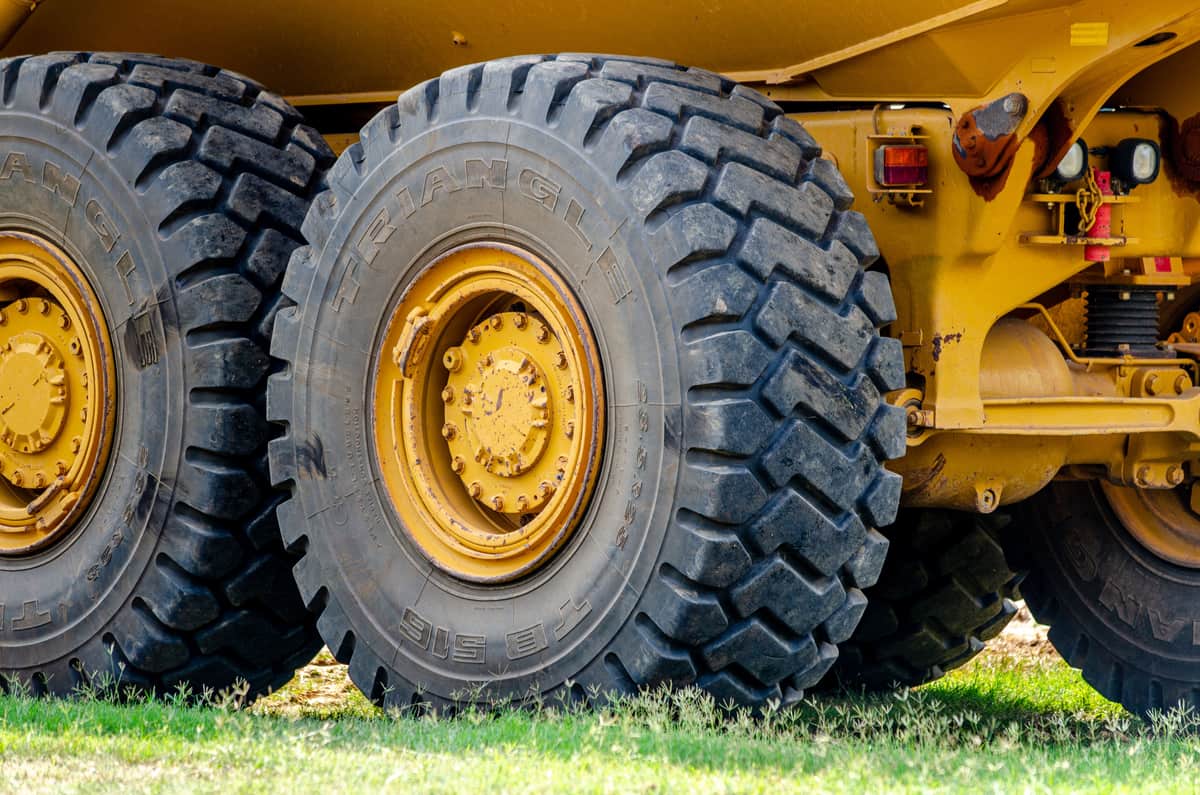 VIAIR 88P Portable Compressor Worth it if your tires are large | Truck, SUV and off-road tires | 1.97 CFM and a published duty cycle | Check price on Amazon #ad Affiliate link · We show no price here; Amazon shows the current one |
The case for
Tires lose pressure whether or not anything is wrong. Air permeates slowly through rubber, and temperature swings move the reading further. NHTSA's guidance is to check monthly and before long trips, using the pressure on the vehicle's door-jamb placard. Without an inflator at home, that check means a trip to a gas station air pump that may or may not work.
Underinflation is expensive in ways you do not see. It increases rolling resistance, which costs fuel. It makes the shoulders of the tread wear faster, which costs tire life. It raises operating temperature, which is the mechanism behind heat-related tire failures NHTSA's tire safety material covers in detail.
A tire pressure warning light is not a diagnosis. The system tells you something has dropped; it does not tell you which tire or by how much. An inflator with a gauge turns a warning light into a two-minute answer instead of a trip somewhere.
Slow leaks become manageable. A nail in the tread that loses five PSI a day is a repairable tire. Driven flat, it is a scrapped tire and possibly a scrapped wheel. An inflator in the trunk is the difference between those two outcomes.
The case against
It does not fix a flat. This is the expectation that leads to disappointment. A puncture that is losing air as fast as you add it needs a plug kit, a sealant canister or a spare. Tire inflator versus sealant covers what each actually recovers.
Gas-station air is free, where it works. If you pass a reliable air pump weekly and are happy to use it, an inflator buys convenience rather than capability. That is a legitimate reason to skip it.
A cordless one is another thing to keep charged. The same objection that applies to a jump pack applies here, and a cordless inflator that is flat when you need it is worse than a socket one that is simply slower. 12V versus cordless is the trade-off in full.
A cheap one may not cover your tires. If you run light-truck or RV tires, an inflator built for sedans will spend more time cooling than running. That is not a reason to skip the category — it is a reason to buy the right size. Inflators for trucks and SUVs covers that end.
What you get for the money, by tier
| 12 V socket inflator | Cordless inflator | Clamp-on compressor | |
|---|---|---|---|
| Routine monthly top-ups | Yes | Yes | Yes, with more setup |
| Needs charging | No | Yes | No |
| Works if the car battery is flat | No | Yes | No |
| Car and small SUV tires | Comfortably | Comfortably | Comfortably |
| Light-truck tires from flat | With cooling breaks | Poorly | Yes |
| Published duty cycle | Rarely | Rarely | Usually |
| Lives in | A trunk | A door pocket | Recovery gear |
A cordless unit is the only one of the three that still works when the vehicle's battery is dead — which, if that is also your worry, is what a jump starter with a compressor is for.
Who should definitely own one
- Anyone with a tire pressure warning system. You will get the light eventually, and the inflator turns it into a non-event.
- Anyone in a climate with real seasons. Pressure falls with temperature, so every cold snap puts all four tires below the placard figure at once.
- Anyone who tows, loads up or carries passengers. Load changes the correct pressure, and the placard often lists a different figure for full load.
- Anyone driving a car without a spare. Many new vehicles ship with a sealant kit instead, and an inflator is half of that kit's usefulness.
- Anyone taking long trips. NHTSA's guidance is to check before a long drive, which is exactly when a station air pump is least convenient. The road trip kit covers what else belongs alongside it.
Who can reasonably skip it
If you have a reliable free air pump on your normal route, check pressures regularly already, and drive a car with a full-size spare, an inflator is a convenience rather than a need. It is still a good purchase, but it is not the one to make first — a jump starter solves a problem you cannot walk away from, and an inflator mostly solves one you can.
The honest ordering, if you are building a trunk kit from nothing, is in the roadside emergency kit checklist. The inflator is near the top of that list — just not at the very top.
The picks
1. Worth it at the entry point
AstroAI 12V Tire Inflator
AstroAI · Best for the cheapest inflator still worth owning
A plain 12 V socket-powered inflator with a digital gauge and auto-shutoff — the baseline that covers a car's tires with no battery to maintain.
This manufacturer does not publish a full specification table for this model on its own site. Rather than repeat figures we cannot source, the assessment below is limited to what the product category and the retailer listing genuinely establish.
What works
- Powered from the 12 V socket, so it works whenever the car does
- Nothing to keep charged, which means it is never flat when the tire is
- Digital preset shutoff at the target pressure
What does not
- The cord limits where you can work, and reaching a rear tire can be tight
- Small-motor inflators in this tier run hot; large tires need rest intervals
- Gauge accuracy in this class varies unit to unit, so verify against a separate gauge
Skip it if
Not the pick if you regularly air down and back up for trails, or run light-truck tires. That is dedicated-compressor work.
#ad Affiliate link · We show no price here; Amazon shows the current one
2. Worth the premium if you will use it
Fanttik X8 Apex
Fanttik · Best for cordless top-ups from a glovebox
A self-contained cordless inflator small enough to live in a door pocket, with a backlit digital gauge and a preset target pressure.
Published specifications
- Maximum pressure
- 150 PSI source
- Internal battery
- 28.8 Wh lithium-ion source
- Stated gauge accuracy
- ±1 PSI source
- Stated runtime
- Up to 40 minutes continuous source
- Stated fill time
- 56 seconds, 215/55 R17 from 28 to 33 PSI source
- Weight
- 1.74 lb source
- Recharging
- USB-C, 5 V / 3 A adapter source
- Work light
- 40 lumens source
What works
- No cable to the car at all — it runs off its own internal battery
- Small enough that it stays in the vehicle, which is most of the battle
- Preset-and-stop pressure control avoids the overshoot you get chasing an analogue gauge
What does not
- An internal battery is one more thing to keep charged, and cold weather cuts into it
- Cordless inflators this size heat up on large tires; expect to work in stages
- Manufacturer duty-cycle figures for this class are not consistently published
Skip it if
Not the pick for light-truck or RV tires. Small cordless units are built for top-ups, not for taking a 35-inch tire from flat to 60 PSI.
#ad Affiliate link · We show no price here; Amazon shows the current one
3. Worth it if your tires are large
VIAIR 88P Portable Compressor
VIAIR · Best for truck, suv and off-road tires
A battery-clamp compressor built for the tire sizes socket-powered units cannot handle without stopping to cool down.
Published specifications
What works
- Connects to the battery terminals rather than the 12 V socket, so socket fuse current is not the limit
- Built for larger tires and repeated fills — the duty cycle is the whole reason to buy it
- Metal body and a real air hose rather than a molded plastic assembly
What does not
- The battery-clamp connection means popping the hood every time
- Bigger and heavier than any glovebox inflator
- Overkill, and slower to set up, for a routine cold-morning top-up
Skip it if
Not the pick if you drive a sedan and just want to correct 4 PSI once a month. That is what a socket inflator is for.
#ad Affiliate link · We show no price here; Amazon shows the current one
Key takeaways
- The real value is monthly top-ups, not the roadside emergency it is sold on.
- NHTSA's guidance is to check pressure monthly and before long trips.
- An inflator does not fix a puncture and will not reseat a tire off the bead.
- A cordless unit is the only type that works when the car battery is dead.
- If you drive on light-truck or RV tires, buy for duty cycle, not for the PSI number.
How we sourced this
Every figure on this page came from one of the following. Where a manufacturer or regulator does not publish a number, we say so rather than estimate it.
Common questions
- Is a portable tire inflator worth it?
- For most drivers, yes — but for routine pressure maintenance rather than emergencies. NHTSA recommends checking tire pressure monthly and before long trips, and underinflation costs fuel economy, tire life and wet grip. An inflator turns that check into a two-minute driveway job instead of a trip to a station pump.
- Can a portable tire inflator fix a flat tire?
- No. It adds air; it does not seal a puncture. If a tire is losing air faster than the inflator adds it, you need a plug kit, a sealant canister or the spare. Where an inflator genuinely helps is a slow leak — enough air to reach a tire shop, which is the difference between a repair and a replacement.
- Is a cordless tire inflator worth the extra over a 12V one?
- It is if you will keep it charged. A cordless unit works with the car switched off or the battery dead, and lives in a door pocket rather than trailing a cord. A 12-volt socket unit has nothing to maintain and is never flat when the tire is. Pick based on which failure you would rather have.
- How often should I actually use it?
- Monthly, which is NHTSA's recommendation, plus before any long drive and after a significant temperature drop. Check when the tires are cold — before driving, or at least three hours after — because rolling heats the air and raises the reading above the true cold pressure.
More in Tire Inflators
The cheapest tool that prevents the second-most-common roadside stop. Here is which type fits your tires, and the two specs that actually matter.
Read next
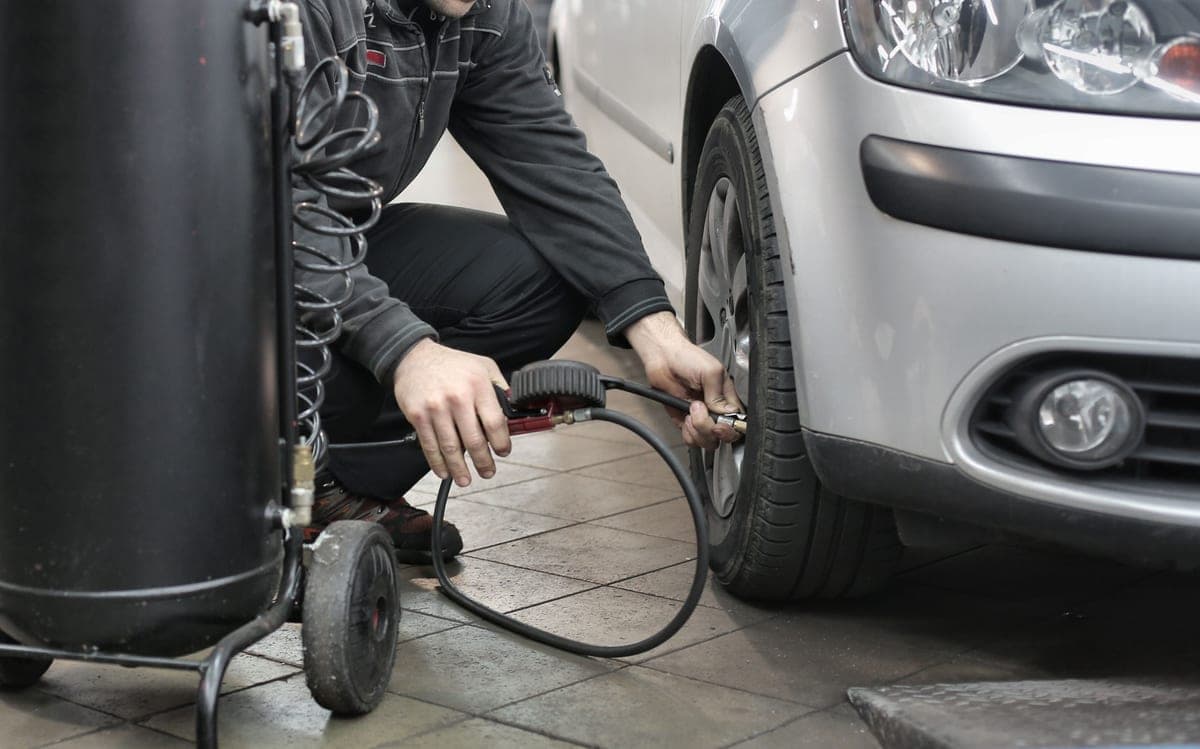
Best Portable Tire Inflators
Best Portable Tire Inflators
Our main inflator roundup: socket, cordless, tool-battery and battery-clamp units, matched to the tires you actually run.

Guide
What PSI Should My Tires Be?
The single most common tire mistake, fixed in two minutes: placard versus sidewall, checking cold, and what cold weather does to the reading.

Head to head
Inflator vs Sealant
When air is enough, when you need sealant, what sealant does to a TPMS sensor and a future repair, and why most drivers should carry both.
Head to head
12V vs Cordless
Socket power versus an internal battery, compared on reliability, convenience, cold-weather output and what happens when the car battery is also dead.
Guide
PSI Ratings Explained
Why a 150 PSI inflator is not faster than a 100 PSI one, what the rating genuinely limits, and the spec that decides how long you stand there.
Found something out of date, or a figure you can source better than we did? Tell us — corrections get read first. Our methodology explains how picks are made, and contact is one click away.