Road Trip & Travel
The road trip car kit
The trunk kit with three changes: size up the power, add for the terrain you are crossing, and separate your power bank from your jump pack.
Disclosure: we earn a commission if you buy through the Amazon links on this page, at no extra cost to you. Commission never decides a verdict or a ranking position — read our editorial policy and affiliate disclosure.
How we assessed these: regulatory figures on this page were read off the FAA and TSA pages linked in the sources block on 2026-09-26 and are cited there. Product figures are manufacturers' published specifications. We have not bench-tested every unit.
Short answer
Take the standard trunk kit and make three changes: size the jump pack up rather than down, add water and warmth for the terrain you are crossing rather than the terrain you live in, and carry a phone power bank that is separate from the jump pack.
The tools do not change on a road trip. The margins do. At home a dead battery is an inconvenience with a workshop at the end of it. Four hours from home on a Sunday it is the difference between continuing the trip and not, and everything in this kit is chosen against that.
Change one: size up the power
At home, a pack that just clears your engine's published rating is adequate — if it struggles you have other options. Away from home you want headroom. Buy one step up the range from your engine's minimum, for the same reason you would in cold weather: margin is what covers the conditions you did not plan for.
Check the pack's charge before you leave, not when you arrive. And if the trip crosses genuinely hot country, think about where the pack rides — heat permanently costs capacity, and a pack cooking on a rear shelf across Nevada is losing the margin you just bought.
Change two: add for the terrain you are crossing
| Where you are going | What to add |
|---|---|
| Desert or hot, remote country | Water — more than feels necessary. Sun protection. A spare tire you have actually checked. |
| Mountains, any season | Warm layers regardless of the forecast. Weather changes with altitude faster than with the calendar. |
| Snow country | The winter kit in full: traction material, a folding shovel, cold-rated washer fluid. |
| Long distances between towns | A paper map or offline maps downloaded. Cell coverage is not a given, and navigation is what your phone is for. |
| Unpaved or gravel roads | A tire plug kit, and an inflator with real throughput. Gravel punctures tires. |
| Anywhere with a trailer or boat | A second check on trailer tire pressures, which run higher than the car's. |
Change three: separate the power bank from the jump pack
This sounds fussy and it is the single most useful item on the page. A jump pack with a USB output is a poor power bank — a GB40 holds 24 watt-hours, which is a handful of phone charges. If you use it to keep phones alive on a long drive and then need it to start the car, you have spent the margin.
Carry a separate power bank for devices and leave the jump pack for its job. The exception is a pack with genuine USB-C Power Delivery, like the GBX45 at up to 20 V / 3 A — but even then, the discipline of not draining it is worth keeping.
What to leave at home
- A mains battery charger. There is no outlet on a highway shoulder. It is the right tool in a garage and dead weight on a trip — which is exactly why this hub is separate from the charger hub.
- A full socket set. Roadside repairs you can actually complete rarely need one.
- A heavy shop compressor, unless you are running large tires and airing down deliberately. A portable inflator covers the trip case.
- Anything you have not checked. A spare tire at 15 PSI, a flashlight with corroded cells, a first-aid kit six years out of date. Untested gear is worse than no gear, because you planned around it.
The pre-trip check
- Tire pressures, cold, all five — including the spare. Use the door-jamb placard figure, not the sidewall maximum; full guidance.
- Battery voltage. Around 12.6 V at rest is healthy. If it is materially lower, deal with it before you leave, not 300 miles out. A multimeter does this in thirty seconds.
- Jump pack charge, and that you know where it is going to ride.
- Oil and coolant levels, and washer fluid — appropriate for the destination's climate, not your own.
- Lights, all of them, including the ones you cannot see from the driver's seat.
- That the kit is actually in the car. The most common failure is a kit that got taken out to make room for luggage.
The picks

1. Size up for distance
NOCO Boost HD GB70
NOCO · Best for diesel pickups and big v8s
The one to buy if you drive a diesel: 2,000 peak amps, a 6.0-liter diesel rating and 56 watt-hours, which is the smallest pack with real margin on a cold diesel.
Published specifications
What works
- The 6.0 L diesel rating covers the common 3.0 L and 6.7 L light-truck diesels with margin
- 56 Wh is still comfortably under the 100 Wh carry-on threshold, so it flies as hand luggage
- 12 V 15 A accessory output, and a 400-lumen light that is genuinely usable roadside
- 12 V / 3 A fast charge brings it back in about three hours
What does not
- 4.18 lb — noticeably heavier than the compact packs, and it wants a dedicated spot
- Overkill for a commuter four-cylinder; you are paying for headroom you will not use
Skip it if
Not the one to buy if you only ever start a four-cylinder commuter. Buy diesel headroom when you have a diesel.
#ad Affiliate link · We show no price here; Amazon shows the current one
Raw specifications: NOCO’s own page for the NOCO Boost HD GB70.
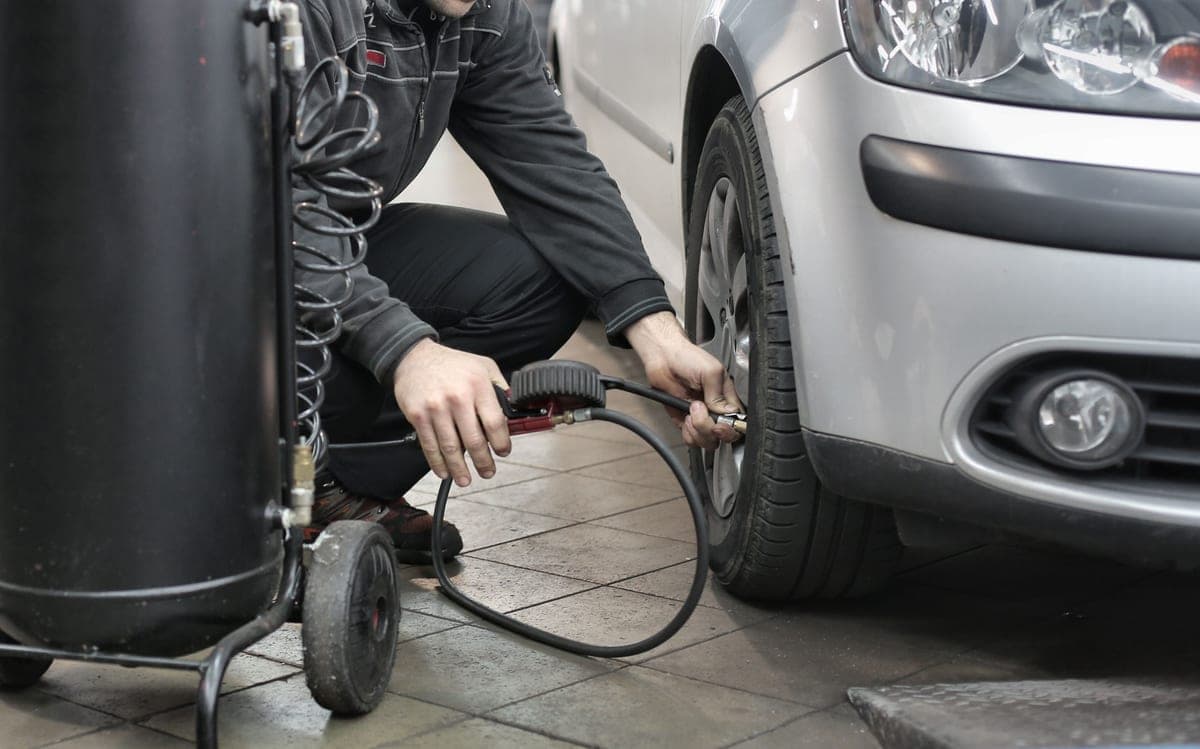
2. Best inflator for a long trip
DEWALT DCC020IB 20V MAX Inflator
DEWALT · Best for anyone already on dewalt 20v batteries
Three power sources in one body — 20V MAX battery, 12 V socket or 110 V wall — with a digital gauge and auto-shutoff, which is what makes an inflator usable everywhere.
Published specifications
What works
- The 12 V socket option means a dead tool battery never leaves you stranded
- A threaded chuck screws onto the valve stem instead of clamping — the difference between a solid seal and a hissing one
- Set-and-walk-away auto-shutoff at your target pressure
- High-volume mode handles air mattresses and inflatables, not just tires
What does not
- Sold as a bare tool — battery, charger and AC adapter are separate purchases
- Bigger and heavier than a pocket 12 V inflator, so it wants trunk space
Skip it if
Not the pick if you own no DEWALT batteries and only ever top up car tires. A plain 12 V inflator is smaller and cheaper for that job.
#ad Affiliate link · We show no price here; Amazon shows the current one
Raw specifications: DEWALT’s own page for the DEWALT DCC020IB 20V MAX Inflator.

3. Non-negotiable on unfamiliar roads
Reflective Warning Triangle Set
Various · Best for being seen before anything else
The cheapest item in the trunk that changes an outcome. Before you open the hood on a shoulder, you want traffic to know you are there.
This manufacturer does not publish a full specification table for this model on its own site. Rather than repeat figures we cannot source, the assessment below is limited to what the product category and the retailer listing genuinely establish.
What works
- Works without batteries, in any weather, for as long as you own the car
- Folds flat, so it costs almost no trunk space
- Visible far enough back to give traffic time to move over
What does not
- Only useful if you actually get out and place it, which takes a deliberate habit
- Plastic bases crack if they live loose under heavier gear
Skip it if
Not a substitute for hazard lights or for getting clear of the roadway. Placement matters more than the product.
#ad Affiliate link · We show no price here; Amazon shows the current one
4. The consumables base
AAA Roadside Emergency Kit
AAA / Lifeline · Best for a ready-made starting point
A pre-assembled kit is the fastest way to stop having no kit. Treat it as a base to upgrade, not a finished answer.
This manufacturer does not publish a full specification table for this model on its own site. Rather than repeat figures we cannot source, the assessment below is limited to what the product category and the retailer listing genuinely establish.
What works
- Removes the excuse — one purchase and there is something in the trunk tonight
- The bag and organization are usually better than what you would improvise
- Covers the small consumables nobody buys on their own: gloves, ties, tape, first aid
What does not
- The jumper cables and flashlight in pre-built kits are the first things worth replacing
- Advertised item counts include individual bandages, which inflates the apparent value
- No kit at this level includes a jump starter or an inflator — the two things that actually get you moving
Skip it if
Not sufficient on its own. If you buy one, budget for a jump starter and an inflator alongside it, because the kit will include neither.
#ad Affiliate link · We show no price here; Amazon shows the current one
Key takeaways
- Size the jump pack up for distance — margin covers what you did not plan for.
- Pack for the terrain you are crossing, not the terrain you live in.
- Keep a separate power bank so device charging does not spend your starting margin.
- Leave the mains charger at home; there is no outlet on a shoulder.
- Check all five tire pressures and the battery voltage before you leave.
How we sourced this
Every figure on this page came from one of the following. Where a manufacturer or regulator does not publish a number, we say so rather than estimate it.
Common questions
- What should be in a road trip emergency car kit?
- The standard trunk kit — triangles, jump starter, inflator, flashlight, gloves, blanket, first aid — with three changes: a jump pack sized one step above your engine's minimum, water and warmth appropriate to the terrain you are crossing, and a phone power bank kept separate from the jump pack.
- Do I need a bigger jump starter for a road trip?
- One step up from your engine's published rating is worth it, for the same reason margin matters in cold weather: away from home there is no second option if the pack struggles. Check its charge before you leave rather than when you arrive.
- Should I take a battery charger on a road trip?
- No. A mains charger needs a wall outlet, which a highway shoulder does not have. Take the jump pack, which works anywhere, and leave the charger in the garage where it is the right tool.
- Can I use my jump starter to charge my phone on a trip?
- You can, and it is better not to. A compact pack holds around 24 watt-hours, which is a handful of phone charges — spend that on devices and you have spent your starting margin. Carry a separate power bank.
More in Road Trip & Travel
What changes when the nearest parts store is four hours away, the pack has to survive a hot trunk, and the airline has an opinion about your lithium battery.
Read next
Guide
Emergency Kit Checklist
The short list that survives contact with a real trunk, in priority order, plus what to skip and what to check twice a year.

Guide
Flying With a Jump Starter
The FAA and TSA thresholds quoted from source, where every mainstream pack sits against them, and the rules airlines add on top.
Best for Travel
Best for Travel
Packs for road trips, rentals and flying: light, compact, under 100 Wh, and charging from a cable you already have.
Guide
Winter Car Kit
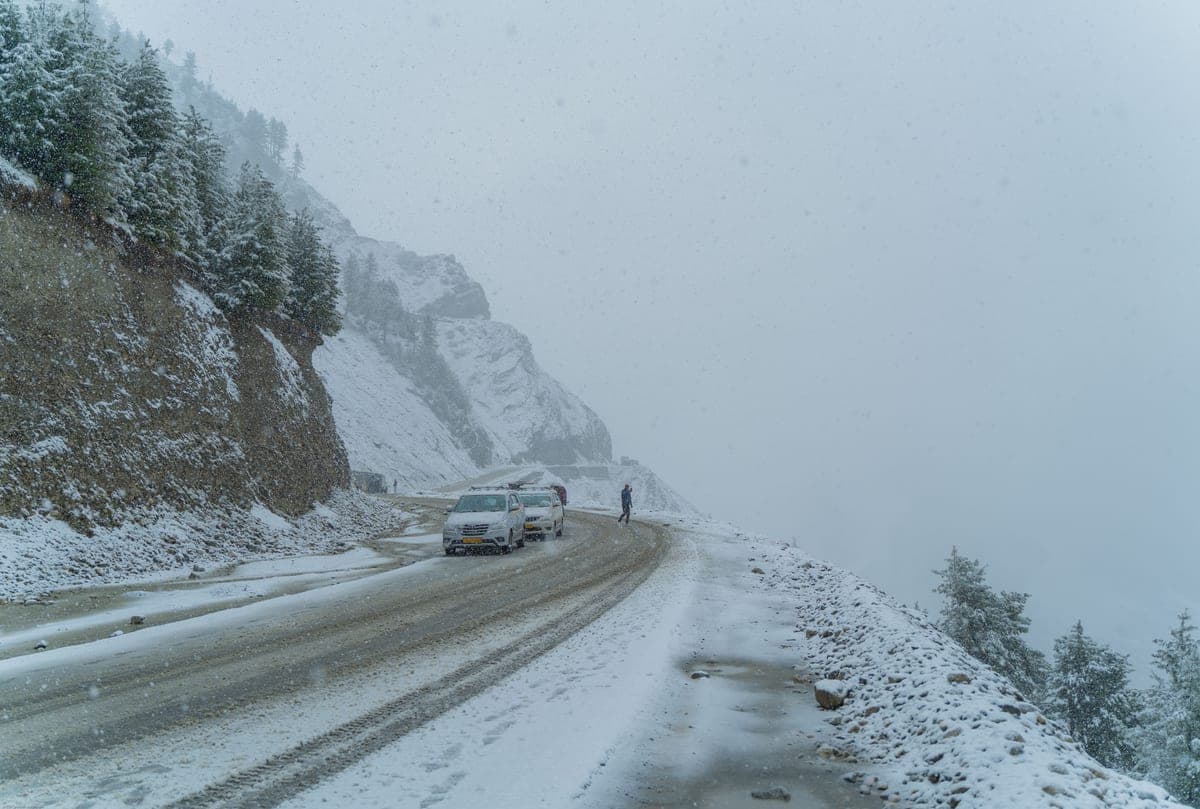
What gets added for winter: cold-margin power, warmth that does not need the engine, traction, and the things people forget until it is dark.
Found something out of date, or a figure you can source better than we did? Tell us — corrections get read first. Our methodology explains how picks are made, and contact is one click away.