Jump Starters
NOCO Boost Plus GB40 review
The pack most people should buy, and a clear line around the engines it does not cover.
Disclosure: we earn a commission if you buy through the Amazon links on this page, at no extra cost to you. Commission never decides a verdict or a ranking position — read our editorial policy and affiliate disclosure.
How we assessed these: this assessment is built from NOCO's published specifications, the current retailer listing and published owner feedback. We have not bench-tested this unit, and we do not publish test figures we did not measure.
Short answer
Buy the GB40 if your engine is a gas four or six under 6.0 liters and you want the smallest pack that reliably covers it. Do not buy it for a diesel above 3.0 liters — NOCO's own rating stops there, and cold weather eats what margin is left.
The GB40 is the pack that made lithium jump starters normal. It is small enough to live in a door pocket, rated for the engine most people actually drive, and it has been in the market long enough that its limitations are well understood rather than argued about.
What NOCO publishes
| Specification | Figure |
|---|---|
| Starting current | 1,000 A peak |
| Internal battery | 24 Wh lithium-ion |
| Gas engine rating | Up to 6.0 liters |
| Diesel engine rating | Up to 3.0 liters |
| Weight | 2.45 lb (1.11 kg) |
| Water resistance | IP65 |
| USB output | 5 V / 2.1 A max |
| Flashlight | 100 lumens |
| Warranty | 1-year hassle-free |
Every figure above is taken from NOCO's GB40 specification page. We do not restate figures from memory or from other review sites.
Who it is right for
The 6.0 L gas rating is more generous than it sounds. It covers essentially every four-cylinder and V6 passenger car and crossover on the road, plus small gas V8s. If your engine is a 2.5 L four, a 3.5 L V6 or a 5.0 L V8, the GB40 has margin.
What makes it the default recommendation rather than merely an adequate one is the 2.45 lb weight and the packed size. That matters more than spec sheets suggest: the jump starter that gets used is the one that is still in the vehicle, and packs that need a dedicated trunk spot are the ones that migrate to a garage shelf. If you are shopping for the tool you will actually have with you, small is a feature.
The 24 Wh capacity also sits far below the FAA's 100 Wh carry-on threshold, so it flies as hand luggage without airline approval — see flying with a jump starter for the rules as the regulator states them.
Where the line is
Diesel. The published diesel rating is 3.0 liters, which is a 2-to-1 derating against the gas figure. That is not caution — a diesel cranks against much higher compression and draws glow-plug current first. A 3.0 L six-cylinder light-duty diesel is at the edge of this pack's rating on a warm day, which is another way of saying it has nothing left for a cold one. For anything above that, read the diesel roundup.
Big gas V8s. A 6.2 L V8 is past the 6.0 L rating. The GB50 class at 1,500 A and 7.0 L is the correct step, and our SUV and truck roundup works through the common engines.
Repeated use as a power bank. 24 Wh is a small reserve. It is enough for a handful of phone top-ups — NOCO cites up to four smartphone recharges — and nothing like a camping battery. If that is what you want, you want a power station, which is a different product with different airline implications.
The GB40 against its siblings
| Model | Peak amps | Capacity | Gas rating | Weight |
|---|---|---|---|---|
| GB40 | 1,000 A | 24 Wh | Up to 6.0 L | 2.45 lb |
| GBX45 | 1,250 A | 31 Wh | Up to 6.5 L | 2.16 lb |
| GB50 | 1,500 A | 35 Wh | Up to 7.0 L | 2.71 lb |
| GB70 | 2,000 A | 56 Wh | Up to 8.0 L | 4.18 lb |
The interesting row is the GBX45: more capacity and a higher rating than the GB40 in a lighter body, because it is a newer design with USB-C Power Delivery. It costs more. The GBX45 review covers whether that is worth it.
Living with it
Two habits decide whether this pack is there when you need it. Recharge it on a schedule — every three months is a reasonable rhythm, and NOCO specifies recharging from a powered USB port in three hours at 2.1 A. Keep it out of the heat. Sustained high temperature is the main cause of permanent lithium capacity loss, and a pack that spent July in a hot trunk has quietly lost some of the margin you paid for. The cabin, out of direct sun, is a better home than the trunk in summer.
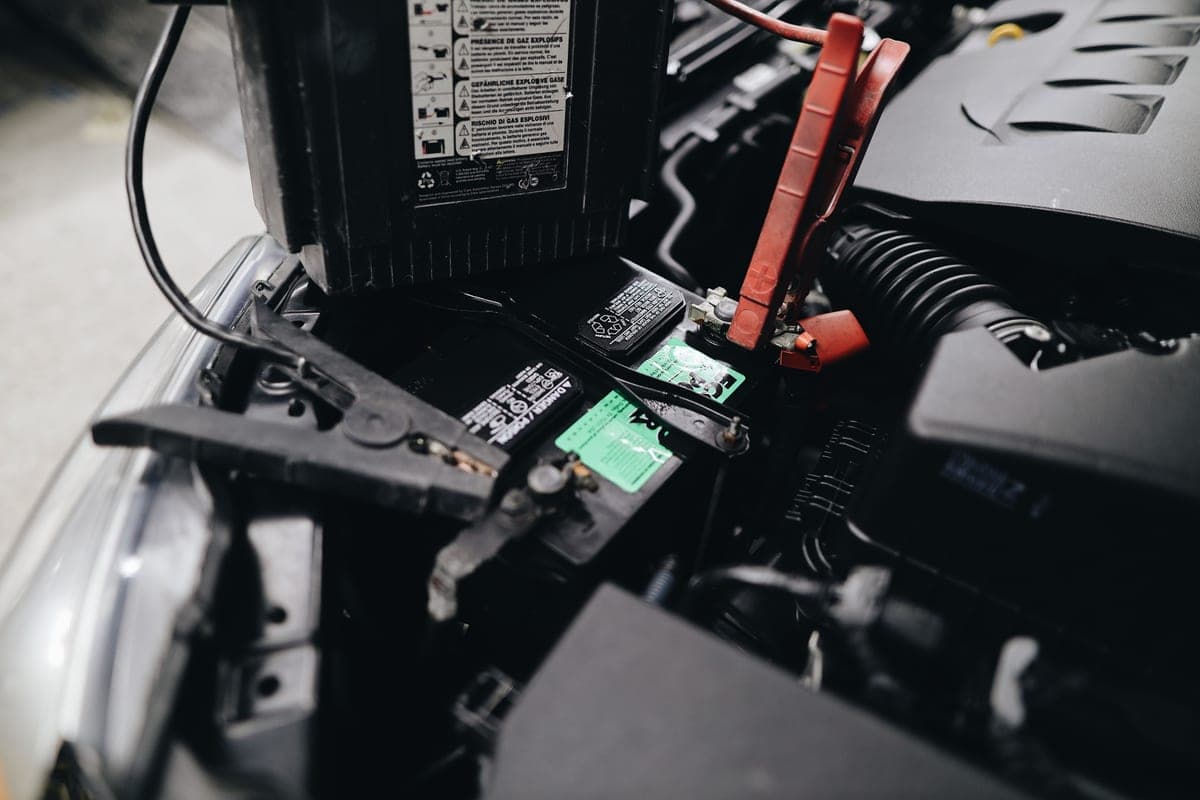
On the roadside, the pack's reverse-polarity protection means a backwards clamp does not spark, which is the single biggest safety improvement over jumper cables. How to use a jump starter has the full sequence, and jump starter safety covers what can still go wrong.
Verdict
1. Best overall for most cars
NOCO Boost Plus GB40
NOCO · Best for most cars and small suvs
The default answer for a four- or six-cylinder car: 1,000 peak amps, 24 watt-hours, and light enough that it actually stays in the trunk.
Published specifications
What works
- 24 Wh sits far under the 100 Wh carry-on threshold, so flying with it needs no airline approval
- 2.45 lb and pocketable — the size that decides whether a tool is still in the trunk six months later
- IP65 enclosure, so a wet shoulder in the rain is not a problem
- Reverse-polarity protection means a backwards clamp does not spark
What does not
- 1,000 peak amps runs out of headroom above a 6.0 L gas engine
- The 3.0 L diesel ceiling rules out most modern diesel pickups
- 24 Wh is a small reserve — it is a jump starter, not a power bank substitute
Skip it if
Not the one to buy if you drive a diesel pickup or a big V8. You would be at the edge of its rating on a cold morning, which is exactly when you want margin.
#ad Affiliate link · We show no price here; Amazon shows the current one
Raw specifications: NOCO’s own page for the NOCO Boost Plus GB40.
Key takeaways
- 1,000 peak amps, 24 Wh, 2.45 lb, IP65 — all from NOCO's own spec page.
- Covers virtually every gas four and V6 passenger car with margin.
- Diesel rating stops at 3.0 L; buy the GB70 class for a diesel pickup.
- 24 Wh flies in carry-on baggage with no airline approval needed.
- Recharge quarterly and keep it out of a hot trunk, or it loses capacity.
How we sourced this
Every figure on this page came from one of the following. Where a manufacturer or regulator does not publish a number, we say so rather than estimate it.
Common questions
- What engine size can a NOCO GB40 start?
- NOCO publishes a rating of up to 6.0 liters for gas engines and up to 3.0 liters for diesel. That covers essentially every four-cylinder and V6 passenger car and crossover, plus small gas V8s, and stops short of diesel pickups.
- Can you take a NOCO GB40 on a plane?
- Yes, in carry-on baggage. Its 24 Wh rating is far under the FAA's 100 Wh limit for lithium-ion batteries, so no airline approval is needed. Spare lithium batteries and power banks must never travel in checked baggage, and the terminals must be protected from short circuit.
- How long does it take to charge a GB40?
- NOCO specifies three hours from a powered USB port at 2.1 amps. A lower-current USB source will take proportionally longer, which is worth knowing if you top it up from a laptop port.
- Is the GB40 or the GBX45 better?
- The GBX45 has a higher rating (6.5 L gas against 6.0 L), more capacity (31 Wh against 24 Wh) and less weight (2.16 lb against 2.45 lb), plus USB-C Power Delivery in both directions. It also costs more. If you travel with the pack or already carry USB-C, the GBX45 earns the difference; for a car that stays local, the GB40 is enough.
More in Jump Starters
A jump pack is the one trunk tool that turns a tow truck into a five-minute inconvenience. This is how to size one, and which ones are worth the space.
Read next
Best Portable Jump Starters
Best Portable Jump Starters
Our main roundup: five packs from compact to heavy-duty, ranked on the engine rating the manufacturer will actually stand behind.
Head to head
GB40 vs GB70
The head-to-head most buyers actually face. Published specs side by side, and a clear rule for which side of the line you are on.
Review
NOCO GBX45 Review
1,250 peak amps, 31 Wh, 2.16 lb, USB-C Power Delivery both directions. The pack to pack.

Guide
What Size Do I Need?
The sizing table by engine displacement and fuel type, using ratings manufacturers publish and warrant rather than peak-amp marketing.
Found something out of date, or a figure you can source better than we did? Tell us — corrections get read first. Our methodology explains how picks are made, and contact is one click away.