Jump Starters
The best lithium jump starters
Lithium is what made a jump starter small enough to stay in the car. These are the packs whose makers publish the numbers that matter, sized by the engine you actually own.
Disclosure: we earn a commission if you buy through the Amazon links on this page, at no extra cost to you. Commission never decides a verdict or a ranking position — read our editorial policy and affiliate disclosure.
How we assessed these: picks are selected from manufacturers' published specifications, stated engine ratings and current retailer listings — not from hands-on cranking tests of every unit. We publish no measured cranking currents or start counts, because we do not measure them.
Short answer
For a car or small SUV, buy the NOCO Boost Plus GB40: 1,000 peak amps and 24 watt-hours at 2.45 lb, which is the size that stays in the trunk. If you fly, the GBX45 is lighter and recharges over USB-C. If you drive a diesel pickup, the GB70's published 6.0-liter diesel rating is the one with real margin. The budget pick is the NOCO Boost Sport GB20 — the cheapest lithium pack here, but NOCO rates it to 4.0 liters of gas and says diesel is not recommended, so buy it for a motorcycle or a quad, not for a car you depend on.
Quick picks
Tap any row to jump to the full write-up. Scoring criteria are published in full on our methodology page.
| # | Product | Best for | Our read | Price |
|---|---|---|---|---|
| 1 | 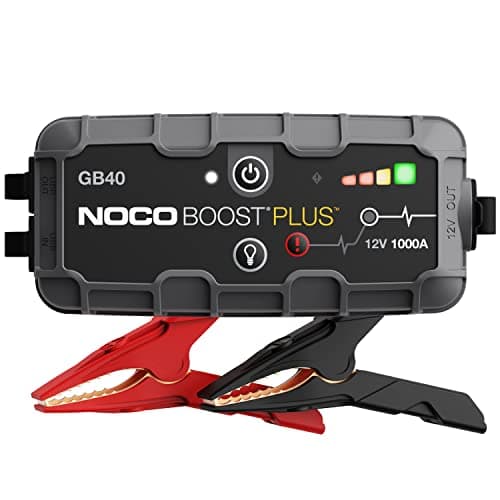 NOCO Boost Plus GB40 Best overall | Most cars and small SUVs | 1,000 A and 24 Wh at 2.45 lb — the default for a car | $99.95View on Amazon #ad Affiliate link · Price as of November 10, 2026 |
| 2 | 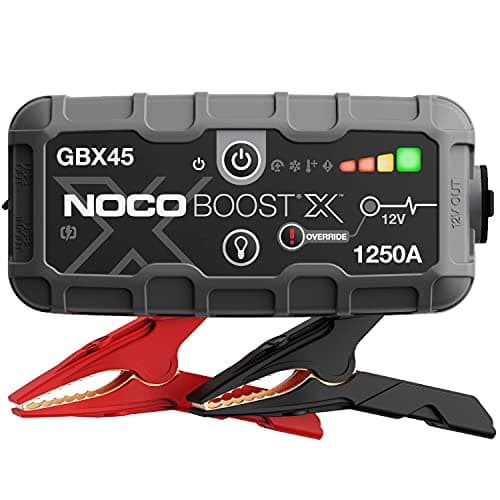 NOCO Boost X GBX45 Best for travel | Travel and carry-on use | Lightest here at 2.16 lb, USB-C Power Delivery both ways | $124.95View on Amazon #ad Affiliate link · Price as of November 10, 2026 |
| 3 | 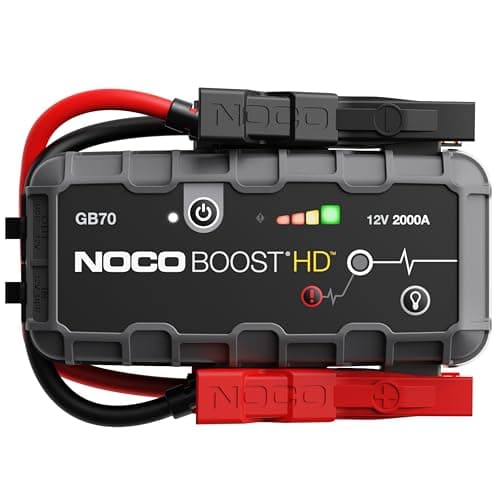 NOCO Boost HD GB70 Best for diesel pickups | Diesel pickups and big V8s | 2,000 A, 56 Wh, a 6.0 L diesel rating, still under 100 Wh | $199.95View on Amazon #ad Affiliate link · Price as of November 10, 2026 |
| 4 | 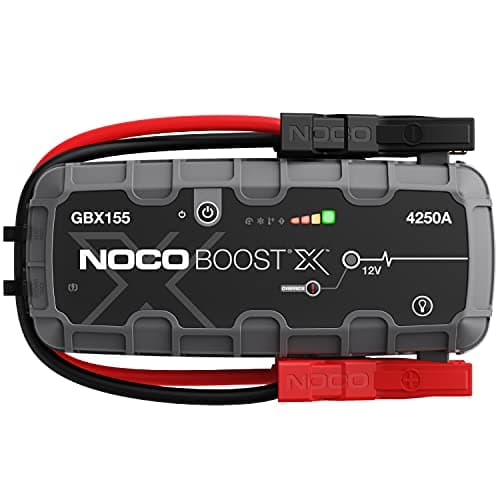 NOCO Boost X GBX155 Best as a power bank too | Doubling as a serious power bank | 99 Wh — the most capacity that still clears carry-on | $369.95View on Amazon #ad Affiliate link · Price as of November 10, 2026 |
| 5 | 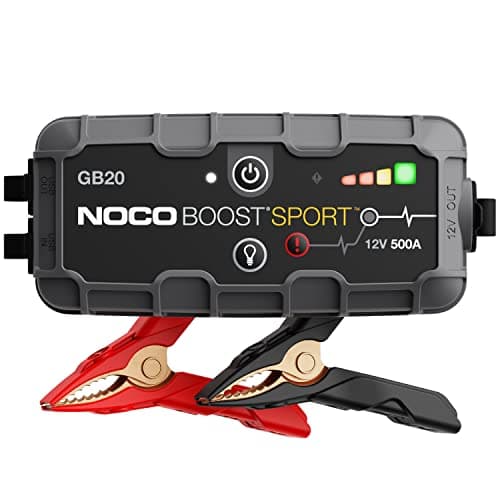 NOCO Boost Sport GB20 Budget pick | Motorcycles, ATVs and small engines | Cheapest lithium pack here, and correctly sized for powersports | $79.95View on Amazon #ad Affiliate link · Price as of November 10, 2026 |
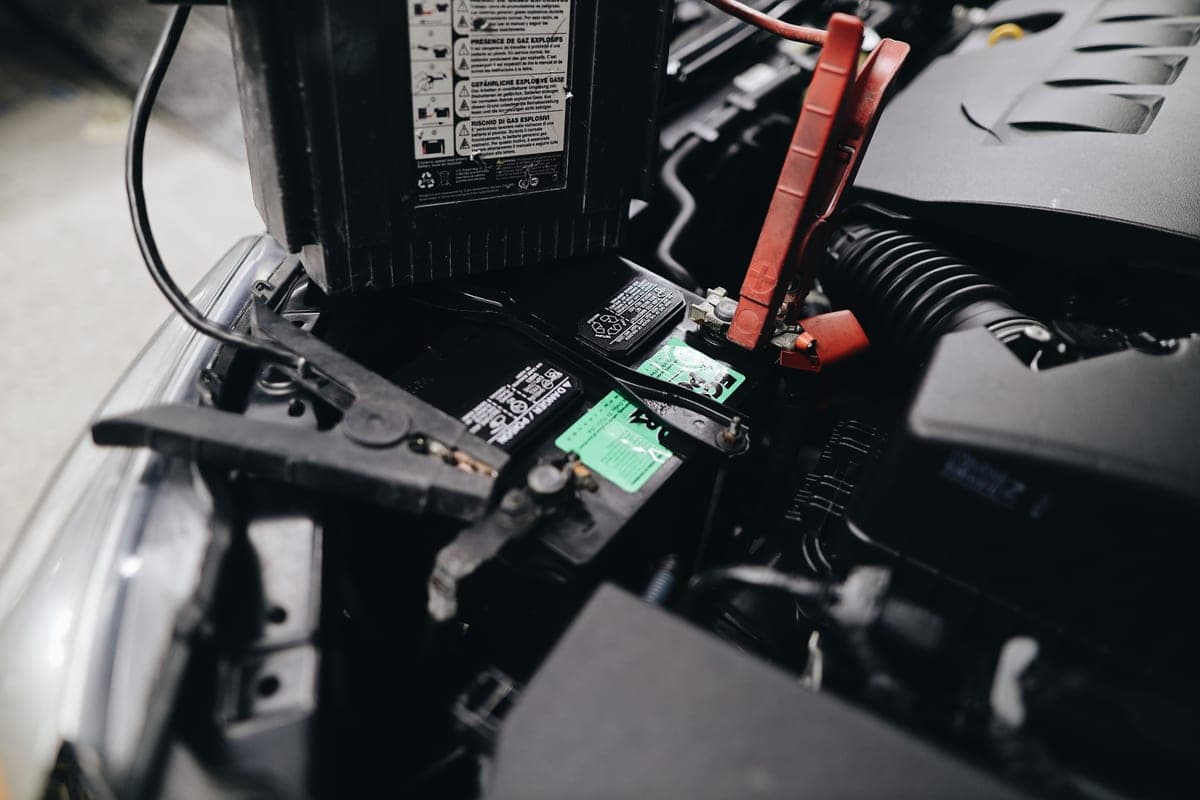
Lithium is the reason this category exists in its current form. A lead-acid jump box with the same starting ability is heavy enough that it migrates to a garage shelf within a year, and a pack on a shelf has never started anything. The whole argument for lithium is that a 2-pound tool stays where you put it.
What makes a lithium pack worth buying, though, is not the chemistry — it is whether the maker publishes numbers you can check. The packs below all come with a published peak-amp figure, a published watt-hour capacity and a published engine rating, which is a smaller group than the search results suggest. Lithium vs lead-acid jump starters covers the trade the chemistry actually makes; this page is about which lithium pack to buy once you have made it.
The three figures that decide this
- Watt-hours, not milliamp-hours. Watt-hours are what an airline regulates and what tells you how many attempts you get. A pack quoted only in mAh is hiding the figure that matters — see jump starter mAh vs watt-hours.
- The published engine rating, in liters. Peak amps are a headline; the engine rating is the manufacturer committing to a ceiling. NOCO publishes both a gas and a diesel figure for every pack in the range, and they are not the same number.
- Weight. This is the specification that decides whether the tool is still in the vehicle six months after you bought it, and it is the one nobody compares.
| Pack | Peak amps | Capacity | Gas rating | Diesel rating | Weight |
|---|---|---|---|---|---|
| NOCO Boost Sport GB20 | 500 A | 24 Wh | Up to 4.0 L | Not recommended | 2.1 lb |
| NOCO Boost Plus GB40 | 1,000 A | 24 Wh | Up to 6.0 L | Up to 3.0 L | 2.45 lb |
| NOCO Boost X GBX45 | 1,250 A | 31 Wh | Up to 6.5 L | Up to 4.0 L | 2.16 lb |
| NOCO Boost HD GB70 | 2,000 A | 56 Wh | Up to 8.0 L | Up to 6.0 L | 4.18 lb |
| NOCO Boost X GBX155 | 4,250 A | 99 Wh | Up to 10 L | Up to 8.0 L | 5.82 lb |
Every figure is NOCO's own published specification, linked in Sources. The GOOLOO GT4000S appears on other pages here but is absent from this table deliberately: it quotes capacity in milliamp-hours rather than watt-hours, so there is no comparable figure to put in the capacity column.
Why the capacity column matters more than peak amps
A start attempt is short — a few seconds of very high current. What the watt-hour figure buys you is the number of those attempts you get before the pack is flat, and that is the thing that decides whether a bad morning ends well. The GB40's 24 watt-hours is enough for a healthy battery that is merely discharged. A battery that is genuinely dead, in the cold, on an engine that does not catch on the first crank, eats capacity fast.
This is why the 100 watt-hour line keeps appearing. It is the FAA's threshold for a lithium battery you can carry on without airline approval, and NOCO has clearly designed the GBX155 against it — 99 watt-hours is not an accident. It means the largest pack in the range is also the largest pack you can take through security without asking anyone. Flying with a jump starter has the rules in full, including what happens if you put one in a checked bag.
Cold weather is where lithium gives something back
The honest weakness of lithium in a car tool is cold. A lithium cell delivers less at low temperature than at room temperature, and a pack that lives in an unheated trunk through a northern winter is not at its rated best on the morning you need it. That is not a reason to buy lead-acid — it is a reason to buy headroom.
The practical version: pick the pack whose published rating comfortably exceeds your engine rather than the one that just covers it. A 3.5-liter V6 on a GB40 rated to 6.0 liters has margin. The same V6 on a pack rated to 4.0 liters does not, and the first below-freezing morning is exactly when you find out. Car battery dead in cold weather explains why the battery gets weaker and the engine gets harder to turn at the same time.
The picks
1. Best overall
NOCO Boost Plus GB40
NOCO · Best for most cars and small suvs
The default answer for a four- or six-cylinder car: 1,000 peak amps, 24 watt-hours, and light enough that it actually stays in the trunk.
Published specifications
What works
- 24 Wh sits far under the 100 Wh carry-on threshold, so flying with it needs no airline approval
- 2.45 lb and pocketable — the size that decides whether a tool is still in the trunk six months later
- IP65 enclosure, so a wet shoulder in the rain is not a problem
- Reverse-polarity protection means a backwards clamp does not spark
What does not
- 1,000 peak amps runs out of headroom above a 6.0 L gas engine
- The 3.0 L diesel ceiling rules out most modern diesel pickups
- 24 Wh is a small reserve — it is a jump starter, not a power bank substitute
Skip it if
Not the one to buy if you drive a diesel pickup or a big V8. You would be at the edge of its rating on a cold morning, which is exactly when you want margin.
#ad Affiliate link · Price as of November 10, 2026
Raw specifications: NOCO’s own page for the NOCO Boost Plus GB40.
2. Best for travel
NOCO Boost X GBX45
NOCO · Best for travel and carry-on use
The travel pick: 1,250 peak amps at 2.16 lb with USB-C Power Delivery in and out, so it recharges from the same brick as your laptop.
Published specifications
- Peak amps
- 1,250 A source
- Internal battery
- 31 Wh lithium-ion source
- Gas engine rating
- Up to 6.5 liters source
- Diesel engine rating
- Up to 4.0 liters source
- Weight
- 2.16 lb (0.98 kg) source
- USB-C output
- Up to 20 V / 3 A Power Delivery source
- Water resistance
- IP65 with ports closed source
- Warranty
- 1-year hassle-free source
What works
- Lightest pack in the range at 2.16 lb, and 31 Wh means no airline paperwork
- USB-C Power Delivery both directions — one cable covers the pack, phone and laptop
- More gas headroom than the GB40 (6.5 L against 6.0 L) in a lighter body
What does not
- The IP65 rating only holds with the port covers closed — worth remembering in the rain
- The 4.0 L diesel ceiling is not enough for a full-size diesel pickup
Skip it if
Not the right pack for a diesel truck, and not the cheapest way to cover a small commuter — its premium buys packability, not amps.
#ad Affiliate link · Price as of November 10, 2026
Raw specifications: NOCO’s own page for the NOCO Boost X GBX45.
3. Best for diesel pickups
NOCO Boost HD GB70
NOCO · Best for diesel pickups and big v8s
The one to buy if you drive a diesel: 2,000 peak amps, a 6.0-liter diesel rating and 56 watt-hours, which is the smallest pack with real margin on a cold diesel.
Published specifications
What works
- The 6.0 L diesel rating covers the common 3.0 L and 6.7 L light-truck diesels with margin
- 56 Wh is still comfortably under the 100 Wh carry-on threshold, so it flies as hand luggage
- 12 V 15 A accessory output, and a 400-lumen light that is genuinely usable roadside
- 12 V / 3 A fast charge brings it back in about three hours
What does not
- 4.18 lb — noticeably heavier than the compact packs, and it wants a dedicated spot
- Overkill for a commuter four-cylinder; you are paying for headroom you will not use
Skip it if
Not the one to buy if you only ever start a four-cylinder commuter. Buy diesel headroom when you have a diesel.
#ad Affiliate link · Price as of November 10, 2026
Raw specifications: NOCO’s own page for the NOCO Boost HD GB70.
4. Best as a power bank too
NOCO Boost X GBX155
NOCO · Best for doubling as a serious power bank
99 watt-hours with USB-C Power Delivery in and out — the largest pack in the range that still clears the 100 Wh carry-on limit, and the one that genuinely works as a power bank.
Published specifications
What works
- 99 Wh is deliberately just under the 100 Wh airline threshold — the most capacity you can carry on without asking anyone
- USB-C Power Delivery at up to 20 V / 3 A charges laptops, not just phones
- 4,250 peak amps with an 8.0 L diesel rating covers almost any light vehicle
- 500-lumen light, which is a genuinely usable work light
What does not
- 5.82 lb — heavier than most people expect from something sold partly as a power bank
- Priced as a premium jump starter, so it is an expensive way to buy 99 Wh of USB power alone
- A dedicated power bank of the same capacity is smaller, lighter and cheaper
Skip it if
Skip it if you mainly want to charge devices. A purpose-built power bank does that better for less, and this pack's premium is in the cranking hardware you would not be using.
#ad Affiliate link · Price as of November 10, 2026
Raw specifications: NOCO’s own page for the NOCO Boost X GBX155.
5. Budget pick
NOCO Boost Sport GB20
NOCO · Best for motorcycles, atvs and small engines
The smallest pack in the range and the right one for powersports: 500 peak amps, 2.1 lb, and a gas rating that stops at 4.0 liters — which is all a bike or a quad ever asks for.
Published specifications
What works
- 2.1 lb — light enough to live under a motorcycle seat or in an ATV storage box, which is the whole point
- 500 peak amps is correctly sized for powersports batteries rather than wildly over them
- Same IP65 enclosure and reverse-polarity protection as the larger packs
- 24 Wh, so it flies in carry-on baggage like the rest of the range
What does not
- The 4.0 L gas ceiling rules out most cars, so it is not a do-everything pack
- NOCO states diesel is not recommended at all for this model — read that as a hard limit
- Small reserve, so cold-weather attempts eat into it quickly
Skip it if
Do not buy it as your car's pack as well. NOCO's own rating stops at 4.0 L gas and says not recommended for diesel, and a bike pack asked to start a car is exactly the wrong economy.
#ad Affiliate link · Price as of November 10, 2026
Raw specifications: NOCO’s own page for the NOCO Boost Sport GB20.
What we left out, and why
The large tier of budget lithium packs quoting four-figure peak amps and five-figure milliamp-hour numbers is absent here for one reason: the claims are not stated in a form you can compare. A peak-amp number with no defined measurement condition, and a capacity in milliamp-hours with no cell voltage given, cannot be put in the same table as a published watt-hour figure without implying a comparison that does not exist.
We also left out lead-acid jump boxes, which are a legitimate purchase for different reasons — they shrug off a hot trunk, and they are cheaper per peak amp. If that trade appeals, the one-box stations on best jump starter with air compressor are where to look instead.
Key takeaways
- Watt-hours is the capacity figure to compare; a pack quoted only in mAh is not comparable to one quoted in Wh.
- The published engine rating in liters is the manufacturer committing to a ceiling — peak amps alone are a headline.
- 99 Wh is the practical airline maximum, and the GBX155 is built to sit just under it.
- Buy margin over your engine, not a rating that just covers it, because cold takes some of it back.
- Weight decides whether the pack is still in the car in six months, which makes it a real specification.
- The GB20 is the cheapest lithium pack here and the wrong one for a car — NOCO's own rating stops at 4.0 L gas.
How we sourced this
Every figure on this page came from one of the following. Where a manufacturer or regulator does not publish a number, we say so rather than estimate it.
- NOCO GB20 published specifications
- NOCO GB40 published specifications
- NOCO GBX45 published specifications
- NOCO GB70 published specifications
- NOCO GBX155 published specifications
- FAA PackSafe — Lithium Batteries (carry-on and checked rules, watt-hour limits)
- TSA — Lithium batteries with more than 100 watt hours
Common questions
- Are lithium jump starters better than lead-acid ones?
- For a tool that lives in a car, usually yes — the weight and size difference is what keeps it in the vehicle. Lead-acid still wins on tolerance of a hot trunk and on cost per peak amp, which is why the one-box jump-and-inflate stations are still built that way.
- How many watt-hours do I need in a jump starter?
- For a four- or six-cylinder gas car, 24 to 31 watt-hours is the normal range and covers a discharged battery with attempts to spare. A diesel or a big V8 wants 50 watt-hours or more, because each attempt draws more and cold mornings need several.
- Can I take a lithium jump starter on a plane?
- In carry-on, yes, if it is under 100 watt-hours — that is the FAA threshold. Every NOCO pack on this page except the 137 Wh Boost MAX is under it. It must not go in checked baggage.
- Do lithium jump starters work in cold weather?
- They work, but they deliver less than their rated best when cold. The fix is headroom: choose a pack rated well above your engine size rather than one that just covers it.
- How long does a lithium jump starter hold its charge?
- Months, not years. Self-discharge is slow but real, so the practical rule is to top it up twice a year on a schedule rather than relying on a number.
- Is a bigger peak-amp number always better?
- No. Peak amps with no stated measurement condition is a marketing figure. The published engine rating in liters is the number the manufacturer stands behind, and it is what you should size against.
More in Jump Starters
A jump pack is the one trunk tool that turns a tow truck into a five-minute inconvenience. This is how to size one, and which ones are worth the space.
Read next
Head to head
Lithium vs Lead-Acid
Why lithium replaced lead-acid for most drivers, and the one storage situation where the old heavy boxes still make sense.
Best Portable Jump Starters
Best Portable Jump Starters
Our main roundup: five packs from compact to heavy-duty, ranked on the engine rating the manufacturer will actually stand behind.
Guide
What Size Do I Need?
The sizing table by engine displacement and fuel type, using ratings manufacturers publish and warrant rather than peak-amp marketing.
Guide
mAh vs Watt-Hours
The conversion, worked through, plus why watt-hours is the only capacity figure that matters if the pack is ever going on a plane.
Found something out of date, or a figure you can source better than we did? Tell us — corrections get read first. Our methodology explains how picks are made, and contact is one click away.