Jump Starters
The best jump starters for semi trucks
It is not about amps. Most Class 8 trucks start on 24 volts, and a 12-volt pack is not a small version of the right tool — it is the wrong one.

Disclosure: we earn a commission if you buy through the Amazon links on this page, at no extra cost to you. Commission never decides a verdict or a ranking position — read our editorial policy and affiliate disclosure.
How we assessed these: picks are selected from manufacturer specifications, current retailer listings and published owner feedback — not from hands-on testing of every unit. Where a manufacturer does not publish a figure, it is left out rather than estimated.
Short answer
Check the starting system voltage first. Most Class 8 trucks start on 24 volts, and a 12-volt pack cannot start them regardless of its peak-amp figure. The NOCO Boost MAX GB251 is built for 24-volt systems and is rated by NOCO as safe on all engine sizes up to 32 liters.
This is the one page on the site where the usual sizing advice — read the published engine rating in liters — is the *second* question. The first is voltage, and getting it wrong means buying a pack that physically cannot do the job.
Quick picks
Tap any row to jump to the full write-up. Scoring criteria are published in full on our methodology page.
| # | Product | Best for | Our read | Price |
|---|---|---|---|---|
| 1 | 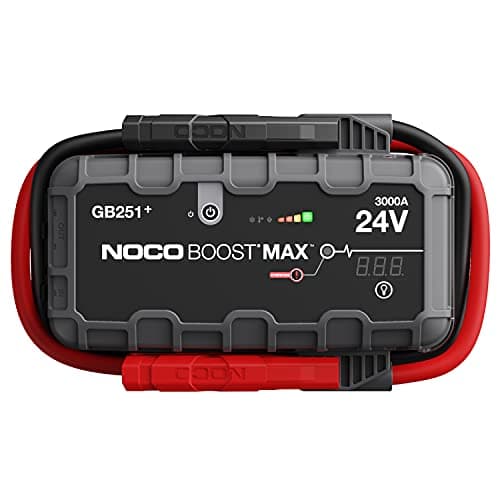 NOCO Boost MAX GB251 Best for 24-volt systems | Semi trucks and 24-volt systems | The only 24-volt pack here, rated safe on all engine sizes | $1,199.95View on Amazon #ad Affiliate link · Price as of November 13, 2026 |
| 2 | 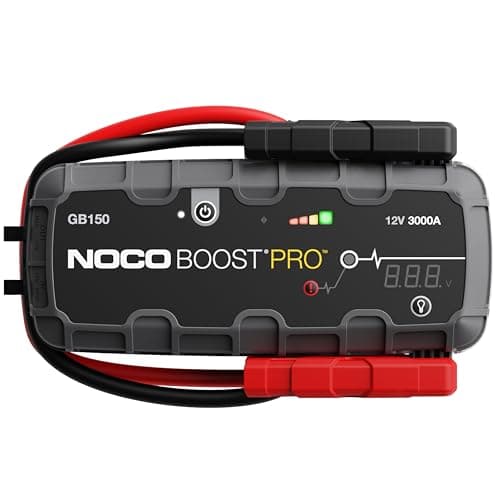 NOCO Boost Pro GB150 Best 12-volt heavy-duty pack | Heavy diesel, fleet and equipment | Only if your truck is genuinely 12 V | $299.95View on Amazon #ad Affiliate link · Price as of November 13, 2026 |
| 3 | 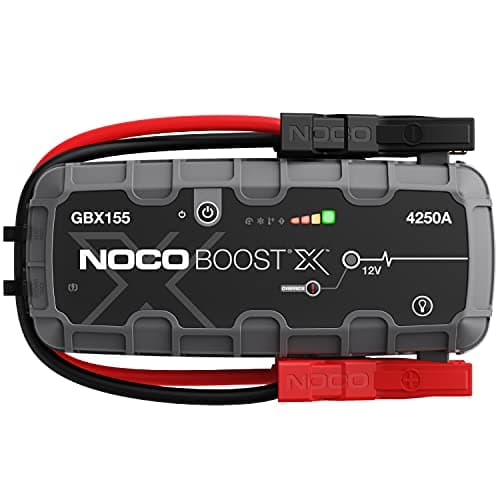 NOCO Boost X GBX155 Best for a 12-volt day cab | Doubling as a serious power bank | 8.0 L diesel rating, and it still flies | $369.95View on Amazon #ad Affiliate link · Price as of November 13, 2026 |
Why voltage comes first
Heavy trucks commonly use a 24-volt starting system, typically built from two 12-volt batteries in series, while the rest of the truck runs 12 volts. A 12-volt jump pack connected to a 24-volt starting circuit is not undersized — it is mismatched, and no amount of cranking amps compensates.
Some trucks are 12 volt throughout, particularly lighter or older units and many day cabs. Others are 24 V start / 12 V accessory. You have to know which yours is, and the answer is in the truck's service documentation or on the battery box, not in a generic roundup.
What the specification actually needs to say
| Pack | Voltage | Peak amps | Capacity | Engine rating | Weight |
|---|---|---|---|---|---|
| NOCO GB251 | 24 V only | 3,000 A | 137 Wh | Up to 32 L gas and diesel | 14.7 lb |
| NOCO GB150 | 12 V only | 3,000 A | 88 Wh | Up to 7.0 L diesel | 6.39 lb |
| NOCO GBX155 | 12 V only | 4,250 A | 99 Wh | Up to 8.0 L diesel | 5.82 lb |
Only the GB251 states 24-volt capability — and it states 24 volts ONLY, so it is not a candidate for a 12-volt truck either. The other two are capable heavy-duty packs for 12-volt vehicles and cannot start a 24-volt system. Confirm your truck's starting voltage before buying any of the three.
The practical realities of the job
- Cable reach. Truck battery boxes sit low, outboard, behind a step, and are often awkward to reach with short leads. Heavy-duty packs ship longer, thicker cables for this reason.
- Corrosion. Commercial vehicles live outside. A clamp resting on a corroded terminal passes almost nothing at cranking currents and presents exactly like an undersized pack — clean the terminal before concluding the pack is too small.
- Glow plugs and grid heaters. On a cold diesel, let the pre-heat cycle finish before cranking. Cranking through it drains the pack while the engine is least willing to start.
- Repeated attempts. The GB251's 137 Wh matters here. A fleet vehicle that has been sitting may need several attempts, and reserve is what makes that possible.
One thing this pack cannot do unaided
Fly without asking. At 137 watt-hours the GB251 is over the FAA's 100 Wh carry-on threshold, which puts it in the 101-160 Wh band that needs the airline's approval before you take it on board — it is not a pack you can simply put in a bag. Every other pack on this site is under 100 Wh and needs no permission; this one is the exception, and it is worth knowing before you plan around it. The rules, with sources. The other two heavy-vehicle purchases: tire inflators for semi trucks, and battery chargers for diesel trucks.
The picks
1. Best for 24-volt systems
NOCO Boost MAX GB251
NOCO · Best for semi trucks and 24-volt systems
The only pack here built for a 24-volt starting system: 3,000 peak amps and 137 watt-hours, rated by NOCO as safe on all engine sizes up to 32 liters. It is also the one that needs airline permission.
Published specifications
- System voltage
- 24 V source
- Peak amps
- 3,000 A source
- Internal battery
- 137 Wh lithium-ion source
- Battery types
- 24 V lead-acid battery systems source
- Gas engine rating
- Up to 32 liters source
- Diesel engine rating
- Up to 32 liters — safe on all engine sizes source
- Weight
- 14.7 lb (6.67 kg) source
- Accessory output
- 12 V, 15 A (XGC) source
- Flashlight
- 600 lumens source
- Water resistance
- IP65 with ports closed source
- Warranty
- 1-year hassle-free source
What works
- Built for 24 V systems, which is what actually disqualifies most packs from Class 8 work
- NOCO rates it safe on all engine sizes up to 32 liters — no guessing at the ceiling
- 137 Wh is a genuine reserve for repeated attempts on a cold fleet vehicle
- 12 V 15 A accessory output will run an inflator directly
What does not
- 14.7 lb, and the size that goes with it — this is a toolbox item, not a glovebox one
- 24 V only, so it is no use at all on a 12-volt truck
- 137 Wh is over the 100 Wh carry-on threshold, so flying with it needs airline approval
- Enormous overkill, and priced accordingly, for any passenger vehicle
Skip it if
Not for a car, a pickup or an RV with a 12 V system — on a 12-volt start a 24-volt pack is the wrong tool, not a bigger one. If nothing you own runs 24 volts, buy the pack that matches your engine rating instead.
#ad Affiliate link · Price as of November 13, 2026
Raw specifications: NOCO’s own page for the NOCO Boost MAX GB251.
2. Best 12-volt heavy-duty pack
NOCO Boost Pro GB150
NOCO · Best for heavy diesel, fleet and equipment
The heavy end: 3,000 peak amps, a 7.0-liter diesel rating and 88 watt-hours, for the engines the consumer packs cannot legitimately claim.
Published specifications
What works
- The 7.0 L diesel rating is the highest in NOCO's consumer line
- 88 Wh still sits under the 100 Wh carry-on threshold, which is unusual at this size
- Long, heavy-gauge cables reach awkward battery positions on trucks and equipment
What does not
- 6.39 lb and bulky — a dedicated trunk or toolbox item, not a glovebox one
- Far more capacity than any passenger car will ever draw
Skip it if
Wrong tool for a car or crossover. If your largest engine is a half-ton gas V8, the GB70 already has margin and costs and weighs less.
#ad Affiliate link · Price as of November 13, 2026
Raw specifications: NOCO’s own page for the NOCO Boost Pro GB150.
3. Best for a 12-volt day cab
NOCO Boost X GBX155
NOCO · Best for doubling as a serious power bank
99 watt-hours with USB-C Power Delivery in and out — the largest pack in the range that still clears the 100 Wh carry-on limit, and the one that genuinely works as a power bank.
Published specifications
What works
- 99 Wh is deliberately just under the 100 Wh airline threshold — the most capacity you can carry on without asking anyone
- USB-C Power Delivery at up to 20 V / 3 A charges laptops, not just phones
- 4,250 peak amps with an 8.0 L diesel rating covers almost any light vehicle
- 500-lumen light, which is a genuinely usable work light
What does not
- 5.82 lb — heavier than most people expect from something sold partly as a power bank
- Priced as a premium jump starter, so it is an expensive way to buy 99 Wh of USB power alone
- A dedicated power bank of the same capacity is smaller, lighter and cheaper
Skip it if
Skip it if you mainly want to charge devices. A purpose-built power bank does that better for less, and this pack's premium is in the cranking hardware you would not be using.
#ad Affiliate link · Price as of November 13, 2026
Raw specifications: NOCO’s own page for the NOCO Boost X GBX155.
Key takeaways
- Starting-system voltage is the first question, not peak amps.
- A 12-volt pack cannot start a 24-volt system at any amp rating.
- Number of batteries does not tell you series versus parallel — check documentation.
- Clean the terminals before deciding a pack is undersized.
- At 137 Wh the 24-volt pack is the one pack here that needs airline approval to fly.
How we sourced this
Every figure on this page came from one of the following. Where a manufacturer or regulator does not publish a number, we say so rather than estimate it.
Common questions
- What jump starter do I need for a semi truck?
- One that supports your truck's starting-system voltage. Most Class 8 trucks start on 24 volts, and a 12-volt pack cannot start them whatever its peak-amp rating. The NOCO Boost MAX GB251 is a 24-volt pack rated safe on all engine sizes up to 32 liters. If your truck is 12 volt throughout, you want a 12-volt heavy-duty pack instead — the two are not interchangeable.
- Are semi trucks 12 volt or 24 volt?
- Many are 24 volt for starting, typically two 12-volt batteries in series, while accessories run at 12 volts. Others are 12 volt throughout. You cannot tell from the number of batteries, because 12-volt trucks often carry several in parallel — check the service documentation.
- Can I use a car jump starter on a semi truck?
- Only if the truck's starting system is genuinely 12 volt, and even then most car packs are far below the engine rating a Class 8 diesel needs. On a 24-volt system a car pack is not undersized but mismatched, and no amp figure compensates.
- Why won't my jump starter turn over a truck engine?
- Check three things before blaming the pack: the starting-system voltage, whether the terminals are corroded, and whether the glow-plug or grid-heater cycle has finished. Corrosion in particular is an insulator at cranking currents and presents exactly like an underpowered pack.
More in Jump Starters
A jump pack is the one trunk tool that turns a tow truck into a five-minute inconvenience. This is how to size one, and which ones are worth the space.
Read next
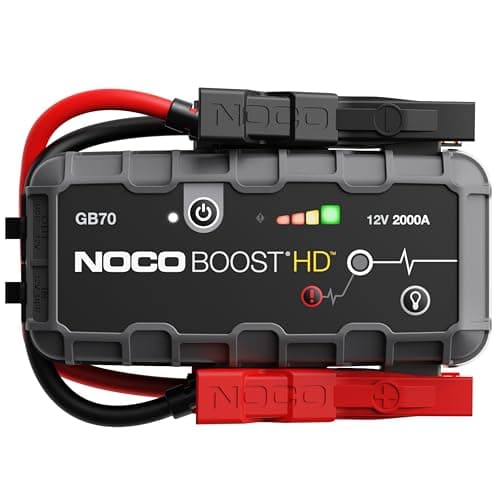
Best for Diesel Trucks
For Diesel Trucks
Packs with a published diesel rating that actually covers a 3.0 L to 6.7 L light-truck engine, with margin for a cold morning.
Guide
What Size Do I Need?
The sizing table by engine displacement and fuel type, using ratings manufacturers publish and warrant rather than peak-amp marketing.
Guide
Peak vs Cranking Amps
Peak amps is momentary and loosely defined; cranking amps is sustained. Why manufacturers publish engine ratings instead, and what to compare.
Guide
Flying With a Jump Starter
The FAA and TSA thresholds quoted from source, where every mainstream pack sits against them, and the rules airlines add on top.
Found something out of date, or a figure you can source better than we did? Tell us — corrections get read first. Our methodology explains how picks are made, and contact is one click away.