Jump Starters
NOCO Boost Plus GB50 review
A liter more gas engine than the GB40 for a quarter of a pound more weight. The cheapest headroom in NOCO's range, and the most awkwardly positioned unit in it.
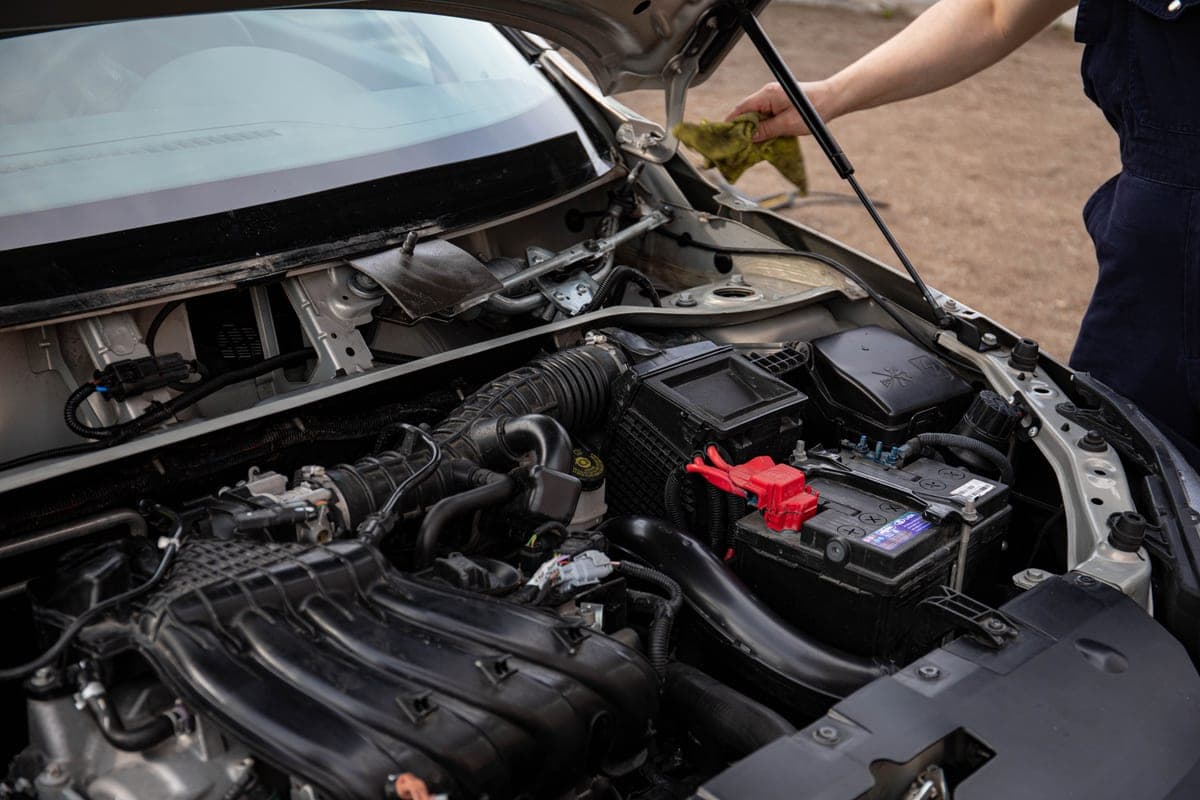
Disclosure: we earn a commission if you buy through the Amazon links on this page, at no extra cost to you. Commission never decides a verdict or a ranking position — read our editorial policy and affiliate disclosure.
How we assessed these: this assessment is built from NOCO's own published specifications for the GB50 and the units around it in the range, plus published owner feedback — not from hands-on testing. Where NOCO does not publish a figure, we leave it out rather than estimate it.
Short answer
The GB50 is the right NOCO if your engine is a V6 or a small V8 and you want the cheapest step up from the GB40: NOCO publishes 1,500 peak amps, a 35 watt-hour internal battery and gas engines up to 7.0 liters, at 2.71 lb. Most buyers should compare it against the GBX45 before deciding, because the GBX45 is lighter and recharges over USB-C for similar money.
Every range has a model that exists mainly to fill a gap in a price list, and in NOCO's Boost line that unit is the GB50. It is not a bad jump starter — on NOCO's own numbers it is a genuinely capable one. But it sits between a cheaper model that covers most cars and a newer model that does the same work with better conveniences, and understanding that position is most of what you need to decide.
What NOCO publishes
| Figure | GB50 |
|---|---|
| Peak amps | 1,500 A |
| Internal battery | 35 Wh lithium-ion |
| Gas engine rating | Up to 7.0 liters |
| Diesel engine rating | Up to 4.5 liters |
| Weight | 2.71 lb (1.22 kg) |
| Water resistance | IP65 |
| Flashlight | 200 lumens |
| Warranty | 1-year hassle-free |
Every figure is from NOCO's published GB50 specification page, listed in Sources. Peak amps is a manufacturer rating and not a cranking-amp figure measured under load — see the note on peak amps below.
Two of those rows do most of the work. The 7.0 liter gas rating is what you are actually buying, and the 35 watt-hour battery is what makes that rating repeatable rather than a single-shot claim.
The engine rating matters more than the peak amps
Peak amps is the number printed largest on the box and the least useful one on the sheet. It describes a brief current spike under ideal conditions, not the sustained current that turns an engine over, and there is no industry test standard behind it the way there is behind a battery's cold cranking amps. Peak amps versus cranking amps explains why two packs advertising the same peak figure can behave completely differently.
NOCO's engine displacement ratings are the more honest guide, because the manufacturer is staking a specific claim about a specific job. For the GB50 that claim is gas engines up to 7.0 liters and diesels up to 4.5. Against the GB40's published 6.0 liter gas and 3.0 liter diesel ratings, the GB50 buys you a full liter of gas headroom and a liter and a half of diesel headroom for a published weight difference of 0.26 lb.
That is the GB50's genuine argument, and it is a good one. If you drive a 5.3 or 5.7 liter V8 pickup, the GB40 is close to its published ceiling and the GB50 is comfortably inside its own. What size jump starter do I need works through that sizing properly, and the right answer is usually one step above the number that merely matches your engine.
35 watt-hours is the row most people skip
Watt-hours describe how much energy is stored, which determines how many attempts you get and how long the pack holds a useful charge sitting in a glovebox. The GB50's published 35 watt-hours against the GB40's 24 is a 46% increase, and it is the reason the GB50 feels different in use rather than merely stronger on paper.
It also matters for travel. The limit that governs a lithium pack in airline carry-on baggage is watt-hours, not amps, and 35 watt-hours is comfortably inside the 100 watt-hour threshold that applies without airline approval. Flying with a jump starter covers the rules and what to expect at the checkpoint, and milliamp-hours versus watt-hours explains why packs advertised in mAh obscure exactly this figure.
Where the GB50 is awkward
The problem is not the GB50. It is the GBX45, which NOCO introduced later in the same part of the range and which beats the GB50 on the things most owners actually notice.
- Recharging. The GBX45 takes USB-C Power Delivery, so it charges from a laptop charger or a phone brick. The GB50 uses NOCO's older micro-USB arrangement, which is slower and means carrying a second cable.
- Weight. The GBX45 is lighter, which matters for a device whose whole point is living in a bag or a glovebox.
- Overlap, not advantage. The two sit close enough in capability that the GB50's edge is largely raw current, which — see above — is the least meaningful row on the sheet.
So the honest recommendation is to read the GBX45 review and GBX45 versus GB40 before committing to the GB50. If the two are priced similarly when you look — and prices in this range move constantly — the GBX45 is the easier device to live with.
The rest of the specification sheet, briefly
IP65 means protected against dust and low-pressure water jets. For a device used on a roadside shoulder in weather, that is the rating you want, and it is the same rating NOCO publishes across the Boost line.
A 200-lumen flashlight, double the GB40's published output. This sounds like a throwaway feature and is not. Most jump starts happen in the dark, on a shoulder, and 200 lumens is enough to actually find the terminals rather than merely prove the light works. How to use a jump starter covers the connection order, which is the part worth getting right in poor light.
A one-year hassle-free warranty, which is shorter than NOCO's three years on the GENIUS charger line and the one row where the Boost range is unremarkable. It is the category norm rather than a shortfall.
What it will not do
A modern diesel pickup. NOCO's published 4.5 liter diesel rating does not cover a 6.6 or 6.7 liter diesel, and a pack bought one size short of a diesel is a pack that fails on the coldest morning of the year. The best jump starters for diesel trucks covers what those engines actually require.
Replace a charger. A jump starter gets the engine running; it does not fix the battery, and a battery that needed jumping once will usually need it again. Jump starter versus battery charger is the distinction, and if the battery itself is the problem, how to tell if a car battery is bad comes first.
Sit in a hot car for a year and still work. No lithium pack will. Heat is the enemy of the chemistry and self-discharge is real, which is why jump starter storage and heat exists and why how to charge a jump starter recommends a recharge schedule rather than trusting the pack to be ready.
Verdict
On NOCO's published numbers the GB50 is a well-specified jump starter and the cheapest way to get a 7.0 liter gas rating out of the Boost range. The 35 watt-hour battery is the row that justifies it over the GB40, the 1,500 peak amps figure is the row to ignore, and the 0.26 lb weight penalty against the GB40 is nothing.
Buy it if your engine is a V6 or a small V8, you want more headroom than the GB40 offers, and it is cheaper than the GBX45 when you look. Buy the GBX45 instead if the prices are close, because USB-C charging and less weight are worth more in practice than extra peak amps you will never use. And buy the GB40 if the car is a four-cylinder, where the larger packs are headroom you are paying for and will not need.
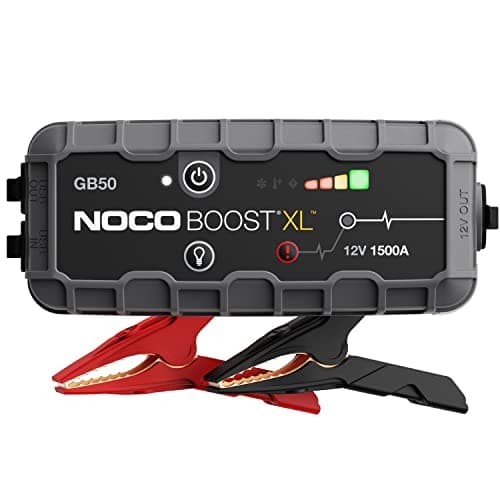
1. Best for V6 and small V8 gas engines
NOCO Boost Plus GB50
NOCO · Best for v6 and small v8 gas engines
The middle rung: 1,500 peak amps and 35 watt-hours for a quarter-pound more than the GB40, which is the cheapest headroom in the range.
Published specifications
What works
- A full liter more gas headroom than the GB40 for 0.26 lb more weight
- 35 Wh still clears the 100 Wh carry-on limit with room to spare
- Doubles the flashlight output over the GB40 at 200 lumens
What does not
- Overlaps awkwardly with the GBX45, which is lighter and charges over USB-C
- Still short of the 6.0 L diesel rating a modern diesel pickup wants
Skip it if
Skip it if convenience matters more than amps — the GBX45 is lighter and takes USB-C Power Delivery, and the GB50's edge is raw current.
#ad Affiliate link · Price as of November 10, 2026
Raw specifications: NOCO’s own page for the NOCO Boost Plus GB50.
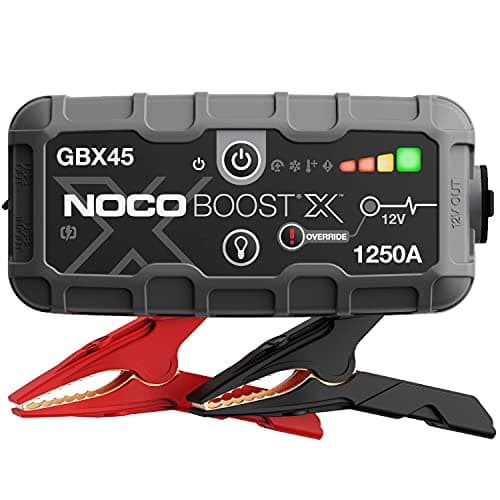
2. The one to buy instead, for most people
NOCO Boost X GBX45
NOCO · Best for travel and carry-on use
The travel pick: 1,250 peak amps at 2.16 lb with USB-C Power Delivery in and out, so it recharges from the same brick as your laptop.
Published specifications
- Peak amps
- 1,250 A source
- Internal battery
- 31 Wh lithium-ion source
- Gas engine rating
- Up to 6.5 liters source
- Diesel engine rating
- Up to 4.0 liters source
- Weight
- 2.16 lb (0.98 kg) source
- USB-C output
- Up to 20 V / 3 A Power Delivery source
- Water resistance
- IP65 with ports closed source
- Warranty
- 1-year hassle-free source
What works
- Lightest pack in the range at 2.16 lb, and 31 Wh means no airline paperwork
- USB-C Power Delivery both directions — one cable covers the pack, phone and laptop
- More gas headroom than the GB40 (6.5 L against 6.0 L) in a lighter body
What does not
- The IP65 rating only holds with the port covers closed — worth remembering in the rain
- The 4.0 L diesel ceiling is not enough for a full-size diesel pickup
Skip it if
Not the right pack for a diesel truck, and not the cheapest way to cover a small commuter — its premium buys packability, not amps.
#ad Affiliate link · Price as of November 10, 2026
Raw specifications: NOCO’s own page for the NOCO Boost X GBX45.
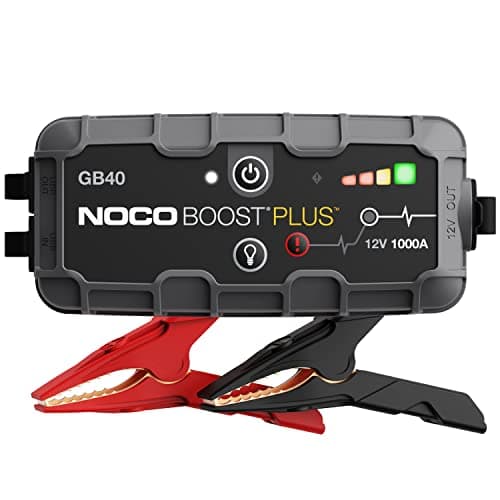
3. Best if the engine is genuinely small
NOCO Boost Plus GB40
NOCO · Best for most cars and small suvs
The default answer for a four- or six-cylinder car: 1,000 peak amps, 24 watt-hours, and light enough that it actually stays in the trunk.
Published specifications
What works
- 24 Wh sits far under the 100 Wh carry-on threshold, so flying with it needs no airline approval
- 2.45 lb and pocketable — the size that decides whether a tool is still in the trunk six months later
- IP65 enclosure, so a wet shoulder in the rain is not a problem
- Reverse-polarity protection means a backwards clamp does not spark
What does not
- 1,000 peak amps runs out of headroom above a 6.0 L gas engine
- The 3.0 L diesel ceiling rules out most modern diesel pickups
- 24 Wh is a small reserve — it is a jump starter, not a power bank substitute
Skip it if
Not the one to buy if you drive a diesel pickup or a big V8. You would be at the edge of its rating on a cold morning, which is exactly when you want margin.
#ad Affiliate link · Price as of November 10, 2026
Raw specifications: NOCO’s own page for the NOCO Boost Plus GB40.
Key takeaways
- NOCO publishes 1,500 peak amps, 35 Wh, 7.0 L gas and 4.5 L diesel for the GB50, at 2.71 lb.
- The engine displacement rating is the useful number; peak amps has no standard test behind it.
- 35 Wh against the GB40's 24 Wh is a 46% energy increase — the real reason to step up.
- At 35 Wh it is well inside the 100 Wh airline carry-on threshold.
- The GBX45 is the unit to price it against: lighter, and recharges over USB-C.
- The 4.5 L diesel rating rules out a modern 6.6 or 6.7 L diesel pickup.
How we sourced this
Every figure on this page came from one of the following. Where a manufacturer or regulator does not publish a number, we say so rather than estimate it.
Common questions
- What size engine will a NOCO GB50 start?
- NOCO publishes gas engines up to 7.0 liters and diesel engines up to 4.5 liters for the GB50. That covers essentially every passenger car, most V6 and small V8 pickups and SUVs, and light diesels. It does not cover a modern 6.6 or 6.7 liter diesel pickup.
- Is the GB50 worth it over the GB40?
- If your engine is a V6 or a small V8, yes. NOCO publishes a 7.0 liter gas rating for the GB50 against 6.0 for the GB40, and a 35 watt-hour battery against 24, for a weight difference of 0.26 lb. If your car is a four-cylinder, the GB40 is already inside its published rating and the extra is headroom you will not use.
- GB50 or GBX45?
- The GBX45 for most people, if the prices are close — it is lighter and recharges over USB-C Power Delivery, which means one cable instead of two. Choose the GB50 if it is meaningfully cheaper when you shop and your engine is a V6 or small V8, since you are mainly giving up charging convenience.
- Can I take a NOCO GB50 on a plane?
- In carry-on baggage, yes. The governing limit is watt-hours, and NOCO publishes 35 watt-hours for the GB50 — comfortably below the 100 watt-hour threshold that applies without airline approval. It has to travel in the cabin, never in checked baggage.
- Does the GB50 charge a car battery?
- No, and no jump starter does. It delivers a short burst of current to crank the engine, after which the alternator takes over. If the battery will not hold a charge, you need a charger or a new battery — a jump starter only moves the problem to the next cold morning.
More in Jump Starters
A jump pack is the one trunk tool that turns a tow truck into a five-minute inconvenience. This is how to size one, and which ones are worth the space.
Read next
Head to head
GB40 vs GB50
The narrow comparison the Boost range forces on most buyers, decided on NOCO's published engine ratings — plus the case for skipping both and buying the GBX45.
Review
NOCO GBX45 Review
1,250 peak amps, 31 Wh, 2.16 lb, USB-C Power Delivery both directions. The pack to pack.
Review
NOCO GB40 Review
1,000 peak amps, 24 Wh, 2.45 lb. The default answer for a four- or six-cylinder car — and wrong for a diesel.
Guide
What Size Do I Need?
The sizing table by engine displacement and fuel type, using ratings manufacturers publish and warrant rather than peak-amp marketing.
Guide
Peak vs Cranking Amps
Peak amps is momentary and loosely defined; cranking amps is sustained. Why manufacturers publish engine ratings instead, and what to compare.
Best Portable Jump Starters
Best Portable Jump Starters
Our main roundup: five packs from compact to heavy-duty, ranked on the engine rating the manufacturer will actually stand behind.
Found something out of date, or a figure you can source better than we did? Tell us — corrections get read first. Our methodology explains how picks are made, and contact is one click away.