Jump Starters
Why won't my car start even with a jump?
A jump starter only fixes one failure. When it does not work, the sound the car makes tells you which of the other five you have.
Disclosure: we earn a commission if you buy through the Amazon links on this page, at no extra cost to you. Commission never decides a verdict or a ranking position — read our editorial policy and affiliate disclosure.
How we assessed these: this page explains a diagnosis using published manufacturer figures and the standard voltage checks. It is not a substitute for a shop that can put a load tester on your own battery.
Short answer
If a correctly connected jump starter does not start the car, the battery was not the only problem. Listen: nothing at all points to a connection, a safety switch or a dead ignition circuit; one loud click points to the starter; rapid clicking means the pack is not delivering enough current; strong cranking without firing means fuel, spark or security, not power.
A jump starter solves exactly one failure: a battery with too little charge to turn the engine over. That is the most common roadside failure, which is why the tool is worth owning, but it is not the only one. When the pack goes on and nothing improves, the useful move is not to try again harder — it is to stop and listen, because the four noises a car can make here map cleanly onto four different problems.
Start by confirming the jump itself
Before diagnosing the car, rule out the pack and the connection, because those two account for a large share of apparent no-starts. Three checks, in order:
- Is the pack charged? Most packs show a state-of-charge display. A pack at one bar may light up and still not deliver starting current. How to charge a jump starter covers the habit that prevents this.
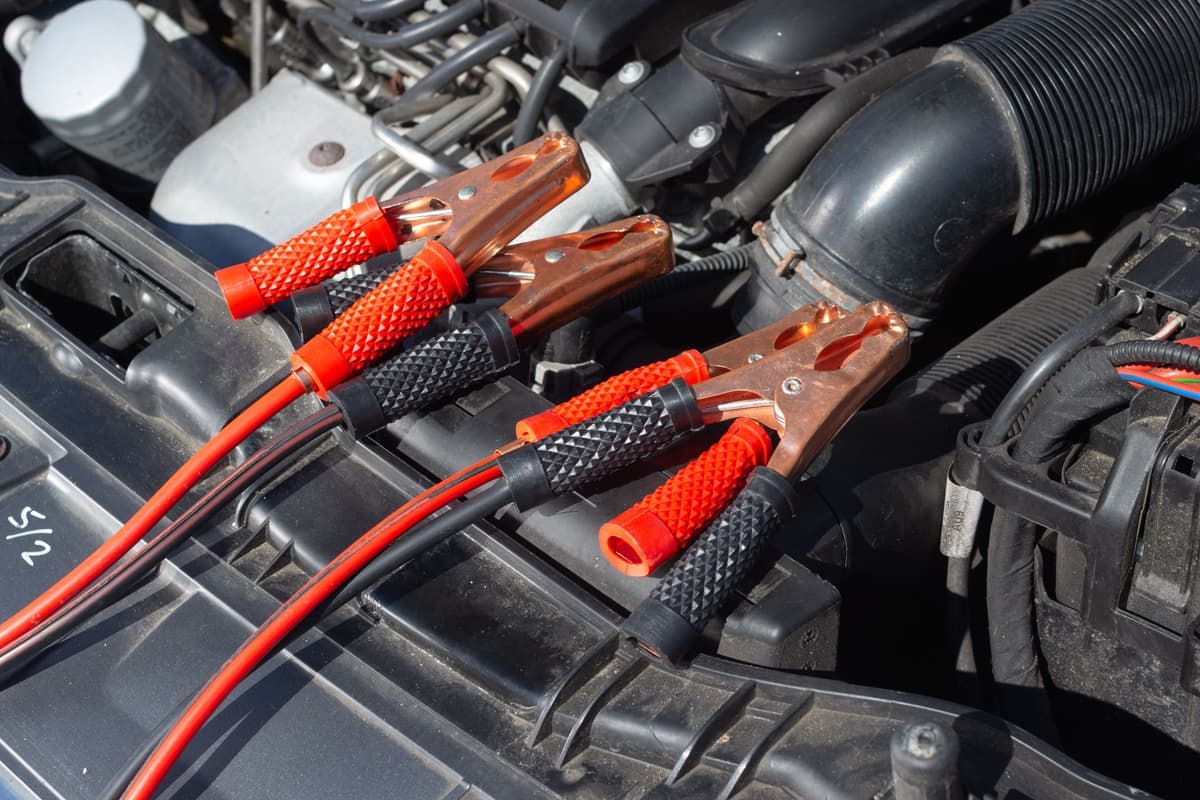
- Are the clamps actually on metal? Paint, corrosion and a layer of grease all insulate. Rock each clamp onto bare lead or bare metal until it bites. Most failed jumps we hear about are failed connections.
- Is the pack big enough for the engine? A 500-amp pack on a 5.3-liter V8 on a January morning is an underspecified tool, not a broken one. What size jump starter do I need gives the rule.
Now use the noise
| What you hear | Most likely cause | What to do next |
|---|---|---|
| Nothing at all — no click, no dash lights | No power reaching the ignition circuit: a loose or corroded terminal, a bad ground, a blown main fuse | Clean and tighten both terminals, check the main fuse, confirm the pack's clamps are biting |
| Nothing, but the dash lights up normally | A safety interlock or the ignition switch: the gear selector not fully in Park, a clutch switch, an immobilizer or key-recognition fault | Shift firmly into Park and back, try Neutral, press the clutch fully, try the spare key |
| One loud single click, engine does not turn | The starter solenoid engages but the motor does not turn — a failed starter, or a seized engine | Tap test aside, this is a shop job. Do not keep cranking |
| Rapid machine-gun clicking | Not enough current for the solenoid to hold in — pack too small, poor connection, or a deeply discharged battery | Re-seat the clamps, wait two minutes with the pack connected, then try again |
| Strong cranking, no start | Power is fine. Fuel delivery, spark, a crank sensor, or a security system cutting the injectors | Stop cranking and read the stored codes |
This table is our diagnostic ordering, built from the standard voltage and continuity checks. It is not a manufacturer flowchart and it does not replace one for your specific vehicle.
The case where power really is still the problem
Rapid clicking deserves its own note, because it is the one symptom on that list that a jump starter can still fix. The clicking is the starter solenoid pulling in and dropping out over and over because the voltage at its coil collapses the moment it tries to work. That happens when the pack cannot supply enough current, when a clamp is making a poor connection, or when the car's own battery is so deeply discharged that it acts as a load rather than a help.
The fix is usually unglamorous: re-seat both clamps on bare metal, leave the pack connected for two or three minutes without cranking so that it can put some charge into the car's battery, and try again. If that works once but the problem returns, the car's battery is the fault. Will a jump starter start a dead battery explains where that limit sits, and can a jump starter charge a battery explains why the two-minute wait helps only a little.
Cranks strongly but will not fire
This is the most misread outcome, because the jump obviously worked — the engine is spinning at normal speed — and people keep cranking anyway. If it spins and does not catch, the electrical system has done its job and the problem is somewhere in fuel, spark or the computer's permission to run. Repeated long cranks here achieve nothing except washing cylinders with fuel and overheating a starter.
Two things are worth doing yourself. Read the stored trouble codes with a scanner, because a crank-no-start almost always leaves something behind — a crank or cam sensor, a fuel pressure fault, an immobilizer code. And check the obvious: is there fuel, is there a security light flashing on the dash, did this start right after work was done on the car. The best OBD2 scan tools covers reading codes without a shop visit.
Started once, died again, now will not restart
That pattern is the alternator's signature. If the car runs while the pack is connected and dies when you remove it, or runs for a few minutes and then dies with the dash lighting up, the charging system is not replacing what the starter took. A jump starter cannot help with that — it can get you one start, which you should spend driving directly to a shop rather than to the far side of town. Can you jump start a car with a bad alternator is the dedicated page, and how to tell if a car battery is bad separates a failed battery from a failed alternator with two readings.
What to own so this is diagnosable
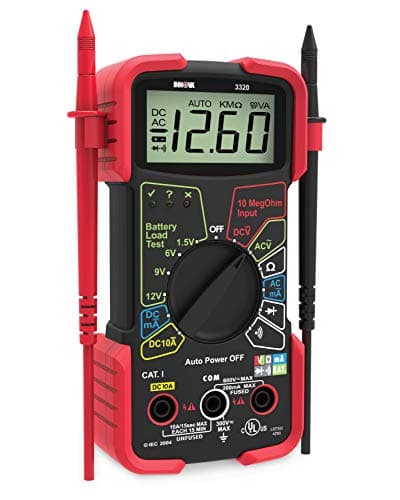
1. The tool that answers this question
INNOVA 3320 Digital Multimeter
INNOVA · Best for checking whether the battery is the problem
An auto-ranging meter is the difference between guessing and knowing whether you have a dead battery, a dead alternator or a parasitic drain.
This manufacturer does not publish a full specification table for this model on its own site. Rather than repeat figures we cannot source, the assessment below is limited to what the product category and the retailer listing genuinely establish.
What works
- Auto-ranging removes the main source of beginner error
- Reads resting and charging voltage, which is most of automotive electrical diagnosis
- Cheap enough that not owning one is hard to justify
What does not
- A voltage reading is not a load test — a battery can read 12.6 V and still fail under cranking load
- Entry-level leads are the weak point and are worth replacing
Skip it if
Not a scan tool. If you are chasing a check-engine light rather than an electrical fault, you want an OBD2 reader instead.
#ad Affiliate link · Price as of October 17, 2026
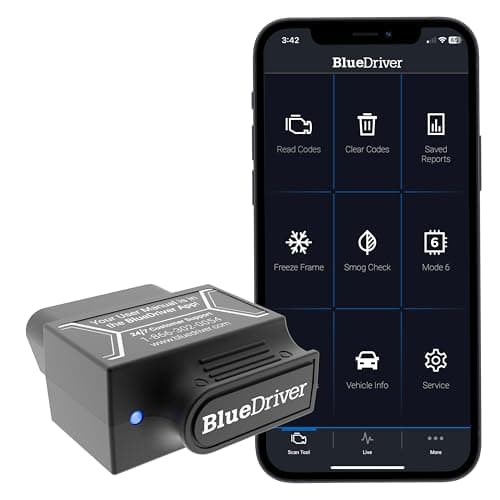
2. For a car that cranks but will not fire
BlueDriver Bluetooth OBD2 Scanner
BlueDriver · Best for reading a check-engine light yourself
A phone-paired OBD2 reader turns a warning light from an unknown into a code you can look up before agreeing to any repair.
This manufacturer does not publish a full specification table for this model on its own site. Rather than repeat figures we cannot source, the assessment below is limited to what the product category and the retailer listing genuinely establish.
What works
- Reads and clears codes, so you learn whether a light is urgent before driving anywhere
- Uses the phone you already carry instead of another screen to charge
- Freeze-frame and live data go well past the basic code-reader tier
What does not
- Manufacturer-specific coverage is uneven — enhanced data varies a lot by make
- A cleared code is not a fixed fault; the light returns if the cause remains
- Depends on a phone and an app, which is one more failure point on a bad day
Skip it if
Not the tool for a no-start. A car that will not crank is a battery and starting-system problem, and a code reader tells you little about it.
#ad Affiliate link · Price as of October 17, 2026
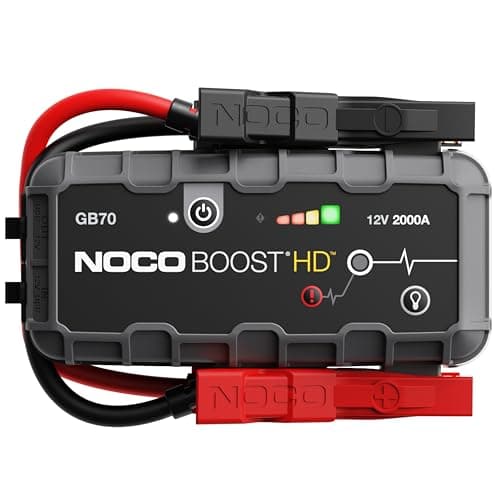
3. If the pack was simply too small
NOCO Boost HD GB70
NOCO · Best for diesel pickups and big v8s
The one to buy if you drive a diesel: 2,000 peak amps, a 6.0-liter diesel rating and 56 watt-hours, which is the smallest pack with real margin on a cold diesel.
Published specifications
What works
- The 6.0 L diesel rating covers the common 3.0 L and 6.7 L light-truck diesels with margin
- 56 Wh is still comfortably under the 100 Wh carry-on threshold, so it flies as hand luggage
- 12 V 15 A accessory output, and a 400-lumen light that is genuinely usable roadside
- 12 V / 3 A fast charge brings it back in about three hours
What does not
- 4.18 lb — noticeably heavier than the compact packs, and it wants a dedicated spot
- Overkill for a commuter four-cylinder; you are paying for headroom you will not use
Skip it if
Not the one to buy if you only ever start a four-cylinder commuter. Buy diesel headroom when you have a diesel.
#ad Affiliate link · Price as of October 17, 2026
Raw specifications: NOCO’s own page for the NOCO Boost HD GB70.
Key takeaways
- A jump starter fixes one failure only: not enough charge to turn the engine.
- Before blaming the car, confirm the pack is charged, the clamps are biting bare metal, and the pack is rated for the engine.
- Nothing at all, with a dead dash, is usually a terminal, a ground or a main fuse.
- Nothing at all with a live dash points at a safety interlock, the ignition switch or the immobilizer.
- One loud click is the starter. Rapid clicking is a current problem you may still be able to fix.
- Strong cranking with no start means the electrical side is fine — stop cranking and read codes.
- Runs with the pack on and dies without it: that is the alternator, and it is a tow or a short drive to a shop.
How we sourced this
Every figure on this page came from one of the following. Where a manufacturer or regulator does not publish a number, we say so rather than estimate it.
Common questions
- Why won't my car start even with a jump starter?
- Because a jump starter only fixes a discharged battery. If it is correctly connected and charged and the car still will not start, the fault is elsewhere: a corroded terminal or bad ground, a safety interlock, a failed starter, or a fuel and spark problem if the engine cranks normally.
- What does rapid clicking mean when I jump my car?
- The starter solenoid is pulling in and dropping out because voltage at its coil collapses under load. That means not enough current is reaching it — usually a poor clamp connection, an undersized pack, or a battery so flat it is acting as a load. Re-seat the clamps, wait two minutes connected, and try again.
- My car cranks but won't start after a jump. What now?
- The electrical system is fine — the engine is turning at normal speed. Stop cranking and look at fuel, spark and security instead. Read the stored codes with a scanner; a crank-no-start nearly always leaves one, commonly a crank or cam sensor or an immobilizer fault.
- Can a bad starter stop a jump starter from working?
- Yes, and it is the classic single-loud-click symptom. The solenoid engages, the motor does not turn, and no amount of extra current changes that. Repeated attempts risk damage; this one is a shop job.
- Why does my car die as soon as I disconnect the jump starter?
- Because the alternator is not charging. The engine runs on what the pack is supplying and stops when you take it away. Get one start out of it and drive straight to a shop — the battery will not be replenished while you drive, so the next stop may be the last one.
More in Jump Starters
A jump pack is the one trunk tool that turns a tow truck into a five-minute inconvenience. This is how to size one, and which ones are worth the space.
Read next
Troubleshooting
Won't Start, Just Clicks
The single-click and rapid-click faults told apart, with the voltage checks that confirm each and the tool that actually fixes it.
Troubleshooting
Jump Starter Not Working
A symptom-by-symptom walk through the common failures, and how to tell a dead pack from a pack that is refusing to engage on purpose.
Guide
Jump Starting a Bad Alternator
Why a jump pack starts a car with a failed alternator but cannot keep it running, how to tell the two faults apart in the driveway, and what to carry.
Guide
Is the Battery Bad?
The resting-voltage table, the cranking and charging checks, and how to tell a failed battery from a failing alternator or a parasitic drain.
Found something out of date, or a figure you can source better than we did? Tell us — corrections get read first. Our methodology explains how picks are made, and contact is one click away.