Trunk Kit
The best jumper cables
The amp rating printed on the bag is marketing. The two numbers that decide whether a set of cables will start your car are the gauge of the copper and the length you need it to travel.
Disclosure: we earn a commission if you buy through the Amazon links on this page, at no extra cost to you. Commission never decides a verdict or a ranking position — read our editorial policy and affiliate disclosure.
How we assessed these: picks are selected from manufacturers' published specifications, stated duty levels and current retailer listings — not from hands-on cranking tests on identical dead batteries. We publish no measured voltage-drop figures, because we do not measure them.
Short answer
For most drivers, buy a 4-gauge set at least 20 feet long: the Performance Tool W1673 is rated 500 amps continuous and 600 peak with copper jaw clamps and a published cold rating. For a diesel or a big V8, step up to 1 gauge — the Jump-N-Carry 401252 is 25 feet with 800-amp clamps. Only buy a 10-gauge set if the biggest thing you will jump is a compact car or a motorcycle.
Quick picks
Tap any row to jump to the full write-up. Scoring criteria are published in full on our methodology page.
| # | Product | Best for | Our read | Price |
|---|---|---|---|---|
| 1 | 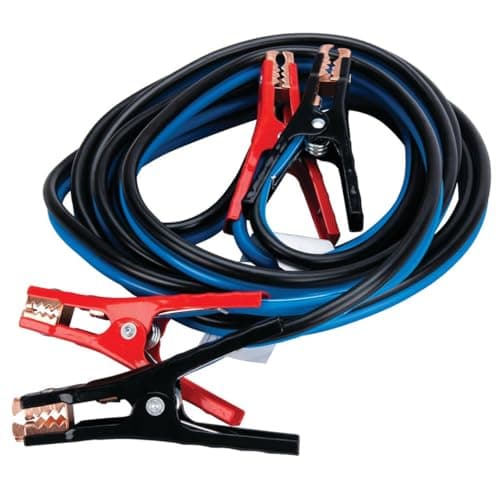 Performance Tool W1673 4-Gauge 20 ft Jumper Cables Best overall | One set of cables for a normal car or SUV | 4 gauge, 20 ft, 500 A continuous and 600 peak, published cold rating | $37.03View on Amazon #ad Affiliate link · Price as of November 10, 2026 |
| 2 | 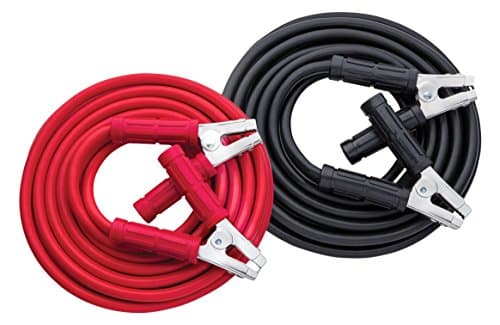 Jump-N-Carry 401252 1-Gauge 25 ft Booster Cables Best for diesels and big V8s | Diesels, big V8s and awkward parking | 1 gauge, 25 ft, 800 A clamps, TPR jacket rated to -40 C | $91.95View on Amazon #ad Affiliate link · Price as of November 10, 2026 |
| 3 | 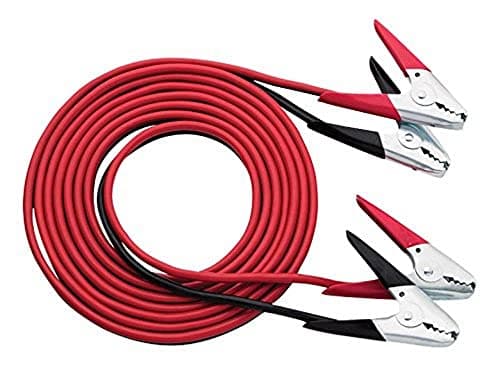 Jump-N-Carry 404202 4-Gauge 20 ft Booster Cables Best clamps | Corroded terminals on an ordinary car | 4 gauge, 20 ft, 600 A commercial parrot clamps, twin cable | $48.00View on Amazon #ad Affiliate link · Price as of November 10, 2026 |
| 4 | 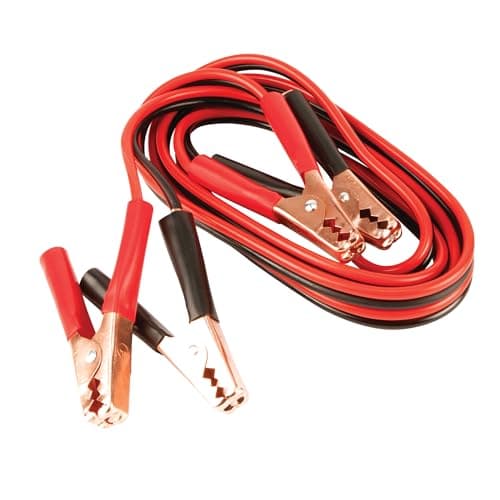 Performance Tool W1670 10-Gauge 12 ft Jumper Cables Best light-duty set | A compact car, a motorcycle or a glovebox | 10 gauge, 12 ft, 150 A - stated for compacts and motorcycles | $15.40$17.99View on Amazon #ad Affiliate link · Price as of November 10, 2026 |
Jumper cables are the most over-marketed item in the trunk. Nearly every set on a shelf has a four-figure amp number on the bag, and that number is almost never a specification of anything. What actually determines whether a set of cables starts a car is the cross-section of copper between the two batteries, the length that copper has to travel, and whether the clamps can make real contact with the terminals. Those three things are measurable, and the good manufacturers publish them.
This page is for the reader who has already decided on cables. If you have not, jump starter versus jumper cables is the honest comparison — cables are cheaper and never go flat, and they require a second car with a healthy battery and a willing driver, which is exactly what you do not have at 11 PM in an empty lot.
Gauge is the number that matters
Cable gauge is American Wire Gauge, and it runs backwards: a smaller number is thicker copper. 1 gauge is thick, 10 gauge is thin. Thicker cable has less resistance, which means less of the donor battery's voltage is lost as heat on the way to the dead one, which means the starter gets more of what it needs.
NOCO publishes a straightforward guideline on its own jump-starting page: for a gas engine of about 3 liters or less, 6 or 4 gauge is sufficient; for a gas engine over roughly 4 liters, or any diesel, it suggests 2 or 1 gauge. NOCO also notes that most auto parts stores stock 10, 8, 6 and 4 gauge sets, typically around 12 feet long — which is to say that the shelf in front of you is weighted toward the light end of the range.
| Gauge | What it suits | What happens if you undersize it |
|---|---|---|
| 1 or 2 AWG | Diesels, big V8s, work trucks, long cable runs | Nothing — this is the margin end |
| 4 AWG | Most cars, crossovers, SUVs and stock pickups | A slower crank on a big cold engine |
| 6 AWG | Small to mid-size gas engines at short lengths | Long waits on anything over about 3 liters |
| 8 AWG | Compacts, short runs | Cables get hot; may only charge rather than crank |
| 10 AWG | Compact cars and motorcycles only | Will not turn a V6 — at best it trickles into the dead battery |
The suitability column follows NOCO's published gauge guidance by engine size, linked in Sources. The right-hand column is our editorial read of what undersizing costs, not a measured figure.
One thing the gauge table cannot tell you is whether the cables will work at all when the dead battery is genuinely dead rather than merely low. Cables transfer current from a running donor; they do not manufacture it. If the battery will not take a charge, no gauge of copper fixes that — how to tell if a car battery is bad is the diagnosis step, and a bad alternator is the other common reason a successful jump does not stay successful.
The criteria we buy on
- A published gauge AND a published length, stated by the manufacturer rather than inferred from a photograph.
- An amp rating that distinguishes continuous from peak. A single "3000 AMP" figure with no qualifier tells you nothing; "500 A continuous, 600 A peak" tells you what the cable is for.
- Clamps that can bite through terminal corrosion. This is where real-world jumps fail far more often than the copper runs out.
- A published cold temperature rating, because the jacket going stiff in a January parking lot is the failure mode nobody plans for.
- At least 20 feet unless you have a specific reason to go shorter, so the two cars do not have to be nose to nose.
- A manufacturer with a published specification page at all. A listing with no spec sheet behind it is an unverifiable claim, and we leave those out.
The copper-clad aluminum problem
This is the single most useful thing to know before buying cables, and it is the thing least often disclosed. NOCO states it plainly on its own support page: the vast majority of jumper cables sold are not pure copper but copper-clad aluminum — aluminum wire with a copper coating — and the conductivity difference against pure copper is around 40 percent.
The consequence is that gauge alone can mislead. A 4-gauge copper-clad aluminum cable does not carry current like a 4-gauge pure copper one, and both are sold as "4 gauge" because the measurement describes the physical cross-section, not the metal. There is no way to tell from the outside.
We have to be honest about the limits of our own research here: neither Performance Tool nor Clore Automotive publishes the conductor material for the sets below. That is a real gap, and it is listed as a drawback on every pick rather than glossed over. What we can say is that both publish the specifications that are checkable — gauge, length, amp or clamp rating, temperature range — which is more than the anonymous brands that occupy most of the category do. Where conductor material matters most is at the thin end: if you are buying a light-duty set, assume copper-clad unless the maker says otherwise, and buy more gauge than you think you need.
Clamps do more work than people expect
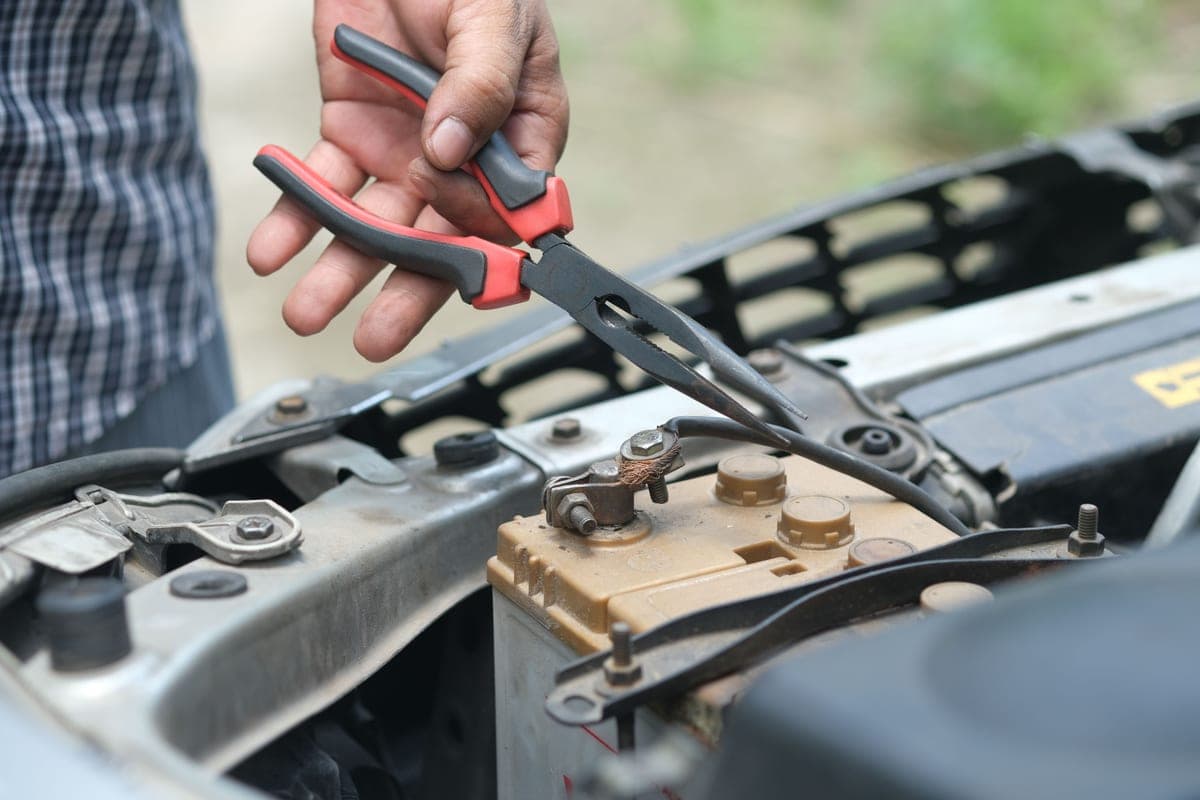
A clamp has one job: make metal-to-metal contact with the battery post or terminal through whatever white-green crust has grown there. Corrosion is an insulator. A clamp that sits on top of it is a jump that fails for reasons that have nothing to do with cable gauge, and this is why a car can click rather than crank even with good cables attached — a clicking start has several causes and a bad connection is high on the list.
Two clamp styles dominate. Jaw clamps are the familiar alligator shape and work fine on clean terminals. Parrot clamps have a narrower, deeper bite and considerably more closing force — Clore specifies its 600-amp parrot clamps as having the "strong biting force to penetrate corrosion on battery terminals", which is exactly the problem they exist to solve. On a car whose terminals you have not cleaned since you bought it, better clamps are a more useful upgrade than another gauge of copper.
The trade is bulk. Parrot clamps are physically larger, which can be a genuine problem on a modern engine bay where the battery sits under a plastic cover with a hand's width of clearance.
Length: where will the other car actually be?
A 12-foot set assumes two cars can be parked nose to nose. In a parking garage, on a street with parallel parking, or in a driveway with a car facing the wrong way, that is often impossible — and the battery is not always at the front of the engine bay either. Some vehicles put it in the trunk or under a rear seat, which adds the whole length of the car to the run.
Twenty feet covers nose-to-nose, side-by-side and most awkward angles. Twenty-five feet covers a truck with the battery at the back of a long engine bay and a donor car that cannot get close. Longer cable does cost you voltage — resistance rises with length, which is why the heavy-duty long sets are also the thick ones. A 25-foot 10-gauge set would be the worst of both worlds, which is why nobody sells one.
Doing it safely
The order that keeps the sparks away from the battery
Both engines off, cables uncoiled
Park close enough to reach, put both cars in park or neutral with the ignition off, and lay the cables out so the clamps are nowhere near each other or any metal.
Red to the dead battery's positive
Clamp the first red clamp onto the positive terminal of the dead battery. Wiggle it so the jaws bite metal, not corrosion.
Red to the donor's positive
Clamp the other red clamp onto the donor battery's positive terminal.
Black to the donor's negative
Clamp the first black clamp onto the donor battery's negative terminal.
Black to bare metal on the dead car
Clamp the last black clamp onto an unpainted engine bracket or chassis bolt on the dead car — NOT the dead battery's negative post. This keeps the final spark away from the battery, which vents hydrogen.
Start the donor, then the dead car
Run the donor for a couple of minutes, then try the key. If it does not catch within a few attempts, stop and reconsider rather than cranking repeatedly.
Remove in reverse order
Last clamp on comes off first. Then drive the revived car for a while — idling does not recharge a flat battery meaningfully.
The deeper version of all of this, including what to do when it does not work, is in jump starter safety and why won't my car start after a jump. The sequence above is the same regardless of which set you buy.
The picks
1. Best overall
Performance Tool W1673 4-Gauge 20 ft Jumper Cables
Performance Tool · Best for one set of cables for a normal car or suv
4 gauge, 20 feet, rated 500 amps continuous and 600 peak, with copper jaw clamps and a published cold rating down to minus 13 Fahrenheit - the size and length that covers most of what a driver actually meets.
Published specifications
What works
- 20 feet is the length that stops mattering where you park - it reaches a car nose-to-nose, side by side, or parked in the next bay over
- 4 gauge at 20 feet is the honest sweet spot: thick enough to crank a V6 without a long wait, thin enough to coil back into the bag
- Copper jaw clamps and a published low-temperature rating, which is more than most cables in this bracket disclose
- Performance Tool publishes continuous AND peak amps, so the 600 number is not doing all the work
What does not
- Performance Tool does not publish whether the conductor is pure copper or copper-clad aluminum, and that distinction changes real current capacity
- Not enough cable for a big diesel - a 6.7-liter engine that has been sitting in the cold wants 1 or 2 gauge
- The clamps are jaw-style rather than parrot-style, so badly corroded terminals need cleaning first
Skip it if
Not the set for a work truck, a dually or a tractor. If the engine you expect to start is diesel or over about 5 liters, go to 1 or 2 gauge and accept the bulk.
#ad Affiliate link · Price as of November 10, 2026
Raw specifications: Performance Tool’s own page for the Performance Tool W1673 4-Gauge 20 ft Jumper Cables.
2. Best for diesels and big V8s
Jump-N-Carry 401252 1-Gauge 25 ft Booster Cables
Clore Automotive · Best for diesels, big v8s and awkward parking
Trade-grade cable: 1 gauge, 25 feet, 800-amp heavy-duty clamps meant to bite through terminal corrosion, in a TPR jacket Clore rates from minus 40 to 80 Celsius.
Published specifications
- Cable gauge
- 1 AWG source
- Length
- 25 ft source
- Clamp rating
- 800 A heavy-duty clamps source
- Cable style
- Single source
- Jacket
- TPR, stays flexible in extreme conditions source
- Operating temperature
- -40 to 80 C (-40 to 176 F) source
- Model number
- 401252 source
- Stated use
- Head-to-head and side-by-side starting of light and medium-duty vehicles source
- Warranty
- 1-year limited source
What works
- 1 gauge is the size that starts a cold diesel without a five-minute wait while the donor car charges the dead battery through a thin cable
- The clamps are specified to penetrate corrosion, which is the failure most cheap cables hit before the copper is ever the limit
- 25 feet and a minus 40 Celsius jacket rating is a set that works in a plowed parking lot in February, not just in a garage
- Clore builds the Jump-N-Carry jump packs that shops actually use, and these come out of the same catalog
What does not
- Heavy and bulky - 1 gauge at 25 feet is a real armful and takes real trunk space
- Clore does not publish a conductor material or a continuous amp rating on this page, only the clamp rating
- Costs several times what a 4-gauge consumer set does, and most drivers will never use the extra capacity
- Amazon stock on the exact Clore part number moves around, because this is a trade line rather than a retail one
Skip it if
Too much cable for a commuter car. If the biggest engine in the driveway is a 4-cylinder, 4 gauge is lighter, cheaper and does the same job.
#ad Affiliate link · Price as of November 10, 2026
Raw specifications: Clore Automotive’s own page for the Jump-N-Carry 401252 1-Gauge 25 ft Booster Cables.
3. Best clamps
Jump-N-Carry 404202 4-Gauge 20 ft Booster Cables
Clore Automotive · Best for corroded terminals on an ordinary car
The same trade pedigree in a size a car owner can live with: 4 gauge, 20 feet, 600-amp commercial parrot clamps with the biting force to get past terminal corrosion, in a minus 40 Celsius TPR jacket.
Published specifications
- Cable gauge
- 4 AWG source
- Length
- 20 ft source
- Clamp rating
- 600 A commercial-grade parrot clamps source
- Cable style
- Twin source
- Jacket
- TPR, stays flexible in extreme conditions source
- Operating temperature
- -40 to 80 C (-40 to 176 F) source
- Model number
- 404202 source
- Stated use
- Head-to-head and side-to-side starting of passenger vehicles and light trucks source
- Warranty
- 1-year limited source
What works
- Parrot clamps bite deeper and hold harder than the jaw clamps on most consumer sets - the single most useful upgrade on a cable set
- Twin cable construction keeps the pair tidy instead of giving you two ropes to untangle in the rain
- Rated to minus 40 Celsius, which is the condition in which you will actually be using them
- 4 gauge and 20 feet is the size most drivers need, from a trade brand rather than an anonymous one
What does not
- No published conductor material or continuous amp rating, same as the 1-gauge set
- Parrot clamps are bulkier than jaw clamps and can be a squeeze on a battery buried behind a cover
- Costs noticeably more than a lookalike consumer 4-gauge set, and the gain is in the clamps, not the copper
Skip it if
Not the one if the problem you are solving is a big diesel. Clamp quality does not substitute for cable section - step up to 1 or 2 gauge for that.
#ad Affiliate link · Price as of November 10, 2026
Raw specifications: Clore Automotive’s own page for the Jump-N-Carry 404202 4-Gauge 20 ft Booster Cables.
4. Best light-duty set
Performance Tool W1670 10-Gauge 12 ft Jumper Cables
Performance Tool · Best for a compact car, a motorcycle or a glovebox
The honest light-duty set: 10 gauge, 12 feet, 150 amps continuous and 250 peak, which Performance Tool states is for compact vehicles and motorcycles - and nothing bigger.
Published specifications
What works
- Small and light enough to live under a motorcycle seat or in a hatchback cubby, where a 4-gauge set will not go
- Performance Tool states the duty level plainly instead of printing a four-figure amp number on the bag
- Costs about as much as a fast-food lunch, so there is no reason for a second car to be without a set
- Same published cold rating as the bigger Performance Tool sets
What does not
- 150 amps continuous will not crank a V6, let alone a V8 - at best it slowly charges the dead battery and you try the key later
- 12 feet means the two cars have to be nose to nose, which is not always possible on a street
- 10-gauge cable gets warm in use, and a long attempt is how thin cables get damaged
Skip it if
Do not buy these as your only cables if you drive anything larger than a compact. The money saved disappears the first time they will not turn a cold engine over.
#ad Affiliate link · Price as of November 10, 2026
Raw specifications: Performance Tool’s own page for the Performance Tool W1670 10-Gauge 12 ft Jumper Cables.
Cables are half a kit
Cables solve exactly one roadside problem, and it is not the most common one. A set of cables plus a tire gauge plus something to inflate with covers most of what actually goes wrong — our roadside emergency kit checklist is the full list, and the best tire pressure gauges is the other five-minute purchase that belongs in the same bag. If you would rather buy it assembled, the best roadside emergency kits covers the pre-built options.
And the honest caveat on the whole category: cables need a second car. If you park where there is no one to flag down, or if the thing you most fear is a dead battery on a cold morning with nobody home, a portable jump starter is the purchase that solves your actual problem, and cold weather is where that difference shows up most.
Key takeaways
- Gauge and length decide whether cables work; the big amp number on the bag usually specifies nothing.
- NOCO's own guidance: 6 or 4 gauge for gas engines up to about 3 liters, 2 or 1 gauge for anything over about 4 liters or any diesel.
- Most cable sold is copper-clad aluminum, which NOCO puts at roughly 40 percent less conductive than pure copper — and almost nobody discloses which they used.
- Clamps that bite through corrosion fix more failed jumps than extra copper does.
- Buy at least 20 feet unless you know the two cars can always park nose to nose.
- A 10-gauge set is for a compact or a motorcycle, and the makers that are honest say so on the box.
- Connect positive-to-positive, then donor negative, then bare metal on the dead car — never the dead battery's negative post last.
If a cap is doing the deciding, the best jumper cables in the under-50 bracket covers the three sets here that sit in the cheapest tier and explains why 4-gauge is the floor for a full-size vehicle. And if the cables are one line item in a larger purchase, the best car emergency kit in the under-100 bracket is the page that ranks what to buy first, in the order each item actually gets used.
How we sourced this
Every figure on this page came from one of the following. Where a manufacturer or regulator does not publish a number, we say so rather than estimate it.
- NOCO — how to jump start a car with jumper cables (cable gauge guidance by engine size)
- Performance Tool W1673 4-gauge 20 ft jumper cables — published amp rating and temperature range
- Performance Tool W1670 10-gauge 12 ft jumper cables — published amp rating and stated duty level
- Clore Automotive Jump-N-Carry 401252 — 1 GA, 25 ft, 800 A clamps, published specifications
- Clore Automotive Jump-N-Carry 404202 — 4 GA, 20 ft, 600 A parrot clamps, published specifications
Common questions
- What gauge jumper cables do I need?
- For most cars and SUVs, 4 gauge at 20 feet. NOCO's published guidance is 6 or 4 gauge for gas engines up to about 3 liters and 2 or 1 gauge for engines over about 4 liters or any diesel. A smaller AWG number is thicker cable.
- Are expensive jumper cables worth it?
- The money buys gauge and clamps, both of which are real. It does not buy a higher amp number on a bag, which is where most of the marketing spend goes. A mid-priced 4-gauge set from a maker that publishes specifications beats a cheap set claiming four thousand amps.
- What does copper-clad aluminum mean on jumper cables?
- Aluminum wire with a thin copper coating instead of solid copper. NOCO states that most cables sold are built this way and that the conductivity difference is around 40 percent, so a copper-clad 4-gauge cable does not carry current like a pure copper one. Very few manufacturers disclose which they used.
- How long should jumper cables be?
- At least 20 feet for most people. Twelve feet only works when the cars can park nose to nose, and some vehicles keep the battery in the trunk or under a rear seat, which adds the length of the car to the run.
- Where does the last jumper cable clamp go?
- On an unpainted engine bracket or chassis bolt on the dead car — not on the dead battery's negative post. The final connection sparks, and a charging lead-acid battery vents hydrogen.
- Can jumper cables damage my car?
- Reversed polarity can, which is why the connection order matters and why the clamps are color-coded. Modern cars are more sensitive to this than old ones. Work slowly, check each clamp before the next one goes on, and never let the red and black clamps touch while either end is connected.
More in Trunk Kit
What actually lives in the trunk, in the order it earns its space — and the pre-built kits that are a starting point rather than an answer.
Read next
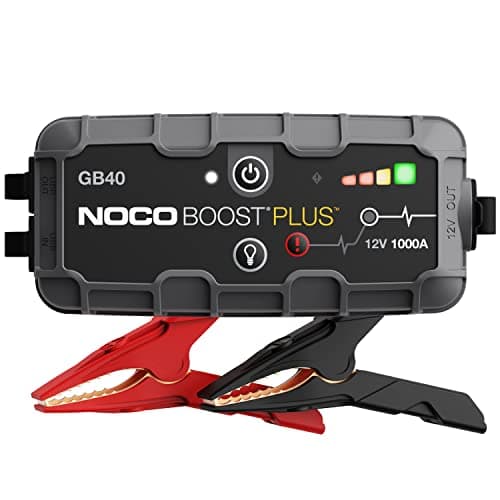
Head to head
Jump Starter vs Cables
The honest comparison: where cables still make sense, why a pack is safer, and why most drivers should carry both.
How to
How to Use One
The full sequence for a lithium jump pack, plus what to do when the first attempt does not work and when to stop trying.
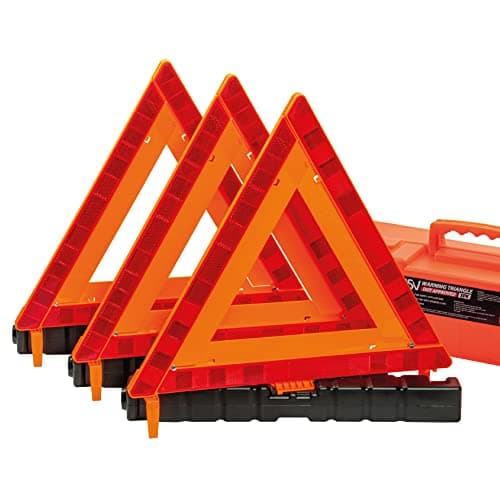
Guide
Emergency Kit Checklist
The short list that survives contact with a real trunk, in priority order, plus what to skip and what to check twice a year.
Guide
Jump Starter Safety
The risks that remain with a protected lithium pack: clamp shorts, damaged cells, frozen batteries, hydrogen, and the traffic behind you.
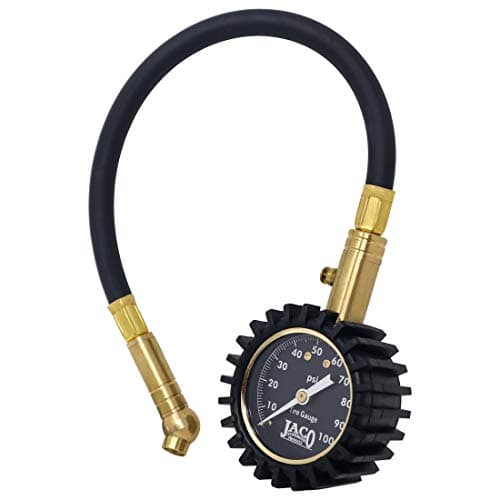
Best tire pressure gauge
Best Tire Gauges
Chosen on the accuracy standard the maker publishes, a scale that puts your tires mid-dial, and a chuck that seats square on the valve — plus honest limits on every pick.
Found something out of date, or a figure you can source better than we did? Tell us — corrections get read first. Our methodology explains how picks are made, and contact is one click away.