Trunk Kit
The best jumper cables under $50
Jumper cables are the one product on this site where a single published number — the wire gauge — tells you almost everything, and where the cheap tier is genuinely adequate.
Disclosure: we earn a commission if you buy through the Amazon links on this page, at no extra cost to you. Commission never decides a verdict or a ranking position — read our editorial policy and affiliate disclosure.
How we assessed these: picks are selected from manufacturers' published specifications, current retailer listings and the live price layer — not from hands-on testing of every unit. The bracket in the title describes the market tier; the live figure in each buy button, stamped with the date it was read, is the only price we stand behind.
Short answer
For a normal car, truck or SUV, buy the Performance Tool W1673: 4 AWG copper-clad wire, 20 feet long, with a published 500 amps continuous and 600 amps peak, which is the right specification for a full-size vehicle. If your battery terminals are corroded or awkward, the Jump-N-Carry 404202 is the same gauge and length with better clamps — 600-amp commercial-grade parrot jaws that bite through muck. The budget pick is the Performance Tool W1670: 10 AWG, 12 feet, 150 amps continuous, and Performance Tool states plainly that it is for compact vehicles and motorcycles, which is exactly how you should buy it.
Quick picks
Tap any row to jump to the full write-up. Scoring criteria are published in full on our methodology page.
| # | Product | Best for | Our read | Price |
|---|---|---|---|---|
| 1 | 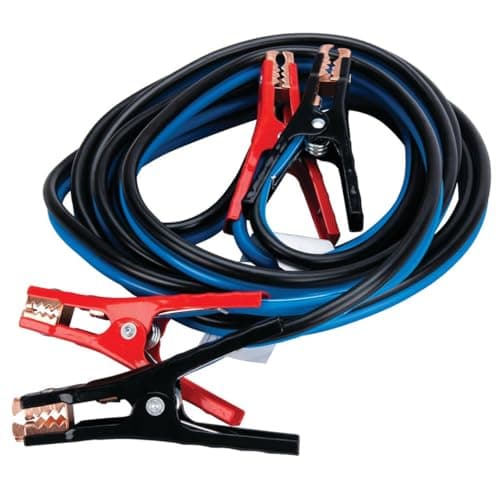 Performance Tool W1673 4-Gauge 20 ft Jumper Cables Best overall | One set of cables for a normal car or SUV | 4 AWG, 20 ft, 500 A continuous and 600 A peak | $37.03View on Amazon #ad Affiliate link · Price as of November 10, 2026 |
| 2 | 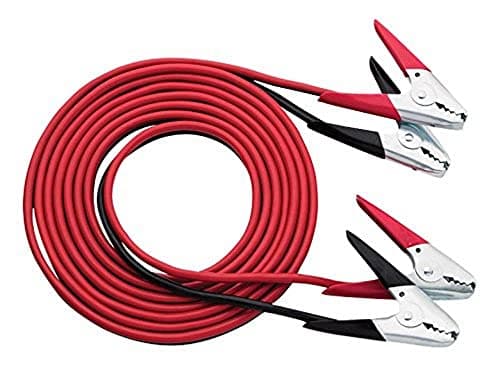 Jump-N-Carry 404202 4-Gauge 20 ft Booster Cables Best clamps | Corroded terminals on an ordinary car | 4 AWG, 20 ft, 600 A commercial-grade parrot clamps | $48.00View on Amazon #ad Affiliate link · Price as of November 10, 2026 |
| 3 | 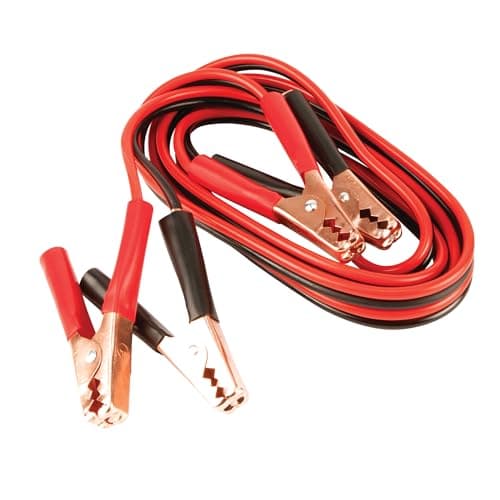 Performance Tool W1670 10-Gauge 12 ft Jumper Cables Budget pick | A compact car, a motorcycle or a glovebox | 10 AWG, 12 ft, 150 A — compacts and motorcycles only | $15.40$17.99View on Amazon #ad Affiliate link · Price as of November 10, 2026 |
Jumper cables are refreshingly simple to shop for, once you know that the headline amp numbers printed on the bag are mostly decoration and the gauge number on the specification sheet is not. Lower gauge means thicker wire, thicker wire means less resistance, and less resistance means the current actually reaches the dead battery instead of warming up the cable.
That is the whole theory. The practice is that under $50 comfortably reaches 4-gauge sets at 20 feet, which covers a normal car or SUV, and that nothing in this bracket covers a big diesel. Best jumper cables is the full roundup with the heavier options.
Why gauge is the only number that matters
American Wire Gauge runs backwards: 10 AWG is thin, 4 AWG is substantially thicker, 1 AWG is thicker again. A thin cable on a large engine does not fail dramatically — it just fails to deliver, so the starter turns slowly or not at all while the cables get warm. People read that as a dead battery and buy a battery they did not need.
NOCO's own jump-starting guidance recommends matching cable gauge to engine size for this reason. The practical version: 10 gauge for a motorcycle or a compact, 4 gauge for a normal car or SUV, 1 or 2 gauge for a diesel or a big V8 — and the last of those is above this bracket.
| Cables | Gauge | Length | Published rating | Clamps | Temperature range |
|---|---|---|---|---|---|
| Performance Tool W1670 | 10 AWG | 12 ft | 150 A continuous, 250 A peak | Copper jaw clamps | Minus 13 to 158 degrees Fahrenheit |
| Performance Tool W1673 | 4 AWG | 20 ft | 500 A continuous, 600 A peak | Heavy-duty copper jaw clamps | Minus 13 to 158 degrees Fahrenheit |
| Jump-N-Carry 404202 | 4 AWG | 20 ft | 600 A clamp rating | Commercial-grade parrot clamps | Minus 40 to 176 degrees Fahrenheit |
Figures are each maker's own published specifications, linked in Sources. Note that the Performance Tool figures are cable amp ratings and the Jump-N-Carry figure is a clamp rating — they are not the same measurement, which is one reason cross-brand amp comparisons on this product are unreliable.
Length is the specification people regret
Twenty feet sounds generous until the only way to position two cars is nose to tail in a parking row, or the dead car's battery is on the far side of its engine bay. Twelve feet forces the two vehicles into an arrangement that is not always available.
This is the main argument for the 20-foot sets over the budget pick even on a small car, and it is why the heavier sets in the full roundup run to 25 feet. A cable that cannot reach is a cable that does not work, regardless of gauge.
The clamps are the part that fails
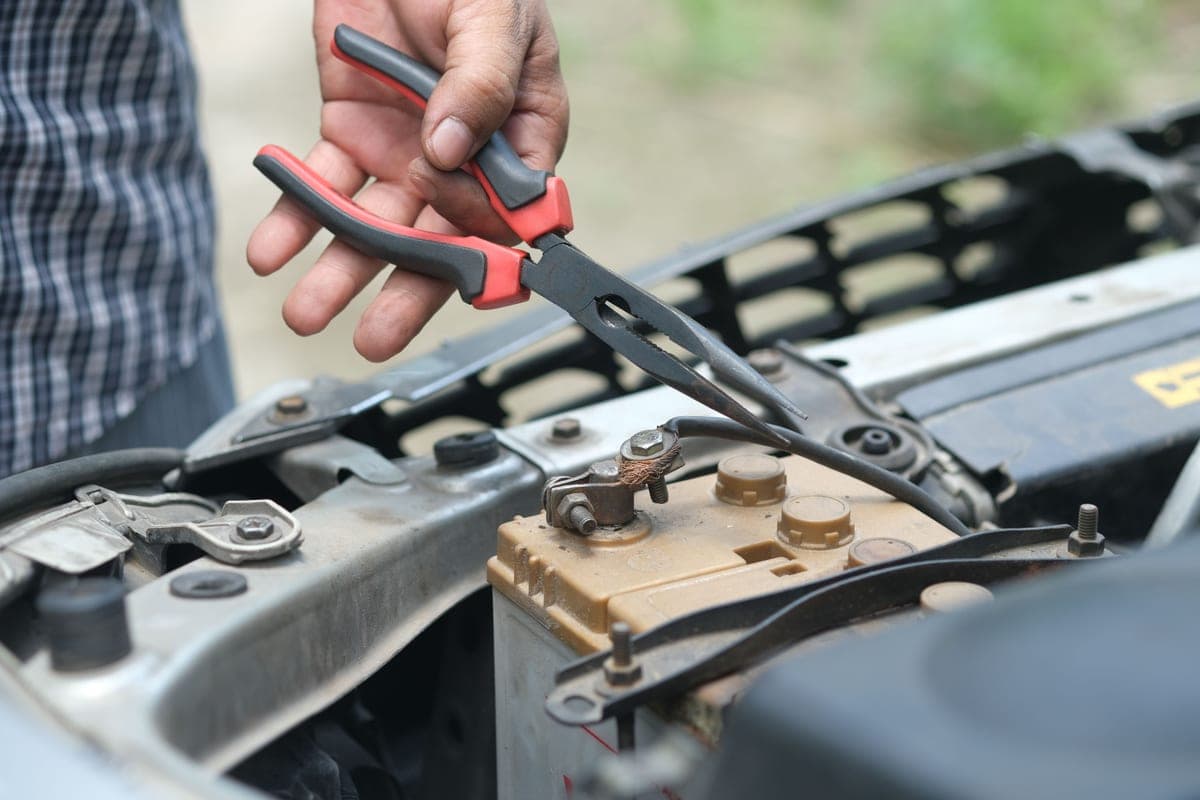
Cable fails rarely. Clamps fail often, in two ways: the jaws are too shallow to reach a side-terminal battery or a recessed post, and the spring is too weak to bite through surface corrosion. A clamp that is resting on oxide rather than lead is a bad connection no amount of copper fixes.
That is why the Jump-N-Carry set is here despite being the same gauge and length as our main pick — the parrot-jaw clamps are a genuine upgrade on a corroded terminal. If you are jumping an older vehicle, that is the one to buy. And consider whether a jump pack is a better answer entirely: jump starter vs jumper cables makes the case either way, since cables need a second vehicle and a willing stranger.
The picks
1. Best overall
Performance Tool W1673 4-Gauge 20 ft Jumper Cables
Performance Tool · Best for one set of cables for a normal car or suv
4 gauge, 20 feet, rated 500 amps continuous and 600 peak, with copper jaw clamps and a published cold rating down to minus 13 Fahrenheit - the size and length that covers most of what a driver actually meets.
Published specifications
What works
- 20 feet is the length that stops mattering where you park - it reaches a car nose-to-nose, side by side, or parked in the next bay over
- 4 gauge at 20 feet is the honest sweet spot: thick enough to crank a V6 without a long wait, thin enough to coil back into the bag
- Copper jaw clamps and a published low-temperature rating, which is more than most cables in this bracket disclose
- Performance Tool publishes continuous AND peak amps, so the 600 number is not doing all the work
What does not
- Performance Tool does not publish whether the conductor is pure copper or copper-clad aluminum, and that distinction changes real current capacity
- Not enough cable for a big diesel - a 6.7-liter engine that has been sitting in the cold wants 1 or 2 gauge
- The clamps are jaw-style rather than parrot-style, so badly corroded terminals need cleaning first
Skip it if
Not the set for a work truck, a dually or a tractor. If the engine you expect to start is diesel or over about 5 liters, go to 1 or 2 gauge and accept the bulk.
#ad Affiliate link · Price as of November 10, 2026
Raw specifications: Performance Tool’s own page for the Performance Tool W1673 4-Gauge 20 ft Jumper Cables.
2. Best clamps
Jump-N-Carry 404202 4-Gauge 20 ft Booster Cables
Clore Automotive · Best for corroded terminals on an ordinary car
The same trade pedigree in a size a car owner can live with: 4 gauge, 20 feet, 600-amp commercial parrot clamps with the biting force to get past terminal corrosion, in a minus 40 Celsius TPR jacket.
Published specifications
- Cable gauge
- 4 AWG source
- Length
- 20 ft source
- Clamp rating
- 600 A commercial-grade parrot clamps source
- Cable style
- Twin source
- Jacket
- TPR, stays flexible in extreme conditions source
- Operating temperature
- -40 to 80 C (-40 to 176 F) source
- Model number
- 404202 source
- Stated use
- Head-to-head and side-to-side starting of passenger vehicles and light trucks source
- Warranty
- 1-year limited source
What works
- Parrot clamps bite deeper and hold harder than the jaw clamps on most consumer sets - the single most useful upgrade on a cable set
- Twin cable construction keeps the pair tidy instead of giving you two ropes to untangle in the rain
- Rated to minus 40 Celsius, which is the condition in which you will actually be using them
- 4 gauge and 20 feet is the size most drivers need, from a trade brand rather than an anonymous one
What does not
- No published conductor material or continuous amp rating, same as the 1-gauge set
- Parrot clamps are bulkier than jaw clamps and can be a squeeze on a battery buried behind a cover
- Costs noticeably more than a lookalike consumer 4-gauge set, and the gain is in the clamps, not the copper
Skip it if
Not the one if the problem you are solving is a big diesel. Clamp quality does not substitute for cable section - step up to 1 or 2 gauge for that.
#ad Affiliate link · Price as of November 10, 2026
Raw specifications: Clore Automotive’s own page for the Jump-N-Carry 404202 4-Gauge 20 ft Booster Cables.
3. Budget pick
Performance Tool W1670 10-Gauge 12 ft Jumper Cables
Performance Tool · Best for a compact car, a motorcycle or a glovebox
The honest light-duty set: 10 gauge, 12 feet, 150 amps continuous and 250 peak, which Performance Tool states is for compact vehicles and motorcycles - and nothing bigger.
Published specifications
What works
- Small and light enough to live under a motorcycle seat or in a hatchback cubby, where a 4-gauge set will not go
- Performance Tool states the duty level plainly instead of printing a four-figure amp number on the bag
- Costs about as much as a fast-food lunch, so there is no reason for a second car to be without a set
- Same published cold rating as the bigger Performance Tool sets
What does not
- 150 amps continuous will not crank a V6, let alone a V8 - at best it slowly charges the dead battery and you try the key later
- 12 feet means the two cars have to be nose to nose, which is not always possible on a street
- 10-gauge cable gets warm in use, and a long attempt is how thin cables get damaged
Skip it if
Do not buy these as your only cables if you drive anything larger than a compact. The money saved disappears the first time they will not turn a cold engine over.
#ad Affiliate link · Price as of November 10, 2026
Raw specifications: Performance Tool’s own page for the Performance Tool W1670 10-Gauge 12 ft Jumper Cables.
Key takeaways
- Gauge is the specification; lower is thicker, and the amp numbers on the bag are not comparable across brands.
- Under $50 reaches 4-gauge, 20-foot sets, which is the right specification for a normal car or SUV.
- Nothing in this bracket is right for a big diesel — that is 1 or 2 gauge territory.
- Twenty feet beats twelve for reasons of geometry, not power.
- Clamps are what actually fails: shallow jaws and weak springs, not the wire.
- A 10-gauge set is honest for a motorcycle or a compact and nothing larger, which is how its maker describes it.
How we sourced this
Every figure on this page came from one of the following. Where a manufacturer or regulator does not publish a number, we say so rather than estimate it.
- Performance Tool W1670 10-gauge 12 ft jumper cables — published amp rating and stated duty level
- Performance Tool W1673 4-gauge 20 ft jumper cables — published amp rating and temperature range
- Clore Automotive Jump-N-Carry 404202 — 4 GA, 20 ft, 600 A parrot clamps, published specifications
- NOCO — how to jump start a car with jumper cables (cable gauge guidance by engine size)
Common questions
- What gauge jumper cables do I need?
- 4 gauge for a normal car, truck or SUV; 10 gauge is only adequate for a compact or a motorcycle; 1 or 2 gauge for a diesel or a big V8. Lower numbers mean thicker wire and less voltage lost in the cable.
- Are cheap jumper cables safe?
- Thin cables are not dangerous so much as ineffective — they warm up instead of delivering current, and the car cranks slowly or not at all. Buy on published gauge rather than the amp figure printed on the packaging.
- How long should jumper cables be?
- Twenty feet, if you can. Twelve feet works only when the two vehicles can be parked nose to nose, which is not always possible in a parking row or a garage.
- Do jumper cables under $50 work on a diesel truck?
- Not reliably. A large diesel wants 1 or 2 gauge and 25 feet, which sits above this bracket. The 4-gauge sets here are sized for gas cars and light trucks.
- Are jumper cables better than a jump starter?
- They are cheaper and never go flat, and they need a second vehicle and someone willing to help. A jump pack is self-sufficient, which is why most drivers end up owning both.
More in Trunk Kit
What actually lives in the trunk, in the order it earns its space — and the pre-built kits that are a starting point rather than an answer.
Read next
Best jumper cables
Best Jumper Cables
Picked on published gauge, length and clamp rating rather than the peak-amp number on the packaging - with the engine size each set is actually specified for.
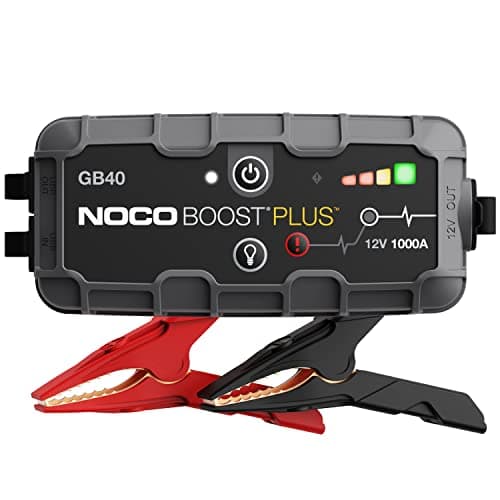
Head to head
Jump Starter vs Cables
The honest comparison: where cables still make sense, why a pack is safer, and why most drivers should carry both.
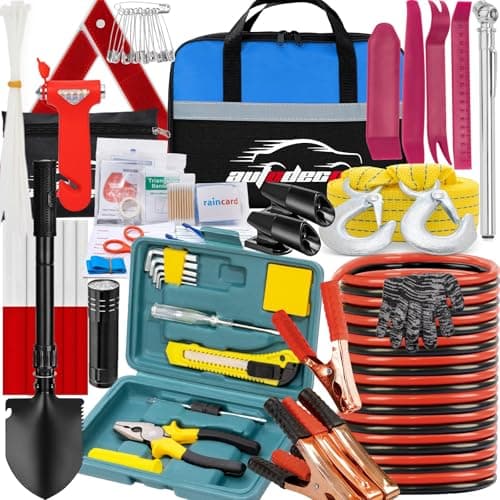
Best Roadside Kits
Best Emergency Kits
Pre-assembled kits worth buying as a base, what to replace immediately, and the two items no kit at this price includes.
Best car emergency kit under $100
Best Kit Under $100
The ready-made kit worth starting from, and the four items that beat it inside the same bracket — ranked by how often each one actually gets used.
Found something out of date, or a figure you can source better than we did? Tell us — corrections get read first. Our methodology explains how picks are made, and contact is one click away.