Road Trip & Travel
The best jump starters for a boat
Marine use adds two problems a car never has: water, and a second battery bank that is nothing to do with starting.
Disclosure: we earn a commission if you buy through the Amazon links on this page, at no extra cost to you. Commission never decides a verdict or a ranking position — read our editorial policy and affiliate disclosure.
How we assessed these: picks are selected from manufacturer specifications, current retailer listings and published owner feedback — not from hands-on testing of every unit. Regulatory figures are cited to the FAA and TSA pages in the sources block.
Short answer
Size the pack on the engine, then weight the choice toward water resistance and cable reach. An IP65 rating — which the NOCO Boost line carries — covers dust and low-pressure water jets, meaning rain and spray rather than immersion. The trolling motor's deep-cycle bank is a charger problem, not a jump-starter one.
Marine starting has the same electrical problem as a car and two extra ones: an environment actively hostile to electrical connections, and a second battery system that has nothing to do with starting the engine.
Quick picks
Tap any row to jump to the full write-up. Scoring criteria are published in full on our methodology page.
| # | Product | Best for | Our read | Price |
|---|---|---|---|---|
| 1 |  NOCO Boost HD GB70 Best for most outboards and inboards | Diesel pickups and big V8s | IP65, long cables, 56 Wh of reserve | Check price on Amazon #ad Affiliate link · We show no price here; Amazon shows the current one |
| 2 | 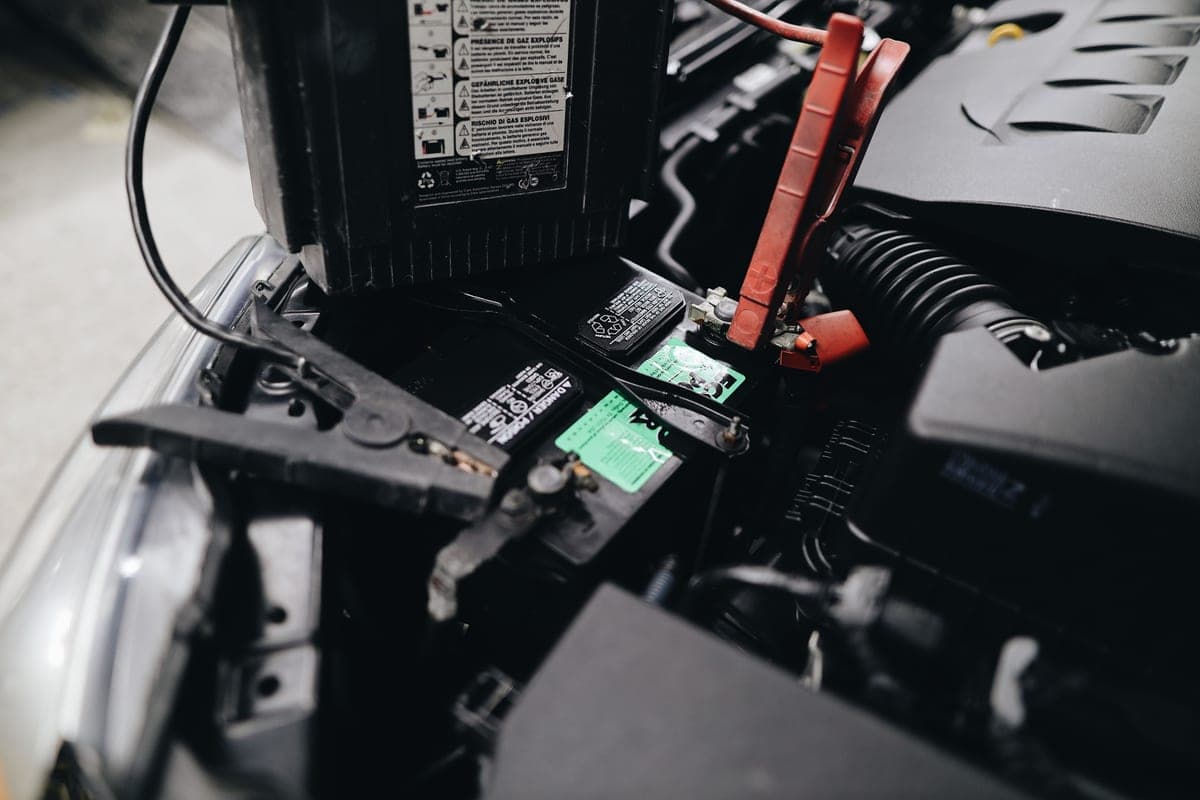 NOCO Boost Plus GB40 Best for a small outboard | Most cars and small SUVs | IP65 and compact, for a modest engine | Check price on Amazon #ad Affiliate link · We show no price here; Amazon shows the current one |
| 3 |  NOCO GENIUS10 For the trolling bank | Several vehicles or a deep-cycle bank | 230 Ah range covers marine deep-cycle | Check price on Amazon #ad Affiliate link · We show no price here; Amazon shows the current one |
| 4 | 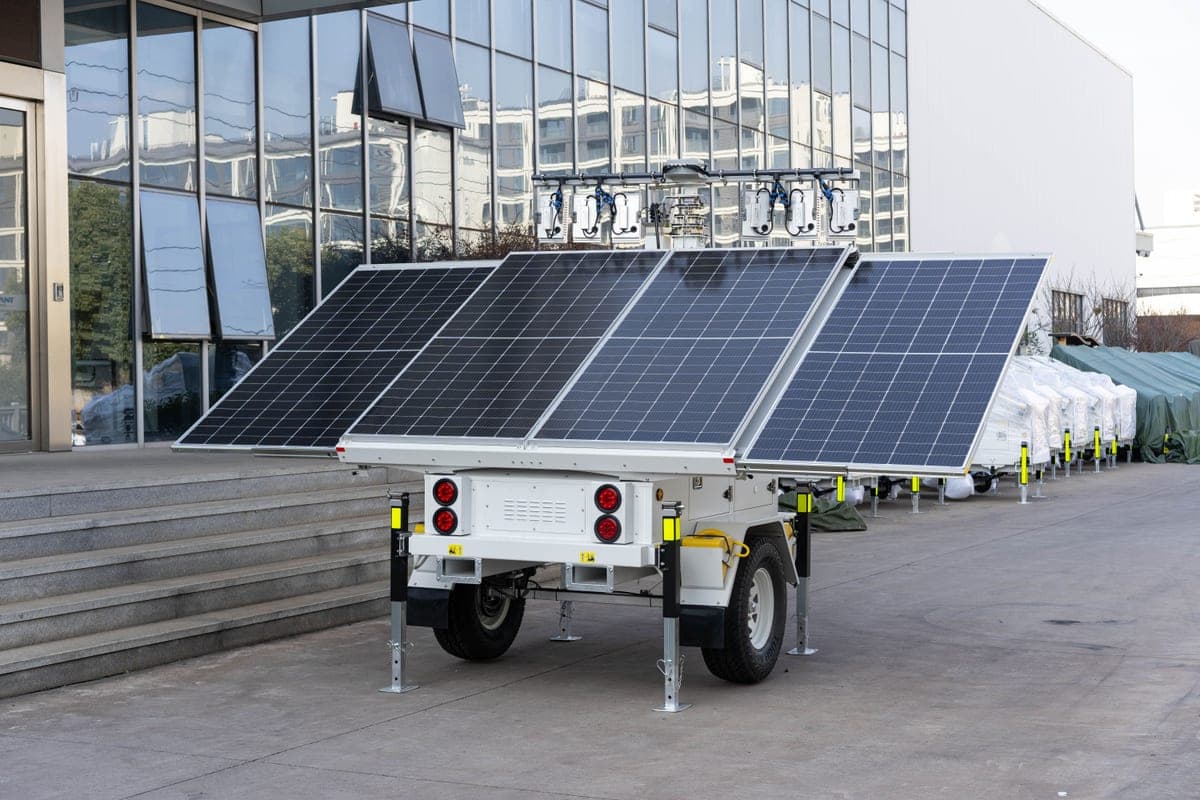 Battery Tender Solar Maintainer For the boat on its trailer | Vehicles stored away from an outlet | No outlet at most storage spots | Check price on Amazon #ad Affiliate link · We show no price here; Amazon shows the current one |
What the IP rating actually means
NOCO specifies the Boost line as IP65, and the GBX45 as IP65 with its ports closed. IP65 means protected against dust ingress and against low-pressure water jets from any direction. In practical terms: rain on a ramp, spray on a deck, a wet bilge-side connection — fine. Immersion — not covered. IP65 is not a submersion rating, and a pack dropped over the side is a pack you replace.
That is a genuinely useful rating for marine use, and it is worth being precise about its limits rather than treating it as waterproof.
Corrosion is the recurring problem
Marine battery terminals corrode faster than automotive ones, and corrosion is an insulator. At the hundreds of amps a starter draws, a clamp resting on a layer of corrosion passes almost nothing — which presents exactly like an undersized pack. Before you conclude the pack is too small:
- Clean the terminals. Wire brush, then protect them. This is the single most common fix.
- Check the clamp is biting metal, not sitting on a deposit. Wiggle it.
- Check the battery's own cable connections at the terminal, not just your clamp. A loose or corroded ring terminal is the same failure one layer down.
Two battery systems, one of which is not your problem
| Starting battery | Deep-cycle / trolling bank | |
|---|---|---|
| Job | Turn the engine over | Run a trolling motor and accessories for hours |
| Designed for | Brief high current | Sustained moderate draw |
| Capacity | Comparable to a car battery | Often 80-230 Ah, sometimes in banks |
| If it is flat | A jump-starter problem | A charger problem |
| Right tool | Pack sized to the engine | 10 A charger or an onboard marine charger |
Some boats use a dual-purpose battery for both roles, which is a compromise at each. If yours does, size the pack on the engine and the charger on the amp-hour rating.
A jump pack cannot meaningfully charge a deep-cycle bank — a 56 Wh pack against a bank measured in hundreds of watt-hours is not the right order of magnitude.
Storage between seasons
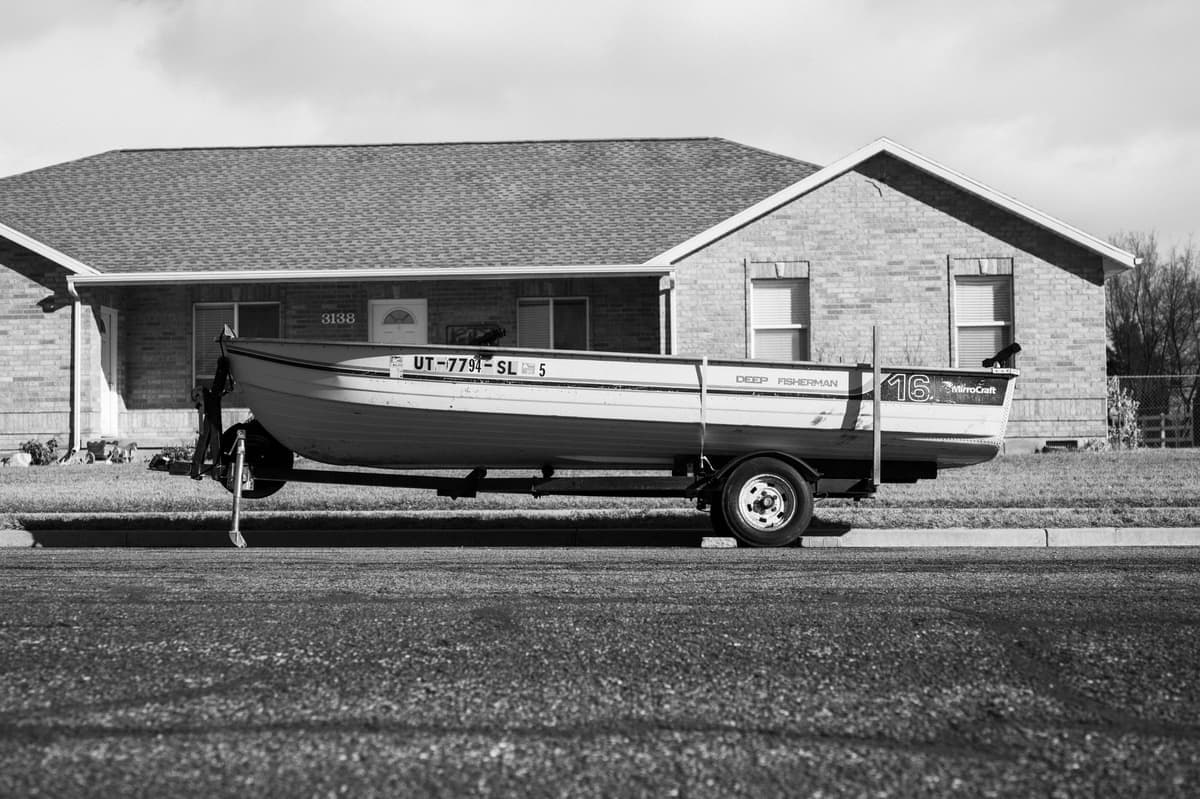
A boat on a trailer in a storage lot is the textbook case for a solar maintainer: months of parasitic drain, and almost never an outlet. The caveats matter though — a shaded or snow-covered panel produces nothing, and solar maintains a charged battery rather than recovering a flat one. Recover on mains first, then let the panel hold it.
Cable reach on a boat
Marine batteries often sit in a locker, under a seat, or in a bilge-adjacent compartment reached at an awkward angle. The heavier packs ship with longer, heavier-gauge cables, and on a boat that reach is worth more than the extra amps it comes with. Work out where yours is, and whether your pack's leads reach it, before the day it matters.
The picks
1. Best for most outboards and inboards
NOCO Boost HD GB70
NOCO · Best for diesel pickups and big v8s
The one to buy if you drive a diesel: 2,000 peak amps, a 6.0-liter diesel rating and 56 watt-hours, which is the smallest pack with real margin on a cold diesel.
Published specifications
What works
- The 6.0 L diesel rating covers the common 3.0 L and 6.7 L light-truck diesels with margin
- 56 Wh is still comfortably under the 100 Wh carry-on threshold, so it flies as hand luggage
- 12 V 15 A accessory output, and a 400-lumen light that is genuinely usable roadside
- 12 V / 3 A fast charge brings it back in about three hours
What does not
- 4.18 lb — noticeably heavier than the compact packs, and it wants a dedicated spot
- Overkill for a commuter four-cylinder; you are paying for headroom you will not use
Skip it if
Not the one to buy if you only ever start a four-cylinder commuter. Buy diesel headroom when you have a diesel.
#ad Affiliate link · We show no price here; Amazon shows the current one
Raw specifications: NOCO’s own page for the NOCO Boost HD GB70.
2. Best for a small outboard
NOCO Boost Plus GB40
NOCO · Best for most cars and small suvs
The default answer for a four- or six-cylinder car: 1,000 peak amps, 24 watt-hours, and light enough that it actually stays in the trunk.
Published specifications
What works
- 24 Wh sits far under the 100 Wh carry-on threshold, so flying with it needs no airline approval
- 2.45 lb and pocketable — the size that decides whether a tool is still in the trunk six months later
- IP65 enclosure, so a wet shoulder in the rain is not a problem
- Reverse-polarity protection means a backwards clamp does not spark
What does not
- 1,000 peak amps runs out of headroom above a 6.0 L gas engine
- The 3.0 L diesel ceiling rules out most modern diesel pickups
- 24 Wh is a small reserve — it is a jump starter, not a power bank substitute
Skip it if
Not the one to buy if you drive a diesel pickup or a big V8. You would be at the edge of its rating on a cold morning, which is exactly when you want margin.
#ad Affiliate link · We show no price here; Amazon shows the current one
Raw specifications: NOCO’s own page for the NOCO Boost Plus GB40.
3. For the trolling bank
NOCO GENIUS10
NOCO · Best for several vehicles or a deep-cycle bank
Twice the current of the GENIUS5 and nearly twice the capacity range — 10 amps up to 230 Ah, which is where RV, marine and multi-vehicle households land.
Published specifications
What works
- 10 A halves the charge time on a flat car battery against a 5 A unit
- The 230 Ah range covers deep-cycle RV and marine batteries the GENIUS5 cannot
- Same -4 °F cold rating and 3-year warranty as the smaller GENIUS units
What does not
- 10 A into a small motorcycle battery is more current than it wants — use a 1 A or 2 A unit there
- Heavier and pricier than a GENIUS5 for a household with one car
Skip it if
Not the right charger for a single motorcycle, ATV or lawn-tractor battery. Small batteries want small current.
#ad Affiliate link · We show no price here; Amazon shows the current one
Raw specifications: NOCO’s own page for the NOCO GENIUS10.
4. For the boat on its trailer
Battery Tender Solar Maintainer
Battery Tender · Best for vehicles stored away from an outlet
For the boat, RV or seasonal vehicle parked where there is no power — a panel that offsets parasitic drain rather than charging from flat.
This manufacturer does not publish a full specification table for this model on its own site. Rather than repeat figures we cannot source, the assessment below is limited to what the product category and the retailer listing genuinely establish.
What works
- Needs no outlet, which is the entire point for a boat on a trailer or a car in long-term storage
- Offsets the parasitic draw that flattens a stored battery over months
- Nothing to plug in means nothing to forget
What does not
- Output depends on sun; a shaded or snow-covered panel does nothing
- It maintains a charged battery — it is not a way to recover a flat one
- Needs a controller to avoid overcharging in strong summer sun; check the kit includes one
Skip it if
Not a replacement for a wall charger. If an outlet reaches the vehicle, a plug-in maintainer is more reliable and cheaper.
#ad Affiliate link · We show no price here; Amazon shows the current one
Key takeaways
- IP65 covers rain and spray — not immersion.
- Corrosion presents exactly like an undersized pack. Clean the terminals first.
- The trolling bank is a charger problem; a jump pack cannot charge it.
- Solar maintains a stored boat's batteries where there is no outlet.
- Ventilate enclosed compartments before charging or jumping.
How we sourced this
Every figure on this page came from one of the following. Where a manufacturer or regulator does not publish a number, we say so rather than estimate it.
Common questions
- Can you use a car jump starter on a boat?
- Yes, sized to the engine as you would for a car, and preferring a pack with a water-resistance rating. NOCO's Boost line is IP65, which covers dust and low-pressure water jets — rain and spray rather than immersion.
- Is an IP65 jump starter waterproof?
- Water-resistant, not waterproof. IP65 means protected against dust and low-pressure water jets from any direction, which covers rain on a ramp and spray on a deck. It is not an immersion rating, and on some models it only applies with the port covers closed.
- Can a jump starter charge a trolling motor battery?
- No. A deep-cycle trolling bank needs tens to hundreds of amp-hours delivered over hours, and a jump pack holds only tens of watt-hours. Use a 10-amp charger or an onboard marine charger for the bank.
- Why won't my jump starter turn my outboard over?
- Check the terminals before the pack. Marine terminals corrode faster than automotive ones, and corrosion is an insulator — a clamp resting on a corroded terminal passes almost no current and presents exactly like an undersized pack. Clean, re-clamp, and try again.
More in Road Trip & Travel
What changes when the nearest parts store is four hours away, the pack has to survive a hot trunk, and the airline has an opinion about your lithium battery.
Read next

Best for RVs
Best for RVs
Packs sized for motorhome chassis engines, why the diesel rating is the column that matters, and where the house battery fits in.
Best Solar Maintainers
Best Solar Maintainers
Solar maintainers for vehicles stored away from an outlet, with a clear statement of what they cannot do and why a controller matters.
Best Car Battery Chargers
Best Car Battery Chargers
Our main charger roundup: 1 A to 10 A units matched to battery capacity, with published cold ratings and warranties.
Review
NOCO GB70 Review
2,000 peak amps, 56 Wh, 4.18 lb, rated to 6.0 L diesel. The right pack for a diesel pickup or a big V8.
Found something out of date, or a figure you can source better than we did? Tell us — corrections get read first. Our methodology explains how picks are made, and contact is one click away.