Tire Inflators
The best tire inflators for bikes
Tiny volumes at high pressure, usually through a Presta valve. Easy for any pump to fill — and easy to overshoot by 20 PSI.
Disclosure: we earn a commission if you buy through the Amazon links on this page, at no extra cost to you. Commission never decides a verdict or a ranking position — read our editorial policy and affiliate disclosure.
How we assessed these: picks are selected from manufacturer specifications, current retailer listings and published owner feedback — not from hands-on testing of every unit. We publish no measured fill times or gauge-deviation figures because we do not measure them.
Short answer
Any powered inflator will fill a bike tire — the volume is tiny. What matters is fine preset control at high pressure and a Presta adapter. A road tire at 90-100 PSI is easy to overshoot by a wide margin with a unit calibrated for cars, and overshooting a bike tire is not harmless.
Bicycle tires are the opposite extreme from light-truck tires. The volume is trivially small, so throughput and duty cycle simply do not matter. Everything hangs on control and on the valve.
Quick picks
Tap any row to jump to the full write-up. Scoring criteria are published in full on our methodology page.
| # | Product | Best for | Our read | Price |
|---|---|---|---|---|
| 1 | Fanttik X8 Apex Best overall for bikes | Cordless top-ups from a glovebox | Fine preset control at high pressure | Check price on Amazon #ad Affiliate link · We show no price here; Amazon shows the current one |
| 2 | 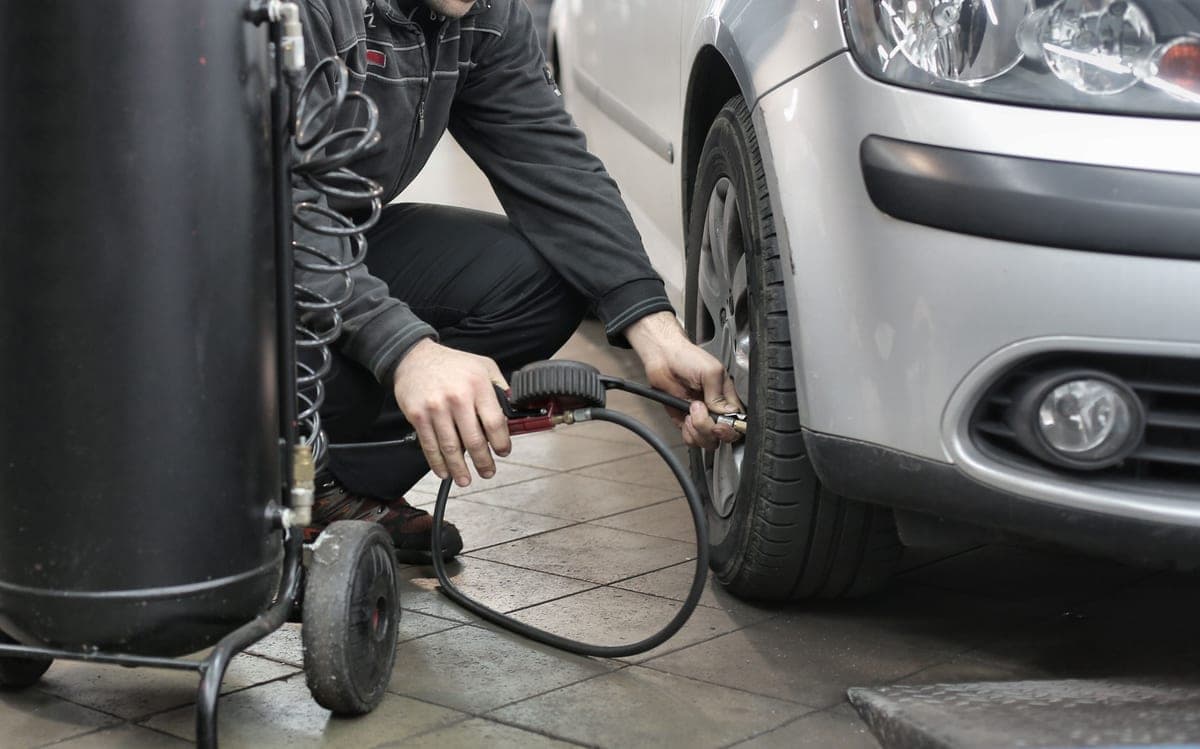 DEWALT DCC020IB 20V MAX Inflator Best if you own the platform | Anyone already on DEWALT 20V batteries | High-pressure mode plus a real gauge | Check price on Amazon #ad Affiliate link · We show no price here; Amazon shows the current one |
| 3 |  AstroAI 12V Tire Inflator Best cheap option | The cheapest inflator still worth owning | Works, but watch the overshoot | Check price on Amazon #ad Affiliate link · We show no price here; Amazon shows the current one |
Presta versus Schrader
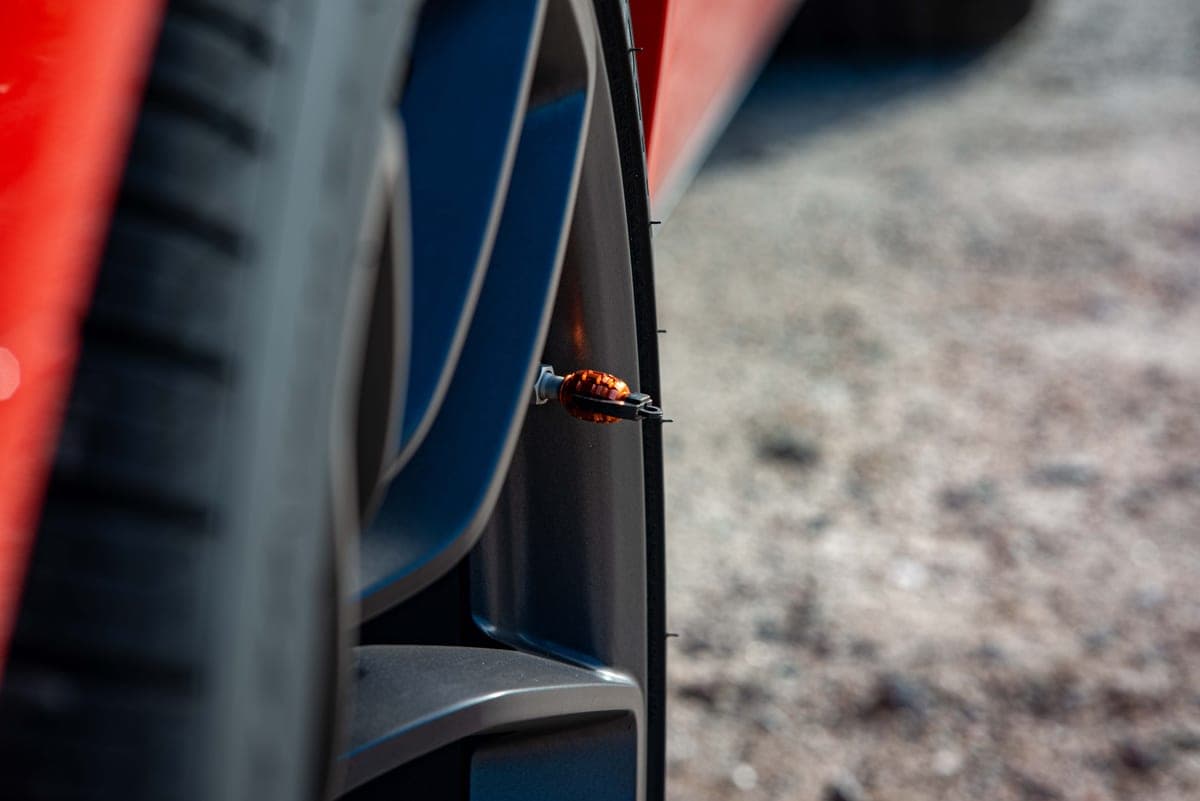
Car tires use Schrader valves — the fat ones with a spring-loaded pin. Most road and many mountain bikes use Presta: narrower, with a small knurled nut you unscrew before inflating and tighten afterwards. Every inflator on this page is built for Schrader, so for a Presta wheel you need an adapter.
- A brass Presta-to-Schrader adapter screws onto the valve and costs almost nothing. Buy several; they are easy to lose.
- Unscrew the Presta nut first and give it a quick press to unstick it before fitting the adapter.
- Re-tighten the nut afterwards, or the tire will weep down over a few days.
Why overshooting matters here
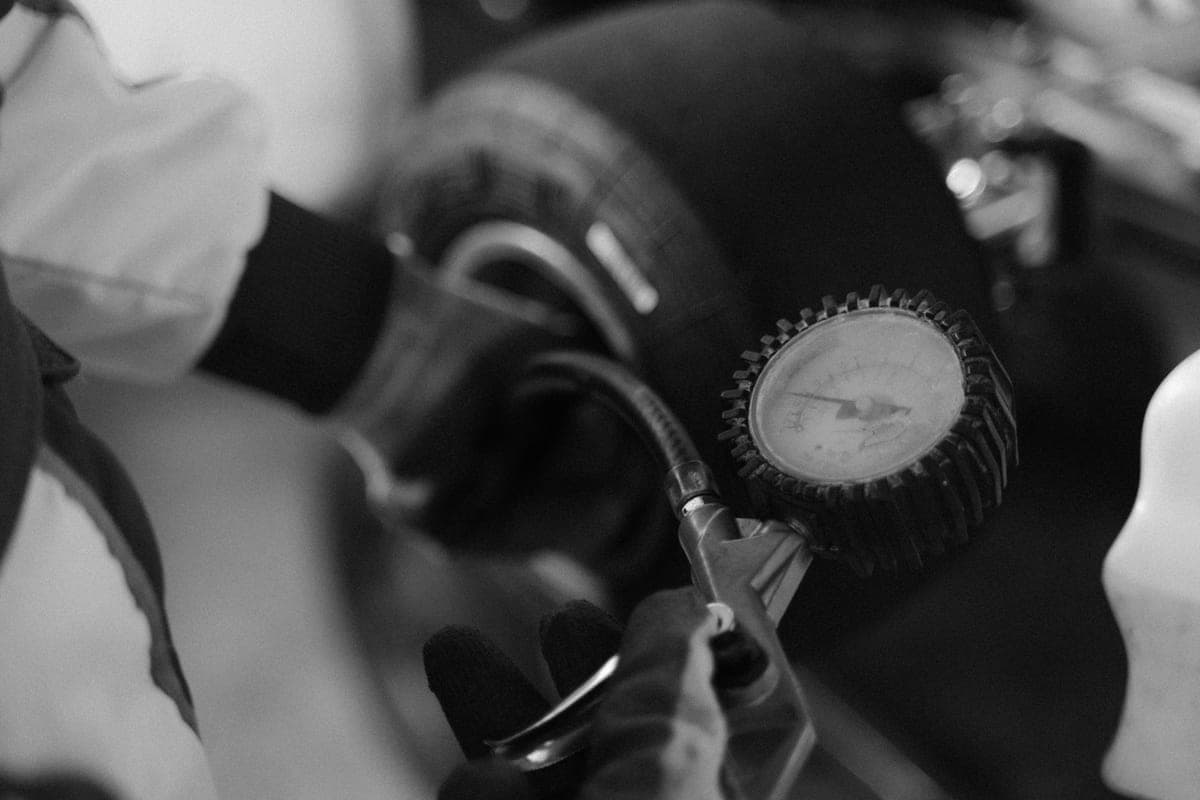
A bike tire holds very little air, so the pump reaches target fast and keeps going if nothing stops it. Two consequences: a preset with a genuine shutoff is worth more on a bike than on a car, and a unit whose display only updates every couple of PSI is harder to control at road-bike pressures.
The picks
1. Best overall for bikes
Fanttik X8 Apex
Fanttik · Best for cordless top-ups from a glovebox
A self-contained cordless inflator small enough to live in a door pocket, with a backlit digital gauge and a preset target pressure.
This manufacturer does not publish a full specification table for this model on its own site. Rather than repeat figures we cannot source, the assessment below is limited to what the product category and the retailer listing genuinely establish.
What works
- No cable to the car at all — it runs off its own internal battery
- Small enough that it stays in the vehicle, which is most of the battle
- Preset-and-stop pressure control avoids the overshoot you get chasing an analogue gauge
What does not
- An internal battery is one more thing to keep charged, and cold weather cuts into it
- Cordless inflators this size heat up on large tires; expect to work in stages
- Manufacturer duty-cycle figures for this class are not consistently published
Skip it if
Not the pick for light-truck or RV tires. Small cordless units are built for top-ups, not for taking a 35-inch tire from flat to 60 PSI.
#ad Affiliate link · We show no price here; Amazon shows the current one
2. Best if you own the platform
DEWALT DCC020IB 20V MAX Inflator
DEWALT · Best for anyone already on dewalt 20v batteries
Three power sources in one body — 20V MAX battery, 12 V socket or 110 V wall — with a digital gauge and auto-shutoff, which is what makes an inflator usable everywhere.
Published specifications
What works
- The 12 V socket option means a dead tool battery never leaves you stranded
- A threaded chuck screws onto the valve stem instead of clamping — the difference between a solid seal and a hissing one
- Set-and-walk-away auto-shutoff at your target pressure
- High-volume mode handles air mattresses and inflatables, not just tires
What does not
- Sold as a bare tool — battery, charger and AC adapter are separate purchases
- Bigger and heavier than a pocket 12 V inflator, so it wants trunk space
Skip it if
Not the pick if you own no DEWALT batteries and only ever top up car tires. A plain 12 V inflator is smaller and cheaper for that job.
#ad Affiliate link · We show no price here; Amazon shows the current one
Raw specifications: DEWALT’s own page for the DEWALT DCC020IB 20V MAX Inflator.
3. Best cheap option
AstroAI 12V Tire Inflator
AstroAI · Best for the cheapest inflator still worth owning
A plain 12 V socket-powered inflator with a digital gauge and auto-shutoff — the baseline that covers a car's tires with no battery to maintain.
This manufacturer does not publish a full specification table for this model on its own site. Rather than repeat figures we cannot source, the assessment below is limited to what the product category and the retailer listing genuinely establish.
What works
- Powered from the 12 V socket, so it works whenever the car does
- Nothing to keep charged, which means it is never flat when the tire is
- Digital preset shutoff at the target pressure
What does not
- The cord limits where you can work, and reaching a rear tire can be tight
- Small-motor inflators in this tier run hot; large tires need rest intervals
- Gauge accuracy in this class varies unit to unit, so verify against a separate gauge
Skip it if
Not the pick if you regularly air down and back up for trails, or run light-truck tires. That is dedicated-compressor work.
#ad Affiliate link · We show no price here; Amazon shows the current one
When a floor pump is simply better
At home, for a road bike, a good floor pump with a built-in gauge is more controllable, faster in practice, needs no charging, and costs less. We would not tell you to buy a powered inflator to replace one.
What a powered inflator gives you is the case a floor pump cannot cover: a bike rack on a car, a trailhead, a garage where the same unit also does the car. If that is your situation — and it is why this page exists on a car site — a compact powered unit earns its place. If you only ever pump tires in your own garage, buy the floor pump.
Key takeaways
- Volume is trivial; control and the valve type decide it.
- Presta valves need a cheap brass adapter — buy spares.
- A real preset shutoff matters more on a bike than on a car.
- On a bicycle the sidewall maximum IS a ceiling, unlike on a car.
- For home-only road-bike use, a floor pump is the better tool.
How we sourced this
Every figure on this page came from one of the following. Where a manufacturer or regulator does not publish a number, we say so rather than estimate it.
Common questions
- Can I use a car tire inflator on a bike?
- Yes, with a Presta adapter if your bike uses Presta valves. The volume is tiny so any powered inflator fills a bike tire easily. The real risks are overshooting the target pressure and losing track of the sidewall maximum, which on a bicycle is a genuine ceiling.
- Do I need a Presta adapter?
- If your bike has the narrow valves with a small knurled nut on top, yes — every car inflator is built for Schrader valves. A brass Presta-to-Schrader adapter costs very little. Unscrew the Presta nut before fitting it, and tighten it again afterwards.
- Is a floor pump better than a portable inflator for bikes?
- At home, for a road bike, usually yes — a floor pump with a good gauge is more controllable, needs no charging and costs less. A powered inflator wins when you are away from home, at a trailhead or on a bike rack, or when the same unit also serves the car.
More in Tire Inflators
The cheapest tool that prevents the second-most-common roadside stop. Here is which type fits your tires, and the two specs that actually matter.
Read next
Best for Home Use
Best for Home Use
What to buy when the inflator lives in a garage rather than a trunk — including why the answer is often still a portable one.

Best for Motorcycles
Best for Motorcycles
Compact inflators that reach a recessed motorcycle valve and stop accurately at a high target pressure.
Best Portable Tire Inflators
Best Portable Tire Inflators
Our main inflator roundup: socket, cordless, tool-battery and battery-clamp units, matched to the tires you actually run.
Guide
Gauge Accuracy
Why built-in gauges drift, how to check yours against a reference, and why we will not publish per-model deviation numbers we have not measured.
Found something out of date, or a figure you can source better than we did? Tell us — corrections get read first. Our methodology explains how picks are made, and contact is one click away.