Battery Chargers
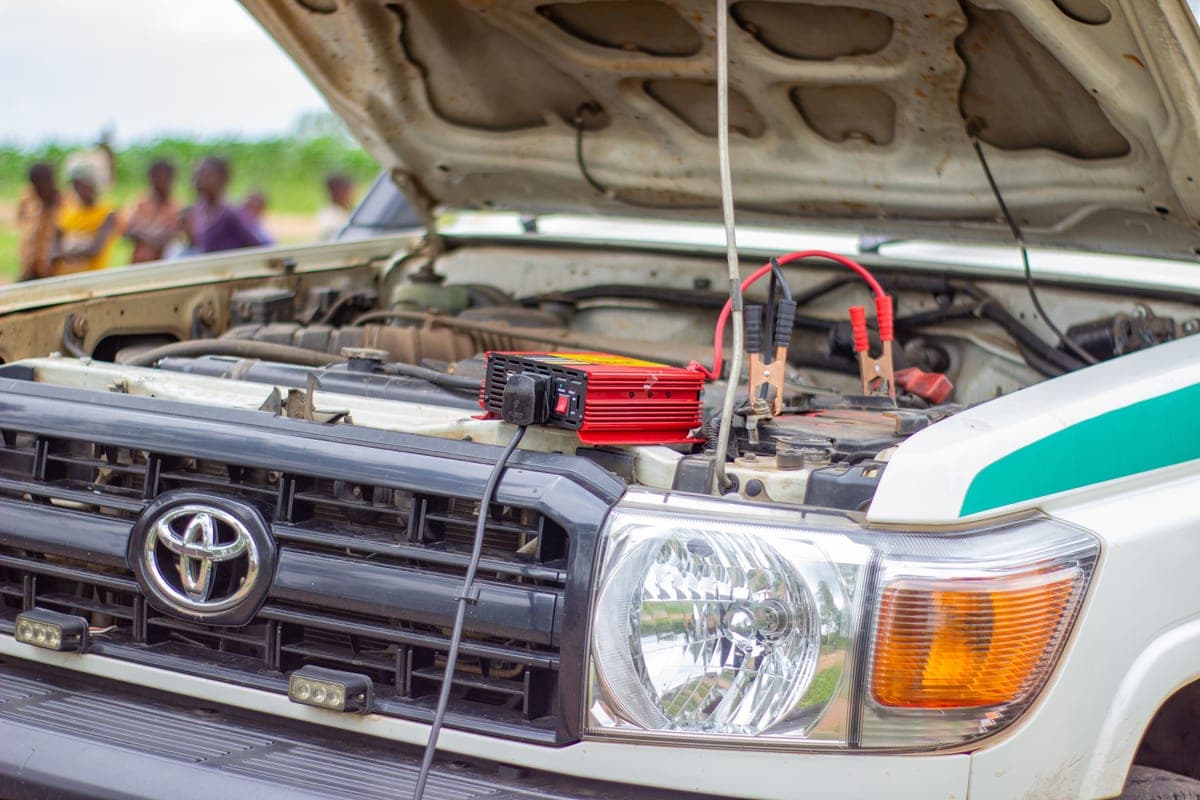
How long to charge a car battery
Amp-hours to replace, divided by charger amps, plus about 20% for inefficiency. The arithmetic is shown so you can check it.
Disclosure: we earn a commission if you buy through the Amazon links on this page, at no extra cost to you. Commission never decides a verdict or a ranking position — read our editorial policy and affiliate disclosure.
How we assessed these: figures here are either published manufacturer specifications, cited inline, or arithmetic shown in full so you can check it. Nothing is asserted from memory.
Short answer
Divide the amp-hours you need to replace by the charger's amps, then add about 20% for charging inefficiency. A 60 Ah battery at 50% needs roughly 30 Ah, which is about seven hours at 5 amps or three and a half at 10. The final stage always takes longer than the arithmetic.
The arithmetic, shown
Three steps, and you can check every one:
- Work out the amp-hours to replace. Battery capacity × the fraction that is missing. A 60 Ah battery at 50% state of charge is missing 30 Ah.
- Divide by the charger's current. 30 Ah ÷ 5 A = 6 hours of theoretical charging.
- Add about 20% for inefficiency. Not all the energy you put in is stored; some becomes heat. 6 hours becomes roughly 7.2.
That is the whole calculation. We show it rather than just asserting a figure because the point of this page is that you can compute it for your own battery instead of trusting a table built around someone else's.
The table
| Battery capacity | Missing | At 2 A | At 5 A | At 10 A |
|---|---|---|---|---|
| 45 Ah compact car | 50% (22.5 Ah) | 13.5 h | 5.4 h | 2.7 h |
| 60 Ah sedan | 50% (30 Ah) | 18 h | 7.2 h | 3.6 h |
| 60 Ah sedan | 80% (48 Ah) | 29 h | 11.5 h | 5.8 h |
| 95 Ah truck | 50% (47.5 Ah) | 28.5 h | 11.4 h | 5.7 h |
| 120 Ah deep-cycle | 50% (60 Ah) | 36 h | 14.4 h | 7.2 h |
Each figure is amp-hours missing ÷ charger amps × 1.2 for inefficiency. It is arithmetic on the numbers in the first two columns, not a measurement — check it yourself against your own battery's rating.
Why the last stage always takes longer
A smart charger does not deliver full current all the way to 100%. It runs a bulk stage at rated current to roughly 80%, then an absorption stage at declining current, then holds at a float voltage. That taper is deliberate — pushing full current into a nearly full battery generates heat and gassing rather than charge.
The practical consequence: the arithmetic above is a good estimate of getting a battery usefully charged, and getting to genuinely 100% takes longer than it predicts. That last 10-20% is disproportionately slow, on every charger, by design.
What state of charge is your battery actually at?
| Resting voltage | Approximate state of charge |
|---|---|
| 12.6 V or above | Fully charged |
| 12.4 V | About 75% |
| 12.2 V | About 50% |
| 12.0 V | About 25% |
| 11.9 V or below | Effectively discharged |
Measure with the car off and undisturbed for a few hours — a battery just driven or just charged shows a surface charge that reads high. These are widely used reference points for flooded 12 V lead-acid; AGM voltages run slightly higher.
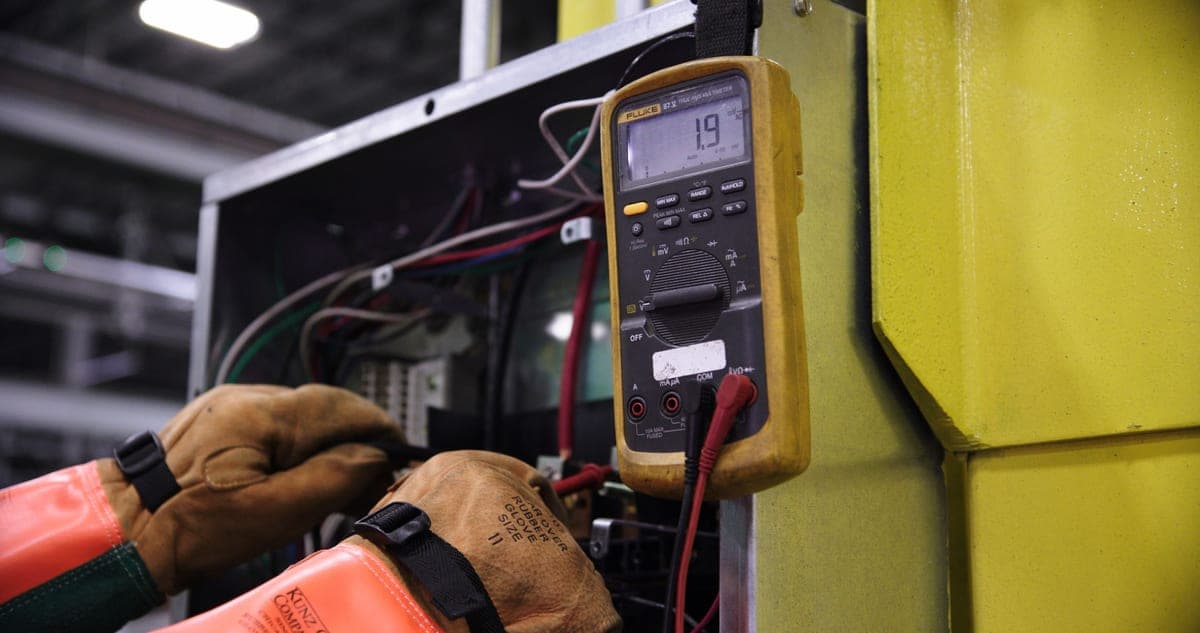
A multimeter costs very little and turns this page from an estimate into a calculation.
What about charging by driving?
It works, poorly, for this purpose. An alternator is designed to replace what the starter used and run the car's loads, not to bulk-charge a deeply discharged battery — and a lot of its output is going to the ignition, lights and electronics rather than the battery. Long drives help; idling in a driveway helps very little; a twenty-minute commute after a jump start is not a charge.
The picks
1. Overnight on a car battery
NOCO GENIUS5
NOCO · Best for one car, charging and maintaining
The single most useful charger for one vehicle: 5 amps, 6 V and 12 V, batteries up to 120 Ah, and it can be left connected indefinitely.
Published specifications
What works
- 5 A recharges a car battery overnight and then holds it — one unit does both jobs
- Rated down to -4 °F, so it works in an unheated garage
- The 77-inch cable reaches from a wall outlet to most engine bays without an extension
- 3-year warranty, against 1 year on the jump-starter line
What does not
- 5 A is slow for a deeply discharged large battery — a 100 Ah battery is an all-nighter
- The 120 Ah ceiling rules out larger deep-cycle banks
Skip it if
Not enough charger if you are reviving deep-cycle RV or marine batteries. Step up to the GENIUS10 and its 230 Ah range.
#ad Affiliate link · We show no price here; Amazon shows the current one
Raw specifications: NOCO’s own page for the NOCO GENIUS5.

2. Half the time on a big battery
NOCO GENIUS10
NOCO · Best for several vehicles or a deep-cycle bank
Twice the current of the GENIUS5 and nearly twice the capacity range — 10 amps up to 230 Ah, which is where RV, marine and multi-vehicle households land.
Published specifications
What works
- 10 A halves the charge time on a flat car battery against a 5 A unit
- The 230 Ah range covers deep-cycle RV and marine batteries the GENIUS5 cannot
- Same -4 °F cold rating and 3-year warranty as the smaller GENIUS units
What does not
- 10 A into a small motorcycle battery is more current than it wants — use a 1 A or 2 A unit there
- Heavier and pricier than a GENIUS5 for a household with one car
Skip it if
Not the right charger for a single motorcycle, ATV or lawn-tractor battery. Small batteries want small current.
#ad Affiliate link · We show no price here; Amazon shows the current one
Raw specifications: NOCO’s own page for the NOCO GENIUS10.
3. When you need it back this afternoon
Schumacher SC1281
Schumacher · Best for fast charging plus engine-start assist
A shop-style charger for the garage: high charge current plus an engine-start mode, for people who would rather fix the battery than carry a pack.
This manufacturer does not publish a full specification table for this model on its own site. Rather than repeat figures we cannot source, the assessment below is limited to what the product category and the retailer listing genuinely establish.
What works
- Charge currents well above a maintainer, so a flat battery is back in hours not overnight
- Engine-start assist covers the case where the battery is too far gone to take a charge quickly
- Automatic voltage detection reduces the chance of selecting the wrong mode
What does not
- Mains-powered and bulky — a garage tool, not a trunk tool
- High-current charging is harder on an ageing battery than a slow charge
- Engine-start mode is no substitute for a portable pack away from home
Skip it if
Useless on the roadside — there is no outlet on the shoulder of a highway. This is the home half of the problem; a lithium pack is the away half.
#ad Affiliate link · We show no price here; Amazon shows the current one
Key takeaways
- Amp-hours missing ÷ charger amps × 1.2 gives a usable estimate.
- A 60 Ah battery at half charge is about seven hours at 5 A.
- The final 10-20% is disproportionately slow on every smart charger, by design.
- Measure resting voltage after a few hours' rest, not right after driving.
- Driving is a poor way to recover a deeply discharged battery.
How we sourced this
Every figure on this page came from one of the following. Where a manufacturer or regulator does not publish a number, we say so rather than estimate it.
Common questions
- How long does it take to charge a car battery?
- Divide the amp-hours you need to replace by the charger's current and add about 20% for inefficiency. A 60 Ah battery at half charge needs roughly 30 Ah, which is about seven hours at 5 amps or three and a half at 10 amps.
- How long to charge a car battery at 2 amps?
- A long time. A 60 Ah battery at half charge is about 18 hours at 2 amps once inefficiency is allowed for. Two amps is a maintenance current rather than a recovery current — use 5 amps if you need the car tomorrow.
- How long should I drive to charge my battery after a jump start?
- Drive at least 20 minutes so the alternator replaces something, but understand that this is not a real charge. An alternator is sized to run the car's loads and replace starter draw, not to bulk-charge a deeply discharged battery. If the battery was significantly flat, put it on a charger.
- Why does my charger say 100% but the battery seems weak?
- A full state of charge is not the same as full capacity. An ageing or sulfated battery charges to 100% of what it can now hold, which may be well below what it held new. That is what a load test measures, and a voltmeter cannot.
More in Battery Chargers
A jump pack gets you moving. A charger is how you stop needing one. This is the home half of the problem.
Read next
Guide
What Amp Do I Need?
Charge current sizing by battery capacity, with the 10% guideline shown in full and manufacturer capacity ranges to verify against.
How to
How to Charge a Battery
The full sequence with a portable charger: connection order, chemistry setting, what the stages mean, and when to remove the battery first.
Guide
Desulfation Explained
What sulfation is, what a repair or desulfation mode actually does, how much it recovers, and the batteries you should not use it on.
Best Automotive Multimeters
Best Multimeters
Meters for automotive electrical work, the readings that actually diagnose a no-start, and the one thing a voltmeter cannot measure.
Found something out of date, or a figure you can source better than we did? Tell us — corrections get read first. Our methodology explains how picks are made, and contact is one click away.