Battery Chargers
Battery desulfation, explained
Sulfation is real, desulfation modes sometimes help, and the honest version of both is more modest than the marketing.
Disclosure: we earn a commission if you buy through the Amazon links on this page, at no extra cost to you. Commission never decides a verdict or a ranking position — read our editorial policy and affiliate disclosure.
How we assessed these: figures here are published manufacturer specifications, cited inline, or arithmetic shown in full. Procedures follow the sequence manufacturers publish; your own charger's manual wins where it differs.
Short answer
Sulfation is lead sulfate crystallizing on a lead-acid battery's plates when it sits partly discharged, which reduces capacity. A charger's desulfation or repair mode applies elevated voltage to try to break those crystals down. It sometimes recovers meaningful capacity, often recovers a little, and cannot revive a failed cell.
What sulfation is
Lead sulfate forms on the plates every time a lead-acid battery discharges — that is simply how the chemistry works, and normal charging converts it back. The problem is time. A battery left sitting partly discharged gives that sulfate time to crystallize into a hard, stable form that ordinary charging does not reverse.
Crystallized sulfate covers active plate area, and covered plate area cannot participate in the reaction. The result is a battery that charges to "100%" and still holds less than it did new — which is exactly the complaint behind "my charger says full but the battery seems weak".
This is why a maintainer is a better investment than it looks. A battery kept at full charge never gives sulfate the sitting time to crystallize.
What a desulfation mode does
Implementations vary and most manufacturers describe them only loosely, but the shared principle is applying a higher-than-normal voltage — sometimes pulsed — to drive the crystallized sulfate back into solution. NOCO's GENIUS line includes a repair function on several models for this purpose.
How well it works is genuinely variable, and we are not going to publish a recovery percentage because it depends on the battery's age, how long it sat, how deeply it was discharged, and how far the crystallization has gone. What is reasonable to say:
- Lightly sulfated, recently: a repair cycle can recover a useful amount.
- Heavily sulfated over years: expect little.
- A battery with a shorted or open cell: nothing. This is not a sulfation problem and no mode fixes it.
- A battery that has lost capacity to plate shedding or corrosion: nothing. Those are physical, not chemical.
When not to use it
Also skip it on a battery with a swollen or cracked case, visible electrolyte, or a sulfur smell. That battery has failed, and applying elevated voltage to it is the wrong direction.
How to tell whether it worked
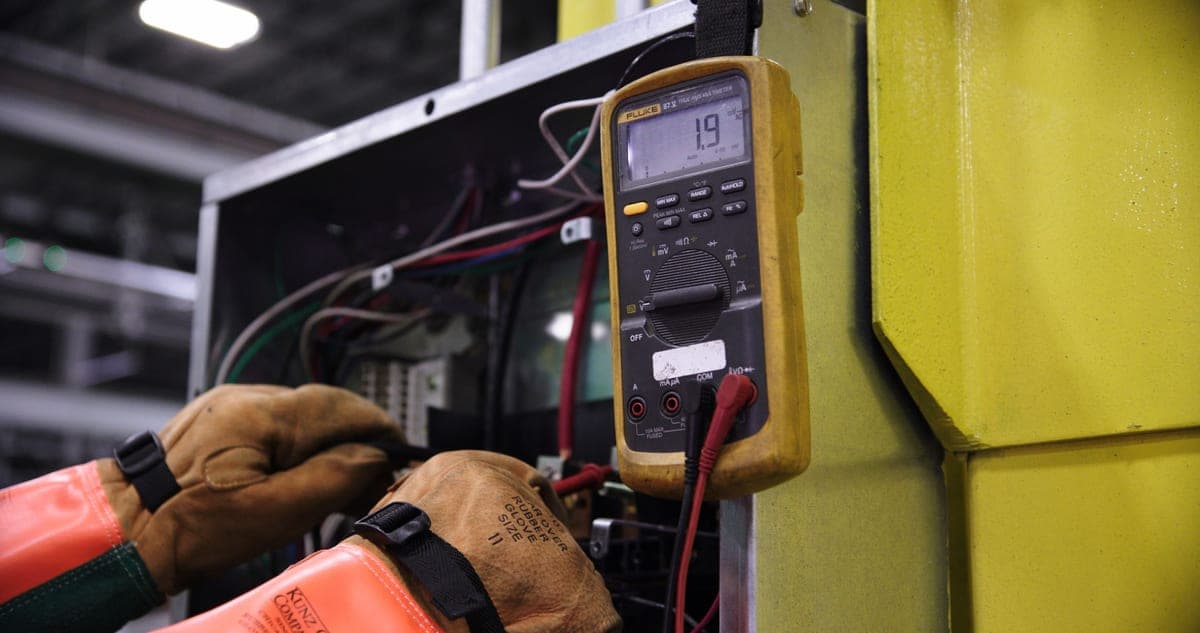
- Measure resting voltage before, after the battery has sat undisturbed for a few hours. Note it.
- Run the repair cycle, then charge normally to full.
- Let it rest a few hours and measure again. Around 12.6 V is a fully charged 12 V battery.
- Wait a day or two and measure once more. The real test is whether it *holds* the charge, not whether it reached it.
- Get a free load test at a parts store. This is the only one of these steps that measures capacity under cranking load, which is what actually matters — and a voltmeter cannot do it.
That last point is the honest one. Resting voltage tells you state of charge, not capacity. A battery can read 12.6 V and collapse the moment the starter engages. How long to charge a car battery has the voltage-to-charge reference table.
The better strategy
Prevention, and it is not close. A battery that lives at full charge does not sulfate meaningfully, and a 1-2 A maintainer on anything that sits costs a fraction of a battery. Desulfation is worth trying on a battery you already have; it is not a plan.
The picks

1. Charger with a repair function
NOCO GENIUS10
NOCO · Best for several vehicles or a deep-cycle bank
Twice the current of the GENIUS5 and nearly twice the capacity range — 10 amps up to 230 Ah, which is where RV, marine and multi-vehicle households land.
Published specifications
What works
- 10 A halves the charge time on a flat car battery against a 5 A unit
- The 230 Ah range covers deep-cycle RV and marine batteries the GENIUS5 cannot
- Same -4 °F cold rating and 3-year warranty as the smaller GENIUS units
What does not
- 10 A into a small motorcycle battery is more current than it wants — use a 1 A or 2 A unit there
- Heavier and pricier than a GENIUS5 for a household with one car
Skip it if
Not the right charger for a single motorcycle, ATV or lawn-tractor battery. Small batteries want small current.
#ad Affiliate link · We show no price here; Amazon shows the current one
Raw specifications: NOCO’s own page for the NOCO GENIUS10.

2. Prevention, which works better
NOCO GENIUS5
NOCO · Best for one car, charging and maintaining
The single most useful charger for one vehicle: 5 amps, 6 V and 12 V, batteries up to 120 Ah, and it can be left connected indefinitely.
Published specifications
What works
- 5 A recharges a car battery overnight and then holds it — one unit does both jobs
- Rated down to -4 °F, so it works in an unheated garage
- The 77-inch cable reaches from a wall outlet to most engine bays without an extension
- 3-year warranty, against 1 year on the jump-starter line
What does not
- 5 A is slow for a deeply discharged large battery — a 100 Ah battery is an all-nighter
- The 120 Ah ceiling rules out larger deep-cycle banks
Skip it if
Not enough charger if you are reviving deep-cycle RV or marine batteries. Step up to the GENIUS10 and its 230 Ah range.
#ad Affiliate link · We show no price here; Amazon shows the current one
Raw specifications: NOCO’s own page for the NOCO GENIUS5.
3. How to know if it worked
INNOVA 3320 Digital Multimeter
INNOVA · Best for checking whether the battery is the problem
An auto-ranging meter is the difference between guessing and knowing whether you have a dead battery, a dead alternator or a parasitic drain.
This manufacturer does not publish a full specification table for this model on its own site. Rather than repeat figures we cannot source, the assessment below is limited to what the product category and the retailer listing genuinely establish.
What works
- Auto-ranging removes the main source of beginner error
- Reads resting and charging voltage, which is most of automotive electrical diagnosis
- Cheap enough that not owning one is hard to justify
What does not
- A voltage reading is not a load test — a battery can read 12.6 V and still fail under cranking load
- Entry-level leads are the weak point and are worth replacing
Skip it if
Not a scan tool. If you are chasing a check-engine light rather than an electrical fault, you want an OBD2 reader instead.
#ad Affiliate link · We show no price here; Amazon shows the current one
Key takeaways
- Sulfation is crystallized lead sulfate covering plate area, caused by sitting discharged.
- A repair mode applies elevated voltage to try to reverse it — results vary genuinely.
- It cannot fix a shorted cell, an open cell, or physical plate damage.
- Do not use it on a sealed AGM unless your charger's manual says it is safe.
- A load test, not a voltmeter, tells you whether capacity actually came back.
How we sourced this
Every figure on this page came from one of the following. Where a manufacturer or regulator does not publish a number, we say so rather than estimate it.
Common questions
- What is battery desulfation?
- It is an attempt to reverse sulfation — the hard lead sulfate crystals that build on a lead-acid battery's plates when it sits partly discharged. A charger's desulfation or repair mode applies elevated, sometimes pulsed, voltage to drive that sulfate back into solution.
- Does battery desulfation actually work?
- Sometimes, and to a variable degree. A lightly sulfated battery can recover useful capacity; one that has sat discharged for years usually recovers little. It cannot do anything for a shorted cell, an open cell, or plates that have physically shed material.
- Is desulfation safe for AGM batteries?
- Only if your charger's manual says so. Desulfation raises voltage deliberately, and a sealed AGM cannot replace water it vents because there is no filler cap. That makes it the one situation where a modern charger can genuinely damage a battery.
- How do I prevent sulfation?
- Keep the battery at full charge. Sulfate crystallizes when a battery sits partly discharged, so a 1-2 amp maintainer on any vehicle that sits for weeks prevents the process rather than trying to reverse it later — and it costs a fraction of a battery.
More in Battery Chargers
A jump pack gets you moving. A charger is how you stop needing one. This is the home half of the problem.
Read next

Best Battery Maintainers
Best Maintainers
Low-current maintainers for seasonal and stored vehicles, including the solar option for anything parked away from an outlet.
Guide
Can You Overcharge It?
What overcharging does to a battery, why a modern multi-stage charger cannot do it, and how to tell whether yours is the old kind.
Best AGM Chargers
Best AGM Chargers
Chargers with a genuine AGM mode, what changes about the charge voltage, and how to tell which chemistry your car actually has.
Guide
How Long to Charge
A charge-time table by amps and capacity, the arithmetic behind it, and why the final stage is always slower than the calculation suggests.
Found something out of date, or a figure you can source better than we did? Tell us — corrections get read first. Our methodology explains how picks are made, and contact is one click away.