Battery Chargers
The best battery chargers under $100
This is the bracket where a charger stops being a dumb transformer and becomes a microprocessor that decides when to stop — which is the whole difference.

Disclosure: we earn a commission if you buy through the Amazon links on this page, at no extra cost to you. Commission never decides a verdict or a ranking position — read our editorial policy and affiliate disclosure.
How we assessed these: picks are selected from manufacturers' published specifications, current retailer listings and the live price layer — not from hands-on testing of every unit. The bracket in the title describes the market tier; the live figure in each buy button, stamped with the date it was read, is the only price we stand behind.
Short answer
For one car, buy the NOCO GENIUS5: 5 amps, 6-volt and 12-volt support, a published ceiling of 120 Ah, and NOCO states it can stay connected indefinitely, so it charges and maintains with one unit. For several vehicles or a deep-cycle bank, the GENIUS10 doubles the current and publishes 230 Ah. The budget pick is the NOCO GENIUS2 — and it is the right choice rather than a compromise if your batteries are motorcycle-sized, because 2 amps up to 40 Ah is correctly scaled where a car charger would be too much current.
Quick picks
Tap any row to jump to the full write-up. Scoring criteria are published in full on our methodology page.
| # | Product | Best for | Our read | Price |
|---|---|---|---|---|
| 1 | 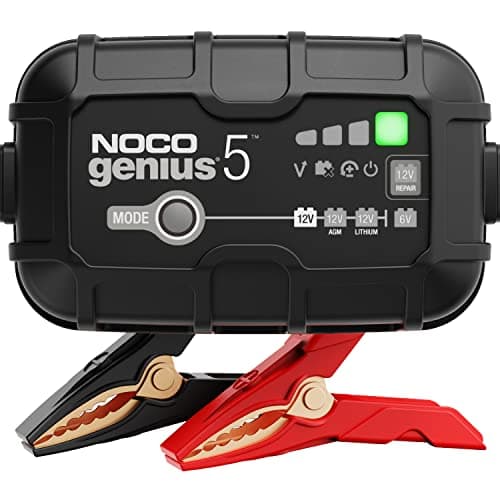 NOCO GENIUS5 Best overall | One car, charging and maintaining | 5 A, 6 V and 12 V, up to 120 Ah, floats indefinitely | $69.95View on Amazon #ad Affiliate link · Price as of November 10, 2026 |
| 2 | 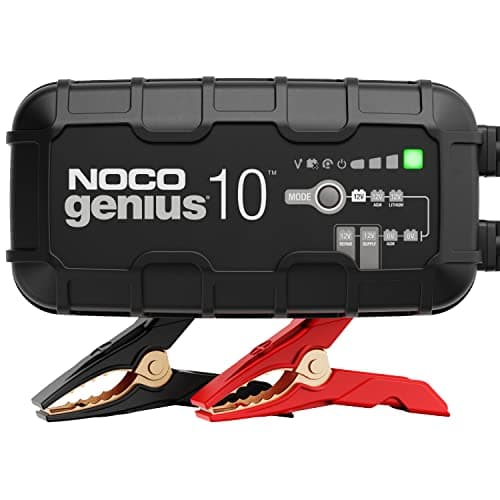 NOCO GENIUS10 Best for several vehicles | Several vehicles or a deep-cycle bank | 10 A with a published 230 Ah ceiling | $99.87View on Amazon #ad Affiliate link · Price as of November 10, 2026 |
| 3 | 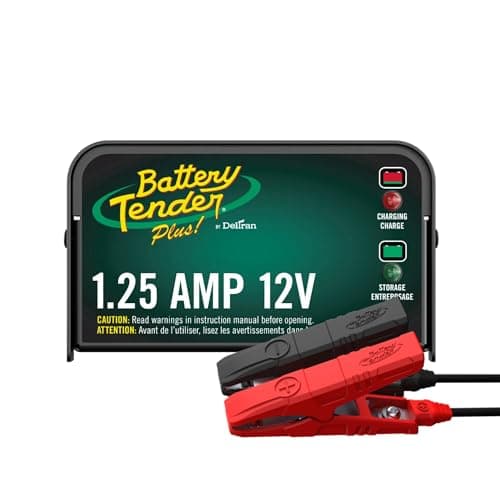 Battery Tender Plus 12V 1.25A Best for long storage | Long-term storage on a car battery | 1.25 A, up to 80 Ah, and a 10-year warranty | $58.95View on Amazon #ad Affiliate link · Price as of November 10, 2026 |
| 4 | 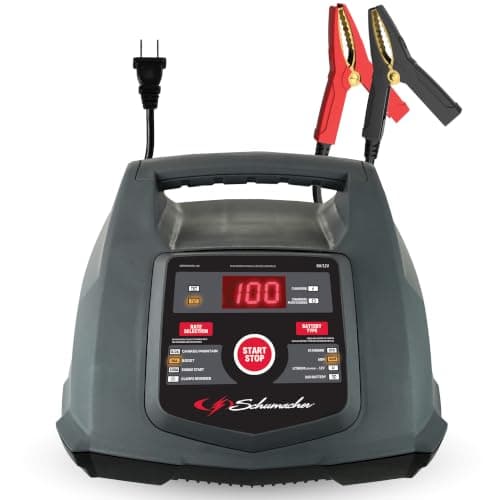 Schumacher SC1281 Best with engine start | Fast charging plus engine-start assist | 30 A boost, 100 A start, battery and alternator tester | $89.99View on Amazon #ad Affiliate link · Price as of November 10, 2026 |
| 5 | 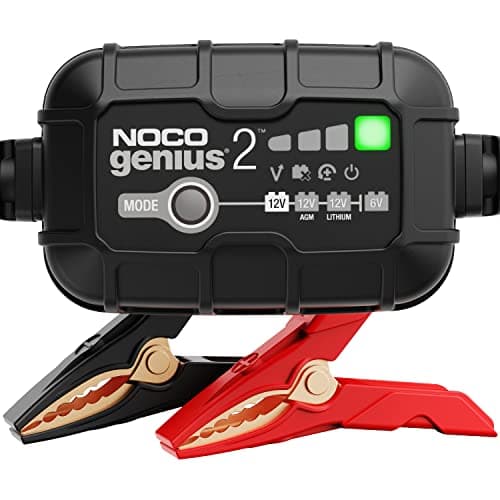 NOCO GENIUS2 Budget pick | Motorcycles, ATVs and lawn equipment | 2 A up to 40 Ah — correct current for powersports | $49.95View on Amazon #ad Affiliate link · Price as of November 10, 2026 |
Under $100 is a comfortable bracket in this category, because the technology that matters is cheap. Microprocessor control — measure the battery, run a charge program, then hold a float voltage instead of continuing to push — is standard at this level, and it is the feature that makes it safe to leave a charger connected while you are away.
What that means practically: you are not choosing between smart and dumb in this tier. You are choosing a current and a capacity ceiling that match your battery. What amp battery charger do I need is the sizing page, and battery charger vs maintainer covers why the two categories have effectively merged here.
Match the published ceiling, not the amp number
The common mistake is shopping by amps. Amperage sets charging speed; the published amp-hour ceiling tells you what size battery the charger's program was designed for, and that is the figure to match.
NOCO publishes a ceiling per unit — 40 Ah on the GENIUS2, 120 Ah on the GENIUS5, 230 Ah on the GENIUS10 — and Battery Tender publishes up to 80 Ah on automotive batteries for the Plus. A 2-amp unit will eventually charge a 70 Ah car battery, but at 2 amps that is most of a weekend, and the 40 Ah ceiling is NOCO saying what it was built for.
| Charger | Current | Voltages | Published ceiling | Cold rating | Warranty |
|---|---|---|---|---|---|
| NOCO GENIUS2 | 2 A | Not published for this model | Up to 40 Ah | Minus 4 to 104 degrees Fahrenheit | 3-year limited |
| Battery Tender Plus 12V 1.25A | 1.25 A | 12 V | Up to 80 Ah automotive | Not published | 10-year |
| NOCO GENIUS5 | 5 A | 6 V and 12 V | Up to 120 Ah | Minus 4 to 104 degrees Fahrenheit | 3-year limited |
| Schumacher SC1281 | 2 to 6 A, 30 A boost, 100 A start | 6 V and 12 V, auto-detected | Not published | Not published | Not published |
| NOCO GENIUS10 | 10 A | 6 V and 12 V | Up to 230 Ah | Minus 4 to 104 degrees Fahrenheit | 3-year limited |
Figures are each maker's own published specifications, linked in Sources. Where a maker publishes no ceiling or temperature range, the cell says so rather than carrying our estimate.
What this bracket does not include
Two things. The first is a dedicated lithium charge profile with app control — the kind of unit you want for a LiFePO4 house bank sits above this tier, and best lithium battery chargers covers why a selectable Li-ion profile is not something to improvise.
The second is a golf cart or series-pack charger. A 36 or 48-volt cart charger is a different device sold by plug type rather than by amps, and it is above this bracket — see best battery charger for golf cart.
The picks
1. Best overall
NOCO GENIUS5
NOCO · Best for one car, charging and maintaining
The single most useful charger for one vehicle: 5 amps, 6 V and 12 V, batteries up to 120 Ah, and it can be left connected indefinitely.
Published specifications
What works
- 5 A recharges a car battery overnight and then holds it — one unit does both jobs
- Rated down to -4 °F, so it works in an unheated garage
- The 77-inch cable reaches from a wall outlet to most engine bays without an extension
- 3-year warranty, against 1 year on the jump-starter line
What does not
- 5 A is slow for a deeply discharged large battery — a 100 Ah battery is an all-nighter
- The 120 Ah ceiling rules out larger deep-cycle banks
Skip it if
Not enough charger if you are reviving deep-cycle RV or marine batteries. Step up to the GENIUS10 and its 230 Ah range.
#ad Affiliate link · Price as of November 10, 2026
Raw specifications: NOCO’s own page for the NOCO GENIUS5.
2. Best for several vehicles
NOCO GENIUS10
NOCO · Best for several vehicles or a deep-cycle bank
Twice the current of the GENIUS5 and nearly twice the capacity range — 10 amps up to 230 Ah, which is where RV, marine and multi-vehicle households land.
Published specifications
What works
- 10 A halves the charge time on a flat car battery against a 5 A unit
- The 230 Ah range covers deep-cycle RV and marine batteries the GENIUS5 cannot
- Same -4 °F cold rating and 3-year warranty as the smaller GENIUS units
What does not
- 10 A into a small motorcycle battery is more current than it wants — use a 1 A or 2 A unit there
- Heavier and pricier than a GENIUS5 for a household with one car
Skip it if
Not the right charger for a single motorcycle, ATV or lawn-tractor battery. Small batteries want small current.
#ad Affiliate link · Price as of November 10, 2026
Raw specifications: NOCO’s own page for the NOCO GENIUS10.
3. Best for long storage
Battery Tender Plus 12V 1.25A
Battery Tender · Best for long-term storage on a car battery
The storage-maintainer benchmark: 1.25 amps, automotive batteries up to 80 Ah, a four-step program and a 10-year warranty behind it.
Published specifications
What works
- A 10-year warranty is the longest in this category by a wide margin
- 1.25 A is low enough to leave connected through a winter without heat build-up
- Covers flooded, AGM and gel without a chemistry switch to get wrong
What does not
- 1.25 A is a maintainer current — it will not revive a deeply flat battery quickly
- The 80 Ah ceiling rules out large truck and deep-cycle batteries
- No 6 V mode on the standard Plus; that is a different model in the line
Skip it if
Not the unit for recovering a flat battery on a deadline. Buy it for the car that sits, not the car that stranded you this morning.
#ad Affiliate link · Price as of November 10, 2026
Raw specifications: Battery Tender’s own page for the Battery Tender Plus 12V 1.25A.
4. Best with engine start
Schumacher SC1281
Schumacher · Best for fast charging plus engine-start assist
A shop-style charger for the garage: a 6-amp automatic charge, a 30-amp boost and a 100-amp engine start, for people who would rather fix the battery than carry a pack.
Published specifications
- Charging current
- 2 A to 6 A, microprocessor-controlled source
- Boost charge
- 30 A source
- Engine start
- 100 A source
- Battery voltages
- 6 V and 12 V, detected automatically source
- Input voltage
- 120 V AC — must stay plugged in source
- Chemistries
- Standard lead-acid, AGM and gel source
- Reconditioning
- Desulfation mode source
- Testing
- Built-in battery and alternator tester source
- Safety
- Reverse-polarity protection, automatic shutoff source
What works
- A 30 A boost charge puts a flat battery back in hours rather than overnight
- 100 A engine start covers the case where the battery is too far gone to take a charge quickly
- Automatic 6 V / 12 V detection reduces the chance of selecting the wrong mode
- The built-in battery and alternator tester tells you whether charging is even the right answer
What does not
- Mains-powered and bulky — a garage tool, not a trunk tool
- High-current charging is harder on an ageing battery than a slow charge
- Engine-start mode is no substitute for a portable pack away from home
Skip it if
Useless on the roadside — there is no outlet on the shoulder of a highway. This is the home half of the problem; a lithium pack is the away half.
#ad Affiliate link · Price as of November 10, 2026
5. Budget pick
NOCO GENIUS2
NOCO · Best for motorcycles, atvs and lawn equipment
A 2-amp maintainer for the small batteries a car charger would cook: motorcycles, ATVs, mowers and anything that sits for months.
Published specifications
What works
- 2 A is the right order of magnitude for a 10-20 Ah powersports battery
- Safe to leave connected through a whole off-season
- Light and small enough to live on a shelf beside the bike
What does not
- The 40 Ah ceiling makes it a maintainer for a car battery, not a recovery charger
- Recharging a flat car battery at 2 A takes most of a weekend
Skip it if
Not the charger to buy if your actual problem is a flat car battery you need back tonight. That is a 5 A or 10 A job.
#ad Affiliate link · Price as of November 10, 2026
Raw specifications: NOCO’s own page for the NOCO GENIUS2.
One caution on the Schumacher's fast charge: a 30-amp boost turns an overnight job into an afternoon, and high-current charging is harder on an aging battery than a slow one. Its built-in battery and alternator tester is arguably the more useful feature, because it tells you whether charging is even the right answer. How to tell if a car battery is bad covers doing that without one.
Key takeaways
- Microprocessor control is standard under the $100 cap so the choice is current and ceiling rather than smart versus dumb.
- Match the published amp-hour ceiling to your battery; amperage only sets how fast it charges.
- 5 amps suits one car, 2 amps suits powersports, 10 amps suits several vehicles or a deep-cycle bank.
- Battery Tender's 10-year warranty on the Plus is the longest in the tier, on a device meant to be left alone.
- Lithium profiles and golf cart pack chargers both sit above this bracket.
- A fast boost charge saves hours and costs some life on an old battery.
How we sourced this
Every figure on this page came from one of the following. Where a manufacturer or regulator does not publish a number, we say so rather than estimate it.
Common questions
- Can you get a good battery charger for under $100?
- Yes — this is a comfortable bracket. Microprocessor-controlled chargers that float safely are standard at this level, including units with published amp-hour ceilings and multi-year warranties.
- What amp battery charger should I buy under $100?
- 5 amps for one car, which recharges overnight and then maintains. 2 amps for a motorcycle or mower battery, and 10 amps if you are covering several vehicles or a deep-cycle bank.
- Is a cheap battery charger safe to leave connected?
- A smart one is — that is what the float stage does. A constant-current trickle charger is not, and the two get described with the same words, so check that the unit states automatic or float operation.
- Will a charger under $100 charge an AGM battery?
- Several will, and the good ones state it. Schumacher lists standard lead-acid, AGM and gel for the SC1281, and Battery Tender lists flooded, AGM and gel for the Plus.
- Do I need to spend more than $100 for a lithium charger?
- For a real LiFePO4 bank, generally yes. A dedicated, selectable Li-ion profile is the specification you are paying for, and it sits above this tier.
More in Battery Chargers
A jump pack gets you moving. A charger is how you stop needing one. This is the home half of the problem.
Read next
Best Car Battery Chargers
Best Car Battery Chargers
Our main charger roundup: 1 A to 10 A units matched to battery capacity, with published cold ratings and warranties.
Best smart battery charger
Best Smart Chargers
Microprocessor-controlled chargers chosen on published amperage, amp-hour range, chemistry support and whether they can safely stay connected.
Guide
What Amp Do I Need?
Charge current sizing by battery capacity, with the 10% guideline shown in full and manufacturer capacity ranges to verify against.
Best Battery Maintainers
Best Maintainers
Low-current maintainers for seasonal and stored vehicles, including the solar option for anything parked away from an outlet.
Found something out of date, or a figure you can source better than we did? Tell us — corrections get read first. Our methodology explains how picks are made, and contact is one click away.