Battery Chargers
The best cold weather car batteries
A northern winter attacks a battery from both sides at once: less available capacity, and an engine that is harder to turn. Published cold cranking amps is the only number that speaks to that directly.
Disclosure: we earn a commission if you buy through the Amazon links on this page, at no extra cost to you. Commission never decides a verdict or a ranking position — read our editorial policy and affiliate disclosure.
How we assessed these: picks are selected from manufacturers' published specifications, stated fitment data and current retailer listings — not from hands-on load testing of every battery. Where a maker publishes no cranking or reserve figures, this page says so rather than repeating a number from a retail listing.
Short answer
For a cold climate, buy the ODYSSEY Extreme ODX-AGM34: 1,050 published cold cranking amps and 135 minutes of reserve capacity, which are the two figures a freezing morning actually tests. If that is more battery than the car needs, the ODYSSEY Performance ODP-AGM34 is within five percent on both numbers and nearly three pounds lighter. The budget pick is the UPLUS Group 48 AGM, the cheapest AGM here and the right case for a Group 48/H6 car — with the honest caveat that UPLUS publishes no cranking or reserve figures at all, which on a cold-weather page is a real trade rather than a footnote. Check your group size before any of it.
Quick picks
Tap any row to jump to the full write-up. Scoring criteria are published in full on our methodology page.
| # | Product | Best for | Our read | Price |
|---|---|---|---|---|
| 1 | 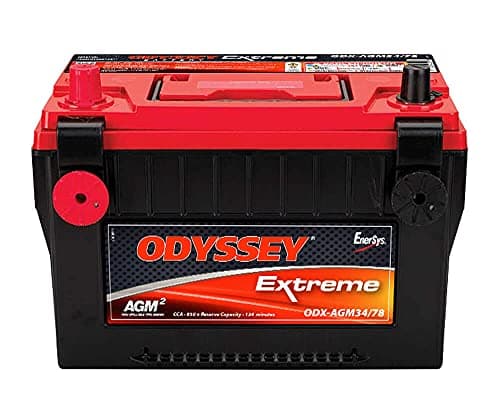 ODYSSEY Extreme ODX-AGM34 (34-PC1500T) Best overall for cold | Maximum cranking in Group 34 | 1,050 published CCA and 135 reserve minutes | $366.64View on Amazon #ad Affiliate link · Price as of November 28, 2026 |
| 2 | 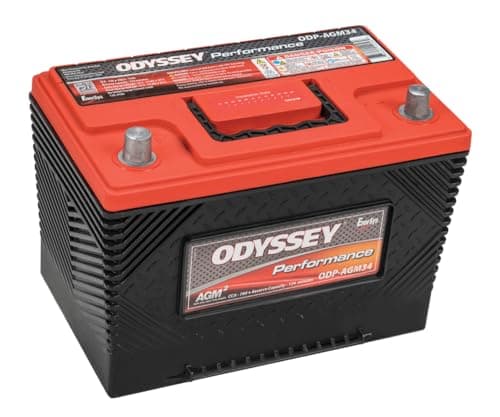 ODYSSEY Performance ODP-AGM34 Best value in the cold | Group 34 AGM without the Extreme premium | 1,000 CCA and 130 reserve minutes, 2.9 lb lighter | $339.67$361.99View on Amazon #ad Affiliate link · Price as of November 28, 2026 |
| 3 | 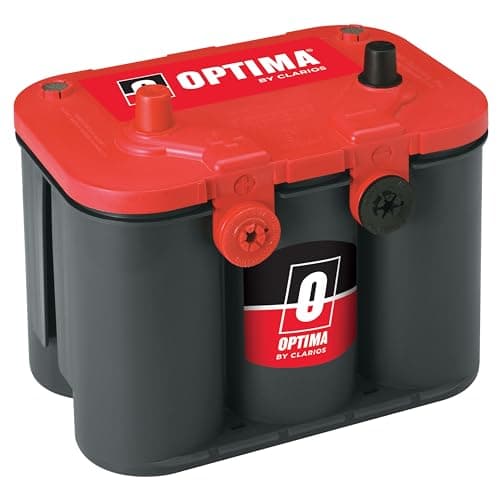 OPTIMA RedTop 34/78 Best widely stocked option | A pure starting battery, dual terminals | 800 published CCA, dual terminals, easy to find in a hurry | $289.99View on Amazon #ad Affiliate link · Price as of November 28, 2026 |
| 4 | 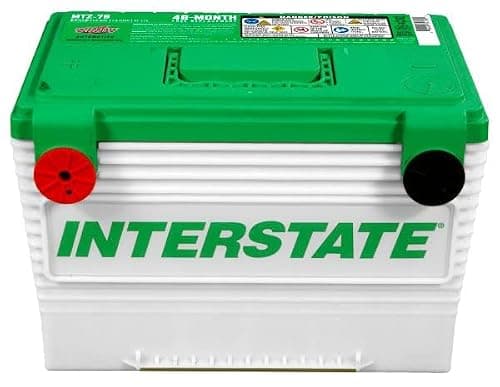 Interstate MTZ-78 AGM Best bought the same day | High accessory loads in a Group 78 fitment | Premium AGM line with dealer testing and core return | $322.96$382.45View on Amazon #ad Affiliate link · Price as of November 28, 2026 |
| 5 | 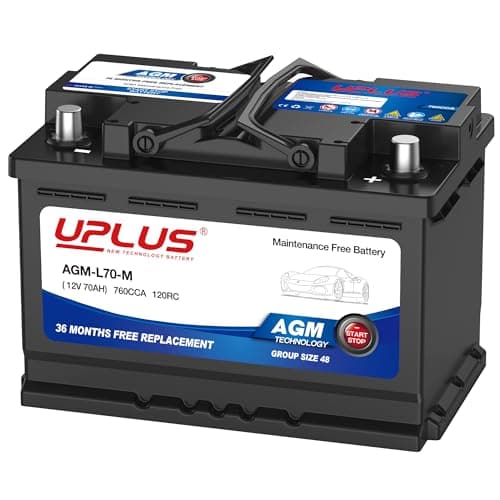 UPLUS Group 48 AGM (AGM-L70-M) Budget pick | Group 48 / H6 fitments | Cheapest AGM here, Group 48 / H6 — but no published figures | $135.99$169.99View on Amazon #ad Affiliate link · Price as of November 28, 2026 |
Cold does two things to a starting system, and they compound. The chemistry inside the battery slows down, so less of its rated capacity is available at the terminals. At the same time the oil in the engine thickens, so the starter has to work harder to turn it over. The battery has less to give on exactly the morning the engine asks for more — which is why a battery that was fine in October fails in January rather than gradually.
That is also why cold cranking amps is the one battery specification that speaks directly to this problem. Cold cranking amps is defined as the current a battery can deliver for 30 seconds at 0 degrees Fahrenheit while holding a usable voltage — the test is literally the cold-morning scenario. Car battery dead in cold weather covers what is happening physically; this page is about which battery to buy because of it.
The two figures that matter, and who publishes them
| Battery | Group | Published CCA | Reserve capacity | Construction |
|---|---|---|---|---|
| ODYSSEY Extreme ODX-AGM34 | 34 | 1,050 A | 135 minutes | AGM |
| ODYSSEY Performance ODP-AGM34 | 34 | 1,000 A | 130 minutes | AGM |
| OPTIMA RedTop 34/78 | 34/78 dual | 800 A | Not published | Spiral-cell AGM |
| OPTIMA YellowTop D34/78 | 34/78 dual | Not published per model | 50 Ah | Spiral-cell AGM |
| Interstate MTZ-78 AGM | 78 | Not published per model | Not published | AGM |
| UPLUS Group 48 AGM | 48 / H6 | Not published by the maker | Not published | AGM |
Figures are each manufacturer's own published specification where one exists, linked in Sources. Three of the six publish no per-model cranking or reserve table, and those cells say so rather than carrying a number from a retail listing. Cold cranking amps is measured at 0 F by definition; reserve capacity is measured at 80 F, so it is a load-duration figure rather than a cold one.
Reserve capacity belongs on a cold-weather page for a second-order reason. Winter is when the alternator has the most to do — headlights, blower, heated seats, rear defroster — and when short trips are least likely to replace what starting took out. Reserve capacity is the figure that says how long the battery can carry that load on its own if the alternator stops contributing, and only the two ODYSSEY units publish it.
Why AGM, specifically, in a cold climate
AGM construction helps in winter in two ways that are easy to state. The electrolyte is held in glass mat rather than sitting as free liquid, so the battery tolerates vibration and can be mounted in positions a flooded battery should not be. And AGM accepts charge faster than a flooded battery of the same size, which matters precisely when your driving is a series of ten-minute trips in the dark and the battery never quite gets back to full.
What AGM does not do is make cold free. Every battery delivers less at 0 F than at 80 F, which is why the practical rule for a cold climate is margin rather than chemistry: buy a published cranking figure comfortably above what the engine needs, not one that just covers it. Best battery charger for cold weather is the other half of this problem, because in a northern winter the charger does more for battery life than the battery choice does.
The honest case for the cheapest row
The UPLUS Group 48 AGM is the budget pick here on two grounds: it is the cheapest AGM on this site, and it covers Group 48/H6, a fitment a lot of modern cars take and almost no roundup addresses. Its listing states the BCI group, the case dimensions and the terminal layout, which is the information that decides whether it fits at all.
On this page, though, its weakness is specific: there is no published cranking figure, so on the one axis this page is organized around, there is nothing to check. That is why it is the budget pick rather than a recommendation for the coldest climates. If you are in a place where January mornings are genuinely hard, buy a published number.
The picks
1. Best overall for cold
ODYSSEY Extreme ODX-AGM34 (34-PC1500T)
ODYSSEY · Best for maximum cranking in group 34
The highest published cranking figures in Group 34 we could source: 1,050 CCA and 135 minutes of reserve capacity, at the cost of nearly 50 lb on the shelf.
Published specifications
What works
- 1,050 CCA is the highest published cold-cranking figure we found in Group 34
- 135 minutes of reserve capacity is real margin when the alternator quits away from home
- AGM construction, so it is sealed, non-spillable and tolerant of vibration
- ODYSSEY publishes a full specification table, which is rarer in this category than it should be
What does not
- 49.5 lb is heavy even for a Group 34 — awkward to carry and expensive to ship
- Priced well above a mainstream flooded battery for cranking power most engines never draw
- Group 34 only — it fits what it fits, and no amount of specification makes it fit anything else
Skip it if
Skip it if your vehicle is a commuter that starts fine today. You are buying cold-morning and accessory-load margin, and a stock-replacement battery in the right group size starts the same engine for far less.
#ad Affiliate link · Price as of November 28, 2026
Raw specifications: ODYSSEY’s own page for the ODYSSEY Extreme ODX-AGM34 (34-PC1500T).
2. Best value in the cold
ODYSSEY Performance ODP-AGM34
ODYSSEY · Best for group 34 agm without the extreme premium
Within 50 cold cranking amps of the Extreme and nearly 3 lb lighter — the Performance line is where most Group 34 buyers should actually land.
Published specifications
What works
- 1,000 CCA and 130 minutes reserve — within 5% of the Extreme on both figures
- 2.9 lb lighter than the Extreme, which you notice lifting it into a fender well
- Same AGM construction and the same published-specification transparency
- An ODP-AGM34R variant exists for reversed terminal positions
What does not
- Still a heavy, premium-priced battery next to a stock flooded replacement
- The Extreme's extra 50 CCA and 5 reserve minutes cost more than they are worth to most drivers, which makes this line the better buy and the less exciting one
- Group 34 only
Skip it if
Not the right battery if your vehicle takes a Group 48/H6, 47/H5 or 65 — check the door placard or the old battery's label before you shop anything on this page.
#ad Affiliate link · Price as of November 28, 2026
Raw specifications: ODYSSEY’s own page for the ODYSSEY Performance ODP-AGM34.
3. Best widely stocked option
OPTIMA RedTop 34/78
OPTIMA · Best for a pure starting battery, dual terminals
A starting-only AGM in a spiral-cell case, rated by OPTIMA at 800 cold cranking amps, with both top and side terminals so it drops into a wider range of vehicles.
Published specifications
- Cold cranking amps
- 800 A (OPTIMA describes this as conservatively rated) source
What works
- The 34/78 case carries both top and side terminals, which widens what it fits
- Spiral-cell AGM construction is sealed, non-spillable and vibration tolerant
- Widely stocked, so a replacement is easy to find when you need one quickly
What does not
- OPTIMA does not publish a full specification table for this model the way ODYSSEY does, so there are fewer figures here to check
- A starting battery only — it is not built for repeated deep discharge
- 800 CCA is below the Group 34 AGM models above, though ample for most engines
Skip it if
Not the one if you run a winch, a big audio system or camp off the battery. Repeated deep discharge is what the YellowTop line exists for, and a RedTop asked to do that job will not last.
#ad Affiliate link · Price as of November 28, 2026
Raw specifications: OPTIMA’s own page for the OPTIMA RedTop 34/78.
4. Best bought the same day
Interstate MTZ-78 AGM
Interstate Batteries · Best for high accessory loads in a group 78 fitment
Interstate positions MTZ as its premium AGM line for high accessory-load vehicles, and its dealer network is the practical argument: testing, fitting and core return in one stop.
This manufacturer does not publish a full specification table for this model on its own site. Rather than repeat figures we cannot source, the assessment below is limited to what the product category and the retailer listing genuinely establish.
What works
- Interstate states the MTZ line “stores and delivers more than enough power for high accessory load vehicles”
- A very large dealer network, which for a 45 lb item with a core charge matters more than it does for any other product on this site
- Local purchase usually includes free testing and fitting, and takes the core back on the spot
What does not
- Interstate does not publish per-model CCA or reserve-capacity tables on its site the way ODYSSEY does, so you are buying on line positioning rather than on figures you can check
- This is the Group 78 model — a dual-terminal GM-style fitment, so check your placard before assuming it drops in
- Dealer pricing varies, and it is rarely the cheapest route
- Online availability is patchier than the mass-market brands
Skip it if
Not the pick if you want to compare published numbers before buying. If the specification table is how you decide, buy a brand that publishes one.
#ad Affiliate link · Price as of November 28, 2026
Raw specifications: Interstate Batteries’s own page for the Interstate MTZ-78 AGM.
5. Budget pick
UPLUS Group 48 AGM (AGM-L70-M)
UPLUS · Best for group 48 / h6 fitments
An AGM battery in the Group 48/H6 case that a large share of modern European and American cars actually take — the fitment enthusiast roundups skip, from an aftermarket brand that at least states the BCI group, the case dimensions and the terminal layout on the listing.
This manufacturer does not publish a full specification table for this model on its own site. Rather than repeat figures we cannot source, the assessment below is limited to what the product category and the retailer listing genuinely establish.
What works
- Covers Group 48/H6, one of the most common fitments on modern cars and under-served by enthusiast roundups
- AGM, so it suits the accessory loads and start-stop duty these vehicles impose
- The listing states the BCI group as 48 (H6/L3) with case dimensions and terminal layout, which is the information that actually decides whether it fits
- Carries a three-year warranty, and the seller states US warehouses in California and Georgia rather than overseas-only support
What does not
- UPLUS publishes no per-model cranking and reserve-capacity table the way ODYSSEY does, so the listing is the only source for its figures and there are no manufacturer-sourced numbers to show
- An aftermarket brand with no parts counter behind it, so a warranty claim means shipping a 47 lb battery instead of walking into a store
- Group 48 batteries often sit in awkward locations such as under a seat or in the trunk
- Confirm whether your vehicle wants AGM or EFB before buying; the two are not interchangeable in both directions
Skip it if
Wrong battery if your car takes a Group 34, 47/H5 or 35 — group size is a physical and terminal-position constraint, not a preference. And skip it if published numbers are how you decide; buy a brand that publishes a specification table.
#ad Affiliate link · Price as of November 28, 2026
Key takeaways
- Cold reduces available capacity and increases cranking effort at the same time, which is why failures are abrupt.
- Cold cranking amps is measured at 0 F, which makes it the one figure that speaks directly to winter.
- Reserve capacity matters in winter too, because that is when the electrical load is highest.
- Buy published margin over the engine's requirement, not a figure that just covers it.
- Three of the six batteries here publish no cranking figure at all — on this page, that is the trade.
- In a cold climate a maintainer does more for battery life than the choice of battery does.
How we sourced this
Every figure on this page came from one of the following. Where a manufacturer or regulator does not publish a number, we say so rather than estimate it.
- ODYSSEY Performance Series battery specifications
- OPTIMA 34/78 published rating
- OPTIMA — which OPTIMA battery is better, red or yellow?
- ODYSSEY Battery — frequently asked questions (winter storage, parasitic drain, maintainer use)
- John Deere TY25221B lawn and garden battery — 12 V, 30 Ah, 350 CCA, U1 BCI
Common questions
- What CCA do I need for cold weather?
- At minimum, the figure your vehicle's manufacturer specifies — and in a genuinely cold climate, comfortably above it. Cold cranking amps is measured at 0 F, so a battery whose rating only just meets the requirement has no margin left on the morning that actually tests it.
- Do AGM batteries work better in cold weather?
- They hold an advantage in charge acceptance, which matters when winter driving is short trips that never fully recharge the battery, and they tolerate vibration and mounting positions a flooded battery cannot. They are still subject to the same physics: every battery delivers less when it is cold.
- Why does my car battery die in winter but not summer?
- Because cold reduces the capacity available at the terminals while thick oil increases what the starter needs. Heat is what actually damages a battery over time; cold is what exposes the damage. A battery weakened over a hot summer often fails on the first cold morning.
- Is a bigger battery better for cold climates?
- A battery with more published cranking amps in the correct group size is better. A physically bigger battery in the wrong group size is not an upgrade — it will not secure properly or the cables will not reach, and both of those are worse problems than a lower rating.
- Should I use a battery maintainer in winter?
- If the car sits for days at a time or only does short trips, yes. In a cold climate a maintainer is the cheapest thing you can do for battery life, because it keeps the battery near full instead of letting it live partly discharged, which is what kills batteries early.
More in Battery Chargers
A jump pack gets you moving. A charger is how you stop needing one. This is the home half of the problem.
Read next
Best for cold weather
Best for Cold Weather
Published operating-temperature ranges, thermal compensation, and the one thing you must never do to a battery that may be frozen.
Best Car Batteries
Best Car Batteries
Batteries ranked by published cranking and reserve figures, organized around the fitment check that has to come first.
Best AGM Car Batteries
Best AGM Batteries
What AGM construction changes, which vehicles require it, and six AGM batteries ranked on the figures their makers actually publish.
Guide
Dead Battery in the Cold
The mechanism behind winter no-starts, why a new battery can still fail, and the cheap prevention that works better than a bigger jump pack.
Found something out of date, or a figure you can source better than we did? Tell us — corrections get read first. Our methodology explains how picks are made, and contact is one click away.