Battery Chargers
The best AGM car batteries
AGM is a construction type, not a performance tier. Here is what the glass mat actually buys you, which cars require it, and the batteries worth the premium once yours does.
Disclosure: we earn a commission if you buy through the Amazon links on this page, at no extra cost to you. Commission never decides a verdict or a ranking position — read our editorial policy and affiliate disclosure.
How we assessed these: picks are selected from manufacturer-published specifications, current retailer listings and published owner feedback — not from hands-on testing of every unit. Where a maker does not publish a figure we say so rather than estimate it, and this category has a wide gap between the brands that publish a full specification table and the brands that publish nothing.
Short answer
Check two things before you shop for an AGM battery: whether your vehicle requires AGM (start-stop systems almost always do), and which BCI group size it takes. Then buy on published cold cranking amps and reserve capacity. For a Group 34 fitment the ODYSSEY Performance ODP-AGM34 has the best published numbers for the outlay at 1,000 CCA and 130 reserve minutes; for the very common Group 48 / H6 case, the UPLUS AGM-L70-M is the fitment that actually exists.
AGM stands for absorbent glass mat, and it describes how the battery is built rather than how well it performs. The electrolyte is held in a glass fiber mat pressed against the plates instead of sloshing around as free liquid. That one change makes the battery sealed, non-spillable, mountable at angles a flooded battery should not be mounted at, and considerably more tolerant of vibration and of being discharged and brought back.
It does not automatically make the battery better at starting your engine. A flooded battery in the right group size with a high published cold-cranking figure will start the same engine on the same morning. What AGM buys is tolerance — of accessory loads with the engine off, of repeated partial discharge, of a start-stop system cycling the starter dozens of times a day, and of a mounting position in a trunk or under a seat. If none of those apply to your car, read the best car batteries instead, because that page starts from fitment rather than from construction and will probably point you somewhere cheaper.
Quick picks
Tap any row to jump to the full write-up. Scoring criteria are published in full on our methodology page.
| # | Product | Best for | Our read | Price |
|---|---|---|---|---|
| 1 | 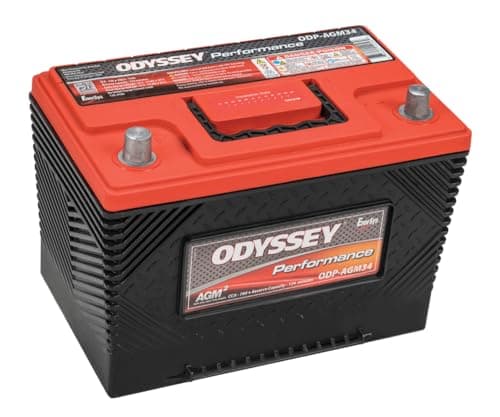 ODYSSEY Performance ODP-AGM34 Best AGM overall | Group 34 AGM without the Extreme premium | The published figures that justify the glass mat, without the Extreme tax | $339.68$361.99View on Amazon #ad Affiliate link · Price as of November 10, 2026 |
| 2 | 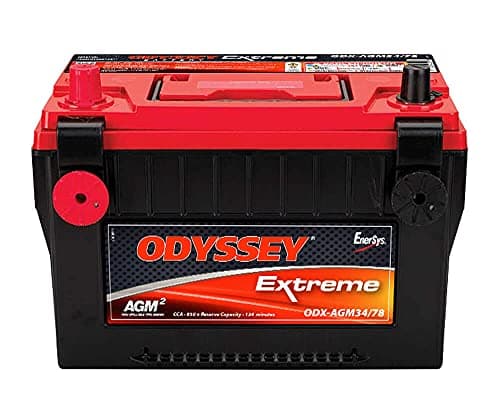 ODYSSEY Extreme ODX-AGM34 (34-PC1500T) Best for cold-start margin | Maximum cranking in Group 34 | 1,050 CCA and 135 reserve minutes, and the weight that comes with them | $367.32View on Amazon #ad Affiliate link · Price as of November 10, 2026 |
| 3 | 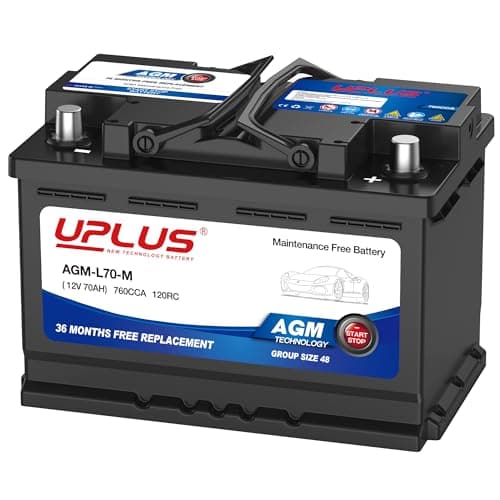 UPLUS Group 48 AGM (AGM-L70-M) Best AGM for Group 48 / H6, and the budget pick | Group 48 / H6 fitments | The start-stop fitment most AGM roundups never list | $169.99View on Amazon #ad Affiliate link · Price as of November 10, 2026 |
| 4 | 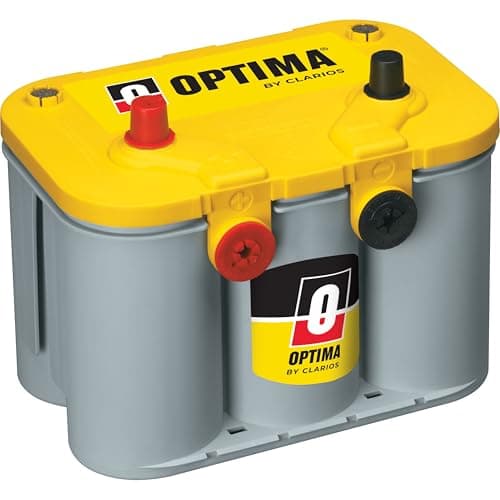 OPTIMA YellowTop D34/78 Best AGM for accessory loads | Starting plus genuine deep cycling | Built to be discharged and recharged, not only to crank | $319.99View on Amazon #ad Affiliate link · Price as of November 10, 2026 |
| 5 | 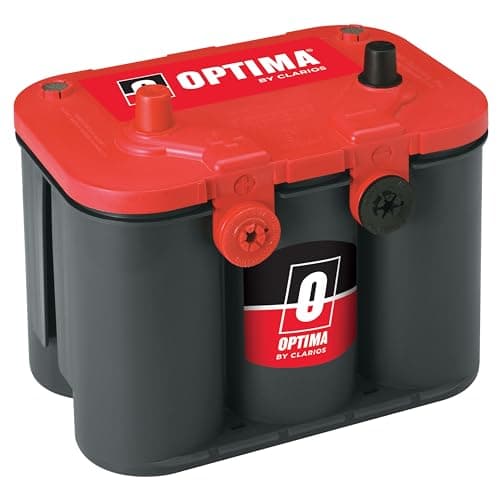 OPTIMA RedTop 34/78 Best AGM for a pure starting job | A pure starting battery, dual terminals | 800 CCA in a dual-terminal case that drops into more cars | $279.99View on Amazon #ad Affiliate link · Price as of November 10, 2026 |
| 6 | 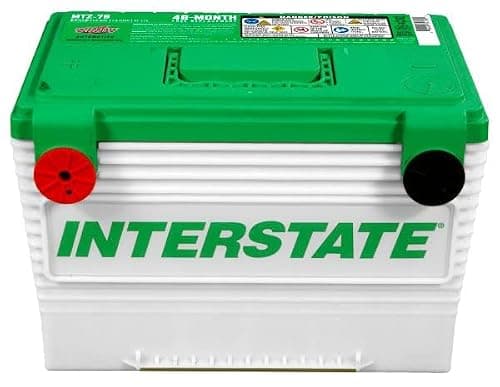 Interstate MTZ-78 AGM Best AGM to buy over a counter | High accessory loads in a Group 78 fitment | Testing, fitting and core return in one stop, at the cost of published figures | $424.95View on Amazon #ad Affiliate link · Price as of November 10, 2026 |
First: does your vehicle actually require AGM?
This is a question with a real answer, and it is worth settling before you compare anything below. Fitting a conventional flooded battery to a vehicle engineered around AGM is a short and expensive experiment, because the charging strategy and the duty cycle were designed for a battery that accepts charge differently.
- Read the label on the battery in the car now. If it says AGM, buy AGM. Manufacturers do not fit AGM for fun — it costs them money, so it is there because the vehicle needs it.
- Look for start-stop. If the engine shuts off at red lights, the battery is being asked to restart the engine many times per trip and to run the climate control and electronics while the engine is off. That duty is why AGM or EFB is fitted, and a flooded replacement will not survive it long.
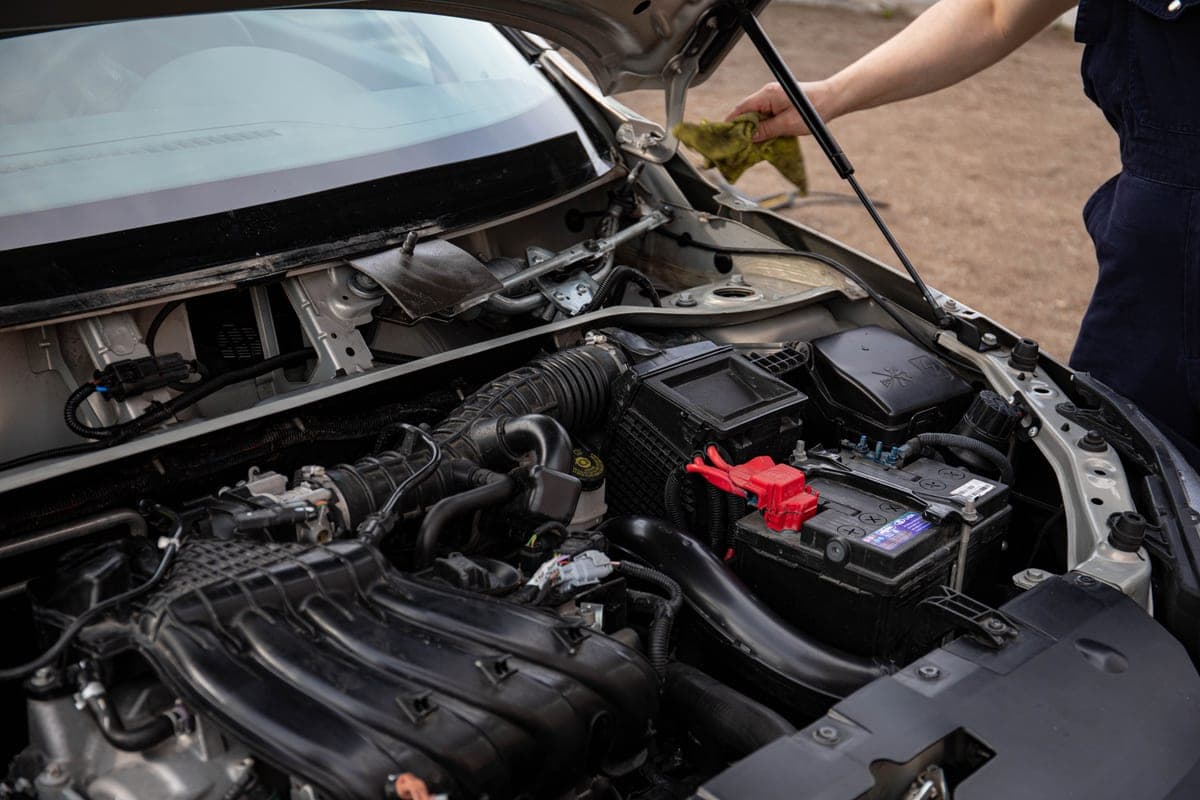
- Note where the battery lives. A battery in the trunk, under a rear seat or in a wheel well is very often AGM, because a sealed battery can be enclosed where a vented flooded one cannot.
- Count your accessory loads. A winch, an inverter, a large audio install or a fridge that runs at camp all discharge the starting battery with the alternator off. That is the AGM case even on a vehicle that shipped with flooded.
- Then get the group size right. Group 34, 48/H6, 47/H5, 65 and so on are physical constraints — tray size, terminal positions, post type. No specification makes the wrong group fit. The best car batteries walks the fitment check in full.
What the glass mat actually changes
Sealed and non-spillable. Electrolyte held in a mat cannot slosh or leak, which is what permits mounting in a cabin, a trunk or at an angle. ODYSSEY states this plainly for its AGM line, and it is the reason every battery on this page can be installed somewhere a vented flooded battery should not go.
Vibration tolerance. Compressed plates with the mat between them move far less than plates hanging in free liquid. For a truck on washboard roads, a trailer, or anything that spends time off pavement, that is a longevity argument rather than a performance one.
Charge acceptance and partial-state-of-charge duty. This is the underrated one. AGM construction has lower internal resistance, so it takes charge back faster after a discharge, and it handles being held at a partial state of charge better than a flooded battery does. That combination is exactly what start-stop driving and a short commute impose, and it is the single most common reason a manufacturer fits AGM.
Deeper discharge without immediate damage. No lead-acid battery enjoys deep discharge, and an AGM starting battery is still a starting battery. But an AGM handles the occasional flat — lights left on overnight, a fridge run too long at camp — with less permanent capacity loss than a flooded battery of the same size. If repeated deep cycling is the actual job, buy a dual-purpose or deep-cycle AGM rather than a starting one, and read starting versus deep-cycle batteries first.
And the costs, honestly. AGM batteries are heavier for the same group size, cost materially more than a flooded equivalent, and are less forgiving of overcharging — the recombinant design means water lost to a sustained overvoltage does not come back, and there are no caps to top up. They also dislike sustained heat more than they dislike cold. Those are real trade-offs, not footnotes, and they are why the first section of this page is a question rather than a pick.
How we chose these
Published cranking and reserve figures, or an explicit admission that none exist. Cold cranking amps is the number that matters on a winter morning and reserve capacity is the number that matters when the alternator quits. ODYSSEY publishes both per model in a downloadable table; OPTIMA publishes headline figures in blog form; Interstate and UPLUS publish neither per model. Every pick below is marked for which camp it is in, and no cell on this page carries a figure we could not attribute.
Fitment coverage that reflects what people drive. AGM roundups have a habit of listing six Group 34 and Group 35 batteries, which is useful if you own a truck or a Subaru and useless otherwise. Group 48 / H6 is one of the most common fitments on modern American and European cars, and it is the group that start-stop vehicles frequently take, so a Group 48 pick is on this page deliberately.
Honest separation of starting from dual-purpose. A battery built to crank and a battery built to crank and then be cycled are different products with different warranties and different failure modes. We have not blurred them: OPTIMA's own position on RedTop versus YellowTop is the clearest statement of that line any manufacturer publishes, and RedTop versus YellowTop settles it in one question.
The purchase channel, counted as a feature. A car battery weighs around 45 pounds and usually carries a core charge. Shipping one and shipping the old one back is a genuine cost that specification sheets do not show, which is why a battery you can buy, have tested and have fitted locally earns a place here even though its maker publishes less.
No self-authored ratings. We do not publish scores, because we do not run a cranking bench. The rubric behind every "our read" column on this site is set out at our methodology.
The AGM picks on published figures
| Battery | Group | Published CCA | Reserve capacity | Published weight | Role |
|---|---|---|---|---|---|
| ODYSSEY Performance ODP-AGM34 | 34 | 1,000 A | 130 minutes | 46.6 lb | Starting with deep-cycle capability |
| ODYSSEY Extreme ODX-AGM34 | 34 | 1,050 A | 135 minutes | 49.5 lb | Maximum cranking margin |
| UPLUS AGM-L70-M | 48 (H6 / L3) | Not published per model | Not published per model | Not published | Start-stop fitment replacement |
| OPTIMA RedTop 34/78 | 34/78 dual terminal | 800 A | Not published | Not published | Starting only |
| OPTIMA YellowTop D34/78 | 34/78 dual terminal | Not published | Not published | Not published | Dual purpose, 50 Ah rated capacity |
| Interstate MTZ-78 | 78 | Not published per model | Not published per model | Not published | High accessory load, dealer channel |
Figures are each maker's own published specifications, read from the pages linked in the sources section below. Cells reading "not published" mean exactly that: the manufacturer does not publish that figure for that model, so we leave it empty rather than carry a number from a retail listing or an estimate. ODYSSEY is the only brand here that publishes a complete per-model table, which is a reason to prefer it if checkable numbers are how you decide.
The picks
1. Best AGM overall
ODYSSEY Performance ODP-AGM34
ODYSSEY · Best for group 34 agm without the extreme premium
Within 50 cold cranking amps of the Extreme and nearly 3 lb lighter — the Performance line is where most Group 34 buyers should actually land.
Published specifications
What works
- 1,000 CCA and 130 minutes reserve — within 5% of the Extreme on both figures
- 2.9 lb lighter than the Extreme, which you notice lifting it into a fender well
- Same AGM construction and the same published-specification transparency
- An ODP-AGM34R variant exists for reversed terminal positions
What does not
- Still a heavy, premium-priced battery next to a stock flooded replacement
- The Extreme's extra 50 CCA and 5 reserve minutes cost more than they are worth to most drivers, which makes this line the better buy and the less exciting one
- Group 34 only
Skip it if
Not the right battery if your vehicle takes a Group 48/H6, 47/H5 or 65 — check the door placard or the old battery's label before you shop anything on this page.
#ad Affiliate link · Price as of November 10, 2026
Raw specifications: ODYSSEY’s own page for the ODYSSEY Performance ODP-AGM34.
2. Best for cold-start margin
ODYSSEY Extreme ODX-AGM34 (34-PC1500T)
ODYSSEY · Best for maximum cranking in group 34
The highest published cranking figures in Group 34 we could source: 1,050 CCA and 135 minutes of reserve capacity, at the cost of nearly 50 lb on the shelf.
Published specifications
What works
- 1,050 CCA is the highest published cold-cranking figure we found in Group 34
- 135 minutes of reserve capacity is real margin when the alternator quits away from home
- AGM construction, so it is sealed, non-spillable and tolerant of vibration
- ODYSSEY publishes a full specification table, which is rarer in this category than it should be
What does not
- 49.5 lb is heavy even for a Group 34 — awkward to carry and expensive to ship
- Priced well above a mainstream flooded battery for cranking power most engines never draw
- Group 34 only — it fits what it fits, and no amount of specification makes it fit anything else
Skip it if
Skip it if your vehicle is a commuter that starts fine today. You are buying cold-morning and accessory-load margin, and a stock-replacement battery in the right group size starts the same engine for far less.
#ad Affiliate link · Price as of November 10, 2026
Raw specifications: ODYSSEY’s own page for the ODYSSEY Extreme ODX-AGM34 (34-PC1500T).
3. Best AGM for Group 48 / H6, and the budget pick
UPLUS Group 48 AGM (AGM-L70-M)
UPLUS · Best for group 48 / h6 fitments
An AGM battery in the Group 48/H6 case that a large share of modern European and American cars actually take — the fitment enthusiast roundups skip, from an aftermarket brand that at least states the BCI group, the case dimensions and the terminal layout on the listing.
This manufacturer does not publish a full specification table for this model on its own site. Rather than repeat figures we cannot source, the assessment below is limited to what the product category and the retailer listing genuinely establish.
What works
- Covers Group 48/H6, one of the most common fitments on modern cars and under-served by enthusiast roundups
- AGM, so it suits the accessory loads and start-stop duty these vehicles impose
- The listing states the BCI group as 48 (H6/L3) with case dimensions and terminal layout, which is the information that actually decides whether it fits
- Carries a three-year warranty, and the seller states US warehouses in California and Georgia rather than overseas-only support
What does not
- UPLUS publishes no per-model cranking and reserve-capacity table the way ODYSSEY does, so the listing is the only source for its figures and there are no manufacturer-sourced numbers to show
- An aftermarket brand with no parts counter behind it, so a warranty claim means shipping a 47 lb battery instead of walking into a store
- Group 48 batteries often sit in awkward locations such as under a seat or in the trunk
- Confirm whether your vehicle wants AGM or EFB before buying; the two are not interchangeable in both directions
Skip it if
Wrong battery if your car takes a Group 34, 47/H5 or 35 — group size is a physical and terminal-position constraint, not a preference. And skip it if published numbers are how you decide; buy a brand that publishes a specification table.
#ad Affiliate link · Price as of November 10, 2026
4. Best AGM for accessory loads
OPTIMA YellowTop D34/78
OPTIMA · Best for starting plus genuine deep cycling
The dual-purpose answer: OPTIMA rates the D34/78 at 50 Ah and builds it to start an engine and then be discharged and recharged repeatedly, which a RedTop is not.
Published specifications
- Capacity
- 50 Ah source
What works
- Built for starting AND deep cycling, which is the combination winches, inverters and big audio actually need
- Same dual top-and-side terminal case as the RedTop 34/78
- Sealed spiral-cell AGM, so it can be mounted in places a flooded battery should not
What does not
- OPTIMA publishes little beyond headline figures for this model, so there is less to verify than we would like
- Dual-purpose construction means it is a compromise at both jobs against a dedicated starting or dedicated deep-cycle battery
- Premium price for capability a standard commuter never uses
Skip it if
Skip it if nothing in your vehicle draws power with the engine off. You would be paying for deep-cycle capability you will never discharge into, and a straight starting battery is the better buy.
#ad Affiliate link · Price as of November 10, 2026
Raw specifications: OPTIMA’s own page for the OPTIMA YellowTop D34/78.
5. Best AGM for a pure starting job
OPTIMA RedTop 34/78
OPTIMA · Best for a pure starting battery, dual terminals
A starting-only AGM in a spiral-cell case, rated by OPTIMA at 800 cold cranking amps, with both top and side terminals so it drops into a wider range of vehicles.
Published specifications
- Cold cranking amps
- 800 A (OPTIMA describes this as conservatively rated) source
What works
- The 34/78 case carries both top and side terminals, which widens what it fits
- Spiral-cell AGM construction is sealed, non-spillable and vibration tolerant
- Widely stocked, so a replacement is easy to find when you need one quickly
What does not
- OPTIMA does not publish a full specification table for this model the way ODYSSEY does, so there are fewer figures here to check
- A starting battery only — it is not built for repeated deep discharge
- 800 CCA is below the Group 34 AGM models above, though ample for most engines
Skip it if
Not the one if you run a winch, a big audio system or camp off the battery. Repeated deep discharge is what the YellowTop line exists for, and a RedTop asked to do that job will not last.
#ad Affiliate link · Price as of November 10, 2026
Raw specifications: OPTIMA’s own page for the OPTIMA RedTop 34/78.
6. Best AGM to buy over a counter
Interstate MTZ-78 AGM
Interstate Batteries · Best for high accessory loads in a group 78 fitment
Interstate positions MTZ as its premium AGM line for high accessory-load vehicles, and its dealer network is the practical argument: testing, fitting and core return in one stop.
This manufacturer does not publish a full specification table for this model on its own site. Rather than repeat figures we cannot source, the assessment below is limited to what the product category and the retailer listing genuinely establish.
What works
- Interstate states the MTZ line “stores and delivers more than enough power for high accessory load vehicles”
- A very large dealer network, which for a 45 lb item with a core charge matters more than it does for any other product on this site
- Local purchase usually includes free testing and fitting, and takes the core back on the spot
What does not
- Interstate does not publish per-model CCA or reserve-capacity tables on its site the way ODYSSEY does, so you are buying on line positioning rather than on figures you can check
- This is the Group 78 model — a dual-terminal GM-style fitment, so check your placard before assuming it drops in
- Dealer pricing varies, and it is rarely the cheapest route
- Online availability is patchier than the mass-market brands
Skip it if
Not the pick if you want to compare published numbers before buying. If the specification table is how you decide, buy a brand that publishes one.
#ad Affiliate link · Price as of November 10, 2026
Raw specifications: Interstate Batteries’s own page for the Interstate MTZ-78 AGM.
An AGM battery needs an AGM charge
This is the part people skip, and it is the part that decides how long the battery lasts. AGM batteries want a different charge profile from flooded ones: a tighter absorption voltage ceiling and a float stage that does not sit too high. An old unregulated trickle charger with no float stage will slowly dry out an AGM battery, and because the case is sealed there is nothing you can do about it afterward.
So if you are buying AGM, make sure the charger you already own has an AGM mode, and if it does not, buy one that does. The best AGM battery chargers is the page for that, and charger versus maintainer explains which of the two jobs you are actually trying to do. If you want the arithmetic on charger size, what amp battery charger do I need has it, and can you overcharge a car battery covers why a modern multi-stage unit cannot do the damage the old ones could.
One more habit worth the thirty seconds: if the vehicle is stored, leave a maintainer on it. ODYSSEY's own support material is direct about parasitic drain being what kills stored batteries, and an AGM battery is an expensive thing to lose to a month in a garage. How to store a car battery is the walkthrough, and the best battery maintainers covers the hardware. If the maintainer you already own is a Battery Tender and the AGM battery you are fitting sits above its published 80 amp-hour ceiling, Battery Tender alternatives is the page for that.
Where AGM is worth the premium, and where it is not
Worth it: a start-stop vehicle, because you have no real choice and the system will chew through a flooded battery. A battery mounted in a cabin, trunk or wheel well, because sealed is a requirement there. A vehicle carrying a winch, an inverter, a fridge or a serious audio install. A truck that works off pavement. And a vehicle stored for long stretches, where AGM's lower self-discharge rate is a practical advantage even with a maintainer attached.
Not worth it: a commuter that starts every morning, has no start-stop, has the battery under the hood in a vented tray, and never runs anything with the engine off. In that car, a flooded battery in the correct group size with a solid published CCA figure is the better purchase, and the difference buys you a jump starter and a tire inflator with change left over. That is not a compromise; it is a better-balanced trunk.
And if the battery you have now is only two or three years old and the car is slow to crank, replace nothing yet. How to tell if a car battery is bad is a fifteen-minute check with a multimeter, and a surprising share of "dead battery" diagnoses are a loose terminal, a parasitic drain or an alternator that stopped charging. Can you jump start a car with a bad alternator covers the last of those.
AGM in heat and in cold
Cold is the easier story. Every lead-acid battery loses cranking ability as the temperature falls while the engine simultaneously gets harder to turn over, which is the whole reason cold cranking amps are rated at 0 degrees Fahrenheit. AGM's lower internal resistance helps here, and so does buying headroom: the ODYSSEY figures above exist for the morning that goes wrong, not for the average Tuesday. Why a car battery dies in cold weather has the detail.
Heat is the one people underrate. Sustained high temperature is what actually ages a battery, AGM included, and an AGM cannot be topped up when it loses water to heat and overcharging. If you live somewhere genuinely hot, the practical implications are to keep the charging voltage correct, to avoid leaving an unregulated charger connected for months, and to expect a shorter service life than the warranty length implies regardless of chemistry.
What we would buy
A Group 34 fitment, and published numbers matter to you: the ODYSSEY Performance ODP-AGM34. It is within roughly five percent of the Extreme on both cranking and reserve, it is nearly three pounds lighter, and ODYSSEY publishes the whole table so you can check us. A Group 34 fitment in a genuinely cold climate with accessory loads: step up to the Extreme and accept the 49.5 pounds.
A Group 48 / H6 start-stop car: the UPLUS AGM-L70-M, because it is an AGM in the case size the car takes, and the fitment constraint outranks the fact that UPLUS publishes no per-model table. A vehicle with a winch, an inverter or a camp fridge: the OPTIMA YellowTop D34/78, which is built to be discharged and recharged rather than only to crank. A straightforward starting job in a 34/78 fitment: the RedTop. And if you would rather have the battery tested, fitted and the core taken back in one stop: the Interstate MTZ, knowing you are buying on line positioning rather than on figures.
Whatever you buy, buy the charger to match it and leave the old trickle charger in the drawer. An AGM battery looked after properly outlasts the flooded battery it replaced; an AGM battery charged on the wrong profile does not. If you are moving away from OPTIMA specifically, OPTIMA battery alternatives is the page that covers the fitment gaps in detail.
Key takeaways
- AGM is a construction type, not a performance tier — it buys tolerance, not cranking amps.
- If the car has start-stop, or the battery is mounted in a cabin or trunk, AGM is a requirement rather than an upgrade.
- Group size is a physical constraint and comes before every other consideration on this page.
- ODYSSEY is the only brand here publishing a full per-model CCA and reserve table — prefer it if checkable figures decide your purchase.
- Group 48 / H6 is a very common modern fitment and is under-served by AGM roundups; we picked for it deliberately.
- AGM wants an AGM charge profile; an unregulated trickle charger will quietly dry out a sealed battery.
- On a no-start-stop commuter with the battery under the hood, a flooded battery in the right group is the better buy.
How we sourced this
Every figure on this page came from one of the following. Where a manufacturer or regulator does not publish a number, we say so rather than estimate it.
Common questions
- Is an AGM battery worth the extra money?
- It is if your vehicle requires it or your use imposes it: start-stop systems, a battery mounted in a cabin or trunk, high accessory loads with the engine off, heavy vibration, or long storage. On a conventional commuter with the battery in a vented under-hood tray and nothing drawing power at rest, a flooded battery in the correct group size starts the same engine for considerably less.
- Can I replace a flooded battery with an AGM?
- Usually yes, provided the group size and terminal positions match. The upgrade direction is the safe one. What you should not do is go the other way and fit a flooded battery where AGM or EFB was specified. On many European cars a new battery also has to be registered or coded to the energy-management module, otherwise the charging strategy stays set for the old battery.
- Do AGM batteries need a special charger?
- They need a charger with an AGM profile, which almost every modern multi-stage charger has. What they genuinely cannot tolerate is an old unregulated trickle charger with no float stage — because the case is sealed, water lost to a sustained overvoltage cannot be replaced. Our AGM battery charger picks cover the hardware.
- How long does an AGM car battery last?
- Longer than a flooded battery in the same duty, but the figure depends far more on heat, charging voltage and how often it is discharged than on the brand. Sustained high temperature is the main ager. Warranty length is a useful proxy for a maker's confidence, not a prediction of service life.
- What is the difference between AGM and EFB for start-stop cars?
- Both are start-stop answers. EFB is an enhanced flooded design and sits between conventional flooded and AGM in cost and in cycling ability; AGM is sealed, handles partial state-of-charge duty better and is generally specified on vehicles with higher electrical demand. A car specified for AGM should get AGM. A car specified for EFB can often be upgraded to AGM, but check the vehicle's documentation first.
- Which group size do I need?
- Read the label on the battery currently in the car — the BCI group is printed on it — and check the door placard or owner's manual as a second source. Note the terminal positions too, because a Group 34 and a Group 34R are mirror images and are not interchangeable.
More in Battery Chargers
A jump pack gets you moving. A charger is how you stop needing one. This is the home half of the problem.
Read next
Best Car Batteries
Best Car Batteries
Batteries ranked by published cranking and reserve figures, organized around the fitment check that has to come first.
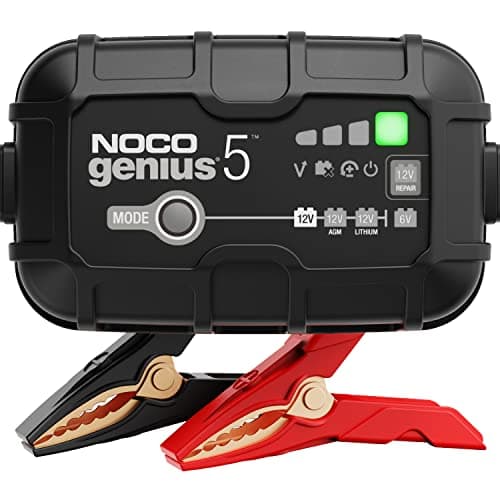
Best AGM Chargers
Best AGM Chargers
Chargers with a genuine AGM mode, what changes about the charge voltage, and how to tell which chemistry your car actually has.
Head to head
RedTop vs YellowTop
The starting-versus-dual-purpose decision in OPTIMA's own terms, including the resting voltages the maker publishes for each line and what that means for your charger.
Best OPTIMA alternative
OPTIMA Alternatives
What OPTIMA is known for, from its own published figures — then four AGM alternatives with more complete specification tables, other fitments, or local support.
Guide
Starting vs Deep Cycle
What separates a cranking battery from a deep-cycle one, what dual-purpose genuinely means, and which charger each needs.
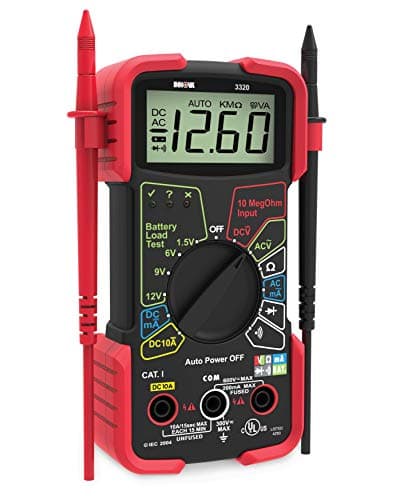
Guide
Is the Battery Bad?
The resting-voltage table, the cranking and charging checks, and how to tell a failed battery from a failing alternator or a parasitic drain.
Found something out of date, or a figure you can source better than we did? Tell us — corrections get read first. Our methodology explains how picks are made, and contact is one click away.