Battery Chargers
OPTIMA RedTop vs YellowTop
Both are sealed spiral-cell AGM batteries in the same case. The difference is not quality — it is whether the battery is ever asked to run something with the engine off.
Disclosure: we earn a commission if you buy through the Amazon links on this page, at no extra cost to you. Commission never decides a verdict or a ranking position — read our editorial policy and affiliate disclosure.
How we assessed these: picks are selected from manufacturer specifications, current retailer listings and published owner feedback — not from hands-on testing of every charger on every battery chemistry. We publish no measured charge curves, because we do not measure them.
Short answer
Buy a RedTop if the vehicle is stock and nothing runs with the engine off — it is a starting battery and slightly cheaper. Buy a YellowTop if you have a winch, an inverter, a big stereo, a dash camera or a fridge, because OPTIMA builds that line for starting and deep-cycle use together.
Quick picks
Tap any row to jump to the full write-up. Scoring criteria are published in full on our methodology page.
| # | Product | Best for | Our read | Price |
|---|---|---|---|---|
| 1 | 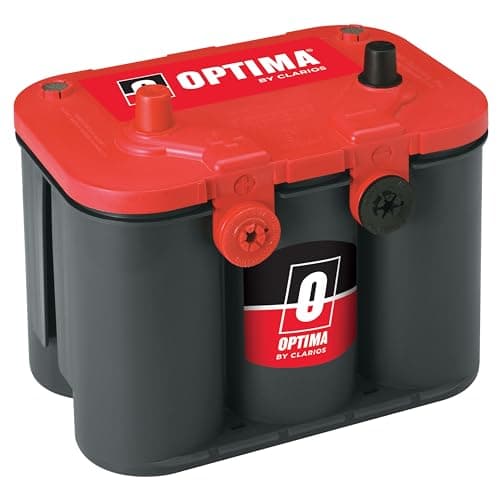 OPTIMA RedTop 34/78 Best for a stock vehicle | A pure starting battery, dual terminals | A starting-only AGM, 800 CCA, dual top and side terminals | $279.99View on Amazon #ad Affiliate link · Price as of October 20, 2026 |
| 2 | 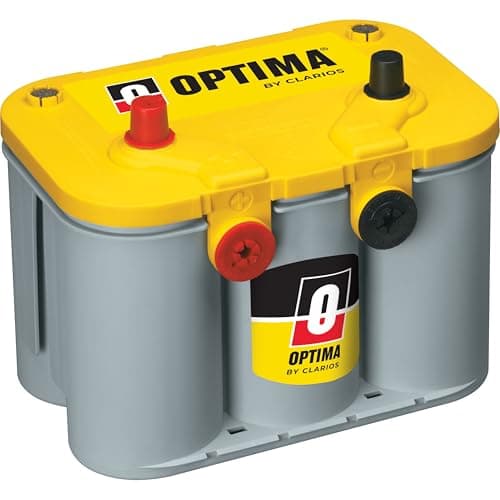 OPTIMA YellowTop D34/78 Best if anything draws power parked | Starting plus genuine deep cycling | Dual-purpose, 50 Ah, built for repeated discharge | $309.99View on Amazon #ad Affiliate link · Price as of October 20, 2026 |
| 3 | 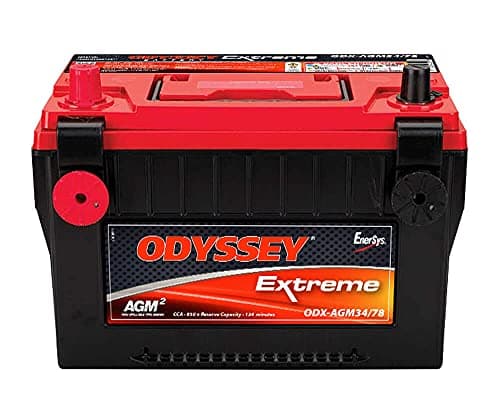 ODYSSEY Extreme ODX-AGM34 (34-PC1500T) Best if you want full published numbers | Maximum cranking in Group 34 | The alternative when a specification sheet matters to you | $367.32View on Amazon #ad Affiliate link · Price as of October 20, 2026 |
OPTIMA's color coding is the clearest naming in the battery aisle, and it still confuses people, because both batteries look identical from the outside: the same spiral-cell AGM construction, the same sealed non-spillable case, in the 34/78 size the same pair of top and side terminals. Nothing about the physical battery tells you which job it was designed for.
The useful news is that OPTIMA answers the question directly in its own words, so this comparison does not have to be a matter of opinion. Their published guidance is that a RedTop "will work just fine" in a stock vehicle, and that a vehicle with "a winch, car alarm, dash camera and aftermarket stereo" wants "a YELLOWTOP that is designed for both starting and deep-cycle use".
The one question that decides it
Does anything in the vehicle draw meaningful power while the engine is not running? Not the clock and the alarm — those are parasitic loads every battery handles. We mean a load you switch on deliberately with the engine off: a winch, a 12-volt fridge, an inverter running tools, a camp light rig, an audio system played at a tailgate, a dash camera recording in parking mode for days.
If the answer is no, a starting battery is the right tool and the extra money for dual-purpose construction buys capability you will never discharge into. If the answer is yes, you are cycling the battery, and a starting battery asked to cycle repeatedly does not last — which is the whole reason the YellowTop line exists. Starting versus deep-cycle batteries is the engineering behind that sentence.
| RedTop 34/78 | YellowTop D34/78 | |
|---|---|---|
| Designed for | Engine starting | Starting and deep-cycle use |
| Published rating we can cite | 800 cold cranking amps | 50 amp-hours |
| Construction | Sealed spiral-cell AGM | Sealed spiral-cell AGM |
| Terminals in this size | Top and side | Top and side |
| Resting voltage when full, per OPTIMA | About 12.6 to 12.8 V | About 13.0 to 13.2 V |
| Right choice when | The vehicle is stock | A winch, inverter, fridge or stereo runs parked |
Figures are OPTIMA's own published statements, linked in Sources. OPTIMA does not publish a full specification table for either model, which is why there are fewer rows here than we would like.
The resting voltage difference matters to your charger
One figure in that table is easy to miss and genuinely useful: OPTIMA gives a different healthy resting voltage for each line, roughly 12.6 to 12.8 volts for a RedTop and roughly 13.0 to 13.2 volts for a YellowTop. A fully charged YellowTop simply sits higher than a fully charged RedTop.
That has two practical consequences. First, if you test a YellowTop against a lead-acid chart and read 12.7 volts, the battery is not full — it is down, and you would have called the same reading perfect on a RedTop. Second, a charger or maintainer whose AGM profile tops out below that will leave a YellowTop chronically short of full, which is exactly the condition that shortens an AGM battery's life. How to tell if a car battery is bad walks through reading voltage properly.
Charging either one
Both are AGM batteries, so both want a charger with an AGM profile rather than a flooded one — an AGM battery on a flooded setting is overcharged, and a flooded battery on an AGM setting is undercharged. The best AGM battery chargers is the category page, and in practice a modern multi-chemistry smart charger with an AGM mode covers both OPTIMA lines. What that charger must not do is treat either one as lithium: the lithium charger picks explain why those profiles are not interchangeable.
The difference is how often you will use it. A RedTop in a daily driver is topped up by the alternator and may never see a charger. A YellowTop that gets cycled is a battery you should be putting on a charger deliberately, because an alternator is designed to replace the energy used to start the engine, not to recharge a deliberately discharged battery. How long to charge a car battery covers what that actually takes.
Check the group size before you choose a color
Both batteries above are the 34/78 size, which is a General Motors convention: a case that carries top posts and side terminals, so it fits vehicles wired for either. That is genuinely useful if you are not sure which your truck wants, or if you are moving a battery between vehicles — but it is not universal, and buying the right color in the wrong group size is a wasted afternoon.
Find your group size before anything else. It is usually printed on the label of the battery currently in the car, and the owner's manual gives it too. The number describes the physical case, the terminal layout and which side the positive post sits on; a battery that is a quarter of an inch too tall can foul the hood, and one with mirrored terminals will not reach the cables. Only once you know the group size does the RedTop-or-YellowTop question matter, because both lines are sold in several sizes and the decision travels across all of them.
Where both lines are weaker than the alternative
The honest criticism of OPTIMA is not the batteries — it is the documentation. OPTIMA publishes far less specification detail per model than ODYSSEY does, which means a buyer who wants to compare cold cranking amps, reserve capacity and cycle life across candidates has less to work with. We can cite 800 cold cranking amps for the RedTop 34/78 and 50 amp-hours for the YellowTop D34/78, and not much more.
If published numbers are what you buy on, the ODYSSEY Extreme in the same group size is the alternative, and it is in the comparison above for exactly that reason. Our full car battery picks put all of them side by side by group size.
The picks
1. Best for a stock vehicle
OPTIMA RedTop 34/78
OPTIMA · Best for a pure starting battery, dual terminals
A starting-only AGM in a spiral-cell case, rated by OPTIMA at 800 cold cranking amps, with both top and side terminals so it drops into a wider range of vehicles.
Published specifications
- Cold cranking amps
- 800 A (OPTIMA describes this as conservatively rated) source
What works
- The 34/78 case carries both top and side terminals, which widens what it fits
- Spiral-cell AGM construction is sealed, non-spillable and vibration tolerant
- Widely stocked, so a replacement is easy to find when you need one quickly
What does not
- OPTIMA does not publish a full specification table for this model the way ODYSSEY does, so there are fewer figures here to check
- A starting battery only — it is not built for repeated deep discharge
- 800 CCA is below the Group 34 AGM models above, though ample for most engines
Skip it if
Not the one if you run a winch, a big audio system or camp off the battery. Repeated deep discharge is what the YellowTop line exists for, and a RedTop asked to do that job will not last.
#ad Affiliate link · Price as of October 20, 2026
Raw specifications: OPTIMA’s own page for the OPTIMA RedTop 34/78.
2. Best if anything draws power parked
OPTIMA YellowTop D34/78
OPTIMA · Best for starting plus genuine deep cycling
The dual-purpose answer: OPTIMA rates the D34/78 at 50 Ah and builds it to start an engine and then be discharged and recharged repeatedly, which a RedTop is not.
Published specifications
- Capacity
- 50 Ah source
What works
- Built for starting AND deep cycling, which is the combination winches, inverters and big audio actually need
- Same dual top-and-side terminal case as the RedTop 34/78
- Sealed spiral-cell AGM, so it can be mounted in places a flooded battery should not
What does not
- OPTIMA publishes little beyond headline figures for this model, so there is less to verify than we would like
- Dual-purpose construction means it is a compromise at both jobs against a dedicated starting or dedicated deep-cycle battery
- Premium price for capability a standard commuter never uses
Skip it if
Skip it if nothing in your vehicle draws power with the engine off. You would be paying for deep-cycle capability you will never discharge into, and a straight starting battery is the better buy.
#ad Affiliate link · Price as of October 20, 2026
Raw specifications: OPTIMA’s own page for the OPTIMA YellowTop D34/78.
3. Best if you want full published numbers
ODYSSEY Extreme ODX-AGM34 (34-PC1500T)
ODYSSEY · Best for maximum cranking in group 34
The highest published cranking figures in Group 34 we could source: 1,050 CCA and 135 minutes of reserve capacity, at the cost of nearly 50 lb on the shelf.
Published specifications
What works
- 1,050 CCA is the highest published cold-cranking figure we found in Group 34
- 135 minutes of reserve capacity is real margin when the alternator quits away from home
- AGM construction, so it is sealed, non-spillable and tolerant of vibration
- ODYSSEY publishes a full specification table, which is rarer in this category than it should be
What does not
- 49.5 lb is heavy even for a Group 34 — awkward to carry and expensive to ship
- Priced well above a mainstream flooded battery for cranking power most engines never draw
- Group 34 only — it fits what it fits, and no amount of specification makes it fit anything else
Skip it if
Skip it if your vehicle is a commuter that starts fine today. You are buying cold-morning and accessory-load margin, and a stock-replacement battery in the right group size starts the same engine for far less.
#ad Affiliate link · Price as of October 20, 2026
Raw specifications: ODYSSEY’s own page for the ODYSSEY Extreme ODX-AGM34 (34-PC1500T).
Key takeaways
- RedTop is a starting battery; YellowTop is built for starting and repeated deep discharge.
- The deciding question is whether anything runs with the engine off — a winch, inverter, fridge, stereo or parking-mode camera.
- In a stock vehicle, OPTIMA itself says a RedTop will work just fine and costs less.
- A full YellowTop rests around 13.0 to 13.2 volts, a full RedTop around 12.6 to 12.8 — do not judge one by the other's chart.
- Both are AGM, so both want a charger with an AGM profile.
- A cycled YellowTop should see a charger regularly; an alternator is not a battery charger.
- OPTIMA publishes less specification detail than ODYSSEY, which is the strongest argument for the alternative.
How we sourced this
Every figure on this page came from one of the following. Where a manufacturer or regulator does not publish a number, we say so rather than estimate it.
Common questions
- What is the difference between OPTIMA RedTop and YellowTop?
- RedTop is designed for engine starting only. YellowTop is a dual-purpose battery designed for starting and deep-cycle use, which is what you need if a winch, inverter, fridge or aftermarket stereo runs while the engine is off.
- Can I use a YellowTop as a starting battery?
- Yes. A YellowTop starts an engine perfectly well — it is dual-purpose, not deep-cycle-only. You are simply paying for cycling capability a stock vehicle never uses, which is why OPTIMA points stock vehicles at the RedTop.
- Is a YellowTop worth the extra money?
- It is if anything in the vehicle draws power parked. Repeated discharge is what kills a starting battery early, so on a winch-equipped truck or an overland build the dual-purpose battery is the cheaper choice over time. On a commuter car it is capability you will not use.
- What voltage should a fully charged OPTIMA battery read?
- OPTIMA publishes roughly 12.6 to 12.8 volts for a RedTop and roughly 13.0 to 13.2 volts for a YellowTop. A YellowTop reading 12.7 volts at rest is not full, even though that figure would be healthy on a RedTop.
- Do OPTIMA batteries need a special charger?
- They need a charger with an AGM profile, not an OPTIMA-branded one. Any modern multi-chemistry smart charger with an AGM mode will do, and a cycled YellowTop benefits from being charged deliberately rather than left to the alternator.
More in Battery Chargers
A jump pack gets you moving. A charger is how you stop needing one. This is the home half of the problem.
Read next
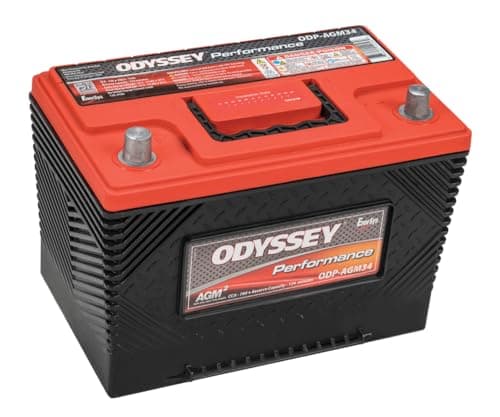
Best Car Batteries
Best Car Batteries
Batteries ranked by published cranking and reserve figures, organized around the fitment check that has to come first.
Guide
Starting vs Deep Cycle
What separates a cranking battery from a deep-cycle one, what dual-purpose genuinely means, and which charger each needs.
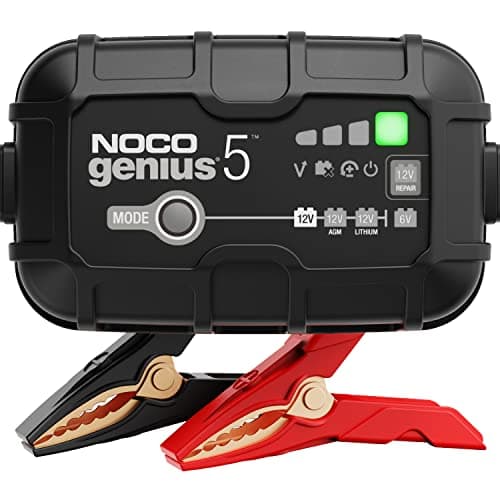
Best AGM Chargers
Best AGM Chargers
Chargers with a genuine AGM mode, what changes about the charge voltage, and how to tell which chemistry your car actually has.
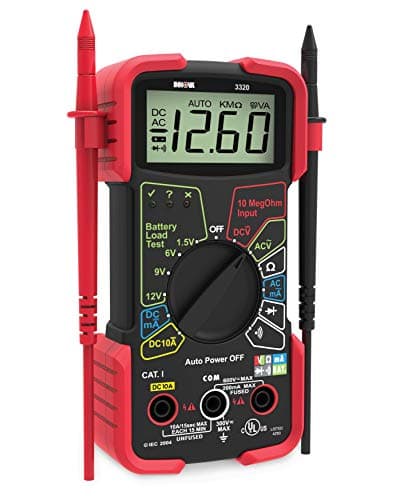
Guide
Is the Battery Bad?
The resting-voltage table, the cranking and charging checks, and how to tell a failed battery from a failing alternator or a parasitic drain.
Found something out of date, or a figure you can source better than we did? Tell us — corrections get read first. Our methodology explains how picks are made, and contact is one click away.