Battery Chargers
How long can a car sit before the battery dies?
The answer is shorter than most people expect, and it has got shorter with every generation of car.
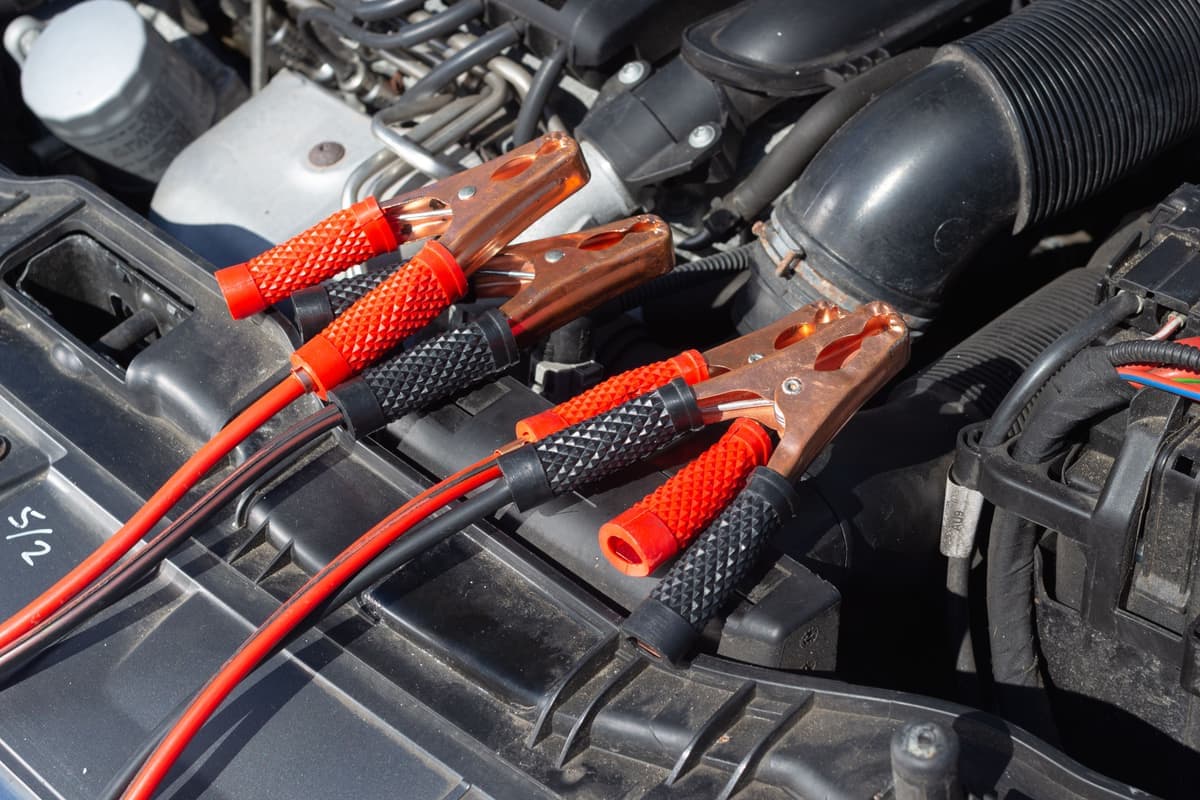
Disclosure: we earn a commission if you buy through the Amazon links on this page, at no extra cost to you. Commission never decides a verdict or a ranking position — read our editorial policy and affiliate disclosure.
How we assessed these: picks are selected from manufacturer specifications, current retailer listings and published owner feedback — not from hands-on testing of every unit. Where a manufacturer does not publish a figure, it is left out rather than estimated.
Short answer
Most modern cars will still start after two weeks parked and are unreliable past about four. Cold weather, an older battery, short-trip use before parking, or an aftermarket accessory shorten that considerably — some cars will not start after ten days. A battery disconnected or on a maintainer can sit for months.
Two separate things are draining the battery while the car sits, and they add together. The first is self-discharge: a lead-acid battery loses charge slowly even with nothing connected to it, because of the chemistry inside it. The second is parasitic drain: the alarm, the keyless-entry receiver, the telematics module, the stereo memory and a handful of control modules that never fully sleep.
Self-discharge has not changed much in decades. Parasitic drain has grown steadily with every generation of car, which is why a car from the 1990s would sit happily for two months and a car from the 2020s may not manage three weeks.
What shortens the window
| Factor | Effect on how long it can sit | Why |
|---|---|---|
| Cold weather | Shorter | Cold reduces available capacity and raises what the starter needs |
| A battery over three years old | Much shorter | Capacity falls with age; there is less reserve to lose |
| Short trips before parking | Shorter | The battery was never fully charged to begin with |
| Aftermarket alarm, dash cam or tracker | Much shorter | Adds continuous draw on top of the factory modules |
| Battery disconnected | Months | Parasitic drain cannot reach a disconnected battery |
| Maintainer connected | Indefinite | Something is replacing what is being drawn |
These are directional, not a formula. The only way to know where your own car sits is to read resting voltage after it has been parked — a battery that reads 12.6 V has a full tank to spend; one that reads 12.2 V is already most of the way down.
That last point is the practical one. A car parked with a full battery and a car parked with a three-quarters-empty battery look identical from the driveway, and the second one will strand you in a fraction of the time. Short-trip driving is the usual reason a battery is not full when it is parked — an alternator is designed to maintain a charged battery, not to refill a deeply drained one.
Why letting it go flat is worse than just inconvenient
A lead-acid battery left in a discharged state sulfates: lead sulfate crystals form on the plates and gradually harden into a form a normal charge cannot reverse. That is permanent capacity loss, and it is why a battery that was flattened once is never quite as good again. The damage starts as soon as the battery is discharged, not weeks later.
A deeply discharged battery can also freeze, because the electrolyte becomes closer to water as the state of charge falls. That is the scenario behind every ruptured battery case in a northern driveway. Why car batteries die in cold weather covers the mechanism, and battery desulfation covers what can and cannot be recovered afterwards.
The two fixes, and when each applies
ODYSSEY's own storage guidance is refreshingly blunt: either leave the battery on a maintainer-type charger that fights the current drains, or simply disconnect the battery cables, because drains from the vehicle cannot damage a battery that is not connected. Those really are the two options, and the choice between them is about whether power reaches the car.
- There is an outlet within reach. Use a maintainer. A 1.25-amp unit like the Battery Tender Plus is designed to stay connected for months, and it means the car is ready whenever you are. This is the better option, because the car keeps its clock, its radio presets and its learned settings.
- No outlet, but the car sees sun. A solar maintainer offsets the drain. Be clear about what it does: it holds a charged battery, it does not recover a flat one, and it does nothing under snow or in a dark garage.
- No power at all, and months of storage. Disconnect the negative cable. You will lose the clock and the radio presets, and on some vehicles a relearn procedure is needed afterwards. Should you disconnect a car battery when storing it goes through the trade-offs.
- It is already flat. Charge it properly before you judge it. A 5-amp charger overnight tells you whether you have a discharged battery or a failed one — see the best battery charger for a dead battery.
What not to do
Do not start the car every few days and let it idle for ten minutes. It feels productive and it is close to useless: an idling engine runs the alternator slowly while the car's own loads draw from it, so the net charge going into the battery over ten minutes is small. Worse, it is enough to make you believe the problem is handled. If you are going to start it, drive it for twenty minutes or more.
Also do not rely on a jump pack as the storage plan. A pack will start the car, which is genuinely useful, but it does nothing about the battery sitting at a damaging state of charge for weeks between those starts. The pack is the roadside tool; the charger is the storage tool. A jump starter versus a battery charger is the direct comparison, and how to tell if a car battery is bad tells you which of the two problems you actually have.
What we would buy
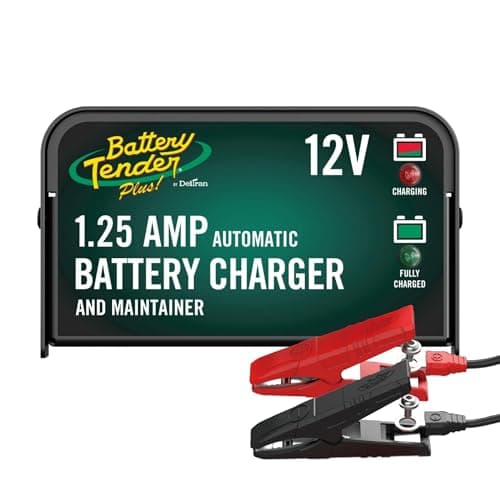
1. Best fix if there is an outlet
Battery Tender Plus 12V 1.25A
Battery Tender · Best for long-term storage on a car battery
The storage-maintainer benchmark: 1.25 amps, automotive batteries up to 80 Ah, a four-step program and a 10-year warranty behind it.
Published specifications
What works
- A 10-year warranty is the longest in this category by a wide margin
- 1.25 A is low enough to leave connected through a winter without heat build-up
- Covers flooded, AGM and gel without a chemistry switch to get wrong
What does not
- 1.25 A is a maintainer current — it will not revive a deeply flat battery quickly
- The 80 Ah ceiling rules out large truck and deep-cycle batteries
- No 6 V mode on the standard Plus; that is a different model in the line
Skip it if
Not the unit for recovering a flat battery on a deadline. Buy it for the car that sits, not the car that stranded you this morning.
#ad Affiliate link · Price as of October 16, 2026
Raw specifications: Battery Tender’s own page for the Battery Tender Plus 12V 1.25A.

2. Best if the battery is already flat
NOCO GENIUS5
NOCO · Best for one car, charging and maintaining
The single most useful charger for one vehicle: 5 amps, 6 V and 12 V, batteries up to 120 Ah, and it can be left connected indefinitely.
Published specifications
What works
- 5 A recharges a car battery overnight and then holds it — one unit does both jobs
- Rated down to -4 °F, so it works in an unheated garage
- The 77-inch cable reaches from a wall outlet to most engine bays without an extension
- 3-year warranty, against 1 year on the jump-starter line
What does not
- 5 A is slow for a deeply discharged large battery — a 100 Ah battery is an all-nighter
- The 120 Ah ceiling rules out larger deep-cycle banks
Skip it if
Not enough charger if you are reviving deep-cycle RV or marine batteries. Step up to the GENIUS10 and its 230 Ah range.
#ad Affiliate link · Price as of October 16, 2026
Raw specifications: NOCO’s own page for the NOCO GENIUS5.
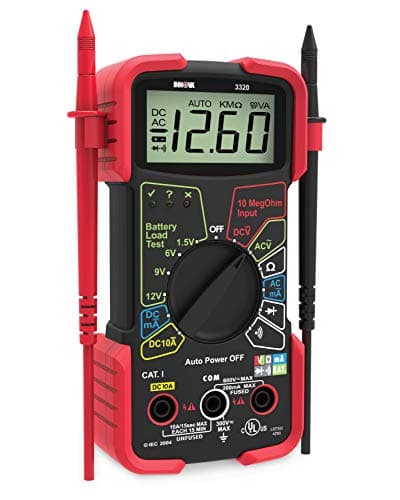
3. Best way to know where you stand
INNOVA 3320 Digital Multimeter
INNOVA · Best for checking whether the battery is the problem
An auto-ranging meter is the difference between guessing and knowing whether you have a dead battery, a dead alternator or a parasitic drain.
This manufacturer does not publish a full specification table for this model on its own site. Rather than repeat figures we cannot source, the assessment below is limited to what the product category and the retailer listing genuinely establish.
What works
- Auto-ranging removes the main source of beginner error
- Reads resting and charging voltage, which is most of automotive electrical diagnosis
- Cheap enough that not owning one is hard to justify
What does not
- A voltage reading is not a load test — a battery can read 12.6 V and still fail under cranking load
- Entry-level leads are the weak point and are worth replacing
Skip it if
Not a scan tool. If you are chasing a check-engine light rather than an electrical fault, you want an OBD2 reader instead.
#ad Affiliate link · Price as of October 16, 2026
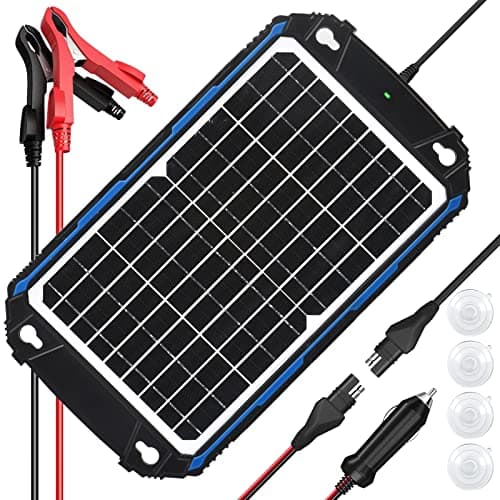
4. Best where no outlet reaches
SUNER POWER 12W Solar Battery Maintainer Pro
SUNER POWER · Best for vehicles stored away from an outlet
For the boat, RV or seasonal vehicle parked where there is no power — a weatherproof 12-watt panel with its own MPPT charge controller, sized to offset parasitic drain rather than to charge from flat.
This manufacturer does not publish a full specification table for this model on its own site. Rather than repeat figures we cannot source, the assessment below is limited to what the product category and the retailer listing genuinely establish.
What works
- Needs no outlet, which is the entire point for a boat on a trailer or a car in long-term storage
- Offsets the parasitic draw that flattens a stored battery over months
- The charge controller is built in, so there is no separate regulator to buy or wire
- Nothing to plug in means nothing to forget
What does not
- Output depends on sun; a shaded or snow-covered panel does nothing
- It maintains a charged battery — it is not a way to recover a flat one
- 12 watts is a maintenance-scale panel, so it will not keep up with a parasitic fault
- The brand publishes no specification sheet of its own, so there are no manufacturer-sourced figures to put in a table
Skip it if
Not a replacement for a wall charger. If an outlet reaches the vehicle, a plug-in maintainer is more reliable and cheaper.
#ad Affiliate link · Price as of October 16, 2026
Key takeaways
- Two weeks is safe for most modern cars; four weeks is where it gets unreliable.
- Self-discharge plus parasitic drain add together, and parasitic drain has grown with every car generation.
- Cold, an older battery, short trips and aftermarket accessories all shorten the window sharply.
- A battery left discharged sulfates permanently — the damage starts immediately, not later.
- The two real fixes are a maintainer or disconnecting the cables. Pick based on whether power reaches the car.
- Idling the car for ten minutes every few days achieves almost nothing.
How we sourced this
Every figure on this page came from one of the following. Where a manufacturer or regulator does not publish a number, we say so rather than estimate it.
- ODYSSEY Battery — frequently asked questions (winter storage, parasitic drain, maintainer use)
- Battery Tender Plus 12V 1.25A product page
- NOCO GENIUS5 published specifications
- NOCO GENIUS5 product page — start-voltage sensor, Force Mode, thermal sensor
- Battery Tender 12V 5W mountable solar battery charger (021-1172) product page
Common questions
- How long can a car sit before the battery goes dead?
- Most modern cars start reliably after two weeks parked and become unreliable somewhere past four. The range is wide because parasitic drain varies between vehicles and cold weather, battery age and short-trip use before parking all shorten it. Some cars with aftermarket accessories struggle after ten days.
- Will a car battery recover after sitting too long?
- Partly. A full charge from a proper charger will restore most of the capacity, but a battery left discharged forms hard lead sulfate on its plates, and that part is permanent. The longer it sat flat, the more capacity you do not get back.
- Does starting the car once a week keep the battery charged?
- Not if you only idle it. Ten minutes of idling puts very little net charge into a battery, because the engine is turning the alternator slowly while the car's own loads draw from it. A drive of twenty minutes or more does real work; a brief idle mostly provides false reassurance.
- Is it better to disconnect the battery or use a maintainer?
- A maintainer, if an outlet reaches the car — the battery stays full and the vehicle keeps its clock, presets and learned settings. Disconnecting is the fallback where no power is available, and it works because parasitic drain cannot reach a disconnected battery.
- How long can a new car battery sit unused?
- Longer than an old one, but the same rules apply: it is losing charge to self-discharge and to the car's always-on modules from the day it is fitted. A new battery parked full will usually outlast an older one by a week or two, not by months.
More in Battery Chargers
A jump pack gets you moving. A charger is how you stop needing one. This is the home half of the problem.
Read next
Guide
Disconnecting for Storage
When pulling the negative terminal is the right call, what it costs you in settings and relearns, and why a maintainer beats it whenever power reaches the vehicle.
Guide
Dead Battery in the Cold
The mechanism behind winter no-starts, why a new battery can still fail, and the cheap prevention that works better than a bigger jump pack.
Best Battery Maintainers
Best Maintainers
Low-current maintainers for seasonal and stored vehicles, including the solar option for anything parked away from an outlet.
Guide
Is the Battery Bad?
The resting-voltage table, the cranking and charging checks, and how to tell a failed battery from a failing alternator or a parasitic drain.
Found something out of date, or a figure you can source better than we did? Tell us — corrections get read first. Our methodology explains how picks are made, and contact is one click away.