Battery Chargers
The best battery chargers for a dead battery
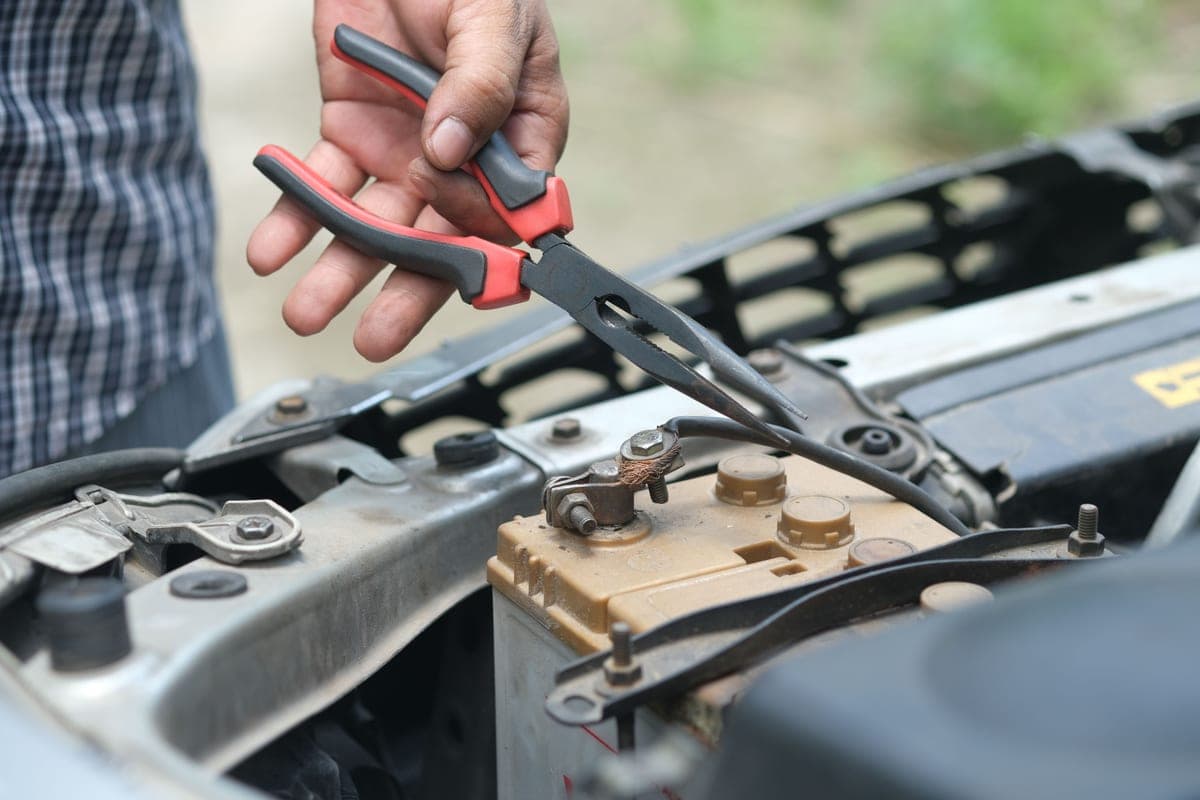
The problem with a truly dead battery is not charging it. It is getting the charger to acknowledge it exists in the first place.
Disclosure: we earn a commission if you buy through the Amazon links on this page, at no extra cost to you. Commission never decides a verdict or a ranking position — read our editorial policy and affiliate disclosure.
How we assessed these: picks are selected from manufacturer specifications, current retailer listings and published owner feedback — not from hands-on testing of every unit. Where a manufacturer does not publish a figure, it is left out rather than estimated.
Short answer
For a deeply discharged car battery, the NOCO GENIUS5 is the right charger: its start-voltage sensor detects and charges batteries as low as 1 volt, and Force Mode charges a completely dead battery down to zero volts manually. Step up to the GENIUS10 if you need the car back the same day, or the Schumacher SC1281 if you need to start the engine now as well as charge it.
The frustrating part of a dead battery is rarely the charging. It is plugging in a charger and watching it sit there doing nothing, because most automatic chargers look for a minimum voltage before they will begin — a safety feature that becomes the problem when the battery is below it.
Quick picks
Tap any row to jump to the full write-up. Scoring criteria are published in full on our methodology page.
| # | Product | Best for | Our read | Price |
|---|---|---|---|---|
| 1 |  NOCO GENIUS5 Best overall for a dead car battery | One car, charging and maintaining | Detects from 1 V, Force Mode to 0 V | Check price on Amazon #ad Affiliate link · We show no price here; Amazon shows the current one |
| 2 |  NOCO GENIUS10 Best when you need it back today | Several vehicles or a deep-cycle bank | Same recovery, twice the current | Check price on Amazon #ad Affiliate link · We show no price here; Amazon shows the current one |
| 3 |  Schumacher SC1281 Best if you also need to start it now | Fast charging plus engine-start assist | 30 A boost and a 100 A engine start | Check price on Amazon #ad Affiliate link · We show no price here; Amazon shows the current one |
| 4 | 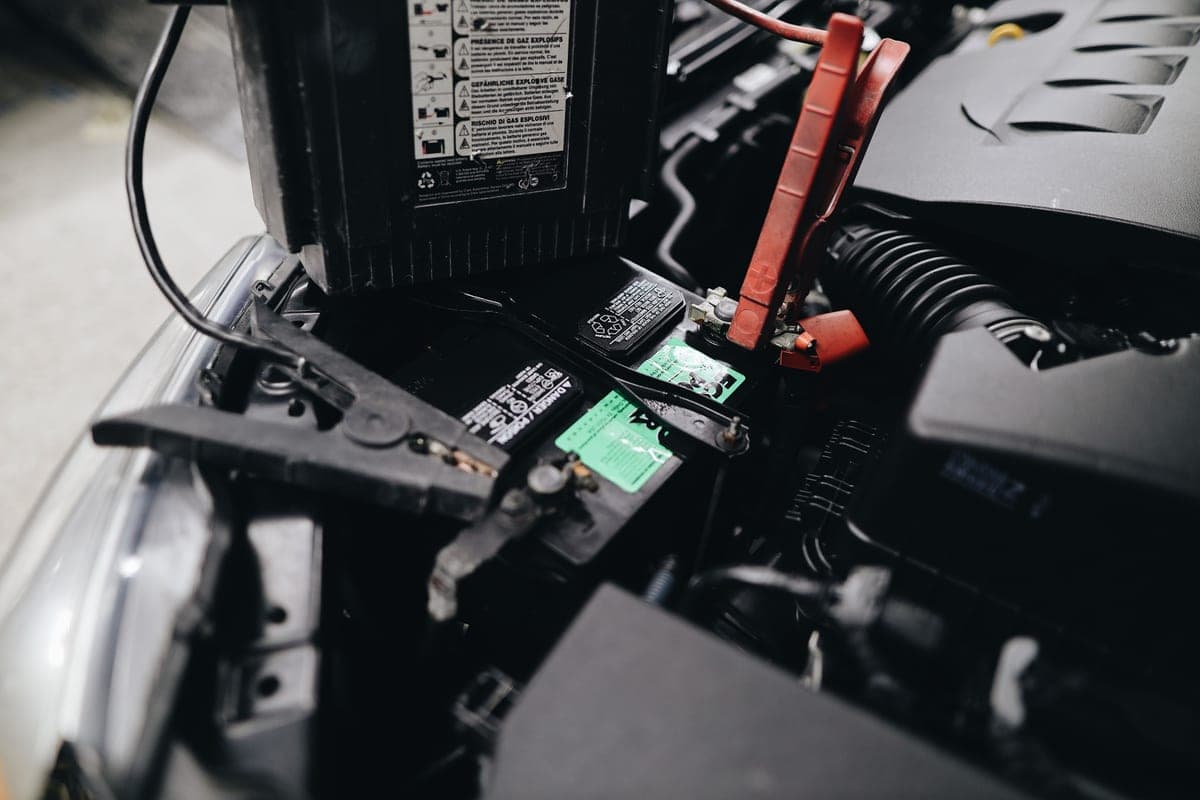 NOCO Boost Plus GB40 Best for the battery that died away from home | Most cars and small SUVs | Starts the engine; charging comes later | Check price on Amazon #ad Affiliate link · We show no price here; Amazon shows the current one |
Why your old charger refuses to start
An automatic charger checks for a battery before it energizes its clamps. That check exists for good reasons: it stops the charger pushing current into reversed clamps, into a short, or into nothing at all. The side effect is that a battery sitting below the detection threshold reads, to the charger, as no battery.
Older and cheaper units often set that threshold around the point where a lead-acid battery is already well discharged. A battery left with a dome light on for a week can fall below it easily. The charger is not broken and neither, necessarily, is the battery — they simply cannot see each other.
NOCO's answer across the GENIUS range is two-part, and it is the reason these chargers dominate this particular search. The start-voltage sensor detects and charges batteries as low as 1 volt. Below that, Force Mode is turned on manually and charges all the way down to zero volts — the user takes responsibility for confirming there is a real battery on the clamps, and the charger stops second-guessing.
Flat, or finished? Tell them apart first
No charger recovers a battery with a shorted or open cell, and it is worth spending two minutes establishing which you have before you spend an evening charging.
- Read resting voltage with a multimeter. A battery that has been standing for a few hours and reads far below its nominal 12.6 volts is discharged. One that reads near zero across the terminals is more likely to have an internal failure. A basic multimeter does this in ten seconds.
- Look at the case. Swelling, a cracked case or any sign of leakage ends the exercise. Replace it.
- Watch what happens in the first hour of charging. A discharged battery accepts current and its voltage climbs. One that takes current with no voltage rise, or heats up noticeably, has an internal fault.
- Get a free load test. Most auto parts stores do this at no charge, and it is the test that distinguishes a battery that holds a charge from one that only appears to.
Will a jump starter start a dead battery covers the same distinction from the other direction, and the car battery picks cover the replacement if that is where this ends.
Charging it, versus starting it right now
These are different problems and the picks reflect both. Charging restores the battery; starting bypasses it. If the car has to move in the next ten minutes, you need the second one.
| Smart charger | Charger with engine start | Lithium jump pack | |
|---|---|---|---|
| Restores the battery | Yes | Yes | No |
| Starts the engine now | No | Yes, plugged in | Yes, anywhere |
| Needs a wall outlet | Yes | Yes | No |
| Works on a roadside | No | No | Yes |
| Recovers from below 1 V | GENIUS range, via Force Mode | Depends on the model | Not applicable |
| Example here | NOCO GENIUS5 / GENIUS10 | Schumacher SC1281 | NOCO GB40 |
The honest answer for most households is a charger at home and a pack in the car. Jump starter versus battery charger works through why one does not replace the other.
What the Schumacher adds
The SC1281 is the garage answer rather than the roadside one. Schumacher publishes a microprocessor-controlled 2 to 6 amp charge, a 30 amp boost charge and a 100 amp engine start, with automatic 6 V and 12 V detection and a desulfation reconditioning mode. It also carries a built-in battery and alternator tester, which addresses the diagnosis problem directly.
What it cannot do is help you anywhere without an outlet. It is a 120 V AC unit that must stay plugged in during use. If your dead battery happens in a driveway, it is excellent. If it happens in a parking lot, it is at home.
After it is charged: stopping the repeat
A battery that went flat once has a reason. If nothing was left switched on, the usual suspects are a parasitic drain, a failing alternator, or a battery near the end of its life — and a deep discharge itself causes sulfation, which permanently costs capacity. Pulse repair, which both GENIUS models use, addresses sulfation but does not undo a hardware fault. Battery desulfation is honest about the limits.
If the car sits for long periods, the real fix is a maintainer rather than repeated rescues. Battery maintainers and trickle chargers covers that, and how long you can leave one connected answers the question everyone asks next.
The picks
1. Best overall for a dead car battery
NOCO GENIUS5
NOCO · Best for one car, charging and maintaining
The single most useful charger for one vehicle: 5 amps, 6 V and 12 V, batteries up to 120 Ah, and it can be left connected indefinitely.
Published specifications
What works
- 5 A recharges a car battery overnight and then holds it — one unit does both jobs
- Rated down to -4 °F, so it works in an unheated garage
- The 77-inch cable reaches from a wall outlet to most engine bays without an extension
- 3-year warranty, against 1 year on the jump-starter line
What does not
- 5 A is slow for a deeply discharged large battery — a 100 Ah battery is an all-nighter
- The 120 Ah ceiling rules out larger deep-cycle banks
Skip it if
Not enough charger if you are reviving deep-cycle RV or marine batteries. Step up to the GENIUS10 and its 230 Ah range.
#ad Affiliate link · We show no price here; Amazon shows the current one
Raw specifications: NOCO’s own page for the NOCO GENIUS5.
2. Best when you need it back today
NOCO GENIUS10
NOCO · Best for several vehicles or a deep-cycle bank
Twice the current of the GENIUS5 and nearly twice the capacity range — 10 amps up to 230 Ah, which is where RV, marine and multi-vehicle households land.
Published specifications
What works
- 10 A halves the charge time on a flat car battery against a 5 A unit
- The 230 Ah range covers deep-cycle RV and marine batteries the GENIUS5 cannot
- Same -4 °F cold rating and 3-year warranty as the smaller GENIUS units
What does not
- 10 A into a small motorcycle battery is more current than it wants — use a 1 A or 2 A unit there
- Heavier and pricier than a GENIUS5 for a household with one car
Skip it if
Not the right charger for a single motorcycle, ATV or lawn-tractor battery. Small batteries want small current.
#ad Affiliate link · We show no price here; Amazon shows the current one
Raw specifications: NOCO’s own page for the NOCO GENIUS10.
3. Best if you also need to start it now
Schumacher SC1281
Schumacher · Best for fast charging plus engine-start assist
A shop-style charger for the garage: a 6-amp automatic charge, a 30-amp boost and a 100-amp engine start, for people who would rather fix the battery than carry a pack.
Published specifications
- Charging current
- 2 A to 6 A, microprocessor-controlled source
- Boost charge
- 30 A source
- Engine start
- 100 A source
- Battery voltages
- 6 V and 12 V, detected automatically source
- Input voltage
- 120 V AC — must stay plugged in source
- Chemistries
- Standard lead-acid, AGM and gel source
- Reconditioning
- Desulfation mode source
- Testing
- Built-in battery and alternator tester source
- Safety
- Reverse-polarity protection, automatic shutoff source
What works
- A 30 A boost charge puts a flat battery back in hours rather than overnight
- 100 A engine start covers the case where the battery is too far gone to take a charge quickly
- Automatic 6 V / 12 V detection reduces the chance of selecting the wrong mode
- The built-in battery and alternator tester tells you whether charging is even the right answer
What does not
- Mains-powered and bulky — a garage tool, not a trunk tool
- High-current charging is harder on an ageing battery than a slow charge
- Engine-start mode is no substitute for a portable pack away from home
Skip it if
Useless on the roadside — there is no outlet on the shoulder of a highway. This is the home half of the problem; a lithium pack is the away half.
#ad Affiliate link · We show no price here; Amazon shows the current one
4. Best for the battery that died away from home
NOCO Boost Plus GB40
NOCO · Best for most cars and small suvs
The default answer for a four- or six-cylinder car: 1,000 peak amps, 24 watt-hours, and light enough that it actually stays in the trunk.
Published specifications
What works
- 24 Wh sits far under the 100 Wh carry-on threshold, so flying with it needs no airline approval
- 2.45 lb and pocketable — the size that decides whether a tool is still in the trunk six months later
- IP65 enclosure, so a wet shoulder in the rain is not a problem
- Reverse-polarity protection means a backwards clamp does not spark
What does not
- 1,000 peak amps runs out of headroom above a 6.0 L gas engine
- The 3.0 L diesel ceiling rules out most modern diesel pickups
- 24 Wh is a small reserve — it is a jump starter, not a power bank substitute
Skip it if
Not the one to buy if you drive a diesel pickup or a big V8. You would be at the edge of its rating on a cold morning, which is exactly when you want margin.
#ad Affiliate link · We show no price here; Amazon shows the current one
Raw specifications: NOCO’s own page for the NOCO Boost Plus GB40.
Key takeaways
- Most automatic chargers refuse a battery below their detection threshold — that is the real problem.
- The NOCO GENIUS range detects from 1 volt and charges from zero in Force Mode.
- Force Mode is manual because it bypasses a safety check; confirm the clamps and the battery first.
- No charger fixes a shorted cell. Establish flat versus failed before spending the evening.
- A charger restores the battery; only a pack or a boost mode starts the engine right now.
How we sourced this
Every figure on this page came from one of the following. Where a manufacturer or regulator does not publish a number, we say so rather than estimate it.
- NOCO GENIUS5 published specifications
- NOCO GENIUS10 published specifications
- NOCO GENIUS5 product page — start-voltage sensor, Force Mode, thermal sensor
- NOCO GENIUS10 product page — start-voltage sensor, Force Mode, pulse repair
- Schumacher SC1281 battery charger and engine starter product page
- NOCO GB40 published specifications
Common questions
- What is the best battery charger for a completely dead battery?
- One that can start charging below the normal detection threshold. NOCO's GENIUS range detects and charges batteries as low as 1 volt, and Force Mode charges a completely dead battery down to zero volts manually. The GENIUS5 covers one car; the GENIUS10 does the same job at twice the current.
- Why will my charger not charge a dead battery?
- Most automatic chargers check for a minimum voltage before energizing their clamps, as protection against reversed connections and shorts. A deeply discharged battery sits below that threshold, so the charger reads it as no battery at all. A charger with a low detection threshold, or a manual force mode, is the way around it.
- Can a dead car battery be recharged?
- A discharged one, yes — it will accept a charge and its voltage will climb as it does. A battery with a shorted or open cell cannot be recovered by any charger. The distinguishing signs are a battery that takes current without its voltage rising, one that heats up, or one that fails a free load test at a parts store.
- How long does it take to charge a dead car battery?
- It depends on the battery's capacity and the charger's current, and doubling the current roughly halves the time. A 5-amp charger on a normal car battery is an evening's work from deeply discharged; a 10-amp charger is roughly half that. Rushing it with very high current is harder on an aging battery.
More in Battery Chargers
A jump pack gets you moving. A charger is how you stop needing one. This is the home half of the problem.
Read next
Best Car Battery Chargers
Best Car Battery Chargers
Our main charger roundup: 1 A to 10 A units matched to battery capacity, with published cold ratings and warranties.
How to
How to Charge a Battery
The full sequence with a portable charger: connection order, chemistry setting, what the stages mean, and when to remove the battery first.
Guide
How Long to Charge
A charge-time table by amps and capacity, the arithmetic behind it, and why the final stage is always slower than the calculation suggests.
Guide
Will It Start a Dead Battery?
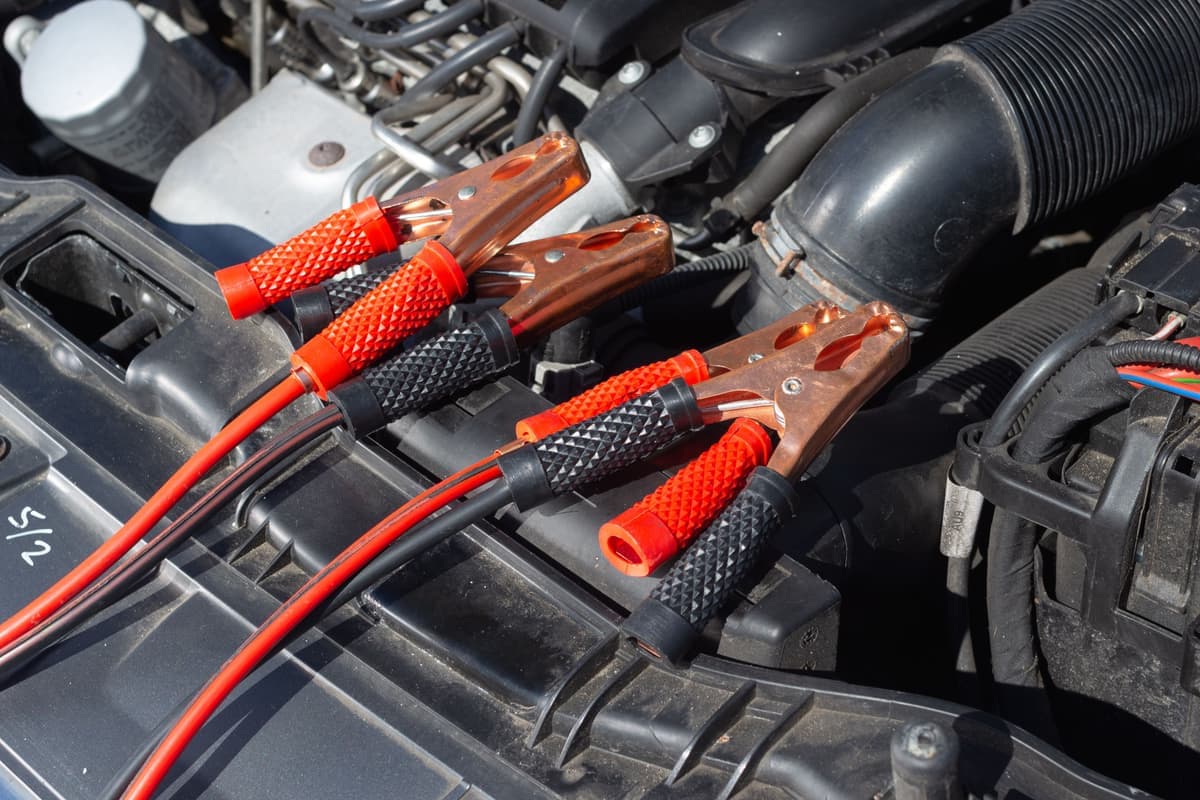
The difference between a discharged battery and a failed one, what a pack can and cannot do about each, and how to tell which you have.

Head to head
GENIUS5 vs GENIUS10
Both charge from 1 volt, both have Force Mode and pulse repair. The decision comes down to battery capacity and how many vehicles you own.
Found something out of date, or a figure you can source better than we did? Tell us — corrections get read first. Our methodology explains how picks are made, and contact is one click away.