Battery Chargers
Battery Tender alternatives
The Battery Tender Plus is the storage-maintainer benchmark, and it is a maintainer first. Here is what to buy instead when you need recovery current, a bigger ceiling, 6 volts, a lithium profile or no outlet at all.

Disclosure: we earn a commission if you buy through the Amazon links on this page, at no extra cost to you. Commission never decides a verdict or a ranking position — read our editorial policy and affiliate disclosure.
How we assessed these: this page compares published specifications against the product it is an alternative to. Every current, ceiling, warranty and chemistry figure below is each maker's own published number, and nothing here comes from our own measurement.
Short answer
The best all-round alternative to a Battery Tender Plus is the NOCO GENIUS5: 5 amps against the Plus's 1.25, a published ceiling of 120 Ah against 80, and both 6-volt and 12-volt support, so one unit recovers a flat car battery and then maintains it. If the batteries are small, the GENIUS2 is the cheaper and more appropriate buy. If you need a flat battery back in an afternoon, the Schumacher SC1281 adds a 30-amp boost and a 100-amp engine start. For a LiFePO4 bank, the Victron Blue Smart's dedicated lithium profile is the right tool, and where no outlet reaches the vehicle, the SUNER POWER solar maintainer is the only one of the six that works at all.
Quick picks
Tap any row to jump to the full write-up. Scoring criteria are published in full on our methodology page.
| # | Product | Best for | Our read | Price |
|---|---|---|---|---|
| 1 | 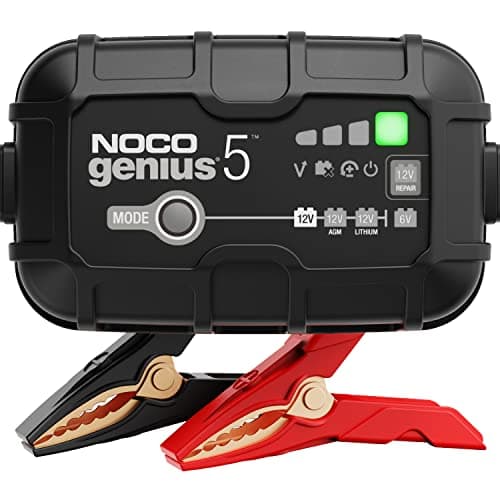 NOCO GENIUS5 Best overall alternative | One car, charging and maintaining | 5 A, up to 120 Ah, 6 V and 12 V — it recovers as well as it maintains | $69.95View on Amazon #ad Affiliate link · Price as of November 10, 2026 |
| 2 | 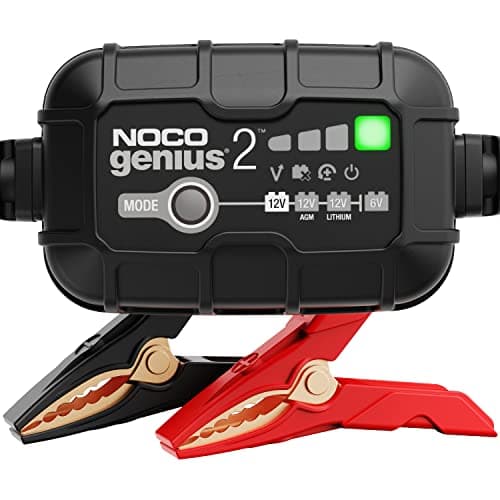 NOCO GENIUS2 Budget pick, and best for small batteries | Motorcycles, ATVs and lawn equipment | 2 A up to 40 Ah, which is the right size for a bike or a mower | $49.95View on Amazon #ad Affiliate link · Price as of November 10, 2026 |
| 3 | 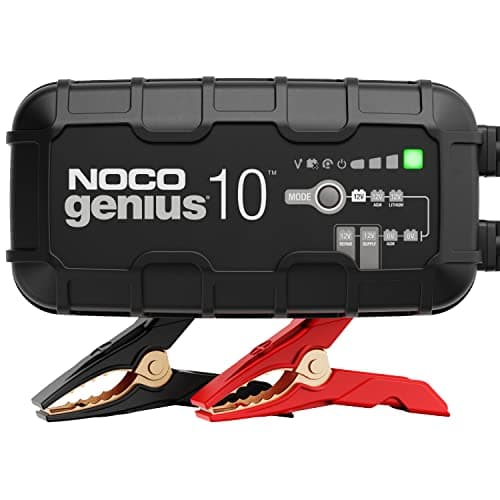 NOCO GENIUS10 Best for a bigger bank | Several vehicles or a deep-cycle bank | 10 A and a published 230 Ah ceiling, against the Plus's 80 | $99.87View on Amazon #ad Affiliate link · Price as of November 10, 2026 |
| 4 | 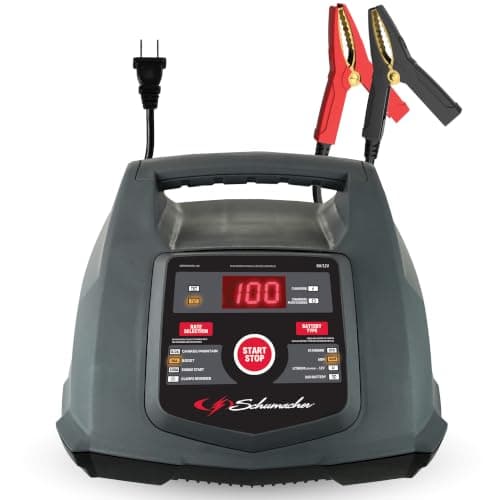 Schumacher SC1281 Best for reviving a flat battery | Fast charging plus engine-start assist | 30 A boost and a 100 A engine start, plus 6 V support | $89.99View on Amazon #ad Affiliate link · Price as of November 10, 2026 |
| 5 | 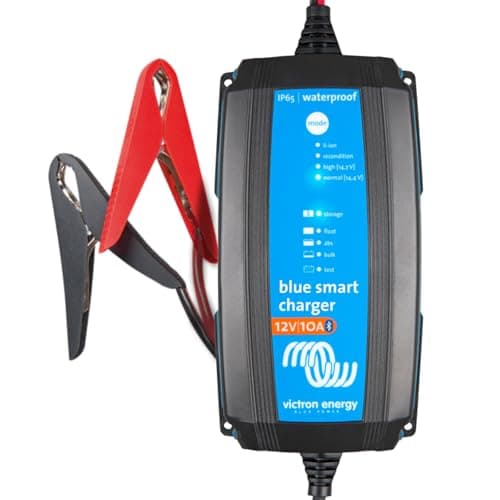 Victron Blue Smart IP65 12V 10A Best for lithium | A lithium house bank you want to set precisely | A deliberate Li-ion profile, set in an app, with a 5-year warranty | Check price on Amazon #ad Affiliate link · Amazon shows the current price |
| 6 | 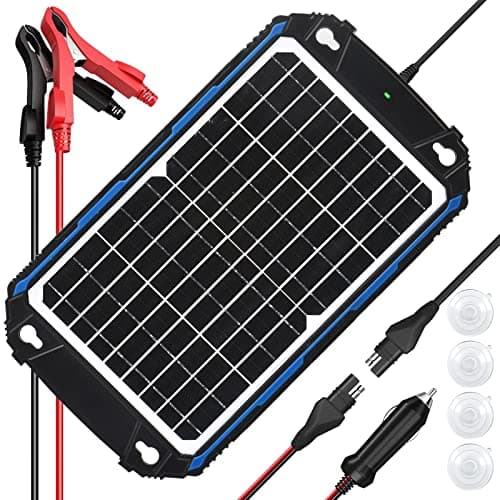 SUNER POWER 12W Solar Battery Maintainer Pro Best where there is no outlet | Vehicles stored away from an outlet | A 12 W panel with its own controller — no mains needed | $53.99$59.99View on Amazon #ad Affiliate link · Price as of November 10, 2026 |
What the Battery Tender Plus is known for
Being precise about this matters, because every alternative below only makes sense against a specific part of it. Battery Tender publishes, for the Plus: 1.25 amps at 12 volts, automotive batteries up to 80 amp-hours, support for flooded, AGM and gel cell chemistries, a four-step charge program, and a 10-year warranty.
What that buys is the most trustworthy set-and-forget maintainer in the category. It is deliberately low-current, so it generates almost no heat across a winter; it switches to a float stage and holds there; and the warranty is longer than anything else here by a wide margin on a device whose entire job is to be connected and ignored for years. It is the reason it is a top pick on the best battery maintainers and trickle chargers and why the Battery Tender Plus review exists. None of that is in dispute on this page.
Five reasons to buy something else
- Recovery current. 1.25 amps is maintenance current. A flat 70 Ah car battery at 1.25 amps is a multi-day proposition; at 5 amps it is overnight and at 30 amps it is an afternoon.
- Capacity ceiling. Battery Tender's published ceiling for the Plus is 80 Ah on automotive batteries. A large truck battery, an RV house bank or a pair of deep-cycle batteries sits above that.
- 6-volt support. The standard Plus is a 12-volt unit. If there is a tractor, an antique or a 6-volt classic in the garage, that is a different model in the Battery Tender line — or a NOCO GENIUS5 or a Schumacher, which publish both voltages on one unit.
- Lithium. A LiFePO4 battery needs a deliberate lithium charge profile with a different voltage curve. The Plus publishes flooded, AGM and gel; lithium is a specification to buy rather than infer.
- No outlet. The Plus is a mains device. In a field shelter, on a mooring or in a barn with no power, it cannot do anything at all.
And worth stating plainly: warranty is not on that list. Ten years on a maintainer is genuinely the best in this category, and if the only thing you want is a device to leave on a stored car for a decade, the honest answer is that the Plus is hard to beat and you should keep it. These alternatives exist for the cases where current, capacity, voltage, chemistry or siting is the binding constraint. NOCO GENIUS versus Battery Tender is the head-to-head if the choice is only between those two brands.
| Charger | Current | Published ceiling | Voltages | Needs mains | Warranty |
|---|---|---|---|---|---|
| Battery Tender Plus (baseline) | 1.25 A | Up to 80 Ah automotive | 12 V | Yes | 10-year |
| NOCO GENIUS5 | 5 A | Up to 120 Ah | 6 V and 12 V | Yes | 3-year limited |
| NOCO GENIUS2 | 2 A | Up to 40 Ah | Not published for this model | Yes | 3-year limited |
| NOCO GENIUS10 | 10 A | Up to 230 Ah | 6 V and 12 V | Yes | 3-year limited |
| Schumacher SC1281 | 2 to 6 A, 30 A boost, 100 A start | Not published | 6 V and 12 V | Yes | Not published |
| Victron Blue Smart IP65 12V 10A | 10 A | Not published | 12 V | Yes | 5-year standard |
| SUNER POWER 12W Solar Maintainer Pro | 12 W panel | Not published | 12 V | No | Not published |
Every figure is the maker's own published specification, taken from the pages linked in the sources section. Cells reading "not published" mean the manufacturer does not state that figure for that model — SUNER POWER publishes no specification sheet at all, and neither Schumacher nor Victron publishes an amp-hour ceiling. We would rather show a gap than an estimate.
If the problem is that it charges too slowly
This is the most common reason people look past the Plus, and it is a fair one. A maintainer at 1.25 amps is doing exactly what it was designed to do: replace the small parasitic drain a parked car imposes and hold the battery at float. It was never designed to bring a flat battery back on a deadline, and Battery Tender's own specification makes that clear rather than hiding it.
The GENIUS5 is the sensible step. NOCO publishes 5 amps, a 120 Ah ceiling and an operating range down to minus 4 degrees Fahrenheit, which matters because the garage this thing lives in is probably unheated. It recovers a flat car battery overnight and then floats indefinitely, so it replaces the Plus rather than supplementing it. The trade is the warranty: three years against ten.
If overnight is still too slow — a shop, a fleet, a car you need running this afternoon — the Schumacher SC1281 is the different kind of tool. It publishes a 2 to 6 amp automatic charge, a 30-amp boost and a 100-amp engine start, plus 6-volt and 12-volt detection and a built-in tester. It is a bench charger, not something you leave on a stored car for a season, and it has to stay plugged into a 120-volt outlet. How long to charge a car battery has the arithmetic for picking between these on your own battery's capacity.
If the problem is the 80 amp-hour ceiling
An amp-hour ceiling is not a safety limit; it is the maker telling you where the charger stops being effective. Above it, the unit will still push current, but it will take an unreasonable length of time to finish the battery — and an unfinished lead-acid battery sulfates, which is the slow way to lose capacity.
The GENIUS10 publishes 10 amps and a 230 Ah range, which covers deep-cycle RV and marine banks that the Plus and the GENIUS5 both leave short. That is the pick for a travel trailer, a boat with a house battery or a household running several vehicles off one charger. The best deep-cycle battery chargers and the best battery charger for multiple batteries go further into both cases, and what amp battery charger do I need is the sizing calculation.
Going the other way is just as important. If the battery in question is a motorcycle, ATV or lawn-tractor battery of 10 to 20 amp-hours, the GENIUS2 at 2 amps is both cheaper than the Plus and better matched to it, and the Plus's 1.25 amps is in the same sensible range. What you should not do is point a 10-amp charger at a small powersports battery. The best battery maintainer for motorcycles is the page for that end of the range.
If any battery in the picture is lithium
Buy for it deliberately. A LiFePO4 battery wants a different voltage curve from lead-acid and has to cooperate with its own battery management system, and a charger with no stated lithium profile is not the place to find out whether it copes. The Plus publishes flooded, AGM and gel support, which is honest and which does not include lithium.
The Victron Blue Smart IP65 publishes eight pre-programmed profiles including a dedicated Li-ion setting selected in the VictronConnect app, 10 amps of charge current, IP65 ingress protection and a 5-year standard warranty. The app is the real argument: it shows you what stage the charger is in, which is the only practical way to confirm a lithium bank is actually being finished. The honest cons are that Victron publishes no amp-hour range, so sizing is on you, and that setup assumes a phone. The best lithium battery chargers covers the wider 12-volt lithium question.
If the vehicle is parked where no outlet reaches
No mains charger solves this, which makes it the one case where the alternative is not a better charger but a different category. The SUNER POWER 12-watt solar maintainer has its own MPPT charge controller built in, is weatherproof, and is sized to offset the parasitic drain on a stored battery rather than to charge one from flat.
Be clear about the limits, because they are real: output depends on sun, a shaded or snow-covered panel does nothing, 12 watts will not keep up with a parasitic fault, and the brand publishes no specification sheet of its own. If an outlet reaches the vehicle, a plug-in maintainer is more reliable and cheaper. The best solar battery maintainers sets out where the category earns its place and where it does not.
What we would buy
One car, and you want a single unit that both recovers and maintains: the NOCO GENIUS5. It is the honest replacement for a Plus rather than a supplement to it, and the only thing you give up is seven years of warranty. A motorcycle, mower or ATV: the GENIUS2, which is the cheapest way onto this page and the right current for the job. An RV, boat or a household of several vehicles: the GENIUS10 for its 230 Ah ceiling.
A garage where batteries arrive flat and leave the same day: the Schumacher SC1281, accepting that it is a bench tool and that Schumacher publishes no warranty term. A lithium bank: the Victron Blue Smart, for a profile you select rather than hope for. A vehicle with no power nearby: the SUNER POWER panel, with its limits understood.
And if after all of that your actual need is a device to leave on a stored classic for the next decade and never think about: keep the Battery Tender Plus. That is the job it was built for and the warranty says the maker knows it. If you would rather see this comparison from the other direction, NOCO GENIUS alternatives runs the same exercise with the GENIUS line as the baseline.
Key takeaways
- The Plus publishes 1.25 A, an 80 Ah automotive ceiling, flooded/AGM/gel support and a 10-year warranty.
- Its warranty is the best here — leave if current, capacity, voltage, chemistry or siting binds, not on brand preference.
- GENIUS5 is the all-round replacement: 5 A, 120 Ah, 6 V and 12 V, at a 3-year warranty.
- GENIUS2 is the cheaper and more appropriate buy for a 10-20 Ah powersports battery.
- GENIUS10's published 230 Ah range is the answer when 80 Ah is the binding limit.
- Schumacher SC1281 is a bench charger with a 30 A boost and a 100 A start, not a storage maintainer.
- Lithium needs a stated Li-ion profile; the Victron publishes one and an app that shows the stage.
- No outlet is the only case the whole mains category cannot answer — that is what the solar panel is for.
How we sourced this
Every figure on this page came from one of the following. Where a manufacturer or regulator does not publish a number, we say so rather than estimate it.
Common questions
- Is the NOCO GENIUS5 a straight replacement for a Battery Tender Plus?
- For most people, yes. NOCO publishes 5 amps against the Plus's 1.25, a 120 amp-hour ceiling against 80, and 6-volt as well as 12-volt support, and it is designed to be left connected indefinitely. The only thing you give up is warranty length: 3 years against Battery Tender's 10.
- Why is the Battery Tender Plus so slow?
- Because it is a maintainer by design. 1.25 amps is sized to replace the small parasitic drain a parked vehicle imposes and then hold the battery at float, which it does with almost no heat across a winter. Recovering a flat 70 amp-hour battery at that current takes days, and Battery Tender's own specification says as much rather than hiding it.
- Will a Battery Tender charge a lithium battery?
- The standard Plus publishes support for flooded, AGM and gel cell lead-acid chemistries, not lithium. A LiFePO4 battery needs a deliberate lithium charge profile and has to work with its own battery management system, so buy a charger that publishes one — the Victron Blue Smart IP65 does, with the profile selected in an app.
- What can I use on a 6-volt battery instead?
- The standard Battery Tender Plus is 12-volt only. The NOCO GENIUS5 and GENIUS10 both publish 6-volt and 12-volt support on one unit, and the Schumacher SC1281 detects either automatically. Battery Tender does sell 6-volt models separately; it is just not this one.
- Does a bigger charger damage a small battery?
- Pushing 10 amps into a 10 to 20 amp-hour powersports battery is more current than it wants, and sustained overcurrent builds heat. Match the charger to the battery: 1 to 2 amps for motorcycle and mower batteries, 5 amps for a car, 10 amps for a deep-cycle bank. That is what the published amp-hour ranges on each unit are telling you.
- Can I leave any of these connected all winter?
- The GENIUS units, the Plus and the Victron are all designed for it, transitioning to a float or maintenance stage when the battery is full. The Schumacher SC1281 is a bench charger and is not the tool for a six-month storage period. An old unregulated trickle charger with no float stage should not be left connected for months on any battery, and never on a sealed AGM. If the battery in question is AGM, [the best AGM car batteries](/battery-chargers/best-agm-car-batteries) explains why the charge profile matters more there than anywhere else.
More in Battery Chargers
A jump pack gets you moving. A charger is how you stop needing one. This is the home half of the problem.
Read next
Review
Battery Tender Plus Review
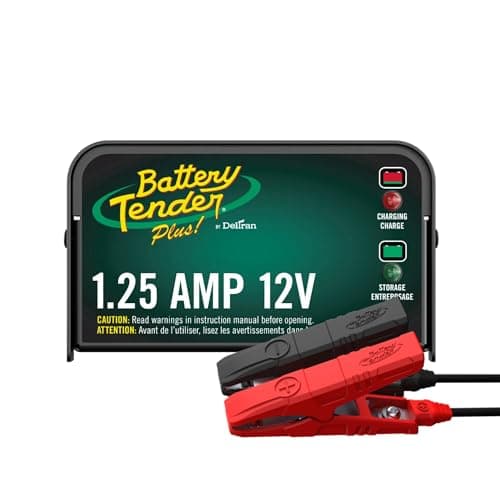
1.25 A at 12 V, automotive batteries up to 80 Ah, flooded/AGM/gel, four-step program, 10-year warranty. Built for storage, not recovery.
Head to head
NOCO vs Battery Tender
The two brands most people choose between, compared on their own published current, capacity ceilings and warranties — and the one question that settles it.
Best GENIUS alternative
GENIUS Alternatives
What the GENIUS line is known for, from NOCO's own specifications — then four alternatives that each beat it on one specific, stated thing.
Best Battery Maintainers
Best Maintainers
Low-current maintainers for seasonal and stored vehicles, including the solar option for anything parked away from an outlet.
Review
NOCO GENIUS5 Review
5 A, 6 V and 12 V, up to 120 Ah, -4 °F cold rating, 77-inch cable, three-year warranty. The default one-car answer.
Best Solar Maintainers
Best Solar Maintainers
Solar maintainers for vehicles stored away from an outlet, with a clear statement of what they cannot do and why a controller matters.
Found something out of date, or a figure you can source better than we did? Tell us — corrections get read first. Our methodology explains how picks are made, and contact is one click away.