Tire Inflators
The best tire inflators for ATV and UTV tires
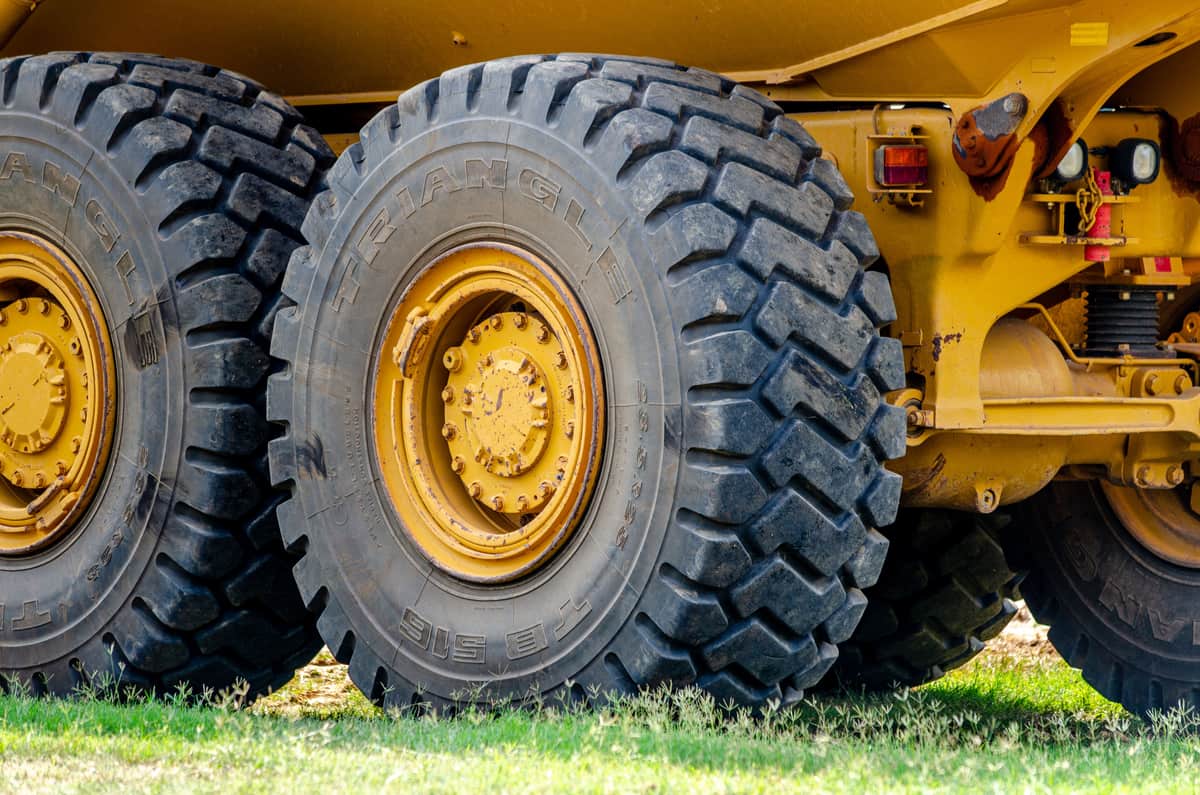
Everything about a quad's tires argues against the usual advice. You need volume, not pressure, and a gauge that is honest below 10 PSI.
Disclosure: we earn a commission if you buy through the Amazon links on this page, at no extra cost to you. Commission never decides a verdict or a ranking position — read our editorial policy and affiliate disclosure.
How we assessed these: picks are selected from manufacturer specifications, current retailer listings and published owner feedback — not from hands-on testing of every unit on a trail. We publish no measured fill times, because we do not measure them.
Short answer
For ATV and UTV tires, buy the VIAIR 88P. It publishes 1.97 CFM of air flow, a 25-minute duty cycle at 30 PSI and a rating up to 33-inch tires, which is what a high-volume low-pressure tire actually asks for. If you already own DEWALT 20V batteries, the DCC020IB's dedicated high-volume mode is the smarter buy.
Quick picks
Tap any row to jump to the full write-up. Scoring criteria are published in full on our methodology page.
| # | Product | Best for | Our read | Price |
|---|---|---|---|---|
| 1 | 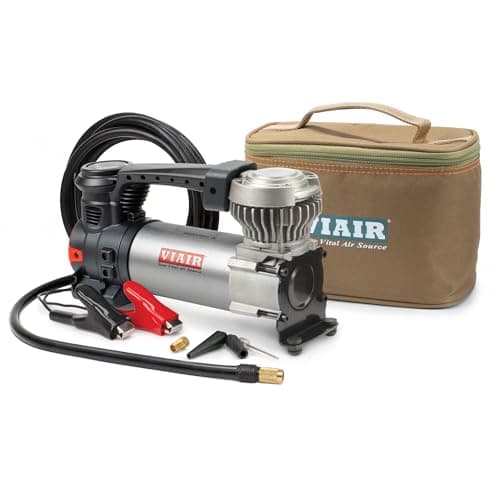 VIAIR 88P Portable Compressor Best overall for ATV and UTV | Truck, SUV and off-road tires | 1.97 CFM, 25 minutes of duty at 30 PSI, rated to 33 in tires | $89.89$103.95View on Amazon #ad Affiliate link · Price as of October 17, 2026 |
| 2 | 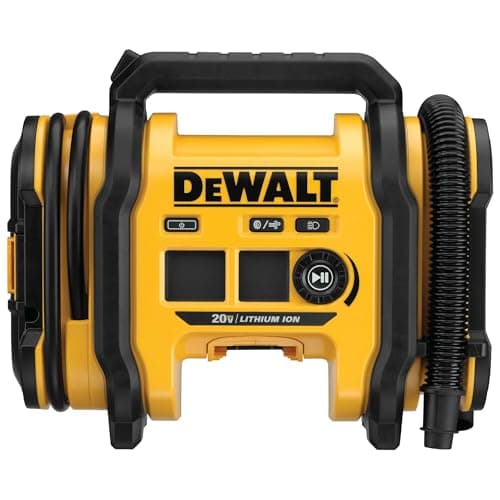 DEWALT DCC020IB 20V MAX Inflator Best for the high-volume mode | Anyone already on DEWALT 20V batteries | A separate high-volume inflate and deflate mode, plus three power sources | $141.79$179.00View on Amazon #ad Affiliate link · Price as of October 17, 2026 |
| 3 | 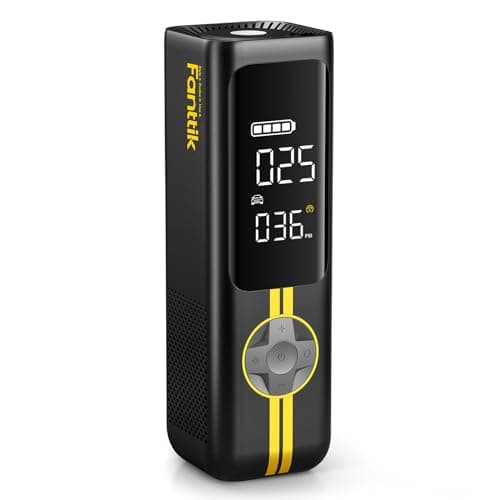 Fanttik X8 Apex Best cordless for quick top-ups | Cordless top-ups from a glovebox | 1.74 lb, 28.8 Wh, preset shutoff — fine for a check before a ride | $69.99$89.99View on Amazon #ad Affiliate link · Price as of October 17, 2026 |
| 4 | 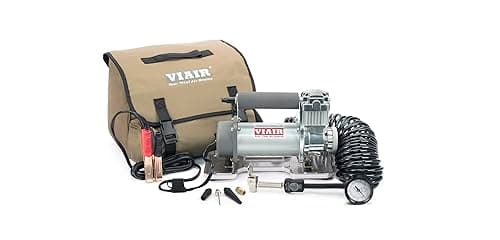 VIAIR 400P Portable Compressor Best if you air down a truck too | Airing back up after a trail | 2.30 CFM, 150 PSI, 25 ft hose, 12 V or 24 V | $226.00View on Amazon #ad Affiliate link · Price as of October 17, 2026 |
Quad and side-by-side tires break the rule that the rest of this category runs on. A passenger car tire is a small volume at a high pressure: around 35 PSI in a modest casing, which is why a 100 PSI inflator with a gentle flow rate is perfectly adequate for a car. An ATV tire is the inverse — a big balloon of a casing at single-digit or low-teens pressure. You will never go near the maximum PSI figure on the box, and you will run out of flow rate constantly.
Read the flow figure, not the pressure figure
Air flow is published in cubic feet per minute, and it is the spec that decides how long you stand there. Maximum working pressure decides whether the pump can reach a given PSI at all — and for ATV work that question is already answered, because every inflator sold can reach 15 PSI. The practical consequence is that a cheap 100 PSI car inflator and a serious compressor are not remotely the same tool on a quad, even though both are technically rated far above what you need.
| Inflator | Air flow | Max working pressure | Duty cycle | Weight |
|---|---|---|---|---|
| VIAIR 88P | 1.97 CFM at 0 PSI | 120 PSI | 25 minutes at 30 PSI | 4.75 lb |
| VIAIR 400P | 2.30 CFM at 0 PSI | 150 PSI | 33 percent at 100 PSI | 10.40 lb |
| DEWALT DCC020IB | Not published as a CFM figure | 160 PSI high-pressure mode | Not published | Varies with battery |
| Fanttik X8 Apex | Not published as a CFM figure | Not published in this format | Not published | 1.74 lb |
Figures are each maker's own published specifications, linked in Sources. Blank cells are figures the manufacturer does not publish — we leave them blank rather than estimating.
The VIAIR numbers are why the 88P leads. Nearly 2 CFM with a published 25-minute duty cycle at 30 PSI means you can bring four large low-pressure tires up without the pump shutting down on thermal protection halfway through the third one. Tire inflator duty cycle, explained covers why that figure matters more than any other on a big tire, and how long does a tire inflator take puts flow rate into minutes.
The gauge problem below 10 PSI
Here is the part nobody mentions. A gauge that is accurate to within a pound or two is fine on a car tire at 35 PSI — that is a few percent. The same absolute error on a quad tire at 7 PSI is a 20 to 30 percent error, and on low-pressure tires that is the difference between correct and badly wrong. Underinflated and the tire rolls on the rim; overinflated and you lose the whole point of running low pressure, which is the contact patch and the ride.
So the practical advice on an ATV is: set pressure with the inflator, then verify with a separate low-range gauge, at least until you know how your inflator reads at the pressures you actually use. A digital preset that stops at a target is a convenience feature, not a calibration certificate. Tire inflator accuracy is the dedicated page on what these gauges do and do not guarantee, and tire inflator PSI explained covers the pressure ratings on the box.
Why the DEWALT is the dark-horse pick
The DCC020IB has something nothing else in this list publishes: a separate high-volume inflate and deflate mode alongside its high-pressure mode. High-pressure mode is the usual piston arrangement for car tires with auto-shutoff at a preset; high-volume mode moves a lot of air at low pressure, which is exactly the job description for an ATV tire, an air mattress or a raft. The deflate function matters too, because airing down for a trail is half of what an ATV owner does with a pump.
It also runs from a 20V MAX battery, a 12-volt socket or a 110-volt outlet, which makes it the most flexible tool here for a machine that lives on a trailer. DEWALT publishes a 3-year limited warranty, one year of free service and a 90-day satisfaction guarantee on it, which is unusually strong for this category. The honest caveats: DEWALT does not publish a CFM figure or a duty cycle, and the tool only makes sense if you already own the batteries. The best cordless tire inflators is the wider field.
What about the little cordless ones?
A compact cordless inflator like the Fanttik X8 Apex is genuinely useful on a quad, but for a narrower job than people expect. At 1.74 lb with a 28.8 watt-hour internal battery it is the tool you throw in a pack to check and nudge pressures before a ride, or to bring one tire back after a slow leak on a trail. It is not the tool to bring four big tires up from flat, and its published 14 degree Fahrenheit operating floor is worth knowing if you ride in winter.
Our read is that most ATV owners end up with two: a proper 12-volt compressor that lives with the trailer or the tow vehicle, and something small enough to actually carry on the machine. That is not an upsell, it is the same logic as the best tire inflator for off-road use, where the trail version of this argument plays out on truck tires.
The picks
1. Best overall for ATV and UTV
VIAIR 88P Portable Compressor
VIAIR · Best for truck, suv and off-road tires
A battery-clamp compressor built for the tire sizes socket-powered units cannot handle without stopping to cool down.
Published specifications
- Maximum working pressure
- 120 PSI source
- Air flow
- 1.97 CFM at 0 PSI source
- Duty cycle
- 25 minutes at 30 PSI source
- Supply
- 12 V, battery clamps source
- Maximum amp draw
- 20 A source
- Inrush current
- 45 A at 0 PSI source
- Ingress protection
- IP53 source
- Operating temperature
- -4 to 158 °F source
- Tire size rating
- Up to 33 in source
- Weight
- 4.75 lb source
- Power cord / air hose
- 10 ft / 16 ft source
What works
- Connects to the battery terminals rather than the 12 V socket, so socket fuse current is not the limit
- Built for larger tires and repeated fills — the duty cycle is the whole reason to buy it
- Metal body and a real air hose rather than a molded plastic assembly
What does not
- The battery-clamp connection means popping the hood every time
- Bigger and heavier than any glovebox inflator
- Overkill, and slower to set up, for a routine cold-morning top-up
Skip it if
Not the pick if you drive a sedan and just want to correct 4 PSI once a month. That is what a socket inflator is for.
#ad Affiliate link · Price as of October 17, 2026
2. Best for the high-volume mode
DEWALT DCC020IB 20V MAX Inflator
DEWALT · Best for anyone already on dewalt 20v batteries
Three power sources in one body — 20V MAX battery, 12 V socket or 110 V wall — with a digital gauge and auto-shutoff, which is what makes an inflator usable everywhere.
Published specifications
What works
- The 12 V socket option means a dead tool battery never leaves you stranded
- A threaded chuck screws onto the valve stem instead of clamping — the difference between a solid seal and a hissing one
- Set-and-walk-away auto-shutoff at your target pressure
- High-volume mode handles air mattresses and inflatables, not just tires
What does not
- Sold as a bare tool — battery, charger and AC adapter are separate purchases
- Bigger and heavier than a pocket 12 V inflator, so it wants trunk space
Skip it if
Not the pick if you own no DEWALT batteries and only ever top up car tires. A plain 12 V inflator is smaller and cheaper for that job.
#ad Affiliate link · Price as of October 17, 2026
Raw specifications: DEWALT’s own page for the DEWALT DCC020IB 20V MAX Inflator.
3. Best cordless for quick top-ups
Fanttik X8 Apex
Fanttik · Best for cordless top-ups from a glovebox
A self-contained cordless inflator small enough to live in a door pocket, with a backlit digital gauge and a preset target pressure.
Published specifications
- Maximum pressure
- 150 PSI source
- Internal battery
- 28.8 Wh lithium-ion source
- Stated gauge accuracy
- ±1 PSI source
- Stated runtime
- Up to 40 minutes continuous source
- Stated fill time
- 56 seconds, 215/55 R17 from 28 to 33 PSI source
- Operating temperature
- 14 to 113 °F (-10 to 45 °C) source
- Weight
- 1.74 lb source
- Recharging
- USB-C, 15 W maximum source
- Work light
- 40 lumens source
- Preset modes
- 4 — bicycle, motorcycle, car, ball; PSI, kPa and bar source
- Warranty
- 12 months source
What works
- No cable to the car at all — it runs off its own internal battery
- Small enough that it stays in the vehicle, which is most of the battle
- Preset-and-stop pressure control avoids the overshoot you get chasing an analogue gauge
What does not
- An internal battery is one more thing to keep charged, and cold weather cuts into it
- Cordless inflators this size heat up on large tires; expect to work in stages
- Manufacturer duty-cycle figures for this class are not consistently published
Skip it if
Not the pick for light-truck or RV tires. Small cordless units are built for top-ups, not for taking a 35-inch tire from flat to 60 PSI.
#ad Affiliate link · Price as of October 17, 2026
4. Best if you air down a truck too
VIAIR 400P Portable Compressor
VIAIR · Best for airing back up after a trail
A step up from the 88P for people who air down deliberately: 150 PSI, a published 33 percent duty cycle at 100 PSI, and a 25-foot hose that reaches all four corners.
Published specifications
- Maximum working pressure
- 150 PSI source
- Air flow
- 2.30 CFM at 0 PSI source
- Duty cycle
- 33% at 100 PSI source
- Supply
- 12 V or 24 V, battery clamps source
- Maximum amp draw
- 30 A at 12 V, 15 A at 24 V source
- Inrush current
- 81 A at 0 PSI (PN 40043) source
- Ingress protection
- IP54 source
- Weight
- 10.40 lb source
- Power cord / air hose
- 8 ft / 25 ft source
What works
- Battery-clamp connection, so the 12 V socket's fuse is not the ceiling on throughput
- A published duty cycle — 33 percent at 100 PSI — which almost nothing in this category gives you
- 25 feet of air hose reaches every corner of a vehicle from one hookup
- Metal construction and a real air hose rather than a molded plastic assembly
What does not
- 10.40 lb and the bulk that goes with it — dedicated recovery-gear territory, not a glovebox tool
- 30 A at 12 V rules out any accessory socket; it is battery clamps or nothing
- Slower to set up than a socket inflator for a routine cold-morning top-up
Skip it if
Overkill for a car that needs 4 PSI once a month. That is a socket inflator's job, and this is a lot of equipment to carry for it.
#ad Affiliate link · Price as of October 17, 2026
One more pairing worth making: a quad that has sat all winter usually needs both air and a charge. A 2-amp maintainer handles the small battery an ATV carries far better than a car charger does, and the best battery maintainers and trickle chargers is the page for that. If the machine will not turn over at all, the best jump starter for an ATV covers the other half of the spring ritual.
Key takeaways
- ATV tires are high volume at low pressure — the inverse of a car tire, so flow matters and max PSI does not.
- The VIAIR 88P publishes 1.97 CFM and a 25-minute duty cycle at 30 PSI. That combination is the pick.
- A gauge error of 2 PSI is trivial at 35 PSI and severe at 7 PSI. Verify with a separate low-range gauge.
- The DEWALT DCC020IB's separate high-volume and deflate modes are the best match for low-pressure tires.
- Airing down is half the job, so a deflate function is worth real money here.
- Use the machine's own pressure decal, which is often different front to rear.
- Compact cordless units are for checking and nudging, not for filling four big tires from flat.
How we sourced this
Every figure on this page came from one of the following. Where a manufacturer or regulator does not publish a number, we say so rather than estimate it.
Common questions
- What is the best tire inflator for ATV tires?
- The VIAIR 88P. It publishes 1.97 CFM of air flow, a 25-minute duty cycle at 30 PSI and a rating to 33-inch tires, which is the combination a high-volume low-pressure tire needs. If you already run DEWALT 20V batteries, the DCC020IB's high-volume mode is the better match.
- Can I use a car tire inflator on an ATV?
- It will work, slowly. A small car inflator can reach any ATV pressure easily — the problem is air flow, because a quad tire has several times the volume of a car tire. Expect long run times and thermal shutdowns on a unit without a published duty cycle.
- What PSI should ATV tires be?
- Whatever the decal on your machine says, which is usually in the single digits to low teens and is often different front to rear. Never use a car pressure on an ATV tire — it rides badly and wears in the center.
- Are digital tire inflators accurate at low PSI?
- Accurate enough for a car, often not accurate enough for a quad. A 2 PSI error is a few percent at 35 PSI and a third of the reading at 7 PSI. Set with the inflator, then verify with a separate low-range gauge until you know how yours reads.
- Do I need a deflator for ATV tires?
- If you air down for sand or trails, yes — and a pump with a built-in deflate mode saves carrying one. That is the main practical advantage of the DEWALT DCC020IB over a plain 12-volt compressor for this use.
More in Tire Inflators
The cheapest tool that prevents the second-most-common roadside stop. Here is which type fits your tires, and the two specs that actually matter.
Read next
Best for Off-Road
Best for Off-Road
Battery-clamp compressors built for repeated large-volume fills, and why the 12 V socket is the ceiling you have to get past.
Guide
Duty Cycle Explained
What duty cycle means, why it decides whether an inflator can handle large tires, and what to infer when the manufacturer stays silent.
Guide
Gauge Accuracy
Why built-in gauges drift, how to check yours against a reference, and why we will not publish per-model deviation numbers we have not measured.
Best for ATVs
Best for ATVs
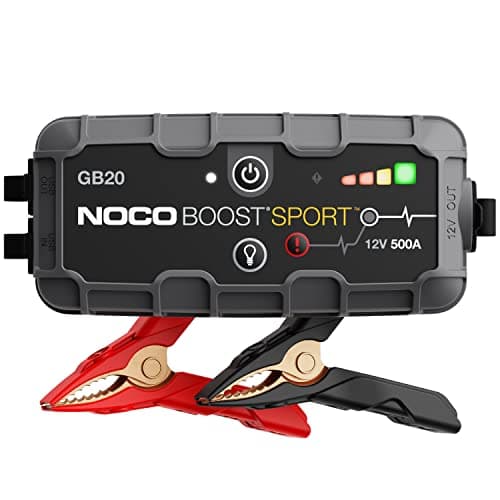
Compact sealed packs sized for powersports batteries, chosen for surviving a dusty storage box and a long way from help.
Found something out of date, or a figure you can source better than we did? Tell us — corrections get read first. Our methodology explains how picks are made, and contact is one click away.