Tire Inflators
What PSI should a spare tire be?
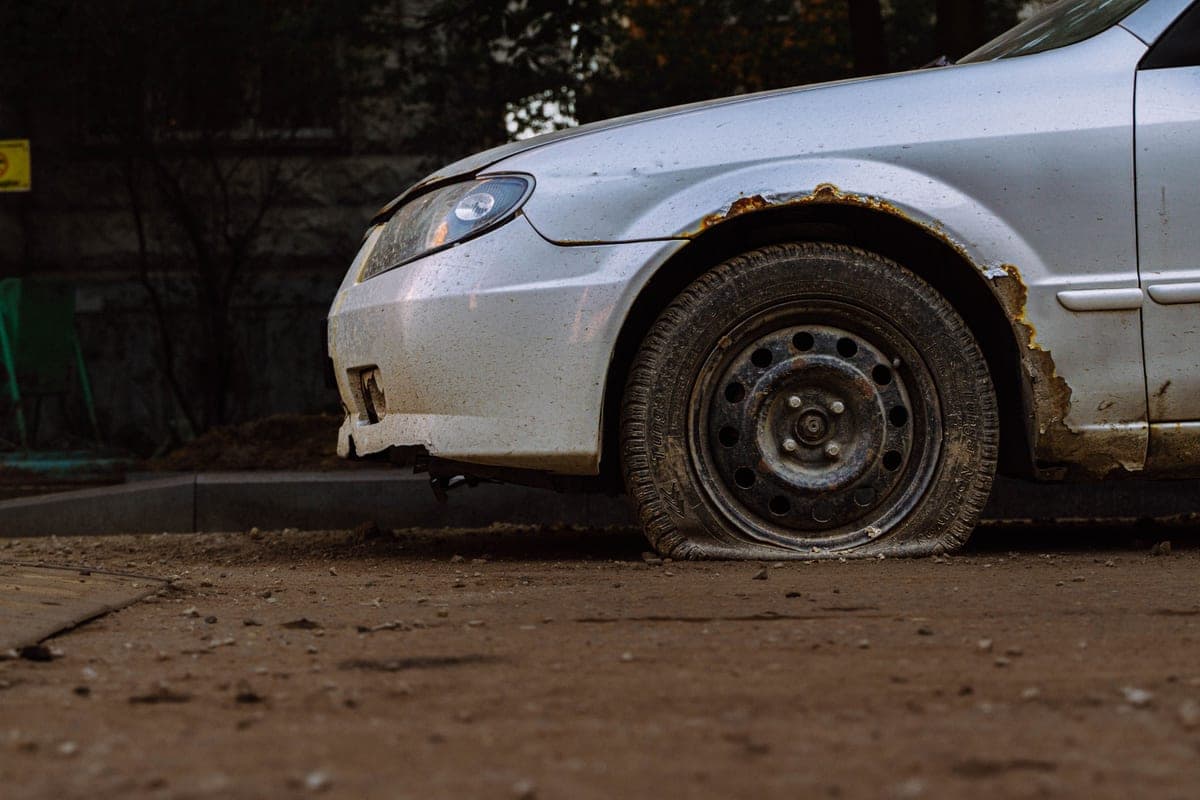
The number is printed on the spare itself, and it is nothing like the figure on the door jamb. Most spares in driveways are soft right now.
Disclosure: we earn a commission if you buy through the Amazon links on this page, at no extra cost to you. Commission never decides a verdict or a ranking position — read our editorial policy and affiliate disclosure.
Short answer
A temporary-use spare — the narrow steel "donut" — is usually inflated to 60 PSI, and the exact figure is printed on the spare's own sidewall and often on the vehicle's tire placard. A full-size spare takes the same pressure as the road tires on the door-jamb placard. Always use the figure printed on your own car and tire.
This is the only tire on the car with its own pressure spec, and that is why it catches people out. The door-jamb placard figure — commonly somewhere in the low thirties for a passenger car — applies to the four tires on the ground. A temporary spare is a much smaller, much stiffer tire carrying the same weight on a smaller contact patch, which is why it needs roughly twice the pressure.
Temporary-use spare versus full-size spare
| Temporary-use spare (donut) | Full-size spare | |
|---|---|---|
| Where the pressure comes from | Its own sidewall and the vehicle placard | The vehicle placard, same as the road tires |
| Typical figure | Commonly 60 PSI in the US | The same as the front or rear road tires |
| Speed and distance limits | Yes — printed on the tire, commonly 50 mph | None beyond the tire's own rating |
| Loses pressure in storage | Yes, like any tire | Yes, like any tire |
| Counts in the TPMS | Usually not | Sometimes, on some vehicles |
| Worth rotating into service | No | Only if it matches the road tires exactly |
The speed and distance limits on a temporary-use spare are printed on the tire itself. Treat those markings as the authority, not a general figure.
The speed limit on a donut is not advisory. A temporary spare has less tread, a smaller contact patch, different grip and in most cases no ability to work with the car's stability systems the way a matched tire does. Fitting one is a decision to drive slowly to a tire shop, not a repair.
Why your spare is probably low right now
Because nothing checks it. A spare loses air through permeation at the same rate as a road tire, it is rarely included in TPMS, and in most cars it is under a trunk floor or slung beneath the vehicle where nobody looks. A spare left alone for four or five years can be substantially soft — which is discovered, reliably, at the exact moment it is needed.
The fix is to add it to the monthly routine you should already have: how often you should check tire pressure covers the interval, and the spare costs you an extra thirty seconds once you have the inflator out. If the spare is under the car or behind a cover, checking it quarterly rather than monthly is a reasonable compromise.
What 60 PSI means for which inflator you buy
It means the pressure ceiling on the box matters slightly more than it does for road tires. A car's placard pressure is in the low thirties, so almost any inflator clears it with enormous margin. A 60 PSI donut asks for twice that, and a pump reaching its stall pressure slows dramatically before it gets there — so a unit rated to 100 PSI will fill a 60 PSI spare, but noticeably more slowly than it fills a road tire.
All three picks here have ample headroom; the Fanttik's 150 PSI ceiling and the DEWALT's high-pressure mode have the most. Tire inflator PSI ratings takes the whole ceiling-versus-speed question apart, and how long a tire inflator takes explains why the last few PSI are always the slow ones.
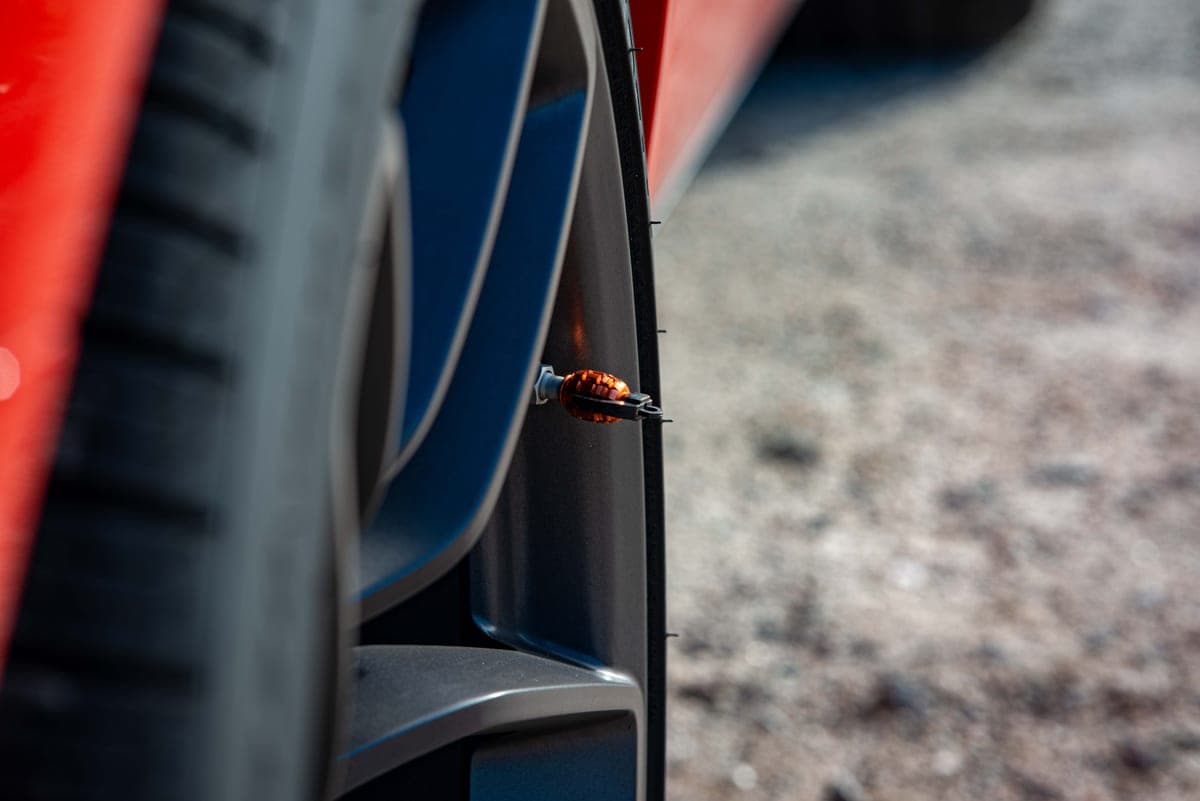
1. Reaches a 60 PSI spare easily
Fanttik X8 Apex
Fanttik · Best for cordless top-ups from a glovebox
A self-contained cordless inflator small enough to live in a door pocket, with a backlit digital gauge and a preset target pressure.
Published specifications
- Maximum pressure
- 150 PSI source
- Internal battery
- 28.8 Wh lithium-ion source
- Stated gauge accuracy
- ±1 PSI source
- Stated runtime
- Up to 40 minutes continuous source
- Stated fill time
- 56 seconds, 215/55 R17 from 28 to 33 PSI source
- Weight
- 1.74 lb source
- Recharging
- USB-C, 15 W maximum source
- Work light
- 40 lumens source
- Preset modes
- 4 — bicycle, motorcycle, car, ball; PSI, kPa and bar source
- Warranty
- 12 months source
What works
- No cable to the car at all — it runs off its own internal battery
- Small enough that it stays in the vehicle, which is most of the battle
- Preset-and-stop pressure control avoids the overshoot you get chasing an analogue gauge
What does not
- An internal battery is one more thing to keep charged, and cold weather cuts into it
- Cordless inflators this size heat up on large tires; expect to work in stages
- Manufacturer duty-cycle figures for this class are not consistently published
Skip it if
Not the pick for light-truck or RV tires. Small cordless units are built for top-ups, not for taking a 35-inch tire from flat to 60 PSI.
#ad Affiliate link · We show no price here; Amazon shows the current one
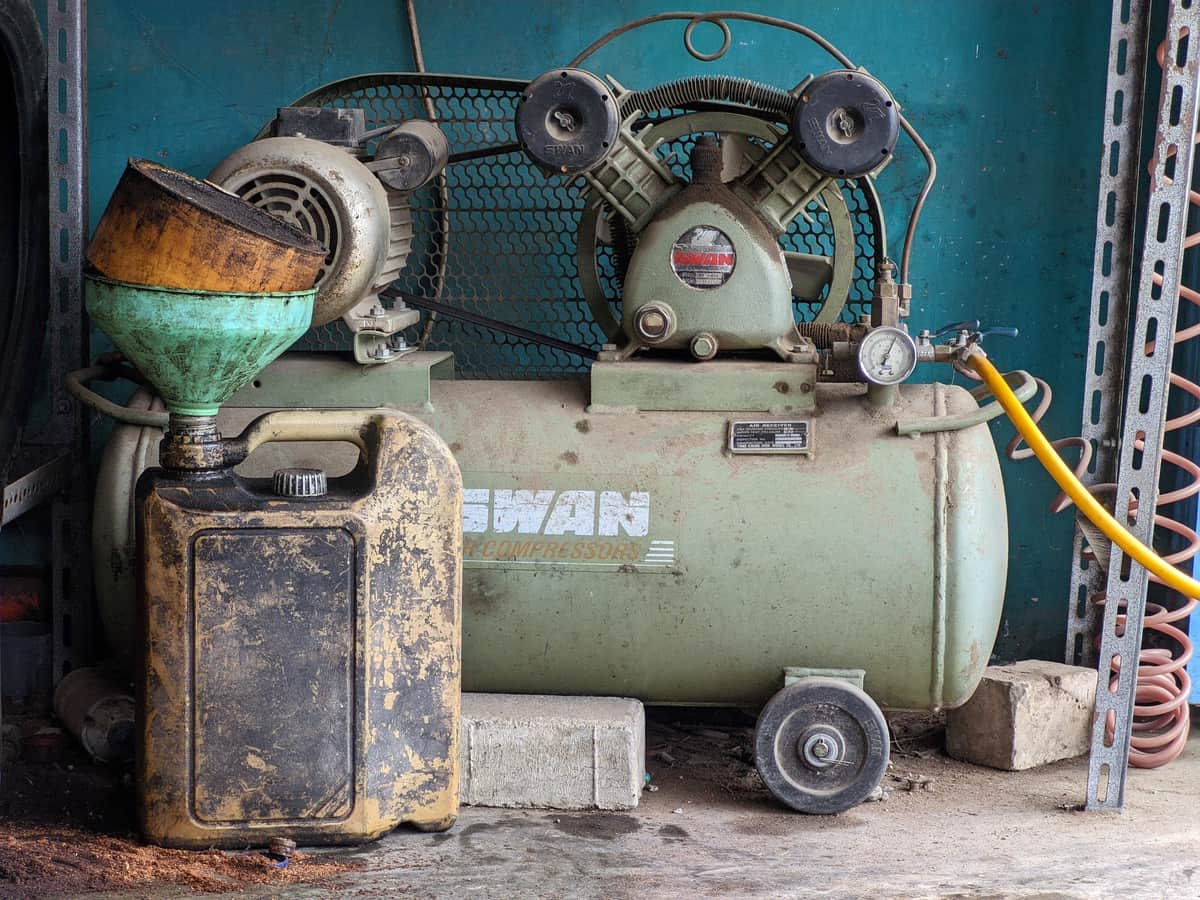
2. Cheapest way to never be caught out
AstroAI 12V Tire Inflator
AstroAI · Best for the cheapest inflator still worth owning
A plain 12 V socket-powered inflator with a digital gauge and auto-shutoff — the baseline that covers a car's tires with no battery to maintain.
This manufacturer does not publish a full specification table for this model on its own site. Rather than repeat figures we cannot source, the assessment below is limited to what the product category and the retailer listing genuinely establish.
What works
- Powered from the 12 V socket, so it works whenever the car does
- Nothing to keep charged, which means it is never flat when the tire is
- Digital preset shutoff at the target pressure
What does not
- The cord limits where you can work, and reaching a rear tire can be tight
- Small-motor inflators in this tier run hot; large tires need rest intervals
- Gauge accuracy in this class varies unit to unit, so verify against a separate gauge
Skip it if
Not the pick if you regularly air down and back up for trails, or run light-truck tires. That is dedicated-compressor work.
#ad Affiliate link · We show no price here; Amazon shows the current one
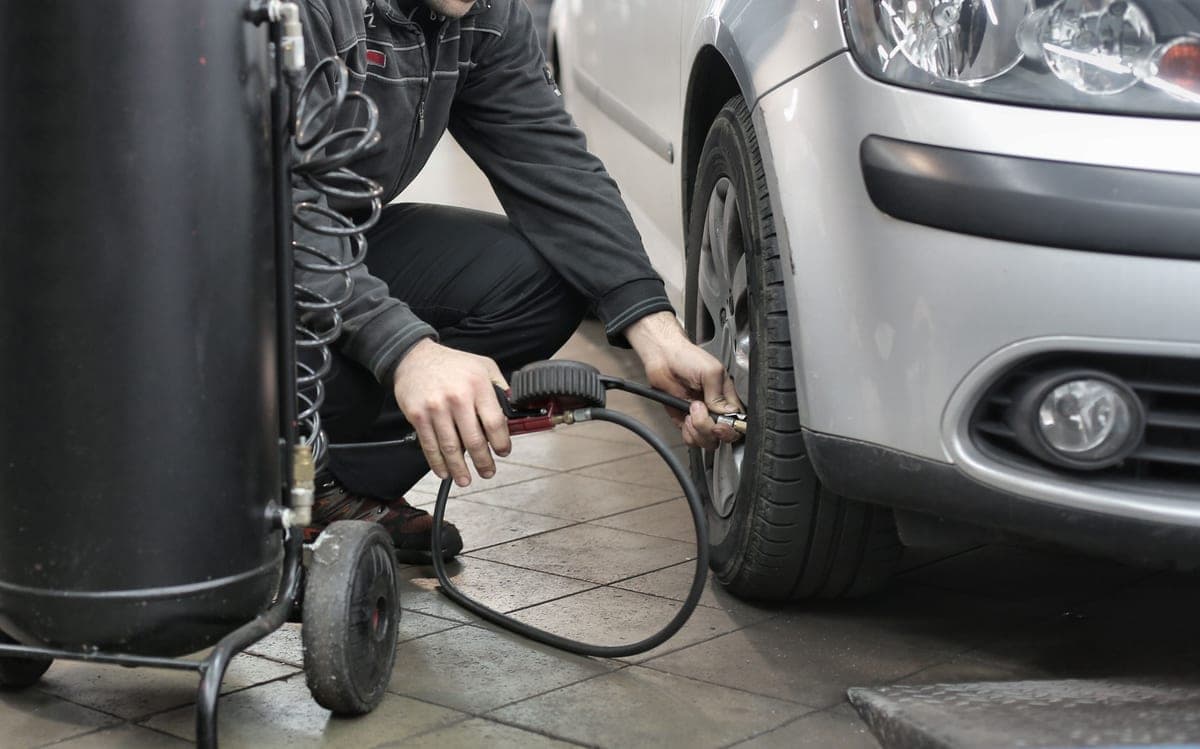
3. Best for a hard-to-reach stem
DEWALT DCC020IB 20V MAX Inflator
DEWALT · Best for anyone already on dewalt 20v batteries
Three power sources in one body — 20V MAX battery, 12 V socket or 110 V wall — with a digital gauge and auto-shutoff, which is what makes an inflator usable everywhere.
Published specifications
What works
- The 12 V socket option means a dead tool battery never leaves you stranded
- A threaded chuck screws onto the valve stem instead of clamping — the difference between a solid seal and a hissing one
- Set-and-walk-away auto-shutoff at your target pressure
- High-volume mode handles air mattresses and inflatables, not just tires
What does not
- Sold as a bare tool — battery, charger and AC adapter are separate purchases
- Bigger and heavier than a pocket 12 V inflator, so it wants trunk space
Skip it if
Not the pick if you own no DEWALT batteries and only ever top up car tires. A plain 12 V inflator is smaller and cheaper for that job.
#ad Affiliate link · We show no price here; Amazon shows the current one
Raw specifications: DEWALT’s own page for the DEWALT DCC020IB 20V MAX Inflator.
Checking a spare you cannot easily reach
- Find out where it is and how it comes out, once, in daylight. Under-floor wells, exterior carriers and tool kits with a weird jack handle are all common. The roadside is the wrong place to learn this.
- Note the spare's pressure figure and the vehicle placard figures on a card in the glovebox. Reading a molded sidewall number in the dark is harder than it sounds.
- Check the spare whenever you have the inflator out anyway. The marginal cost is thirty seconds.
- Check the jack and the wheel wrench at the same time. A correctly inflated spare and a seized jack is still a tow.
- Replace a spare that has aged out. Rubber ages whether or not it has been used, and a decade-old donut is not a plan.
If your car has no spare at all — increasingly common — then the inflator and a plug kit are the spare, and that is a different risk profile. Roadside emergency kit checklist covers what to carry instead, and tire inflators versus sealant is honest about what sealant fixes.
Key takeaways
- Temporary-use spares are commonly 60 PSI; the real figure is on the spare's own sidewall.
- A full-size spare takes the door-jamb placard pressure, the same as the road tires.
- The speed and distance limits printed on a donut are limits, not suggestions.
- Spares lose air through permeation and are usually not monitored by TPMS.
- A 60 PSI target is twice a road tire's, so the fill is slower than you expect.
- Check the spare, the jack and the wrench together — all three have to work.
How we sourced this
Every figure on this page came from one of the following. Where a manufacturer or regulator does not publish a number, we say so rather than estimate it.
Common questions
- What PSI should a spare tire be?
- A temporary-use spare is commonly 60 PSI in the US, and the exact figure is molded into the spare's sidewall and listed on the vehicle's tire placard. A full-size spare takes the same pressure as the road tires on the door-jamb placard.
- Why does a donut spare need higher pressure than a normal tire?
- It is a much smaller, stiffer tire carrying the same share of the vehicle's weight on a smaller contact patch. Higher pressure is what lets it do that without overloading the sidewall.
- How often should I check the spare tire pressure?
- Whenever you check the other four if the spare is easy to reach — monthly is the right interval. If it is under the vehicle or behind a cover, quarterly is a reasonable compromise. Spares lose air through permeation like any tire and are usually not monitored by TPMS.
- Can I inflate a 60 PSI spare with a portable tire inflator?
- Yes. Any unit with a ceiling comfortably above 60 PSI will do it, though the fill is slower than a road tire because the pump is working closer to its stall pressure. The Fanttik X8 APEX's 150 PSI ceiling and the DEWALT's high-pressure mode have the most headroom here.
More in Tire Inflators
The cheapest tool that prevents the second-most-common roadside stop. Here is which type fits your tires, and the two specs that actually matter.
Read next
Guide
What PSI Should My Tires Be?
The single most common tire mistake, fixed in two minutes: placard versus sidewall, checking cold, and what cold weather does to the reading.
Guide
How Often to Check
Why monthly is the right interval, what cold weather does to the number, and why a TPMS light is not a substitute for a gauge.
Head to head
Inflator vs Sealant
When air is enough, when you need sealant, what sealant does to a TPMS sensor and a future repair, and why most drivers should carry both.
Guide
PSI Ratings Explained
Why a 150 PSI inflator is not faster than a 100 PSI one, what the rating genuinely limits, and the spec that decides how long you stand there.
Guide
Emergency Kit Checklist
The short list that survives contact with a real trunk, in priority order, plus what to skip and what to check twice a year.
Found something out of date, or a figure you can source better than we did? Tell us — corrections get read first. Our methodology explains how picks are made, and contact is one click away.