Trunk Kit
The best jumper cables under $100
This is the band where cable section stops being the compromise. One gauge, twenty-five feet and commercial clamps all fit under the cap — which matters most on exactly the engines a cheap set cannot turn over.
Disclosure: we earn a commission if you buy through the Amazon links on this page, at no extra cost to you. Commission never decides a verdict or a ranking position — read our editorial policy and affiliate disclosure.
How we assessed these: picks are selected from manufacturers' published specifications, current retailer listings and the live price layer — not from hands-on testing of every unit. The bracket in the title describes the market tier; the live figure in each buy button, stamped with the date it was read, is the only price we stand behind.
Short answer
Under $100 the set to buy is the Jump-N-Carry 401252: 1-gauge copper, 25 feet long, with 800-amp clamps and a jacket Clore rates from minus 40 to 80 Celsius. That combination is what starts a cold diesel from an awkward parking angle, and it is the thing no cheap set can substitute for. If the biggest engine you expect to start is an ordinary car, the 4-gauge Jump-N-Carry 404202 has the same clamp pedigree in a set you can lift, and the Performance Tool W1673 is the everyday 4-gauge buy. The budget pick is the Performance Tool W1670 — 10 gauge and 12 feet, which Performance Tool states is for compact vehicles and motorcycles, and nothing bigger.
Quick picks
Tap any row to jump to the full write-up. Scoring criteria are published in full on our methodology page.
| # | Product | Best for | Our read | Price |
|---|---|---|---|---|
| 1 | 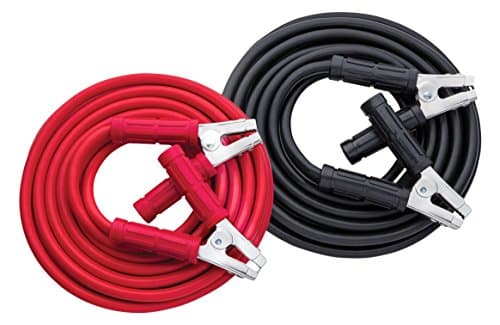 Jump-N-Carry 401252 1-Gauge 25 ft Booster Cables Best overall | Diesels, big V8s and awkward parking | 1 gauge, 25 ft, 800 A clamps, jacket rated to minus 40 C | $93.30View on Amazon #ad Affiliate link · Price as of November 28, 2026 |
| 2 | 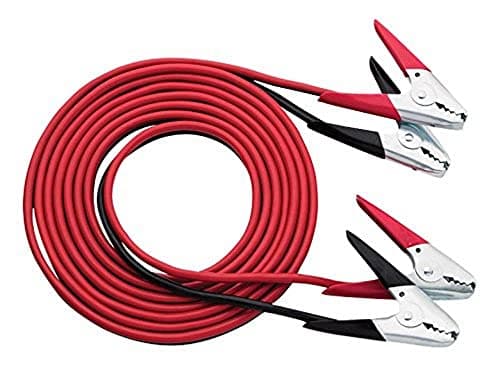 Jump-N-Carry 404202 4-Gauge 20 ft Booster Cables Best clamps for an ordinary car | Corroded terminals on an ordinary car | 4 gauge, 20 ft, 600 A commercial parrot clamps | $47.78View on Amazon #ad Affiliate link · Price as of November 28, 2026 |
| 3 | 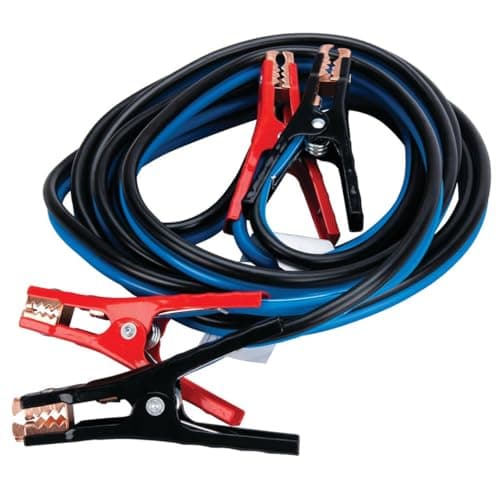 Performance Tool W1673 4-Gauge 20 ft Jumper Cables Best everyday 4-gauge set | One set of cables for a normal car or SUV | 4 gauge, 20 ft, 500 A continuous, copper jaw clamps | $37.03View on Amazon #ad Affiliate link · Price as of November 28, 2026 |
| 4 | 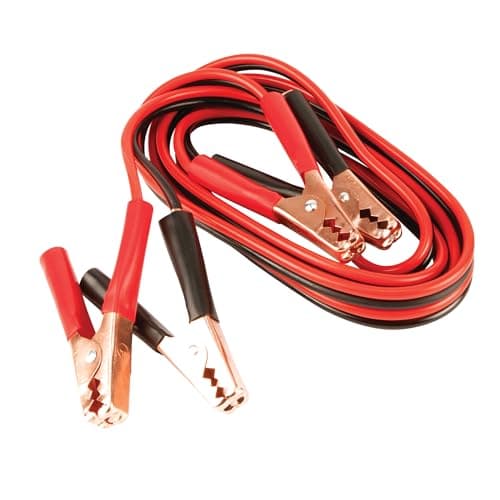 Performance Tool W1670 10-Gauge 12 ft Jumper Cables Budget pick | A compact car, a motorcycle or a glovebox | 10 gauge, 12 ft, 150 A — compacts and motorcycles only | $15.40$17.99View on Amazon #ad Affiliate link · Price as of November 28, 2026 |
Jumper cables under $50 is the band most drivers shop, and it is an honest band: it buys a competent 4-gauge set that covers a normal car. What it cannot buy is cable section. Doubling the budget to this cap does one thing the cheaper band simply cannot do — it puts 1-gauge copper and 25 feet of reach in the trunk.
If that sounds like a small difference, it is worth being concrete about what cable section does. Gauge is a measure of conductor area, and it runs backwards: a smaller number is a thicker wire. Thicker wire has less resistance, so more of the donor battery's current arrives at the dead starter instead of warming up the cable in between. On a four-cylinder with a merely discharged battery, almost anything works. On a cold diesel, the thin set is the reason nothing happens.
The three figures that decide a cable set
- Gauge. The conductor area, where a lower number is thicker. Four gauge covers an ordinary car; 1 or 2 gauge is what a diesel or a big V8 wants. Ten gauge is a compact-car and motorcycle size, whatever the packaging claims.
- Length. Reach decides whether the donor car can get to the dead one at all — nose to nose in a parking row is rarely available, and 12 feet assumes it is. Longer cable costs voltage, which is why the long sets are also the thick ones.
- The clamps. A clamp has to bite through the oxide layer on a neglected terminal to make contact at all. Commercial parrot-jaw clamps are the difference between a connection and a conversation about whether the cables are broken.
| Set | Gauge | Length | Clamp rating | Published cold rating |
|---|---|---|---|---|
| Jump-N-Carry 401252 | 1 gauge | 25 ft | 800 A heavy duty | Minus 40 to 80 C (TPR jacket) |
| Jump-N-Carry 404202 | 4 gauge | 20 ft | 600 A commercial parrot | Minus 40 C (TPR jacket) |
| Performance Tool W1673 | 4 gauge | 20 ft | 500 A continuous, 600 A peak | Minus 13 F |
| Performance Tool W1670 | 10 gauge | 12 ft | 150 A continuous, 250 A peak | Not published |
Every figure is the manufacturer's own published specification, linked in Sources. Clamp and cable ratings are stated differently by different makers — Clore rates clamps in amps and the jacket in Celsius, Performance Tool rates the cable continuous and peak — so the columns are not a like-for-like comparison and are not presented as one.
Why 25 feet is the quiet upgrade
Length is the specification people discover they needed. A dead car in a garage, nose in. A truck parked along a curb with the donor behind it. A hood that only opens on the far side from the access road. Twelve-foot cables assume a geometry that real parking lots rarely provide, and the moment that assumption fails, the cable rating stops mattering because the clamps will not reach.
The reason long cable sets are always thick is that the voltage drop along the cable grows with length, so a 25-foot set in a thin gauge would deliver very little at the far end. That is why the one genuinely long set in this band is also the 1-gauge one, and why a long, thin set on a marketplace listing is a warning sign rather than a bargain.
Cables or a pack?
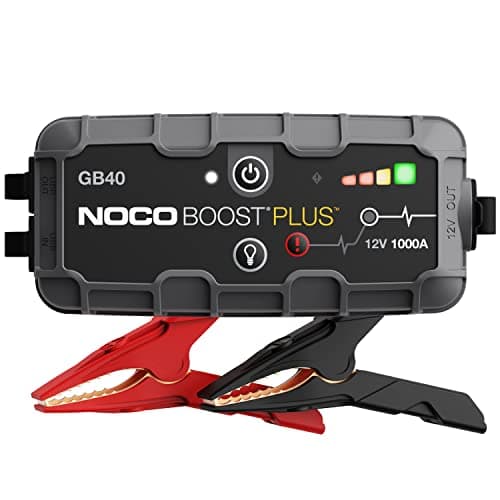
Cables are cheaper, they never need charging, and they last decades. Their one requirement is another vehicle with a healthy battery and a willing driver, which is exactly what an empty lot at night does not have. A jump starter removes that requirement and introduces a different one: it has to be charged. Jump starter vs jumper cables works through the trade properly.
The honest answer for most drivers is both, in this order: a competent cable set lives in the trunk permanently because it asks nothing of you, and a pack joins it when you start parking somewhere lonely. A cable set in this band will still be working in fifteen years, which is more than any lithium pack will manage.
The picks
1. Best overall
Jump-N-Carry 401252 1-Gauge 25 ft Booster Cables
Clore Automotive · Best for diesels, big v8s and awkward parking
Trade-grade cable: 1 gauge, 25 feet, 800-amp heavy-duty clamps meant to bite through terminal corrosion, in a TPR jacket Clore rates from minus 40 to 80 Celsius.
Published specifications
- Cable gauge
- 1 AWG source
- Length
- 25 ft source
- Clamp rating
- 800 A heavy-duty clamps source
- Cable style
- Single source
- Jacket
- TPR, stays flexible in extreme conditions source
- Operating temperature
- -40 to 80 C (-40 to 176 F) source
- Model number
- 401252 source
- Stated use
- Head-to-head and side-by-side starting of light and medium-duty vehicles source
- Warranty
- 1-year limited source
What works
- 1 gauge is the size that starts a cold diesel without a five-minute wait while the donor car charges the dead battery through a thin cable
- The clamps are specified to penetrate corrosion, which is the failure most cheap cables hit before the copper is ever the limit
- 25 feet and a minus 40 Celsius jacket rating is a set that works in a plowed parking lot in February, not just in a garage
- Clore builds the Jump-N-Carry jump packs that shops actually use, and these come out of the same catalog
What does not
- Heavy and bulky - 1 gauge at 25 feet is a real armful and takes real trunk space
- Clore does not publish a conductor material or a continuous amp rating on this page, only the clamp rating
- Costs several times what a 4-gauge consumer set does, and most drivers will never use the extra capacity
- Amazon stock on the exact Clore part number moves around, because this is a trade line rather than a retail one
Skip it if
Too much cable for a commuter car. If the biggest engine in the driveway is a 4-cylinder, 4 gauge is lighter, cheaper and does the same job.
#ad Affiliate link · Price as of November 28, 2026
Raw specifications: Clore Automotive’s own page for the Jump-N-Carry 401252 1-Gauge 25 ft Booster Cables.
2. Best clamps for an ordinary car
Jump-N-Carry 404202 4-Gauge 20 ft Booster Cables
Clore Automotive · Best for corroded terminals on an ordinary car
The same trade pedigree in a size a car owner can live with: 4 gauge, 20 feet, 600-amp commercial parrot clamps with the biting force to get past terminal corrosion, in a minus 40 Celsius TPR jacket.
Published specifications
- Cable gauge
- 4 AWG source
- Length
- 20 ft source
- Clamp rating
- 600 A commercial-grade parrot clamps source
- Cable style
- Twin source
- Jacket
- TPR, stays flexible in extreme conditions source
- Operating temperature
- -40 to 80 C (-40 to 176 F) source
- Model number
- 404202 source
- Stated use
- Head-to-head and side-to-side starting of passenger vehicles and light trucks source
- Warranty
- 1-year limited source
What works
- Parrot clamps bite deeper and hold harder than the jaw clamps on most consumer sets - the single most useful upgrade on a cable set
- Twin cable construction keeps the pair tidy instead of giving you two ropes to untangle in the rain
- Rated to minus 40 Celsius, which is the condition in which you will actually be using them
- 4 gauge and 20 feet is the size most drivers need, from a trade brand rather than an anonymous one
What does not
- No published conductor material or continuous amp rating, same as the 1-gauge set
- Parrot clamps are bulkier than jaw clamps and can be a squeeze on a battery buried behind a cover
- Costs noticeably more than a lookalike consumer 4-gauge set, and the gain is in the clamps, not the copper
Skip it if
Not the one if the problem you are solving is a big diesel. Clamp quality does not substitute for cable section - step up to 1 or 2 gauge for that.
#ad Affiliate link · Price as of November 28, 2026
Raw specifications: Clore Automotive’s own page for the Jump-N-Carry 404202 4-Gauge 20 ft Booster Cables.
3. Best everyday 4-gauge set
Performance Tool W1673 4-Gauge 20 ft Jumper Cables
Performance Tool · Best for one set of cables for a normal car or suv
4 gauge, 20 feet, rated 500 amps continuous and 600 peak, with copper jaw clamps and a published cold rating down to minus 13 Fahrenheit - the size and length that covers most of what a driver actually meets.
Published specifications
What works
- 20 feet is the length that stops mattering where you park - it reaches a car nose-to-nose, side by side, or parked in the next bay over
- 4 gauge at 20 feet is the honest sweet spot: thick enough to crank a V6 without a long wait, thin enough to coil back into the bag
- Copper jaw clamps and a published low-temperature rating, which is more than most cables in this bracket disclose
- Performance Tool publishes continuous AND peak amps, so the 600 number is not doing all the work
What does not
- Performance Tool does not publish whether the conductor is pure copper or copper-clad aluminum, and that distinction changes real current capacity
- Not enough cable for a big diesel - a 6.7-liter engine that has been sitting in the cold wants 1 or 2 gauge
- The clamps are jaw-style rather than parrot-style, so badly corroded terminals need cleaning first
Skip it if
Not the set for a work truck, a dually or a tractor. If the engine you expect to start is diesel or over about 5 liters, go to 1 or 2 gauge and accept the bulk.
#ad Affiliate link · Price as of November 28, 2026
Raw specifications: Performance Tool’s own page for the Performance Tool W1673 4-Gauge 20 ft Jumper Cables.
4. Budget pick
Performance Tool W1670 10-Gauge 12 ft Jumper Cables
Performance Tool · Best for a compact car, a motorcycle or a glovebox
The honest light-duty set: 10 gauge, 12 feet, 150 amps continuous and 250 peak, which Performance Tool states is for compact vehicles and motorcycles - and nothing bigger.
Published specifications
What works
- Small and light enough to live under a motorcycle seat or in a hatchback cubby, where a 4-gauge set will not go
- Performance Tool states the duty level plainly instead of printing a four-figure amp number on the bag
- Costs about as much as a fast-food lunch, so there is no reason for a second car to be without a set
- Same published cold rating as the bigger Performance Tool sets
What does not
- 150 amps continuous will not crank a V6, let alone a V8 - at best it slowly charges the dead battery and you try the key later
- 12 feet means the two cars have to be nose to nose, which is not always possible on a street
- 10-gauge cable gets warm in use, and a long attempt is how thin cables get damaged
Skip it if
Do not buy these as your only cables if you drive anything larger than a compact. The money saved disappears the first time they will not turn a cold engine over.
#ad Affiliate link · Price as of November 28, 2026
Raw specifications: Performance Tool’s own page for the Performance Tool W1670 10-Gauge 12 ft Jumper Cables.
Key takeaways
- Under $100 buys cable section and reach, which is the one thing the cheaper band cannot sell you.
- Gauge runs backwards: 1 gauge is thick and for diesels, 10 gauge is thin and for compacts.
- Twenty-five feet is the upgrade people discover they needed in a parking garage at night.
- Long and thin is a warning sign — voltage drop means the far end delivers very little.
- Clamp quality decides whether the connection happens at all on a corroded terminal.
- Cables ask nothing of you for decades, but they still need a second car. A pack does not.
How we sourced this
Every figure on this page came from one of the following. Where a manufacturer or regulator does not publish a number, we say so rather than estimate it.
- Clore Automotive Jump-N-Carry 401252 — 1 GA, 25 ft, 800 A clamps, published specifications
- Clore Automotive Jump-N-Carry 404202 — 4 GA, 20 ft, 600 A parrot clamps, published specifications
- Performance Tool W1673 4-gauge 20 ft jumper cables — published amp rating and temperature range
- Performance Tool W1670 10-gauge 12 ft jumper cables — published amp rating and stated duty level
- NOCO — how to jump start a car with jumper cables (cable gauge guidance by engine size)
Common questions
- What gauge jumper cables should I buy?
- Four gauge covers an ordinary gas car and is the size most drivers should own. Step up to 1 or 2 gauge if you expect to start a diesel, a big V8 or a work truck, and treat 10 gauge as a compact-car and motorcycle size regardless of what the packaging claims.
- Are expensive jumper cables actually better?
- The ones in this band are better in two measurable ways: more conductor area and clamps with enough bite to get through terminal corrosion. Beyond that, price buys packaging. Compare the published gauge, length and clamp rating rather than the marketing.
- How long should jumper cables be?
- Twenty feet is a sensible minimum and 25 feet removes the parking-geometry problem entirely. Twelve-foot sets assume the two vehicles can meet nose to nose, which real parking lots often do not allow.
- Can I use car jumper cables on a diesel?
- Only in a heavy enough gauge. A diesel draws far more current to crank, so a thin set warms up instead of delivering. One or 2 gauge with high-rated clamps is the specification for that job.
- Do jumper cables wear out?
- The copper does not, but the clamps and the insulation do. Check for cracked jacketing, loose clamp rivets and green corrosion at the jaws; a set stored loose in a trunk for a decade is usually failing at the clamp, not the cable.
More in Trunk Kit
What actually lives in the trunk, in the order it earns its space — and the pre-built kits that are a starting point rather than an answer.
Read next
Best jumper cables
Best Jumper Cables
Picked on published gauge, length and clamp rating rather than the peak-amp number on the packaging - with the engine size each set is actually specified for.
Best jumper cables under $50
Best Under $50
Under $50 reaches real 4-gauge cables with published amp ratings. What the gauge number means, and why lower is thicker.
Head to head
Jump Starter vs Cables
The honest comparison: where cables still make sense, why a pack is safer, and why most drivers should carry both.
Guide
Jump Starter Safety
The risks that remain with a protected lithium pack: clamp shorts, damaged cells, frozen batteries, hydrogen, and the traffic behind you.
Found something out of date, or a figure you can source better than we did? Tell us — corrections get read first. Our methodology explains how picks are made, and contact is one click away.