Tire Inflators
The best 12V tire inflators
A 12-volt inflator has one permanent advantage over every cordless unit: it works whenever the car does. The catch is that how you connect it decides what it can do.
Disclosure: we earn a commission if you buy through the Amazon links on this page, at no extra cost to you. Commission never decides a verdict or a ranking position — read our editorial policy and affiliate disclosure.
How we assessed these: picks are selected from manufacturers' published specifications, stated duty cycles and current retailer listings — not from hands-on fill-time testing of every unit. We publish no measured fill times or gauge deviations, because we do not measure them.
Short answer
If you run truck, SUV or off-road tires, buy the VIAIR 88P: it connects to the battery terminals rather than the accessory socket, VIAIR publishes 1.97 CFM and a 25-minute duty cycle at 30 PSI, and it is rated to 33-inch tires. For an ordinary car that needs four pounds back once a month, the budget pick is the AstroAI 12V inflator — it plugs into the socket, it has a digital preset that stops on its own, and there is no battery to keep charged. If you deliberately air down and back up, the VIAIR 400P is the step up with a published 33 percent duty cycle at 100 PSI.
Quick picks
Tap any row to jump to the full write-up. Scoring criteria are published in full on our methodology page.
| # | Product | Best for | Our read | Price |
|---|---|---|---|---|
| 1 | 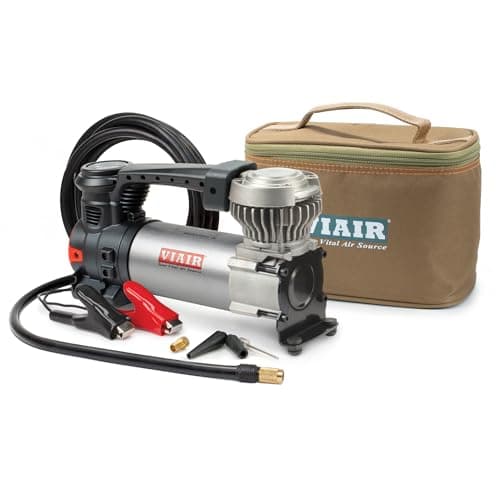 VIAIR 88P Portable Compressor Best overall | Truck, SUV and off-road tires | Battery clamps, 1.97 CFM, published 25 min at 30 PSI | $89.89$103.95View on Amazon #ad Affiliate link · Price as of November 10, 2026 |
| 2 | 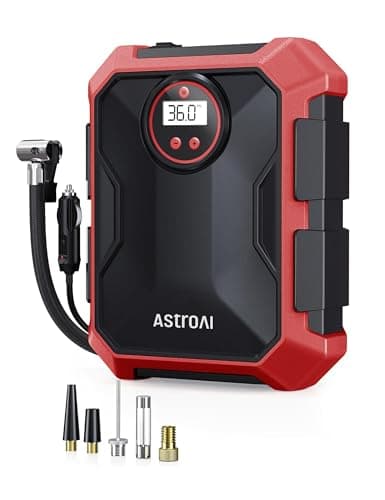 AstroAI 12V Tire Inflator Budget pick | The cheapest inflator still worth owning | Socket-powered with a digital preset — nothing to charge | $26.59$27.99View on Amazon #ad Affiliate link · Price as of November 10, 2026 |
| 3 | 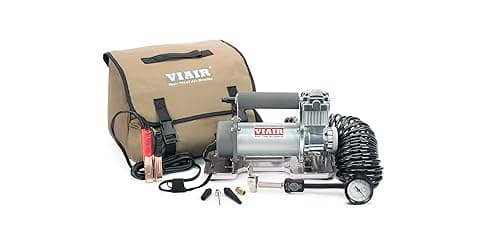 VIAIR 400P Portable Compressor Best for big tires | Airing back up after a trail | 150 PSI, 2.30 CFM, published 33 percent at 100 PSI | $226.00View on Amazon #ad Affiliate link · Price as of November 10, 2026 |
| 4 | 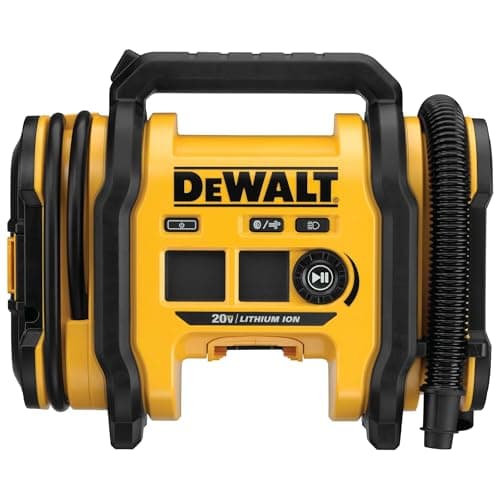 DEWALT DCC020IB 20V MAX Inflator Best for working off the car too | Anyone already on DEWALT 20V batteries | Runs on 12 V, 110 V or a 20V MAX battery | $127.90$179.00View on Amazon #ad Affiliate link · Price as of November 10, 2026 |
| 5 | 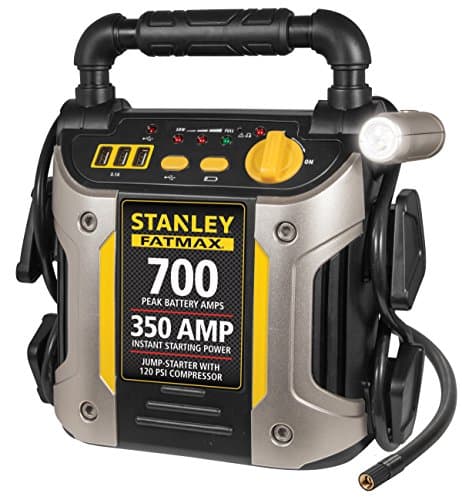 STANLEY FATMAX J7CS Best if you also want a jump start | A cheap one-box jump-and-inflate station | 120 PSI compressor and a V6-rated jump pack in one case | $80.99$89.99View on Amazon #ad Affiliate link · Price as of November 10, 2026 |
The reason to buy a 12-volt inflator rather than a cordless one is simple and hard to argue with: it has no battery of its own, so it cannot be flat when you need it. A cordless inflator is a second device to maintain. A 12-volt unit draws from the thing you are already standing next to.
What varies enormously inside the category is how the unit gets those 12 volts, and that single decision sets the ceiling on everything it can do.
Socket or clamps: the fuse is the real limit
A 12-volt accessory socket is typically protected by a 15 or 20 amp fuse. That is the hard ceiling on any inflator that plugs into it, no matter how the motor is marketed — which is why socket inflators are small-motor units, and why they get hot on a large tire and need to rest.
A battery-clamp compressor bypasses that limit entirely. VIAIR publishes a 20 amp maximum draw for the 88P with a 45 amp inrush at 0 PSI, and 30 amps at 12 volts for the 400P with an 81 amp inrush. Neither of those is a socket's business. The cost is that you pop the hood every time, which on a routine top-up is genuinely more annoying than it sounds.
| Unit | Connection | Max pressure | Air flow | Published duty cycle | Max amp draw |
|---|---|---|---|---|---|
| AstroAI 12V Tire Inflator | 12 V accessory socket | 100 PSI (listing) | Not published | Not published | Not published |
| STANLEY FATMAX J7CS | Internal lead-acid pack | 120 PSI | Not published | Not published | Not applicable |
| DEWALT DCC020IB | 12 V DC, 110 V AC or 20V MAX battery | Not published | Not published | Not published | Not published |
| VIAIR 88P | 12 V battery clamps | 120 PSI | 1.97 CFM at 0 PSI | 25 minutes at 30 PSI | 20 A (45 A inrush) |
| VIAIR 400P | 12 V or 24 V battery clamps | 150 PSI | 2.30 CFM at 0 PSI | 33 percent at 100 PSI | 30 A at 12 V (81 A inrush) |
VIAIR is the only maker here that publishes duty cycle and airflow for these units; the cells that say "not published" reflect that, and are not estimates of ours. How many watts does a tire inflator use converts these amp figures into the draw on your battery.
Match the unit to the tire, not to the car
The useful question is not what you drive, it is what the tire holds and how far from target it is. Topping a 215/55 R17 up by four pounds is a job for the cheapest socket inflator on this page. Taking a 33-inch light-truck tire from 18 PSI back to 40 after a trail is a different machine entirely — and attempting it with a socket unit is how small inflators die.
VIAIR rates the 88P to 33-inch tires, which is a specification almost nobody else in this category publishes, and it is the most useful single number for this decision. Above that, the 400P is the one with the airflow and the hose length. Best tire inflator for trucks and SUVs and best tire inflator for off-road go further into each end of that.
Does running one flatten your battery
Not meaningfully, if the engine is running. A 20 or 30 amp draw for a few minutes with the alternator turning is routine. With the engine off it is a real draw on a battery that may already be the reason you are standing there, so the habit worth having is: engine running, then inflate.
Does a tire inflator drain your battery has the arithmetic, including the case where the battery is already weak.
The picks
1. Best overall
VIAIR 88P Portable Compressor
VIAIR · Best for truck, suv and off-road tires
A battery-clamp compressor built for the tire sizes socket-powered units cannot handle without stopping to cool down.
Published specifications
- Maximum working pressure
- 120 PSI source
- Air flow
- 1.97 CFM at 0 PSI source
- Duty cycle
- 25 minutes at 30 PSI source
- Supply
- 12 V, battery clamps source
- Maximum amp draw
- 20 A source
- Inrush current
- 45 A at 0 PSI source
- Ingress protection
- IP53 source
- Operating temperature
- -4 to 158 °F source
- Tire size rating
- Up to 33 in source
- Weight
- 4.75 lb source
- Power cord / air hose
- 10 ft / 16 ft source
What works
- Connects to the battery terminals rather than the 12 V socket, so socket fuse current is not the limit
- Built for larger tires and repeated fills — the duty cycle is the whole reason to buy it
- Metal body and a real air hose rather than a molded plastic assembly
What does not
- The battery-clamp connection means popping the hood every time
- Bigger and heavier than any glovebox inflator
- Overkill, and slower to set up, for a routine cold-morning top-up
Skip it if
Not the pick if you drive a sedan and just want to correct 4 PSI once a month. That is what a socket inflator is for.
#ad Affiliate link · Price as of November 10, 2026
2. Budget pick
AstroAI 12V Tire Inflator
AstroAI · Best for the cheapest inflator still worth owning
A plain 12 V socket-powered inflator with a digital gauge and auto-shutoff — the baseline that covers a car's tires with no battery to maintain.
This manufacturer does not publish a full specification table for this model on its own site. Rather than repeat figures we cannot source, the assessment below is limited to what the product category and the retailer listing genuinely establish.
What works
- Powered from the 12 V socket, so it works whenever the car does
- Nothing to keep charged, which means it is never flat when the tire is
- Digital preset shutoff at the target pressure
What does not
- The cord limits where you can work, and reaching a rear tire can be tight
- Small-motor inflators in this tier run hot; large tires need rest intervals
- Gauge accuracy in this class varies unit to unit, so verify against a separate gauge
Skip it if
Not the pick if you regularly air down and back up for trails, or run light-truck tires. That is dedicated-compressor work.
#ad Affiliate link · Price as of November 10, 2026
3. Best for big tires
VIAIR 400P Portable Compressor
VIAIR · Best for airing back up after a trail
A step up from the 88P for people who air down deliberately: 150 PSI, a published 33 percent duty cycle at 100 PSI, and a 25-foot hose that reaches all four corners.
Published specifications
- Maximum working pressure
- 150 PSI source
- Air flow
- 2.30 CFM at 0 PSI source
- Duty cycle
- 33% at 100 PSI source
- Supply
- 12 V or 24 V, battery clamps source
- Maximum amp draw
- 30 A at 12 V, 15 A at 24 V source
- Inrush current
- 81 A at 0 PSI (PN 40043) source
- Ingress protection
- IP54 source
- Weight
- 10.40 lb source
- Power cord / air hose
- 8 ft / 25 ft source
What works
- Battery-clamp connection, so the 12 V socket's fuse is not the ceiling on throughput
- A published duty cycle — 33 percent at 100 PSI — which almost nothing in this category gives you
- 25 feet of air hose reaches every corner of a vehicle from one hookup
- Metal construction and a real air hose rather than a molded plastic assembly
What does not
- 10.40 lb and the bulk that goes with it — dedicated recovery-gear territory, not a glovebox tool
- 30 A at 12 V rules out any accessory socket; it is battery clamps or nothing
- Slower to set up than a socket inflator for a routine cold-morning top-up
Skip it if
Overkill for a car that needs 4 PSI once a month. That is a socket inflator's job, and this is a lot of equipment to carry for it.
#ad Affiliate link · Price as of November 10, 2026
4. Best for working off the car too
DEWALT DCC020IB 20V MAX Inflator
DEWALT · Best for anyone already on dewalt 20v batteries
Three power sources in one body — 20V MAX battery, 12 V socket or 110 V wall — with a digital gauge and auto-shutoff, which is what makes an inflator usable everywhere.
Published specifications
What works
- The 12 V socket option means a dead tool battery never leaves you stranded
- A threaded chuck screws onto the valve stem instead of clamping — the difference between a solid seal and a hissing one
- Set-and-walk-away auto-shutoff at your target pressure
- High-volume mode handles air mattresses and inflatables, not just tires
What does not
- Sold as a bare tool — battery, charger and AC adapter are separate purchases
- Bigger and heavier than a pocket 12 V inflator, so it wants trunk space
Skip it if
Not the pick if you own no DEWALT batteries and only ever top up car tires. A plain 12 V inflator is smaller and cheaper for that job.
#ad Affiliate link · Price as of November 10, 2026
Raw specifications: DEWALT’s own page for the DEWALT DCC020IB 20V MAX Inflator.
5. Best if you also want a jump start
STANLEY FATMAX J7CS
STANLEY · Best for a cheap one-box jump-and-inflate station
A lead-acid station with a 120 PSI compressor and triple USB, rated to V6 — the budget end of the one-box category, and honest about being it.
Published specifications
- Jump starting
- 700 peak amps / 350 instant starting amps, rated to V6 source
- Air compressor
- 120 PSI, backlit gauge source
- USB output
- Triple USB ports source
- Battery types
- 12 V AGM, gel and wet lead-acid source
- AC
- Built-in 120 V AC charger (charging input — not an AC power outlet) source
- Light
- LED, rotates 270 degrees source
What works
- Jump starting, a 120 PSI compressor and USB charging in one case at the cheapest point in the category
- Built-in AC charger, so there is no separate brick to lose
- Reverse-polarity alarm, and metal clamps rather than the plastic ones at this price
- Lead-acid, so a hot trunk does not permanently cost it capacity
What does not
- 700 peak / 350 instant amps and a V6 rating — this is not a truck or diesel tool
- Lead-acid self-discharges, so it needs topping up on a schedule or it is flat when you need it
- Heavier and bulkier than a lithium pack of equivalent starting ability
Skip it if
Not enough pack for a V8, a diesel or anything you rely on in the cold. STANLEY rates it to V6, and buying at the edge of a rating is how people end up stranded twice.
#ad Affiliate link · Price as of November 10, 2026
Raw specifications: STANLEY’s own page for the STANLEY FATMAX J7CS.
Key takeaways
- A 12-volt inflator cannot be flat when you need it, which is its single best feature.
- A socket's 15 to 20 amp fuse is the real ceiling on a socket-powered unit, not the motor's marketing.
- Battery clamps bypass the fuse — VIAIR publishes 20 A for the 88P and 30 A for the 400P at 12 volts.
- Size by the tire, not the vehicle: a 33-inch tire from flat is a different machine than a car top-up.
- VIAIR is the only maker here publishing duty cycle and CFM, which is most of why both VIAIR units are on this page.
- Run the engine while you inflate and the draw stops being a question.
How we sourced this
Every figure on this page came from one of the following. Where a manufacturer or regulator does not publish a number, we say so rather than estimate it.
Common questions
- Are 12V tire inflators any good?
- Yes, and they have one structural advantage over cordless units: nothing to keep charged. The quality range is wide, and the published figures to compare are amp draw, duty cycle and the tire-size rating.
- How long does a 12V tire inflator take to fill a tire?
- It depends entirely on the unit's airflow and how far from target the tire is. A socket inflator topping up by four pounds is a two-minute job; the same unit taking a light-truck tire from flat may need cooling breaks. [How long does a tire inflator take](/tire-inflators/how-long-does-a-tire-inflator-take) works through it.
- Should a 12V inflator plug into the socket or clamp to the battery?
- Socket for convenience and routine top-ups; clamps when you need real airflow. The accessory socket's fuse caps current at around 15 to 20 amps, which is why high-output compressors use clamps.
- Can I use a 12V tire inflator with the engine off?
- You can, but the draw comes straight out of the battery. Start the engine first — it costs nothing and removes the risk of swapping a soft tire for a dead battery.
- Will a 12V inflator work on a truck tire?
- A socket-powered one will top one up slowly. For a 33-inch tire from genuinely low, you want a battery-clamp compressor with a published duty cycle, which is the VIAIR tier.
More in Tire Inflators
The cheapest tool that prevents the second-most-common roadside stop. Here is which type fits your tires, and the two specs that actually matter.
Read next
Head to head
12V vs Cordless
Socket power versus an internal battery, compared on reliability, convenience, cold-weather output and what happens when the car battery is also dead.
Best Portable Tire Inflators
Best Portable Tire Inflators
Our main inflator roundup: socket, cordless, tool-battery and battery-clamp units, matched to the tires you actually run.
Guide
Duty Cycle Explained
What duty cycle means, why it decides whether an inflator can handle large tires, and what to infer when the manufacturer stays silent.
Best for Trucks & SUVs
For Trucks & SUVs
Battery-clamp compressors and heavy-duty units for light-truck and off-road tires, with the duty-cycle reasoning spelled out.
Found something out of date, or a figure you can source better than we did? Tell us — corrections get read first. Our methodology explains how picks are made, and contact is one click away.