Tire Inflators
The best tire inflator brands
Every inflator on the shelf claims 150 PSI. Almost none of them tell you how long the motor can hold it. That difference is the only honest way to rank these brands.
Disclosure: we earn a commission if you buy through the Amazon links on this page, at no extra cost to you. Commission never decides a verdict or a ranking position — read our editorial policy and affiliate disclosure.
How we assessed these: this page ranks brands on what they publish, not on a test we ran. Every figure below is the maker's own stated specification for the model named, and where a brand publishes no figure at all we say so rather than quoting one from a retail listing. We have not measured air flow, duty cycle or gauge accuracy ourselves and do not claim to have.
Short answer
VIAIR is the brand to buy if you want one answer. It publishes air flow in CFM, a duty cycle, a maximum amp draw and an inrush current for every compressor it sells, which means its claims are checkable. Fanttik is the pick for a cordless unit that lives in a door pocket, and it publishes watt-hours, runtime and a stated gauge accuracy. DEWALT is the pick if you already own 20V MAX batteries. STANLEY is the honest one-box budget brand. AstroAI is the cheapest tier, and publishes no figures at all.
Quick picks
Tap any row to jump to the full write-up. Scoring criteria are published in full on our methodology page.
| # | Product | Best for | Our read | Price |
|---|---|---|---|---|
| 1 | 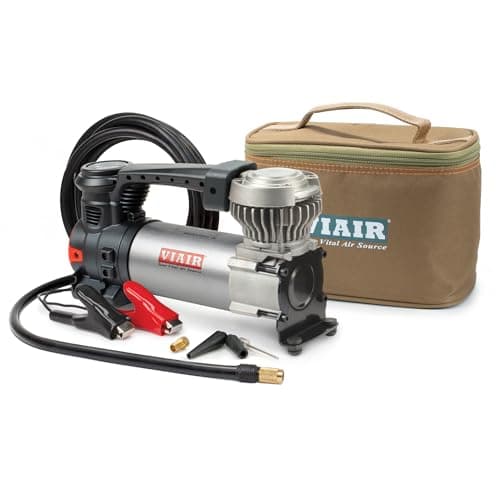 VIAIR 88P Portable Compressor Best brand overall: VIAIR | Truck, SUV and off-road tires | Publishes CFM, duty cycle, amp draw and inrush current per model | $89.89$103.95View on Amazon #ad Affiliate link · Price as of November 28, 2026 |
| 2 | 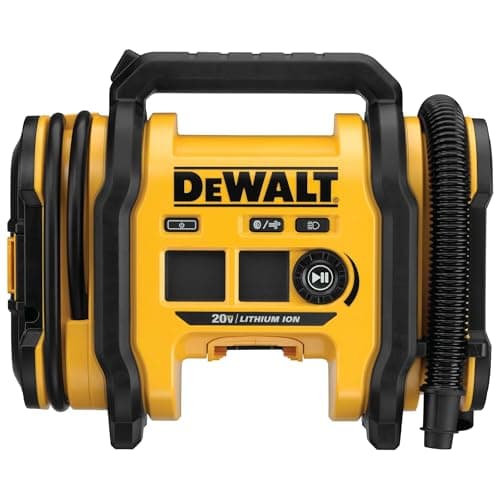 DEWALT DCC020IB 20V MAX Inflator Best tool-brand pick: DEWALT | Anyone already on DEWALT 20V batteries | Three power sources and a 3-year warranty, with a thin spec sheet | Check price on Amazon #ad Affiliate link · Amazon shows the current price |
| 3 | 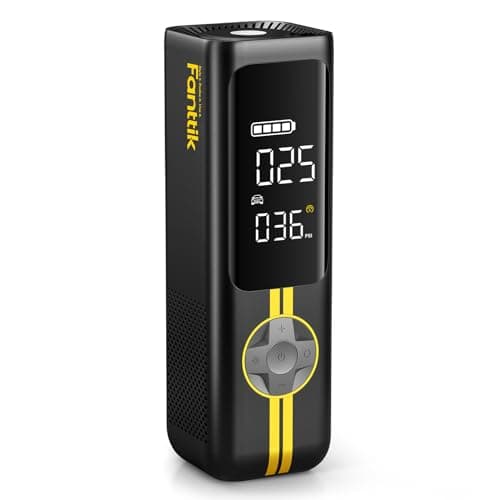 Fanttik X8 Apex Best cordless-first brand: Fanttik | Cordless top-ups from a glovebox | Publishes watt-hours, runtime, fill time and stated accuracy | $59.99$89.99View on Amazon #ad Affiliate link · Price as of November 28, 2026 |
| 4 | 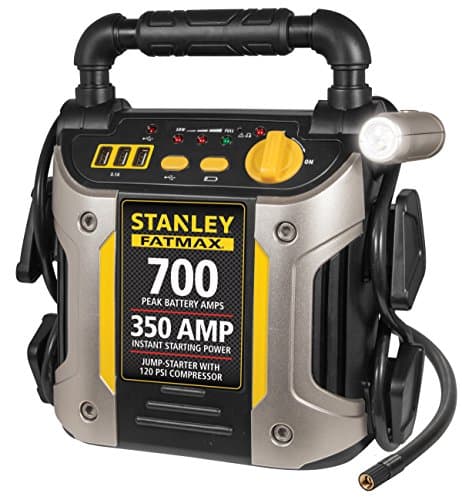 STANLEY FATMAX J7CS Best one-box brand: STANLEY | A cheap one-box jump-and-inflate station | 120 PSI plus a 700 A jump pack, honest about being the cheap end | $78.45$89.99View on Amazon #ad Affiliate link · Price as of November 28, 2026 |
| 5 | 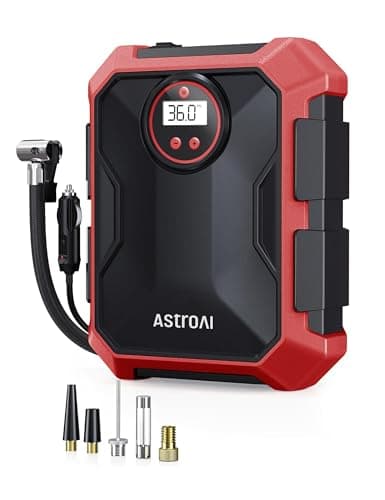 AstroAI 12V Tire Inflator Budget pick | The cheapest inflator still worth owning | The cheapest unit still worth owning, and it publishes nothing | $21.80$27.99View on Amazon #ad Affiliate link · Price as of November 28, 2026 |
Almost every inflator comparison ranks on maximum pressure, and maximum pressure is close to the least useful number on the box. A car tire takes 32 to 36 PSI. A light-truck tire takes 60 or so. A unit rated to 150 PSI is not telling you it fills tires faster — it is telling you where its pressure switch cuts out, which is a number any small motor can reach eventually if nothing stops it. Tire inflator PSI explained is the longer version of that argument.
So we rank brands on disclosure instead. A brand that publishes air flow in CFM is telling you how fast it actually moves air. A brand that publishes a duty cycle is telling you how long the motor runs before it has to rest, which is the single figure that decides whether a unit can take four light-truck tires from 20 PSI to 60 in one session. A brand that publishes a maximum amp draw is telling you whether it can run from a 12-volt socket at all, or whether it needs battery clamps. A brand that publishes none of those is asking you to trust one number on a box — and that is the real difference between the tiers in this market.
What each brand publishes
| Brand | Power | Air flow published | Duty cycle published | Amp draw published | Warranty published |
|---|---|---|---|---|---|
| VIAIR (88P / 400P) | 12 V battery clamps | Yes — 1.97 and 2.30 CFM at 0 PSI | Yes — 25 min at 30 PSI; 33% at 100 PSI | Yes — 20 A and 30 A, plus inrush | Via the dealer network |
| Fanttik (X8 Apex) | Internal 28.8 Wh battery | No | No — states up to 40 min runtime instead | Not applicable, USB-C 15 W recharge | Yes — 12 months |
| DEWALT (DCC020IB) | 20V MAX, 12 V DC or 110 V AC | No | No | No | Yes — 3-year limited |
| STANLEY (FATMAX J7CS) | Internal lead-acid, AC charger | No | No | No | Via the licensee |
| AstroAI (12 V inflator) | 12 V socket | No | No | No | Not published on the product page |
Figures are taken from each maker's own published product information, linked in the sources section below. A blank is a blank: where a brand does not publish a figure we have left it empty rather than filling it from a marketplace listing, because a number with no publisher behind it is not a specification.
That table is the whole page in miniature. One brand publishes the figures that decide the purchase. One publishes a different but genuinely useful set, because it sells a different kind of tool. Two publish a warranty and very little else. One publishes nothing and competes purely on price.
The picks
1. Best brand overall: VIAIR
VIAIR 88P Portable Compressor
VIAIR · Best for truck, suv and off-road tires
A battery-clamp compressor built for the tire sizes socket-powered units cannot handle without stopping to cool down.
Published specifications
- Maximum working pressure
- 120 PSI source
- Air flow
- 1.97 CFM at 0 PSI source
- Duty cycle
- 25 minutes at 30 PSI source
- Supply
- 12 V, battery clamps source
- Maximum amp draw
- 20 A source
- Inrush current
- 45 A at 0 PSI source
- Ingress protection
- IP53 source
- Operating temperature
- -4 to 158 °F source
- Tire size rating
- Up to 33 in source
- Weight
- 4.75 lb source
- Power cord / air hose
- 10 ft / 16 ft source
What works
- Connects to the battery terminals rather than the 12 V socket, so socket fuse current is not the limit
- Built for larger tires and repeated fills — the duty cycle is the whole reason to buy it
- Metal body and a real air hose rather than a molded plastic assembly
What does not
- The battery-clamp connection means popping the hood every time
- Bigger and heavier than any glovebox inflator
- Overkill, and slower to set up, for a routine cold-morning top-up
Skip it if
Not the pick if you drive a sedan and just want to correct 4 PSI once a month. That is what a socket inflator is for.
#ad Affiliate link · Price as of November 28, 2026
2. Best tool-brand pick: DEWALT
DEWALT DCC020IB 20V MAX Inflator
DEWALT · Best for anyone already on dewalt 20v batteries
Three power sources in one body — 20V MAX battery, 12 V socket or 110 V wall — with a digital gauge and auto-shutoff, which is what makes an inflator usable everywhere.
Published specifications
What works
- The 12 V socket option means a dead tool battery never leaves you stranded
- A threaded chuck screws onto the valve stem instead of clamping — the difference between a solid seal and a hissing one
- Set-and-walk-away auto-shutoff at your target pressure
- High-volume mode handles air mattresses and inflatables, not just tires
What does not
- Sold as a bare tool — battery, charger and AC adapter are separate purchases
- Bigger and heavier than a pocket 12 V inflator, so it wants trunk space
Skip it if
Not the pick if you own no DEWALT batteries and only ever top up car tires. A plain 12 V inflator is smaller and cheaper for that job.
#ad Affiliate link · Amazon shows the current price
Raw specifications: DEWALT’s own page for the DEWALT DCC020IB 20V MAX Inflator.
3. Best cordless-first brand: Fanttik
Fanttik X8 Apex
Fanttik · Best for cordless top-ups from a glovebox
A self-contained cordless inflator small enough to live in a door pocket, with a backlit digital gauge and a preset target pressure.
Published specifications
- Maximum pressure
- 150 PSI source
- Internal battery
- 28.8 Wh lithium-ion source
- Stated gauge accuracy
- ±1 PSI source
- Stated runtime
- Up to 40 minutes continuous source
- Stated fill time
- 56 seconds, 215/55 R17 from 28 to 33 PSI source
- Operating temperature
- 14 to 113 °F (-10 to 45 °C) source
- Weight
- 1.74 lb source
- Recharging
- USB-C, 15 W maximum source
- Work light
- 40 lumens source
- Preset modes
- 4 — bicycle, motorcycle, car, ball; PSI, kPa and bar source
- Warranty
- 12 months source
What works
- No cable to the car at all — it runs off its own internal battery
- Small enough that it stays in the vehicle, which is most of the battle
- Preset-and-stop pressure control avoids the overshoot you get chasing an analogue gauge
What does not
- An internal battery is one more thing to keep charged, and cold weather cuts into it
- Cordless inflators this size heat up on large tires; expect to work in stages
- Manufacturer duty-cycle figures for this class are not consistently published
Skip it if
Not the pick for light-truck or RV tires. Small cordless units are built for top-ups, not for taking a 35-inch tire from flat to 60 PSI.
#ad Affiliate link · Price as of November 28, 2026
4. Best one-box brand: STANLEY
STANLEY FATMAX J7CS
STANLEY · Best for a cheap one-box jump-and-inflate station
A lead-acid station with a 120 PSI compressor and triple USB, rated to V6 — the budget end of the one-box category, and honest about being it.
Published specifications
- Jump starting
- 700 peak amps / 350 instant starting amps, rated to V6 source
- Air compressor
- 120 PSI, backlit gauge source
- USB output
- Triple USB ports source
- Battery types
- 12 V AGM, gel and wet lead-acid source
- AC
- Built-in 120 V AC charger (charging input — not an AC power outlet) source
- Light
- LED, rotates 270 degrees source
What works
- Jump starting, a 120 PSI compressor and USB charging in one case at the cheapest point in the category
- Built-in AC charger, so there is no separate brick to lose
- Reverse-polarity alarm, and metal clamps rather than the plastic ones at this price
- Lead-acid, so a hot trunk does not permanently cost it capacity
What does not
- 700 peak / 350 instant amps and a V6 rating — this is not a truck or diesel tool
- Lead-acid self-discharges, so it needs topping up on a schedule or it is flat when you need it
- Heavier and bulkier than a lithium pack of equivalent starting ability
Skip it if
Not enough pack for a V8, a diesel or anything you rely on in the cold. STANLEY rates it to V6, and buying at the edge of a rating is how people end up stranded twice.
#ad Affiliate link · Price as of November 28, 2026
Raw specifications: STANLEY’s own page for the STANLEY FATMAX J7CS.
5. Budget pick
AstroAI 12V Tire Inflator
AstroAI · Best for the cheapest inflator still worth owning
A plain 12 V socket-powered inflator with a digital gauge and auto-shutoff — the baseline that covers a car's tires with no battery to maintain.
This manufacturer does not publish a full specification table for this model on its own site. Rather than repeat figures we cannot source, the assessment below is limited to what the product category and the retailer listing genuinely establish.
What works
- Powered from the 12 V socket, so it works whenever the car does
- Nothing to keep charged, which means it is never flat when the tire is
- Digital preset shutoff at the target pressure
What does not
- The cord limits where you can work, and reaching a rear tire can be tight
- Small-motor inflators in this tier run hot; large tires need rest intervals
- Gauge accuracy in this class varies unit to unit, so verify against a separate gauge
Skip it if
Not the pick if you regularly air down and back up for trails, or run light-truck tires. That is dedicated-compressor work.
#ad Affiliate link · Price as of November 28, 2026
VIAIR: the brand that publishes the number that matters
VIAIR sells compressors rather than inflators, and the specification sheet shows it. For the 88P it publishes 120 PSI maximum working pressure, 1.97 CFM at 0 PSI, a 25-minute duty cycle at 30 PSI, a 20-amp maximum draw with a 45-amp inrush at 0 PSI, IP53 ingress protection, an operating range of -4 to 158 °F, a tire size rating up to 33 inches, 4.75 pounds, and a 10-foot power cord with a 16-foot air hose. You can decide whether that unit suits your vehicle before you buy it, which is not true of most of this category.
The 400P is the step up for people who air down deliberately: 150 PSI, 2.30 CFM, a published 33 percent duty cycle at 100 PSI, 12-volt or 24-volt operation, a 30-amp draw at 12 volts, IP54, 10.40 pounds and a 25-foot air hose that reaches every corner of a vehicle from one hookup. That 30-amp figure is exactly why VIAIR units use battery clamps rather than a 12-volt socket plug — a typical accessory socket is fused at 10 to 20 amps, and the amp draw is the specification that tells you so.
The honest cost of buying VIAIR is convenience and bulk. Popping the hood to attach clamps every time is a real tax on a routine cold-morning top-up, and neither unit is a glovebox tool. If you drive a sedan and want to correct 4 PSI once a month, VIAIR is the wrong brand and you should buy a socket or cordless inflator instead. Tire inflator duty cycle explained is the page that makes the duty-cycle case properly, and the best tire inflator for trucks and SUVs is where VIAIR earns its place.
Fanttik: different specs, published anyway
Fanttik does not publish CFM or a duty cycle, and we would rather it did. What it does publish is the set that matters for a cordless unit: 150 PSI maximum, a 28.8 watt-hour internal lithium-ion battery, a stated gauge accuracy of plus or minus 1 PSI, up to 40 minutes of continuous runtime, a stated fill time of 56 seconds for a 215/55 R17 tire from 28 to 33 PSI, an operating range of 14 to 113 °F, 1.74 pounds, USB-C recharging at up to 15 watts, a 40-lumen work light, four preset modes, and a 12-month warranty.
A stated fill time against a named tire size is a more useful disclosure than CFM for this class of tool, because it answers the actual question. And the operating range is the specification worth reading twice: 14 °F is a real floor, and a cordless inflator is at its worst on exactly the cold morning you need it. The trade for the convenience is that an internal battery is one more thing to keep charged, and small cordless units heat up on large tires, so expect to work in stages. The best cordless tire inflators covers that class in full, and the Fanttik X8 Apex review has the detail.
DEWALT: buy the ecosystem, not the spec sheet
DEWALT publishes a 3-year limited warranty with a year of free service and a 90-day satisfaction guarantee for the DCC020IB, and it publishes what the tool does: it runs from a 20V MAX battery, a 12-volt socket or a 110-volt wall outlet; it has a high-pressure mode with auto-shutoff plus a high-volume inflate and deflate mode; and it uses a threaded chuck that screws onto the valve stem rather than clamping over it.
Those are genuinely good features. The threaded chuck is the difference between a solid seal and a hissing one, and the three power sources mean a dead tool battery never leaves you stranded. What DEWALT does not publish is CFM, duty cycle or amp draw, so there is no way to tell from the specification sheet how this unit behaves on a 35-inch tire or whether it will run from a 15-amp socket without blowing the fuse. Buy it because you already own 20V MAX batteries and want one more thing that takes them — that is a real and sufficient reason. Do not buy it expecting compressor-grade throughput you can verify. The DEWALT 20V inflator review goes further on it.
STANLEY: the honest cheap end of the one-box category
STANLEY's FATMAX J7CS is not really an inflator — it is a lead-acid station with a 120 PSI compressor and a backlit gauge on the side of a 700-peak-amp, 350-instant-amp jump pack rated to V6, with triple USB ports, support for 12-volt AGM, gel and wet lead-acid batteries, a built-in 120-volt AC charger and a light that rotates 270 degrees. It belongs on this page because for a lot of buyers, the inflator they end up owning is the one attached to the jump pack they bought.
What we like about STANLEY here is that the rating is stated honestly: 700 peak amps and a V6 ceiling, at the cheapest point in the category. What you give up is substantial. Lead-acid self-discharges, so the unit needs topping up on a schedule or it is flat the day you need it; it is heavier and bulkier than a lithium pack of equivalent starting ability; and the built-in compressor is a convenience feature rather than a match for a dedicated unit's throughput. Tire inflator versus air compressor sets out that distinction, and if the jump-starting side is the real purchase, the best jump starter with an air compressor is the page for it.
The budget tier, and what the price actually costs you
AstroAI is the cheapest brand on this page that we would still put in a trunk. The 12-volt socket inflator has a digital gauge and a preset auto-shutoff, it needs nothing kept charged, and it works whenever the car does — which is a genuine advantage over every cordless unit here. For a sedan that needs 4 PSI corrected once a month, that is the whole job.
The caveats are the ones the empty row in the table implies. There is no published air flow, duty cycle or amp draw, so there is nothing to check and nothing to hold anyone to. Small-motor inflators in this tier run hot, so large tires need rest intervals you will have to judge yourself. And gauge accuracy in this class varies unit to unit, which is why we would pair any budget inflator with a separate reference gauge rather than trusting its display: tire inflator accuracy explains why, and the best tire pressure gauges covers the gauge itself. For the rest of this price band, the budget tire inflator bracket is the page that lists it.
What we would buy
Light-truck, SUV or off-road tires, or anyone who airs down and back up: VIAIR, and the 88P unless you deliberately run large tires down for trails, in which case the 400P's 25-foot hose and published 33 percent duty cycle at 100 PSI are worth the 10.40 pounds. It is the only brand here that lets you confirm the unit suits the tire before you buy.
A car that needs regular top-ups and an owner who wants no cables: Fanttik, accepting the 14 °F floor and the need to keep it charged. Already invested in DEWALT 20V MAX: DEWALT, for the threaded chuck and the three power sources, and without expecting a duty cycle. One case that jumps a V6 and inflates a tire at the lowest price: STANLEY, on a charging schedule. The cheapest thing worth owning: AstroAI, paired with a real gauge.
And if you are not sure which class of tool you want before you pick a brand, start at the best portable tire inflators — it is organized by the job rather than by the badge, which is the right order to decide in.
Key takeaways
- Maximum PSI is the least useful number on the box. Air flow, duty cycle and amp draw are the ones that decide the purchase.
- VIAIR is the only brand here that publishes all three per model, which is why it ranks first.
- Amp draw explains the hardware: VIAIR's 20 A and 30 A figures are why its units use battery clamps instead of a socket plug.
- Fanttik publishes a different but genuinely useful set — watt-hours, runtime, a stated fill time and plus or minus 1 PSI accuracy.
- DEWALT publishes a 3-year warranty and three power sources, but no CFM, duty cycle or amp draw.
- STANLEY states its jump rating honestly at 700 peak amps and a V6 ceiling; the compressor is a convenience feature.
- AstroAI publishes nothing, which is the trade for the price — pair any budget inflator with a separate reference gauge.
How we sourced this
Every figure on this page came from one of the following. Where a manufacturer or regulator does not publish a number, we say so rather than estimate it.
- VIAIR 88P portable compressor published specifications
- VIAIR 400P portable compressor published specifications
- Fanttik X8 APEX tire inflator published specifications
- DEWALT DCC020IB 20V MAX inflator product page
- STANLEY FATMAX J7CS published product information
- AstroAI 12V 100 PSI tire inflator product page
- NHTSA TireWise — tire safety ratings and awareness
Common questions
- What is the best tire inflator brand?
- VIAIR, if you want one answer. It is the only brand on this page that publishes air flow in CFM, a duty cycle and a maximum amp draw for every compressor it sells, which means you can confirm the unit suits your tires before buying. The trade is bulk and battery clamps, so for routine car top-ups a cordless brand such as Fanttik is the more practical buy.
- Is DEWALT a good tire inflator brand?
- It is a good purchase for someone already on 20V MAX batteries. The DCC020IB runs from a tool battery, a 12-volt socket or a wall outlet, uses a threaded chuck, and carries a 3-year limited warranty. What DEWALT does not publish is CFM, duty cycle or amp draw, so there is no way to verify how it performs on large tires from the specification sheet alone.
- Are cheap tire inflators worth buying?
- A cheap 12-volt socket inflator with a digital auto-shutoff is worth owning, because the alternative is usually owning nothing. What you give up is published figures, consistent gauge accuracy and duty cycle. Pair one with a separate reference gauge, and do not ask it to take a light-truck tire from flat to 60 PSI without rest intervals.
- Why does duty cycle matter more than PSI?
- Because the pressure rating only tells you where the unit cuts out, while the duty cycle tells you how long the motor can run before it has to cool. Any small compressor reaches 35 PSI in a car tire. Taking four light-truck tires from 20 PSI to 60 in one session is a duty-cycle job, and most brands do not publish one.
- Do I need battery clamps or will a 12-volt socket do?
- The amp draw decides it. VIAIR publishes 20 amps for the 88P and 30 amps at 12 volts for the 400P, and a typical accessory socket is fused at 10 to 20 amps — which is why those units ship with battery clamps. Socket-powered and cordless inflators are built to stay under that ceiling, and they trade throughput for the convenience.
- Which brand is best for truck tires?
- VIAIR. The 88P publishes a tire size rating up to 33 inches and a 25-minute duty cycle at 30 PSI; the 400P publishes 2.30 CFM and 33 percent at 100 PSI with a 25-foot hose. Cordless and socket units in this comparison are built for top-ups rather than for filling a light-truck tire from flat, and none of them publishes a duty cycle you could check against the job.
More in Tire Inflators
The cheapest tool that prevents the second-most-common roadside stop. Here is which type fits your tires, and the two specs that actually matter.
Read next
Best Portable Tire Inflators
Best Portable Tire Inflators
Our main inflator roundup: socket, cordless, tool-battery and battery-clamp units, matched to the tires you actually run.
Best Cordless Inflators
Best Cordless
Cordless picks for glovebox convenience, and a clear account of what the internal battery costs you in cold weather and on big tires.
Best for Trucks & SUVs
For Trucks & SUVs
Battery-clamp compressors and heavy-duty units for light-truck and off-road tires, with the duty-cycle reasoning spelled out.
Guide
Duty Cycle Explained
What duty cycle means, why it decides whether an inflator can handle large tires, and what to infer when the manufacturer stays silent.
Best VIAIR 88P alternative
VIAIR 88P Alternatives
What the 88P is known for, from VIAIR's own specification sheet — then three alternatives that trade published duty cycle for convenience or a lower price.
Guide
Gauge Accuracy
Why built-in gauges drift, how to check yours against a reference, and why we will not publish per-model deviation numbers we have not measured.
Found something out of date, or a figure you can source better than we did? Tell us — corrections get read first. Our methodology explains how picks are made, and contact is one click away.