Tire Inflators
Tire inflator not working? Start here
Most of these are not failures. A socket that is dead with the key off, a chuck that is not sealed, and a thermal cutout doing its job account for nearly all of them.

Disclosure: we earn a commission if you buy through the Amazon links on this page, at no extra cost to you. Commission never decides a verdict or a ranking position — read our editorial policy and affiliate disclosure.
How we assessed these: picks are selected from manufacturer specifications, current retailer listings and published owner feedback — not from hands-on testing of every unit. Where a manufacturer does not publish a figure, it is left out rather than estimated.
Short answer
In order of likelihood: the 12-volt socket is unpowered with the ignition off, the chuck is not sealed on the valve stem, the unit has hit its thermal cutout and needs to cool, the in-line fuse in the plug has blown, or the gauge is reading a pressure the pump cannot overcome. Only the last two are faults; the first three are the inflator behaving as designed.
Work down this list in order. Each step takes under a minute, and the first three resolve the large majority of cases without any parts.
1. It does not turn on at all
Check the socket has power with the engine off. Many vehicles cut the accessory socket when the ignition is off, and some cut it when the driver's door opens. Turn the key to accessory, or start the engine, and try again. This is the single most common cause and it is not a fault in the inflator.
Check the fuse in the plug. Nearly every 12-volt plug has a small glass or blade fuse under the screw-off tip. Unscrew it and look at the filament. A blown one is a one-part fix and costs almost nothing — but replace it with the same rating, never a larger one.
Check the vehicle's accessory fuse. If the socket is dead for everything, not just the inflator, the fuse is in the vehicle's fuse box, not the plug. Your owner's manual has the location and rating.
If it is cordless, it is the battery. A cordless inflator left in a cold vehicle for months will not hold its charge. Charge it indoors and try again before concluding anything. Fanttik publishes a 5 V / 3 A USB-C adapter requirement for the X8 APEX — undersupplying a cordless unit's charger is a quiet cause of a pack that never seems full.
2. It runs but the tire is not filling
The chuck is not sealed. This is the most common cause of a running-but-useless inflator. A screw-on chuck has to be threaded far enough to depress the valve core; a clip-on has to be square and fully latched. If you can hear air escaping around the connection, it is not seated.
The valve cap is still on, or the valve core is stuck. Obvious, and it happens. A stuck or corroded valve core will not open under the chuck; a cheap valve core tool is the fix.
The hose is kinked or the extension is too long. Added extension hose costs you flow. If the unit worked before and does not now with a new extension, that is the change to undo.
The tire is beyond inflating. If the tire is off the bead, a small inflator will never seat it — that needs the high volume a clamp-on compressor delivers, and often not even then. Tire inflator versus sealant covers what each can genuinely recover.
3. It stops partway through
This is almost always the thermal cutout, and it is a protective feature rather than a fault. Compressor motors heat up, and small ones heat up fast. VIAIR publishes a duty cycle for its units — 25 minutes at 30 PSI on the 88P, 33 percent at 100 PSI on the 400P — precisely because running past it is what the cutout exists to prevent.
Let it cool for fifteen to twenty minutes and continue. If a unit needs three cooling breaks to fill one tire, it is not broken — it is undersized for the tire. Tire inflator duty cycle explains the spec, and inflators for trucks and SUVs covers what to buy instead.
4. The gauge reads wrong, or it stops at the wrong pressure
Built-in gauges drift, and they drift by different amounts unit to unit even within one model. If your inflator's preset shuts off at 35 PSI and a separate pencil gauge reads 32, neither is necessarily broken — you have found your unit's offset.
Check it against a separate gauge once, write the difference somewhere, and apply it from then on. How accurate are tire inflator gauges walks through the one-minute method, and explains why we do not publish per-model deviation figures we have not measured.
The other possibility is that the pump has reached its ceiling. An inflator rated to 100 PSI will slow dramatically approaching that figure and may simply stall. On a car tire that is not your problem; on an RV tire it might be. Tire inflator PSI ratings covers the headroom question.
5. It works in summer and not in cold
Two separate things cause this. A cordless unit loses usable capacity in the cold, like every lithium battery, so a pack that managed four tires in July manages two in January. A socket-powered unit does not have that problem at all — which is the practical argument in 12V versus cordless.
The second is that you need more air in winter, not less. Pressure falls as temperature falls, so the same tire genuinely needs more pumping on a cold morning than a warm one. The inflator is not weaker; the job is bigger.
When it is actually worth replacing
- The motor runs but makes a new noise, or smells hot at low pressure. That is wear, not duty cycle.
- The cord or plug is damaged. A chafed 12-volt lead carrying 8 amps is not something to tape up.
- It needs more than two cooling breaks per tire routinely. It is undersized, and no repair fixes that.
- The gauge offset is large or inconsistent. A gauge that reads differently each time cannot be corrected for.
The picks
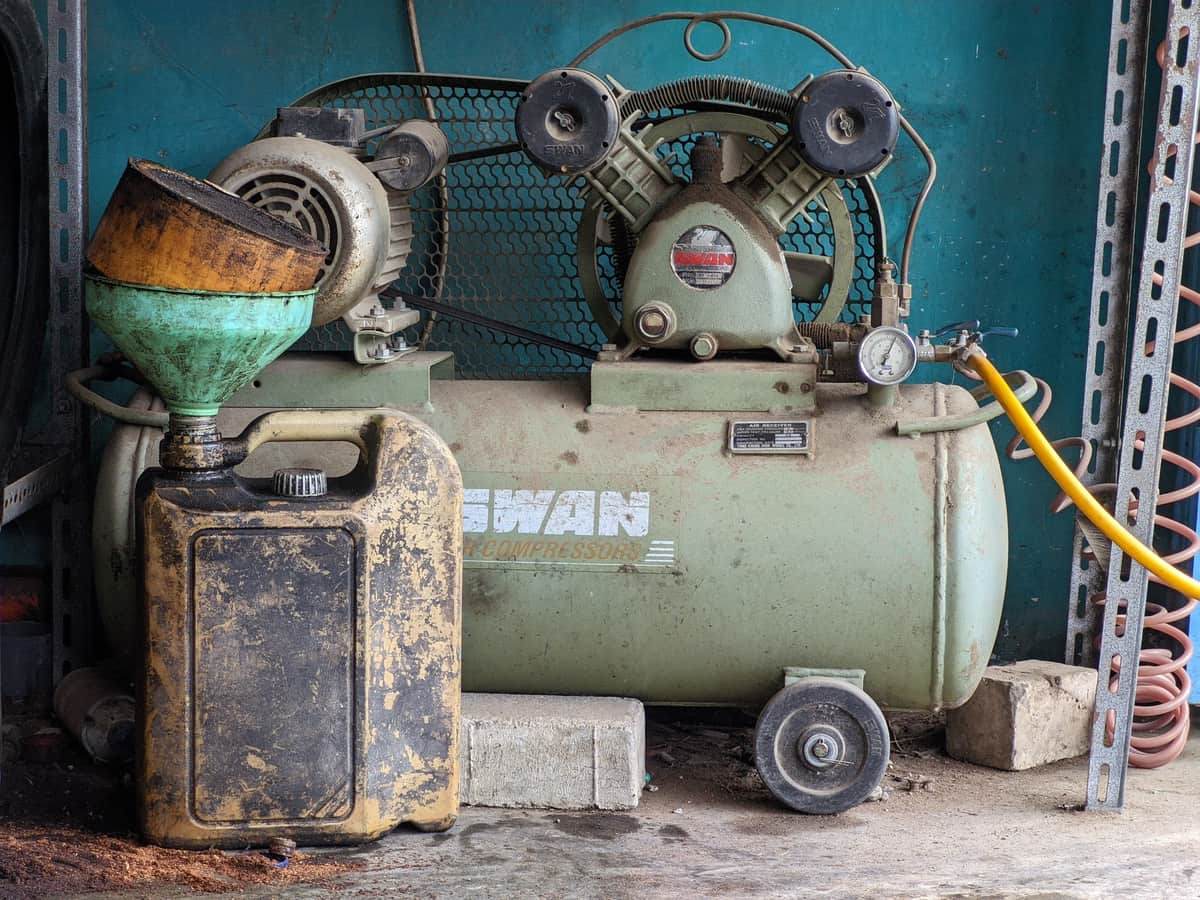
1. The straightforward replacement
AstroAI 12V Tire Inflator
AstroAI · Best for the cheapest inflator still worth owning
A plain 12 V socket-powered inflator with a digital gauge and auto-shutoff — the baseline that covers a car's tires with no battery to maintain.
This manufacturer does not publish a full specification table for this model on its own site. Rather than repeat figures we cannot source, the assessment below is limited to what the product category and the retailer listing genuinely establish.
What works
- Powered from the 12 V socket, so it works whenever the car does
- Nothing to keep charged, which means it is never flat when the tire is
- Digital preset shutoff at the target pressure
What does not
- The cord limits where you can work, and reaching a rear tire can be tight
- Small-motor inflators in this tier run hot; large tires need rest intervals
- Gauge accuracy in this class varies unit to unit, so verify against a separate gauge
Skip it if
Not the pick if you regularly air down and back up for trails, or run light-truck tires. That is dedicated-compressor work.
#ad Affiliate link · We show no price here; Amazon shows the current one
2. If the cord was the problem
Fanttik X8 Apex
Fanttik · Best for cordless top-ups from a glovebox
A self-contained cordless inflator small enough to live in a door pocket, with a backlit digital gauge and a preset target pressure.
Published specifications
- Maximum pressure
- 150 PSI source
- Internal battery
- 28.8 Wh lithium-ion source
- Stated gauge accuracy
- ±1 PSI source
- Stated runtime
- Up to 40 minutes continuous source
- Stated fill time
- 56 seconds, 215/55 R17 from 28 to 33 PSI source
- Weight
- 1.74 lb source
- Recharging
- USB-C, 5 V / 3 A adapter source
- Work light
- 40 lumens source
What works
- No cable to the car at all — it runs off its own internal battery
- Small enough that it stays in the vehicle, which is most of the battle
- Preset-and-stop pressure control avoids the overshoot you get chasing an analogue gauge
What does not
- An internal battery is one more thing to keep charged, and cold weather cuts into it
- Cordless inflators this size heat up on large tires; expect to work in stages
- Manufacturer duty-cycle figures for this class are not consistently published
Skip it if
Not the pick for light-truck or RV tires. Small cordless units are built for top-ups, not for taking a 35-inch tire from flat to 60 PSI.
#ad Affiliate link · We show no price here; Amazon shows the current one

3. If it kept overheating
VIAIR 88P Portable Compressor
VIAIR · Best for truck, suv and off-road tires
A battery-clamp compressor built for the tire sizes socket-powered units cannot handle without stopping to cool down.
Published specifications
What works
- Connects to the battery terminals rather than the 12 V socket, so socket fuse current is not the limit
- Built for larger tires and repeated fills — the duty cycle is the whole reason to buy it
- Metal body and a real air hose rather than a molded plastic assembly
What does not
- The battery-clamp connection means popping the hood every time
- Bigger and heavier than any glovebox inflator
- Overkill, and slower to set up, for a routine cold-morning top-up
Skip it if
Not the pick if you drive a sedan and just want to correct 4 PSI once a month. That is what a socket inflator is for.
#ad Affiliate link · We show no price here; Amazon shows the current one
Key takeaways
- Most accessory sockets are dead with the ignition off — check that first.
- A running inflator that is not filling is nearly always an unsealed chuck.
- Stopping partway is the thermal cutout working, not a failure.
- Check the in-line fuse in the plug tip before the vehicle's fuse box.
- A gauge that reads a few PSI off is normal; find the offset once and apply it.
How we sourced this
Every figure on this page came from one of the following. Where a manufacturer or regulator does not publish a number, we say so rather than estimate it.
Common questions
- Why is my tire inflator not turning on?
- Most often because the vehicle's 12-volt accessory socket has no power with the ignition off. Turn the key to accessory and try again. If it is still dead, check the small fuse under the screw-off tip of the plug, then the vehicle's accessory fuse. A cordless unit that will not start is usually a discharged internal battery.
- Why is my tire inflator running but not inflating the tire?
- Almost always the chuck is not sealed on the valve stem. A screw-on chuck has to go far enough to depress the valve core, and a clip-on has to be square and fully latched. If you hear air escaping at the connection, that is the fault. A stuck valve core or a kinked hose are the next things to check.
- Why does my tire inflator stop before the tire is full?
- It has reached its thermal cutout, which is a protective feature rather than a failure. Let it cool for fifteen to twenty minutes and continue. If it needs several cooling breaks for one tire, the unit is undersized for that tire — the specification to compare is duty cycle, which VIAIR publishes and most small inflators do not.
- My inflator shuts off at the wrong pressure. Is it broken?
- Probably not. Built-in gauges vary unit to unit, so a two or three PSI difference against a separate gauge is normal. Check yours once against a reference gauge, note the offset and apply it. A gauge that reads differently each time, by contrast, cannot be corrected for and the unit is worth replacing.
More in Tire Inflators
The cheapest tool that prevents the second-most-common roadside stop. Here is which type fits your tires, and the two specs that actually matter.
Read next
Guide
Gauge Accuracy
Why built-in gauges drift, how to check yours against a reference, and why we will not publish per-model deviation numbers we have not measured.
Guide
Duty Cycle Explained
What duty cycle means, why it decides whether an inflator can handle large tires, and what to infer when the manufacturer stays silent.
How to
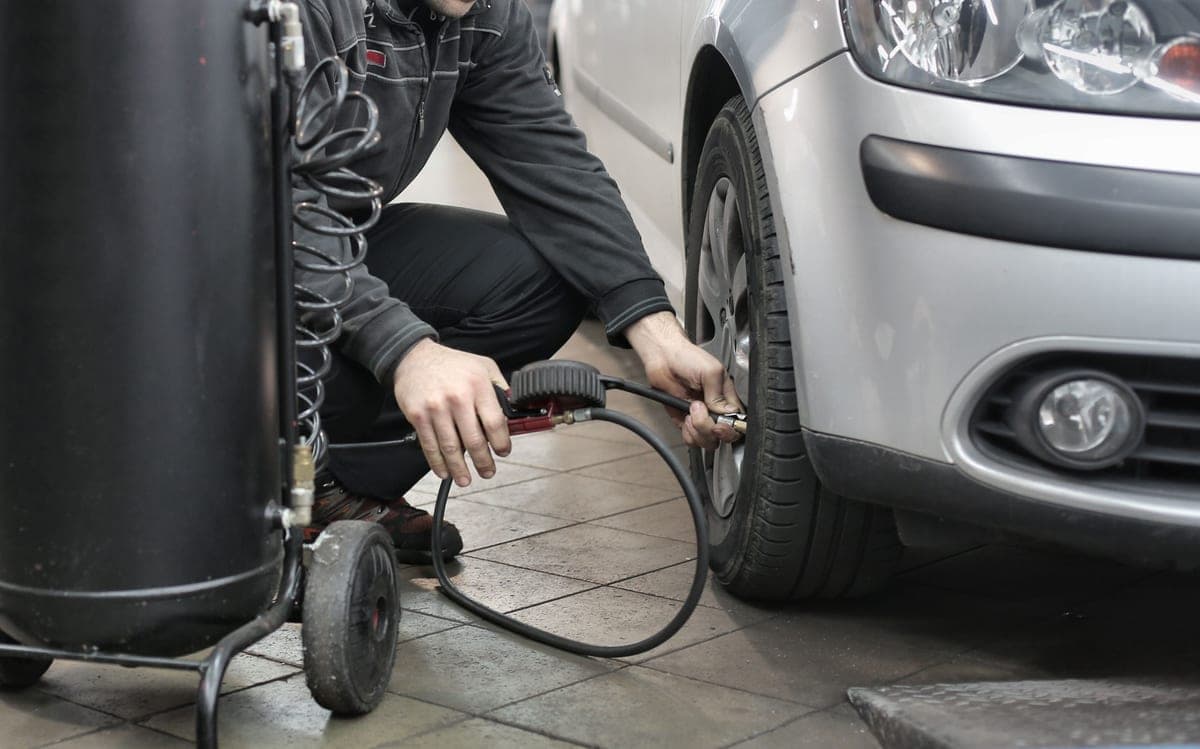
How to Use One
The full sequence, including the chuck technique that stops air escaping and what to do if the tire drops straight back down.
Head to head
12V vs Cordless
Socket power versus an internal battery, compared on reliability, convenience, cold-weather output and what happens when the car battery is also dead.
Guide
PSI Ratings Explained
Why a 150 PSI inflator is not faster than a 100 PSI one, what the rating genuinely limits, and the spec that decides how long you stand there.
Found something out of date, or a figure you can source better than we did? Tell us — corrections get read first. Our methodology explains how picks are made, and contact is one click away.