Battery Chargers
The best battery chargers for a lawn mower
A riding mower battery is roughly half the size of a car battery and sits unused for five months a year. Those two facts pick the charger.

Disclosure: we earn a commission if you buy through the Amazon links on this page, at no extra cost to you. Commission never decides a verdict or a ranking position — read our editorial policy and affiliate disclosure.
How we assessed these: picks are selected from manufacturer-published specifications, current retailer listings and published owner feedback — not from hands-on testing of every unit. Where a figure is not published, we leave it out rather than estimate it.
Short answer
A riding mower battery is typically a 12 V group U1 at around 30 amp-hours, so the right charger is 1-3 amps with a maintenance mode you can leave connected all winter. A 2-amp unit like the NOCO GENIUS2 is the default answer. A 10-amp car charger is the wrong tool — too much current for a battery this small.
Nearly every mower battery that gets replaced did not fail. It sat from October to April losing a little charge every week, sulfated, and then would not turn the engine over on the first warm Saturday in spring. The charger that prevents that is small, cheap and left plugged in — and it is a different purchase from the charger in the garage for the car.
Quick picks
Tap any row to jump to the full write-up. Scoring criteria are published in full on our methodology page.
| # | Product | Best for | Our read | Price |
|---|---|---|---|---|
| 1 |  NOCO GENIUS2 Best overall for a mower | Motorcycles, ATVs and lawn equipment | 2 A and a 40 Ah ceiling match a U1 battery exactly | Check price on Amazon #ad Affiliate link · We show no price here; Amazon shows the current one |
| 2 |  Battery Tender Plus 12V 1.25A Best for the whole off-season | Long-term storage on a car battery | 1.25 A, and a 10-year warranty behind it | Check price on Amazon #ad Affiliate link · We show no price here; Amazon shows the current one |
| 3 | 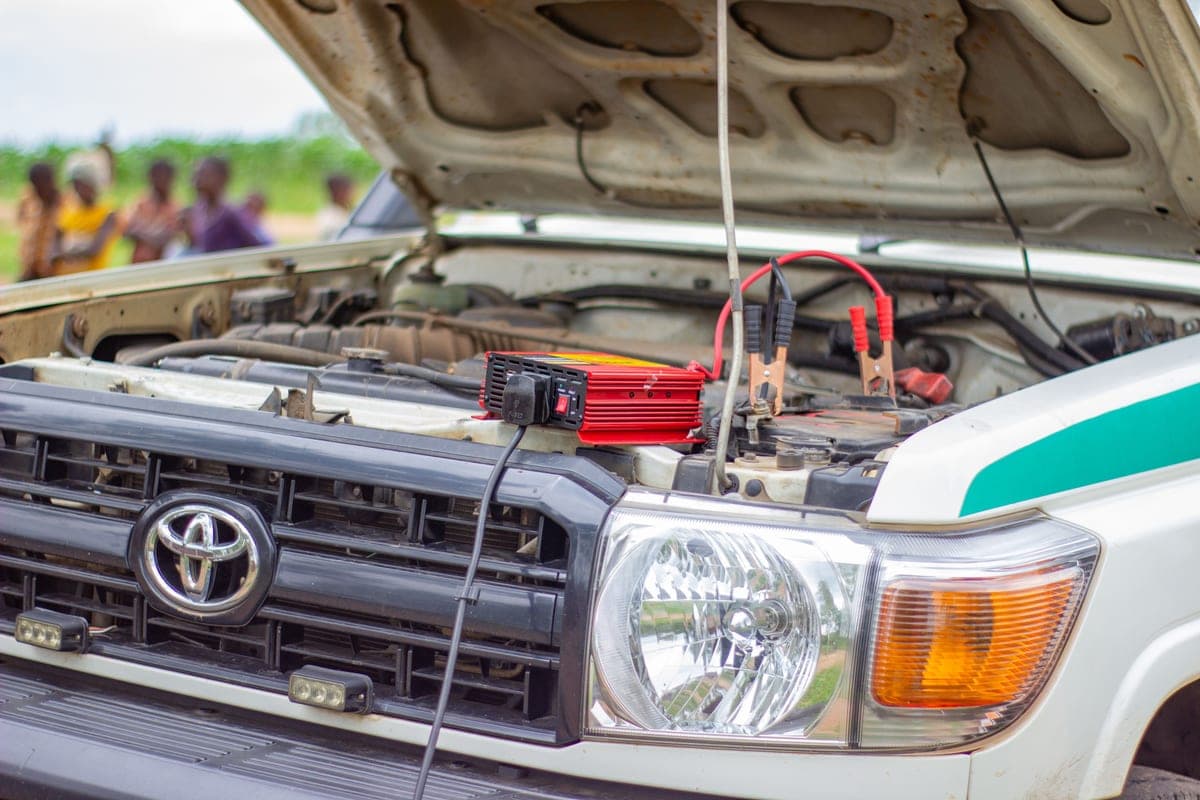 NOCO GENIUS5 Best if it also charges the car | One car, charging and maintaining | 6 V mode covers older garden tractors too | Check price on Amazon #ad Affiliate link · We show no price here; Amazon shows the current one |
| 4 |  Battery Tender Solar Maintainer Best where there is no outlet | Vehicles stored away from an outlet | For the mower stored in a shed with no power | Check price on Amazon #ad Affiliate link · We show no price here; Amazon shows the current one |
How we chose these
Current matched to a 30 amp-hour battery, not a 60. The working guideline across this category is that a charge current of roughly 10% of the battery's amp-hour rating gives a comfortable charge. John Deere publishes 12 V, 30 Ah and 350 CCA for its U1 lawn-and-garden battery, which puts the comfortable band at about 3 amps and makes 1-2 amps the safe, unhurried choice. What amp battery charger do I need walks that arithmetic properly.
A published capacity ceiling that actually covers a U1. Amps tell you how fast; the amp-hour range tells you what size battery the unit was designed around. NOCO publishes up to 40 Ah for the GENIUS2 and up to 120 Ah for the GENIUS5; Battery Tender publishes up to 80 Ah for the Plus. All three comfortably bracket a 30 Ah mower battery, and the GENIUS2's ceiling is the closest fit of the three.
Safe to leave connected for five months. This is the single most important criterion and the one most buyers skip. A mower sits unused for roughly half the year, so what you want is not a fast charger — it is a multi-stage unit that charges, then drops to a float or maintenance voltage and holds there indefinitely. How long can you leave a battery maintainer on is the direct answer, and charger versus maintainer explains why the distinction matters more here than anywhere else on this site.
A published cold rating. Mowers are stored in unheated sheds, barns and garages, which is exactly where a charger has to work from November onward. NOCO publishes an operating range of -4 to 104 °F for the GENIUS line. That is a manufacturer figure, and it is the reason we favor units that publish one.
Chemistry handling, honestly stated. Most mower batteries are flooded lead-acid, some are AGM, and an increasing number of battery-powered mowers use lithium packs that must never see a lead-acid charger. Battery Tender publishes flooded, AGM and gel support on the Plus. Starting versus deep-cycle batteries covers why a mower battery is a starting battery, not a deep-cycle one, despite what the shape suggests.
Warranty, because the spread in this category is wide and these are units you buy once. NOCO warrants the GENIUS line for three years; Battery Tender warrants the Plus for ten and the 5 W solar panel for five.
What size is a mower battery, really
| Equipment | Typical battery | Charger current | Our pick |
|---|---|---|---|
| Riding mower / lawn tractor | 12 V group U1, around 30 Ah | 1-3 A | NOCO GENIUS2 |
| Zero-turn mower | 12 V U1 or U1R, around 30-35 Ah | 1-3 A | NOCO GENIUS2 |
| Garden tractor, pre-1970s | 6 V, varies | 1-2 A, 6 V capable | NOCO GENIUS5 |
| Compact utility tractor | 12 V group 24 or larger | 4-10 A | NOCO GENIUS5 |
| Mower stored away from power | 12 V U1 | Solar float | Battery Tender 5 W solar |
| Mower and the family car, one charger | 30 Ah and 60 Ah | 5 A | NOCO GENIUS5 |
U1 amp-hour figures reflect John Deere's published rating for its TY25221B lawn-and-garden battery (12 V, 30 Ah, 350 CCA, group U1 BCI). Check the label on your own battery — U1 and U1R differ only in terminal position, not capacity.
The picks
1. Best overall for a mower
NOCO GENIUS2
NOCO · Best for motorcycles, atvs and lawn equipment
A 2-amp maintainer for the small batteries a car charger would cook: motorcycles, ATVs, mowers and anything that sits for months.
Published specifications
What works
- 2 A is the right order of magnitude for a 10-20 Ah powersports battery
- Safe to leave connected through a whole off-season
- Light and small enough to live on a shelf beside the bike
What does not
- The 40 Ah ceiling makes it a maintainer for a car battery, not a recovery charger
- Recharging a flat car battery at 2 A takes most of a weekend
Skip it if
Not the charger to buy if your actual problem is a flat car battery you need back tonight. That is a 5 A or 10 A job.
#ad Affiliate link · We show no price here; Amazon shows the current one
Raw specifications: NOCO’s own page for the NOCO GENIUS2.
2. Best for the whole off-season
Battery Tender Plus 12V 1.25A
Battery Tender · Best for long-term storage on a car battery
The storage-maintainer benchmark: 1.25 amps, automotive batteries up to 80 Ah, a four-step program and a 10-year warranty behind it.
Published specifications
What works
- A 10-year warranty is the longest in this category by a wide margin
- 1.25 A is low enough to leave connected through a winter without heat build-up
- Covers flooded, AGM and gel without a chemistry switch to get wrong
What does not
- 1.25 A is a maintainer current — it will not revive a deeply flat battery quickly
- The 80 Ah ceiling rules out large truck and deep-cycle batteries
- No 6 V mode on the standard Plus; that is a different model in the line
Skip it if
Not the unit for recovering a flat battery on a deadline. Buy it for the car that sits, not the car that stranded you this morning.
#ad Affiliate link · We show no price here; Amazon shows the current one
Raw specifications: Battery Tender’s own page for the Battery Tender Plus 12V 1.25A.
3. Best if it also charges the car
NOCO GENIUS5
NOCO · Best for one car, charging and maintaining
The single most useful charger for one vehicle: 5 amps, 6 V and 12 V, batteries up to 120 Ah, and it can be left connected indefinitely.
Published specifications
What works
- 5 A recharges a car battery overnight and then holds it — one unit does both jobs
- Rated down to -4 °F, so it works in an unheated garage
- The 77-inch cable reaches from a wall outlet to most engine bays without an extension
- 3-year warranty, against 1 year on the jump-starter line
What does not
- 5 A is slow for a deeply discharged large battery — a 100 Ah battery is an all-nighter
- The 120 Ah ceiling rules out larger deep-cycle banks
Skip it if
Not enough charger if you are reviving deep-cycle RV or marine batteries. Step up to the GENIUS10 and its 230 Ah range.
#ad Affiliate link · We show no price here; Amazon shows the current one
Raw specifications: NOCO’s own page for the NOCO GENIUS5.
4. Best where there is no outlet
Battery Tender Solar Maintainer
Battery Tender · Best for vehicles stored away from an outlet
For the boat, RV or seasonal vehicle parked where there is no power — a panel that offsets parasitic drain rather than charging from flat.
This manufacturer does not publish a full specification table for this model on its own site. Rather than repeat figures we cannot source, the assessment below is limited to what the product category and the retailer listing genuinely establish.
What works
- Needs no outlet, which is the entire point for a boat on a trailer or a car in long-term storage
- Offsets the parasitic draw that flattens a stored battery over months
- Nothing to plug in means nothing to forget
What does not
- Output depends on sun; a shaded or snow-covered panel does nothing
- It maintains a charged battery — it is not a way to recover a flat one
- Needs a controller to avoid overcharging in strong summer sun; check the kit includes one
Skip it if
Not a replacement for a wall charger. If an outlet reaches the vehicle, a plug-in maintainer is more reliable and cheaper.
#ad Affiliate link · We show no price here; Amazon shows the current one
The off-season is the whole job
A lead-acid battery that sits partly discharged sulfates: lead sulfate crystals form on the plates and stop coming off again, and the battery loses capacity permanently. That process is slow at full charge and fast at half charge, which is why a battery left alone over winter is in much worse shape in April than the calendar suggests. Battery desulfation, explained is honest about how much of that a repair mode can recover, which is: some, not all, and prevention is far cheaper.
So the routine is simple and it is the same every year. When you put the mower away, either leave a maintainer connected for the whole off-season, or disconnect the battery and charge it once a month. The first is better because it requires nothing of you after the first evening. All four picks on this page will do it; the difference is current, ceiling and whether you need an outlet.
One thing not to do: leave a plain unregulated trickle charger connected and assume it is fine. An old-style charger that never stops pushing current will boil a sealed battery dry over months. Can you overcharge a car battery covers what that looks like and why a modern multi-stage unit cannot do it.
Charging a mower battery that is already flat
At 2 amps, a 30 Ah battery at half charge needs roughly 15 Ah replaced, which is about nine hours once you allow for charging inefficiency — an overnight job, and gentler on the plates than a fast charge would be. At 1.25 amps it is closer to fourteen hours. Neither is a problem for a battery you are not using tomorrow. How long to charge a car battery has the full arithmetic and the table.
If the battery is so flat the charger will not detect it at all, that is a specific failure mode with a specific answer — chargers for a dead battery covers the force and repair modes that start from zero volts. And if what you actually need is to get the mower started right now rather than fix the battery, a jump starter for lawn mowers and tractors is the other half of this problem.
Older garden tractors and the 6 volt question
Garden tractors built before the late 1960s are often 6 V, and a 12 V-only charger simply cannot serve them. This is the one reason to step up from the GENIUS2 to the GENIUS5 even though the extra current is not needed: NOCO publishes both 6 V and 12 V support on the GENIUS5, and the 77-inch DC cable reaches a tractor parked a few feet from the outlet. Our GENIUS5 review goes through the full specification sheet.
Check the battery label before you buy either way. A 6 V battery has three cell caps; a 12 V has six. It is a ten-second check that saves an exchange.
When the mower is nowhere near an outlet
Barns, back sheds and equipment trailers frequently have no power, and that is where a solar maintainer earns its place. Battery Tender publishes 12 V, 5 W, an 8-foot 20 AWG output cord, a 1.4 lb panel and a five-year warranty for its mountable 5 W model, with smart charging that switches to float rather than pushing current at a full battery.
Be clear about what a 5 W panel is for, though. It offsets self-discharge on a healthy battery; it is not a way to recover a flat one, and a panel under snow or in shade does nothing at all. If an extension cord can reach the mower, a plug-in maintainer is the more reliable choice. The best solar battery maintainers covers sizing and the controller question in more detail.
Three mistakes worth avoiding
- Using the car charger on its highest setting. A 10 A charger into a 30 Ah battery is more than three times the comfortable rate. It will work, and it will shorten the battery's life. Turn it down or buy the smaller unit.
- Charging a frozen battery. A deeply discharged lead-acid battery can freeze, and charging a frozen battery is genuinely dangerous. Bring it inside and let it reach room temperature first.
- Assuming the charger is the problem. If the battery will not hold a charge after a full cycle, the battery is finished, not the charger. A basic multimeter reading at rest tells you in thirty seconds, and most parts stores will load-test it free.
What we would buy
One mower, one outlet in the shed: the GENIUS2, left connected all winter. A mower plus a car or a motorcycle: the GENIUS5, because the 6 V mode and the 120 Ah ceiling make it the only charger you will need to own. A mower you genuinely never touch between seasons: the Battery Tender Plus, for the 10-year warranty and the lowest current here. And a mower parked where there is no power: the 5 W solar panel, with clear eyes about what it can and cannot do. For the wider field, the best battery maintainers and trickle chargers covers everything in this current range.
Key takeaways
- A riding mower battery is typically a 12 V group U1 at around 30 Ah — about half a car battery.
- That puts the right charge current at 1-3 A. A 10 A car charger is the wrong size.
- The off-season, not the charge, is the real job: leave a multi-stage maintainer connected.
- NOCO publishes a -4 to 104 °F operating range, which matters in an unheated shed.
- 6 V capability is the reason to step up to the GENIUS5 if you own an older garden tractor.
- Battery-powered mowers with lithium packs must use their own charger — never one of these.
How we sourced this
Every figure on this page came from one of the following. Where a manufacturer or regulator does not publish a number, we say so rather than estimate it.
Common questions
- What amp charger should I use on a lawn mower battery?
- 1 to 3 amps. A riding mower battery is typically a 12 V group U1 at around 30 amp-hours, and the working guideline is a charge current near 10% of capacity. A 2-amp unit is the common default; a 10-amp car charger is more current than a battery this size wants.
- Can I use a car battery charger on a lawn mower battery?
- Yes, if you can turn it down to 2 amps or select a small-battery mode, and if it has a maintenance stage you can leave connected. What you should not do is charge a 30 amp-hour mower battery on a 10-amp setting, which works but shortens the battery's life.
- Should I leave a charger on my mower battery all winter?
- Yes, provided it is a modern multi-stage charger or maintainer that drops to a float voltage when the battery is full. That is the single best thing you can do for a mower battery, because sitting partly discharged over winter is what kills most of them. Never leave an old unregulated trickle charger connected for months.
- How long does it take to charge a lawn mower battery?
- At 2 amps, a 30 amp-hour battery at half charge needs roughly 15 amp-hours replaced, which works out to about nine hours allowing for charging inefficiency. At 1.25 amps it is closer to fourteen. Both are overnight jobs, and the slower rate is easier on the plates.
More in Battery Chargers
A jump pack gets you moving. A charger is how you stop needing one. This is the home half of the problem.
Read next
Best Battery Maintainers
Best Maintainers
Low-current maintainers for seasonal and stored vehicles, including the solar option for anything parked away from an outlet.
Guide
What Amp Do I Need?
Charge current sizing by battery capacity, with the 10% guideline shown in full and manufacturer capacity ranges to verify against.
Best Solar Maintainers
Best Solar Maintainers
Solar maintainers for vehicles stored away from an outlet, with a clear statement of what they cannot do and why a controller matters.
Best for Lawn Mowers
Best for Lawn Mowers
Mower and garden-tractor batteries are U1-size and spend half the year doing nothing. The right pack, and the cheaper fix most people actually need.
Guide
How Long Can You Leave It On?
Why modern maintainers are designed for permanent connection, what to check occasionally anyway, and the one kind of unit to never leave unattended.
Found something out of date, or a figure you can source better than we did? Tell us — corrections get read first. Our methodology explains how picks are made, and contact is one click away.